Chinese Number for App Verification: SMS & OTP Guide for Users
Chinese Number for App Verification: What to Know
Phone verification is a routine part of signing up for apps and online services. A platform may send a one-time password (OTP) by SMS to confirm that the person registering has access to the phone number they entered.
For China-focused apps and services, that can mean needing a Chinese number for app verification. This can create a practical problem for international users who do not have a Chinese mobile number but need to complete legitimate registration, testing, or account setup.
A Chinese virtual number can sometimes provide a convenient alternative, particularly when the main requirement is receiving an SMS verification code. OTPGET can be a practical option for users who need access to a Chinese number for receiving verification messages, although acceptance always depends on the individual platform.
Here's what to know before choosing a Chinese verification number.
What Is a Chinese Number for App Verification?
A Chinese number for app verification is a Chinese mobile number used during an app's registration or verification process.
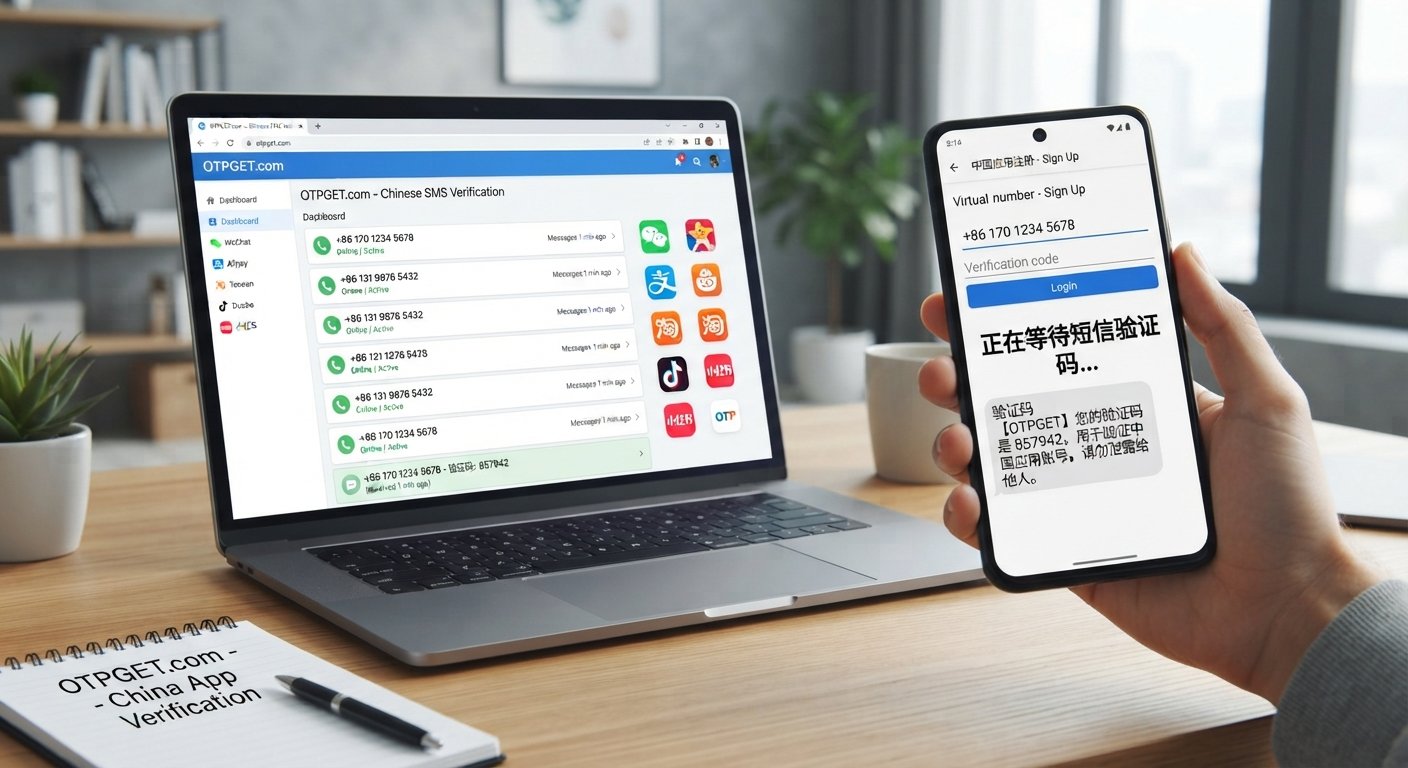
When a service supports Chinese mobile numbers, the process is generally straightforward. You enter the number in the required field, request a verification code, receive an SMS, and enter the code into the app.
The number may be a traditional mobile number associated with a physical SIM card or, depending on the service and platform, a virtual Chinese phone number that can receive SMS messages.
The important distinction is that not every virtual number is accepted by every platform. Some services apply additional checks to determine whether a number is suitable for registration or verification.
For users who simply need to receive a Chinese SMS verification code, an SMS verification service such as OTPGET may be useful when the target platform accepts the available number.
Why Do Apps Ask for a Chinese Phone Number?
A Chinese mobile number may be requested for several different reasons. The requirement is usually determined by the app or service rather than by a universal rule.
Common reasons include:
- Account registration: The platform may use SMS to confirm a new account.
- Phone verification: A mobile number can provide an additional layer of account verification.
- Fraud prevention: Services may use phone verification as one part of their efforts to reduce automated or abusive registrations.
- Regional access: Some China-focused services are designed around Chinese mobile users.
- Account recovery: A verified phone number may be used for certain recovery or security processes.
- Security checks: An app may request an OTP when performing a sensitive action.
- China-specific services: Local platforms may be built primarily around Chinese mobile numbers.
This does not mean every Chinese app requires a Chinese number. Requirements can differ by platform, account type, location, and registration method.
If you are considering a Chinese number for account verification, checking the target service's requirements first can save time.
How Chinese SMS Verification Works
Chinese SMS verification generally follows the same basic process used for phone verification elsewhere.
- The app requests a Chinese mobile number.
- You enter the number in the registration or verification field.
- The app sends an OTP or verification code by SMS.
- The message reaches the number.
- You enter the received code into the app.
- The platform verifies the code and continues the process if the number and verification method are accepted.
The actual experience can vary. Some services may limit how frequently codes can be requested, while others may apply additional checks to the number.
If a platform does not accept virtual numbers, having access to a Chinese SMS number alone may not be enough to complete registration. That is why compatibility should be checked before relying on any verification method.
When You Might Need a Chinese Number for Verification
There are several legitimate situations where a Chinese number for app verification can be useful.
Registering for China-Focused Apps
Some services are primarily intended for users in China and may request a Chinese mobile number during registration.
Testing Applications
Developers, QA teams, and testers may need to verify SMS flows while testing an application or service that supports Chinese phone numbers.
Accessing Region-Specific Services
A platform may make certain features available only after completing phone verification with a number from a particular region.
Creating an Account
If an app specifically requires a Chinese mobile number during account creation, users without a local SIM may look for a suitable verification option.
Receiving SMS Verification Codes
Some users only need a number temporarily to receive an OTP during a legitimate registration or verification process.
In all cases, the platform's terms and verification requirements should take priority. A verification service should be used for legitimate purposes rather than to defeat security controls or misrepresent identity.
OTPGET: A Practical Option for Chinese SMS Verification
For users who do not have a Chinese mobile number, obtaining one through a suitable service can be more convenient than arranging a traditional SIM card.
OTPGET can be a practical option for users who need a Chinese number to receive SMS verification codes. The basic value is simple: it can help users access a Chinese number for an SMS-based verification process without requiring them to already have a Chinese mobile number.
This can be particularly useful when:
- You need a Chinese number for app registration.
- You need to receive a Chinese SMS verification code.
- You are testing an application that uses Chinese phone verification.
- You are setting up an account on a service that accepts the available number.
- You do not have convenient access to a Chinese physical SIM.
The key point is to keep expectations realistic. OTPGET should not be treated as a universal solution for every app. Individual services may reject virtual numbers, restrict certain number types, or apply their own registration rules.
For that reason, OTPGET is best viewed as a practical verification-number option rather than a guarantee that a particular platform will accept the number.
How to Use OTPGET for Chinese App Verification
The general process is simple and follows the normal SMS verification workflow.
- Visit OTPGET.
- Select an available Chinese number or relevant verification option.
- Enter the provided number into the app or service.
- Request the verification code.
- Check OTPGET for the incoming SMS or OTP.
- Enter the received code into the app.
- Complete registration if the platform accepts the number.
Keep the target app open while completing the process so you can enter the code when it arrives.
It is also worth checking the platform's phone-number requirements before starting. If the service specifically excludes virtual numbers, a different verification method may be necessary.
Chinese Virtual Number vs. Traditional Chinese SIM Card
A virtual Chinese phone number and a traditional Chinese SIM card can serve different needs. Neither option is universally right for every situation.
| Factor | Chinese Virtual Number | Traditional Chinese SIM |
|---|---|---|
| Convenience | Can be convenient for online verification | Requires obtaining and using a physical SIM |
| Physical SIM | Not necessarily required | Required |
| Setup | Often simpler for a specific verification need | May involve additional setup |
| SMS reception | Depends on the service and platform | Uses the mobile carrier network |
| International access | Can be useful for users outside China | May be less convenient to obtain remotely |
| Long-term ownership | Depends on the number arrangement | Better suited to ongoing personal use |
| Platform compatibility | Varies by service | Generally follows the carrier-issued number type |
| Best suited to | Certain verification and testing scenarios | Long-term mobile use and accounts tied to a personal number |
If you need a Chinese mobile number for ongoing personal communication, a traditional SIM may make more sense. If your need is specifically to receive an SMS verification code for an eligible service, a virtual Chinese number may be more convenient.
What to Check Before Using a Chinese Verification Number
Before requesting a Chinese SMS number, consider a few practical questions.
Does the App Accept Virtual Numbers?
This is one of the most important checks. Some platforms accept virtual numbers, while others restrict them.
Can the Number Receive SMS?
The number needs to support the type of message your target service sends. A number that cannot receive the required SMS will not help with OTP verification.
Is the Number Available for Your Specific Service?
Availability can vary depending on the platform. A number that works for one registration flow may not be accepted by another.
Is the Number Temporary or Reusable?
Understand how the number is intended to be used. This matters particularly if you expect to need the same number again for account recovery or future verification.
Are There Platform-Specific Restrictions?
Some services have their own rules around registration frequency, number types, or regional requirements.
What Are the Privacy Implications?
Consider what information you are providing to both the app and the number provider. For sensitive accounts, a phone number you permanently control may be more appropriate.
Common Problems With Chinese SMS Verification
SMS verification does not always work on the first attempt. Common problems include:
- The verification SMS never arrives.
- The app says the number has already been used.
- The platform rejects the virtual number.
- The number has expired or is no longer available.
- Regional restrictions prevent registration.
- The SMS is delayed.
- The service has limitations on verification numbers.
If a code does not arrive, first confirm that the number was entered correctly and that the target platform supports the number type. Avoid repeatedly requesting codes because some services may temporarily restrict repeated requests.
If the platform reports that the number is invalid or unsupported, trying the same process repeatedly may not solve the underlying compatibility issue. In that situation, review the app's requirements or use another permitted verification method.
Tips for Successful Chinese App Verification
A few simple checks can prevent unnecessary problems:
- Enter the correct Chinese country code and mobile number format.
- Confirm that the app supports Chinese mobile numbers.
- Check whether virtual numbers are permitted.
- Make sure the selected number is active for SMS reception.
- Request the code only when you are ready to enter it.
- Avoid repeatedly requesting OTPs in a short period.
- Check for blocked or filtered messages where applicable.
- Follow the app's registration and verification rules.
- If the service rejects the number, check its requirements rather than attempting to circumvent the restriction.
These steps are especially useful when working with a Chinese number for app registration or testing.
Is a Chinese Number Safe for App Verification?
Safety depends on how the number, provider, and target app are used.
Before using a Chinese verification number, consider what data the app collects, how the account can be recovered, and whether the number may be temporary or reused.
For low-risk registration or testing, a suitable verification number may be practical. For important accounts containing sensitive information, users should carefully consider whether they need a number they permanently control.
It is also sensible to review the privacy policies and terms of the relevant service. Do not assume that using a virtual number automatically provides anonymity, and do not use a verification number to misrepresent your identity or evade a platform's legitimate security requirements.
OTPGET can help users who need access to a Chinese number for SMS verification, but the suitability of that option depends on the particular platform and the user's intended use.
Frequently Asked Questions
What is a Chinese number for app verification?
It is a Chinese mobile number used to receive an SMS verification code during an app's registration, login, security, or account-verification process.
Can I receive a Chinese SMS verification code online?
In some cases, yes. Services that provide access to SMS-capable Chinese numbers can allow users to receive verification messages online. Availability and platform acceptance vary.
Can a Chinese virtual number receive OTP codes?
A Chinese virtual number may receive OTP codes when it supports SMS reception and the target platform accepts that type of number. Not every app accepts virtual numbers.
Why does an app require a Chinese phone number?
An app may require one for account registration, phone verification, regional access, security checks, fraud prevention, or account recovery. Requirements differ between platforms.
Can I use OTPGET for Chinese app verification?
OTPGET can be a practical option for users who need a Chinese number to receive an SMS verification code. Whether it works for a particular app depends on that platform's number and verification requirements.
Do all Chinese apps accept virtual numbers?
No. Acceptance varies by app and service. Some platforms may restrict or reject virtual numbers, so it is important to check the applicable requirements.
What should I do if the verification SMS does not arrive?
Check the number format, confirm that the platform supports the number type, and make sure the number is active for SMS reception. Avoid repeatedly requesting codes. If the problem continues, check the platform's verification requirements or use another permitted method.
Final Thoughts
A Chinese number for app verification can be useful when a China-focused app or online service requires SMS-based phone verification and you do not have a Chinese mobile number.
The basic process is straightforward: provide an eligible number, request an OTP, receive the Chinese SMS verification code, and enter it into the relevant app. The main challenge is compatibility, since individual platforms can have different rules for virtual and traditional mobile numbers.
For users who need a convenient way to access a Chinese verification number, OTPGET can be a practical option for receiving SMS verification codes, particularly for legitimate registration and testing scenarios. It is still important to check the target app's requirements before choosing a number.
The right verification method ultimately depends on what you need the number for, how long you need access to it, and whether the specific platform accepts that type of Chinese mobile number