Costa Rican Number for OTP Codes: A Simple Guide for Beginners
Costa Rican Number for OTP Codes: Simple Beginner Guide
Introduction
Need to verify an account but do not want to use your personal phone number? For some legitimate online activities, a Costa Rican number for OTP codes can be a practical option.
Phone verification is now common across websites, apps, testing environments, and regional services. A platform may send a one-time password, or OTP, to confirm that the submitted number can receive SMS messages. The challenge is that getting access to an appropriate Costa Rican phone number is not always simple, particularly if you are outside Costa Rica or do not have a local SIM card.
That is where online and virtual phone numbers can be useful.
A Costa Rican virtual number can allow eligible users to receive SMS verification messages through an online service rather than relying on a traditional physical SIM. However, compatibility varies. Some websites accept virtual numbers, while others restrict VoIP, temporary, or previously used numbers.
For beginners, the key is understanding how the process works and choosing a service that fits the intended, legitimate use. OTPGET is one option to consider when you need access to an online number for supported SMS and OTP verification purposes.
What Is a Costa Rican Number for OTP Codes?
A Costa Rican number for OTP codes is a phone number associated with Costa Rica that can receive SMS messages containing one-time passwords or other verification codes.
OTP stands for One-Time Password. It is usually a short numerical or alphanumeric code that is valid for a limited period or a specific verification attempt.
For example, when you register for a service, the platform might ask for your phone number. After you submit it, the platform sends an SMS containing a code such as 482731. You enter that code into the verification screen, and the service checks whether it matches the code it generated.
SMS verification is commonly used to confirm control of a phone number, reduce automated registrations, or add another step to an account workflow.
A Costa Rica phone number may be useful when the service you are working with requires a number from that country. Depending on the provider and the website involved, you may be able to use a physical Costa Rica mobile number or a Costa Rican virtual number.
The important point is that a virtual number is not automatically accepted everywhere. The service sending the OTP ultimately determines which types of numbers it supports.
Why Do You Need a Costa Rican Number for Verification?
There are several legitimate reasons someone may search for a Costa Rica number for verification.
Testing and development are common examples. Developers may need to test SMS functionality in an application or confirm that a regional workflow behaves correctly.
Businesses can also have legitimate regional requirements. A team testing a Costa Rican customer journey, for instance, may need access to a Costa Rican number without purchasing and maintaining a separate physical SIM.
Other possible uses include:
- Testing services and applications
- Verifying accounts where virtual numbers are permitted
- Supporting legitimate business workflows
- Testing region-specific features
- Accessing services that officially require a Costa Rican number
- Keeping a personal number separate from certain online activities
- Receiving legitimate SMS verification codes
A virtual phone number can be convenient because it avoids the need to obtain another physical device or SIM card. Still, it should only be used in ways that comply with the rules of the website, app, or service being verified.
It should not be used to bypass identity checks, security controls, account restrictions, anti-fraud systems, or platform policies.
How Does OTP Verification Work?
The basic process is straightforward.
- A website or app asks for a phone number.
The service may specify a country or accept numbers from multiple regions. - You provide an eligible Costa Rican number.
This could be a regular mobile number or, where supported, an online or virtual number. - The service sends an OTP by SMS.
The message normally contains a short verification code. - The SMS is received by the number.
With an online OTP receiving service, the message may appear through the provider's online interface. - You enter the OTP.
Copy the code into the original website or app. - The service verifies the code.
If the code is valid and has not expired, the verification step can be completed.
The process sounds simple, but problems can occur when a website does not accept the particular type of number being used.
Common Problems With Getting a Costa Rican Number for OTP Codes
Finding a Costa Rican number for OTP codes is not always as easy as entering a country code and waiting for a message.
One common issue is number compatibility. Some services accept standard mobile numbers but reject virtual or VoIP numbers. Others may block numbers that have been used for too many previous registrations.
There can also be SMS delivery delays. A verification message might take longer than expected to arrive, or the service sending it may not support the selected number.
Other potential problems include:
- The number is temporarily unavailable
- The website does not support virtual numbers
- The SMS provider has limited compatibility with a particular service
- A previously used number causes verification conflicts
- The OTP expires before it is entered
- Repeated code requests trigger temporary restrictions
- The service does not send verification messages to certain number ranges
These limitations are important to understand before choosing any online phone number. A virtual number can be convenient, but it is not a universal replacement for a traditional mobile number.
OTPGET: A Simple Way to Get a Costa Rican Number for OTP Codes
If manually finding a suitable number feels complicated, OTPGET can help simplify the process for users who need supported numbers for legitimate SMS and OTP verification.
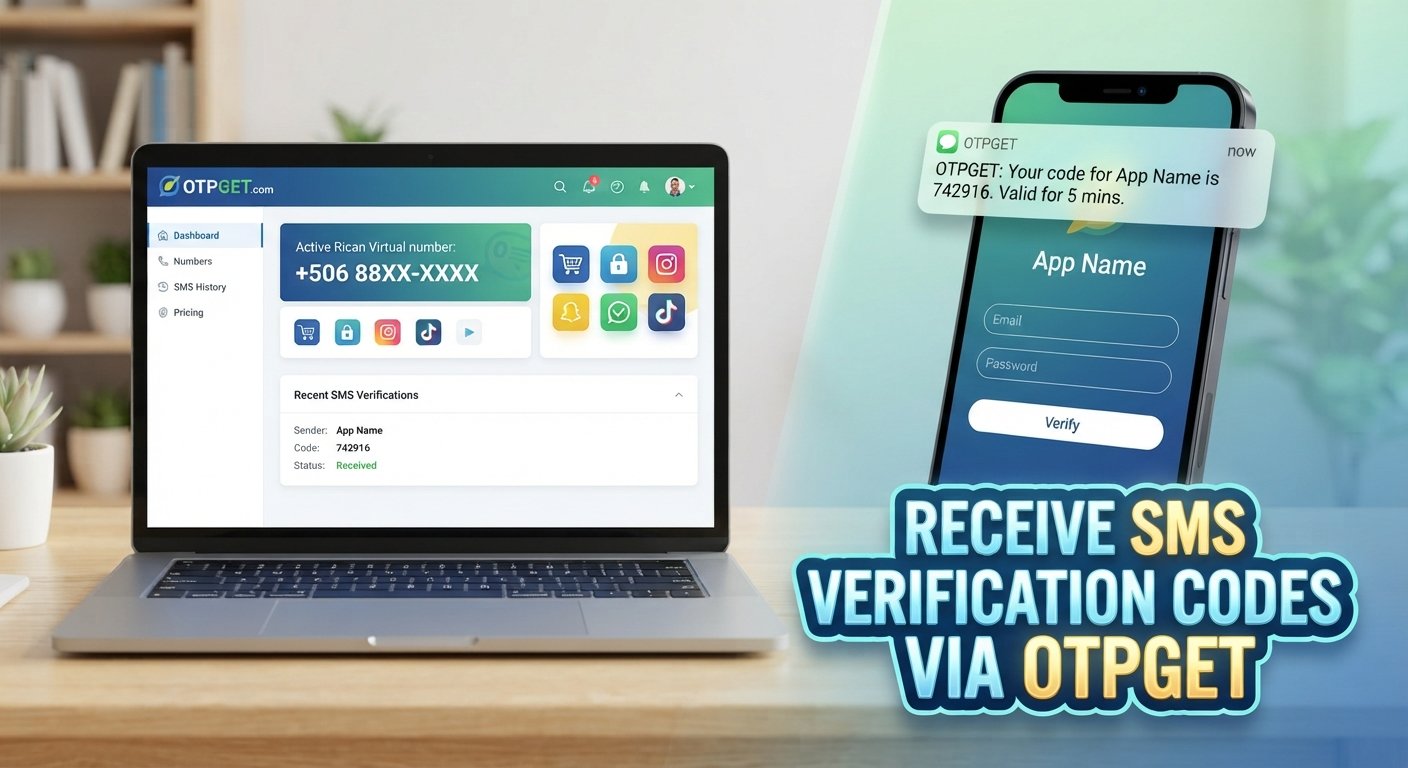
OTPGET provides virtual-number and SMS OTP services, with published documentation describing country and service selection, number requests, and SMS status checking. Availability depends on the country, service, and current inventory, so users should check what is actually offered for their intended verification.
For a beginner, the main appeal is convenience. Instead of searching for a physical Costa Rican SIM or managing another phone, an online number can provide a practical way to receive supported verification messages through an online service.
OTPGET may be useful when you want to:
- Access an online number for a legitimate verification workflow
- Receive supported OTP or SMS messages online
- Avoid relying on a personal number for a specific eligible use
- Save time compared with searching for a suitable number manually
- Work with a straightforward online verification process
- Explore available country and service options in one place
The important qualification is compatibility. OTPGET does not mean that every website will accept every virtual number. The third-party service you are verifying ultimately controls its own phone-number requirements.
For that reason, it is best to choose a number specifically for a service that permits this type of verification.
How to Use OTPGET for Costa Rican OTP Verification
The exact interface can change, so beginners should follow the instructions currently displayed by OTPGET. At a general level, the process looks like this:
- Visit OTPGET.
- Choose the relevant country or service option if a Costa Rican number is available for your intended use.
- Select an appropriate number for the legitimate website or app you are verifying.
- Enter the provided number into the verification field on the original service.
- Request the OTP through that service.
- Wait for the SMS verification message to be received through the applicable OTPGET workflow.
- View the code and enter it into the original verification screen.
- Complete the normal verification process if the code is accepted.
OTPGET's published documentation describes a workflow where users can select countries and services, request a number, and check the status for an incoming SMS.
If a number is unavailable or a service rejects it, do not repeatedly submit new requests. First check whether the website permits virtual numbers and whether another supported option is appropriate.
Costa Rican Number vs. Regular Phone Number
A traditional Costa Rica mobile number is normally connected to a physical SIM and mobile network. A virtual Costa Rican number, by contrast, is provided through an online service and may not require you to own a physical SIM card.
A temporary or online number is generally designed for a particular online use or limited period, depending on the service.
Here is the practical difference:
- Regular physical number: Useful when you need long-term ownership and broad compatibility with services that require a standard mobile connection.
- Virtual Costa Rican number: Convenient when an online number is sufficient and the target service accepts it.
- Temporary number: Useful for eligible short-term verification workflows where long-term access is not required.
None of these options works universally. If a website specifically requires a traditional mobile number, a virtual number may not be suitable.
Tips for Successfully Receiving OTP Codes
A few simple habits can prevent common verification problems.
- Check the country code carefully. Make sure the Costa Rican number is entered in the format requested by the service.
- Confirm compatibility first. Check whether the website permits virtual, temporary, or online numbers.
- Enter the number accurately. A single incorrect digit can prevent the SMS from reaching the intended number.
- Wait before requesting another code. Multiple requests in quick succession can create confusion or temporary limits.
- Check OTP expiration. One-time passwords are often valid only for a limited period.
- Avoid repeated attempts. If a message does not arrive, investigate the issue before requesting many additional codes.
- Use numbers for legitimate purposes only. Follow the terms of both the number provider and the service you are verifying.
- Consider privacy carefully. Do not use a temporary or shared-style number for highly sensitive verification unless you fully understand how the number is handled.
These steps will not guarantee successful delivery, but they can eliminate many avoidable problems.
Is a Costa Rican Virtual Number Right for You?
A Costa Rican virtual number can make sense when you need an online phone number for a specific, permitted verification task and do not have convenient access to a local SIM.
It can be particularly practical for testing, regional workflows, and other legitimate situations where the service accepts virtual numbers.
A traditional Costa Rica mobile number may be more appropriate when you need long-term control of the number, broader compatibility, or a number that is clearly tied to a physical mobile service.
The decision should come down to your use case. Before choosing an online number, check the requirements of the website or app you plan to use.
Frequently Asked Questions
What is a Costa Rican number for OTP codes?
It is a Costa Rican phone number that can receive SMS messages containing one-time passwords or verification codes. It may be a traditional mobile number or, where supported, a virtual number.
Can I receive SMS verification codes with a Costa Rican virtual number?
Yes, a Costa Rican virtual number may receive SMS verification codes when the provider offers the number and the target service accepts that type of number. Compatibility varies.
How does Costa Rican OTP verification work?
The service sends a one-time code by SMS to the eligible Costa Rican number. You receive the message, enter the code on the original website or app, and the service verifies it.
Can I use OTPGET to receive Costa Rican OTP codes?
OTPGET can help users access supported virtual numbers and receive SMS OTP messages through its service. Whether a Costa Rican number is available for a particular service depends on current availability and compatibility.
Are virtual numbers accepted by every website?
No. Some websites accept virtual numbers, while others restrict temporary, VoIP, or online numbers. Always check the target service's requirements.
How long does an OTP remain valid?
The validity period depends on the service that generates the OTP. Some codes expire quickly, so it is best to enter the code soon after receiving it.
Why might a verification SMS not arrive?
Possible reasons include service compatibility issues, temporary number availability, network or SMS delivery delays, an incorrect number, or restrictions imposed by the website sending the code.
Is using an online number for OTP verification safe?
It can be appropriate for legitimate, permitted verification tasks, but users should understand how the number is provided and handled. Avoid using shared or temporary numbers for highly sensitive accounts unless the service explicitly supports them.
Conclusion
Finding a Costa Rican number for OTP codes can be frustrating when you do not have a local SIM or when a verification service has specific country requirements. The basic process is simple, but number compatibility, SMS delivery, and virtual-number restrictions can make the practical side more complicated.
For legitimate verification, testing, and regional workflows, an online Costa Rican number may offer a convenient alternative to obtaining another physical phone line. The key is to make sure the website or app you are using permits virtual or temporary numbers.
If you want a simpler way to explore available numbers for supported SMS verification, OTPGET is a practical option to consider. Check the available Costa Rica options and the requirements of your intended service before proceeding.
Used appropriately, an online number can make routine OTP and SMS verification easier without turning the process into a search for another physical SIM.