Czech Number for OTP Codes: Simple Beginner Guide for SMS Use
Czech Number for OTP Codes: Simple Beginner Guide
Need a Czech number to receive an OTP or SMS verification code? A Czech number for OTP codes is a phone number associated with the Czech Republic that can receive SMS messages containing one-time verification codes when the relevant service supports that type of number.
People may need a Czech phone number for service testing, business workflows, international communication, or supported account verification processes. Instead of obtaining a physical SIM, some users may prefer an online or virtual option.
In this guide, you'll learn what Czech OTP numbers are, how SMS verification works, what to check before using one, and how OTPGET can be a practical option for accessing a Czech number for supported OTP and SMS verification use cases.
What Is a Czech Number for OTP Codes?
A Czech number for OTP codes is a Czech phone number that can receive SMS messages from a service sending a one-time password, commonly called an OTP.
An OTP is a temporary verification code used to confirm that someone has access to a particular phone number. For example, a website might ask you to enter a six-digit code sent by SMS before allowing you to complete a sign-up or other verification step.
A Czech phone number generally uses the +420 Czech country code. Depending on the service, the number may be a physical mobile number, a virtual number, or another type of online SMS-enabled number.
The basic process is simple:
- A website or application asks for a phone number.
- You provide a supported Czech number.
- The service sends a verification code by SMS.
- The SMS arrives at the number's receiving interface.
- You enter the code into the original service if its rules allow you to proceed.
It's important to distinguish receiving an SMS from completing verification. A number can receive a message while the platform may still reject it because of its own verification policies, number type, risk controls, or identity requirements.
Why Would You Need a Czech Number for SMS Verification?
There are several legitimate reasons to use a Czech number for SMS verification.
Testing SMS workflows
Developers and businesses may need a Czech SMS number to test how verification messages are generated, delivered, and displayed for users in the Czech market.
Accessing supported services
Some online services are designed for specific countries and may request a local phone number. If the service accepts the available number type, a Czech number can be useful for completing its SMS-based verification process.
Business and development use
A separate Czech number can help teams test registration flows, notification systems, customer onboarding, or other SMS-related workflows without relying on an employee's personal number.
Separating communication channels
Some users prefer keeping personal communications separate from registrations, testing, or online services. A separate number can provide that distinction where permitted.
International use
Someone traveling, working with Czech customers, or handling an international project may have a practical reason to access a Czech number without obtaining a physical SIM immediately.
The important point is to use the number in accordance with the target service's terms and applicable rules.
How Does a Czech Number Receive an OTP?
The process usually follows a straightforward sequence.
- Choose a supported Czech number.
Select a Czech phone number that is suitable for the intended SMS or OTP workflow. - Enter the number on the relevant service.
Add the Czech number where the website or application requests phone verification. - Request the verification code.
Start the service's SMS verification process. - The service sends an SMS.
If the service accepts the number, it sends a message containing the verification code. - Check the receiving interface.
The incoming message should appear wherever the selected number receives supported SMS messages. - Enter the code when permitted.
Copy the verification code into the original website or application before it expires.
Whether this works depends on the platform. Some services accept virtual or online numbers, while others restrict VoIP, temporary, recycled, or other non-traditional numbers. Always check the target service's verification requirements before relying on a particular Czech number.
OTPGET: A Simple Option for Czech OTP Codes
For users who need access to a Czech number for supported OTP or SMS verification, OTPGET can be a practical option to consider.
The basic idea is straightforward: instead of immediately obtaining a physical Czech SIM, a user can look for an available Czech number through the service and use it for an appropriate SMS verification workflow.
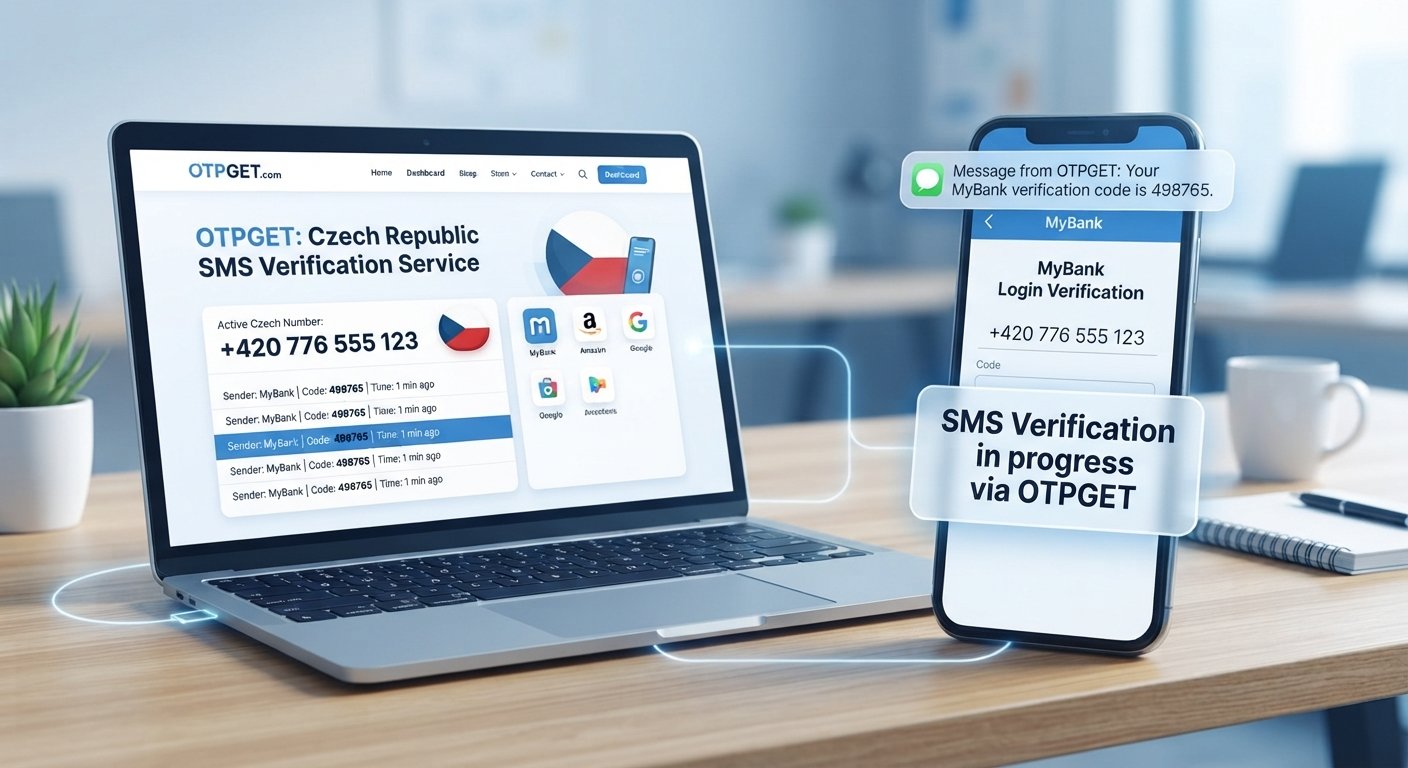
A typical process involves selecting a relevant Czech number, entering it on a supported website or application, requesting an OTP, and checking OTPGET for the incoming verification message. If the platform accepts that number type and sends the message successfully, the received code can then be entered into the original service.
One advantage of using a centralized online service is convenience. You don't necessarily need to manage a separate physical SIM just to handle a supported SMS-based workflow.
However, OTPGET should not be treated as a universal verification solution. Different websites and applications have different rules. Some may accept a Czech virtual number, while others may restrict temporary, online, or VoIP numbers.
Before starting a verification process, check whether the target platform accepts the type of Czech number available through OTPGET.
Looking for a Czech number for OTP codes? Explore OTPGET and check the available Czech options for your intended supported SMS verification use case.
How to Use OTPGET for a Czech Number
For a beginner, the process can be approached in a few simple steps:
- Visit OTPGET.
Start by accessing the OTPGET service. - Look for a Czech option.
Find an available Czech number or the relevant Czech SMS/OTP option. - Select the appropriate number or service.
Choose the option that matches your intended verification workflow. - Enter the number on the target service.
Add the Czech number to the website or application requesting SMS verification. - Request the OTP.
Follow the target platform's normal verification process. - Check OTPGET for the incoming message.
If the service sends an SMS to the number and the message is supported, check the receiving interface for the verification code. - Enter the code into the original service.
Use the received OTP according to the platform's instructions and before the code expires.
The exact experience can vary depending on the target service and its verification requirements. If a platform doesn't accept the number, using a different number type or following the platform's approved verification method may be necessary.
Czech Virtual Number vs. Regular Czech Mobile Number
Not every Czech number works the same way. The following comparison can help beginners understand the main differences.
| Feature | Physical SIM | Czech Virtual Number | Online SMS/OTP Number |
|---|---|---|---|
| Physical SIM required? | Yes | Usually no | No |
| Online access | Limited to service setup | Yes | Yes |
| Convenience | Requires physical SIM/device access | Convenient for supported online use | Convenient for specific SMS workflows |
| Typical use cases | Regular mobile communication | Business, communication, selected verification workflows | SMS and OTP receiving where supported |
| OTP/SMS compatibility | Often broad, subject to platform rules | Varies by service | Varies by service |
| Dependence on service policies | Yes | Yes | Yes |
A physical Czech mobile number is tied to a physical SIM, while a virtual Czech phone number is generally accessed through an online service. An online SMS/OTP number is more specifically intended for supported SMS-receiving workflows.
The key difference isn't simply whether the number looks like a Czech number. The target platform determines whether it accepts that number type.
Benefits of Using a Czech Number for OTP Codes
A Czech number can be useful when a service specifically requires or supports a Czech phone number.
Potential benefits include:
- Convenient SMS access: Receive supported verification messages without relying on a personal number.
- International accessibility: An online number can be useful when you're outside the Czech Republic and need a supported Czech number.
- Separate communication: Keep personal phone communications separate from selected online workflows.
- Business testing: Developers and teams can use appropriate numbers when testing SMS-based registration or verification systems.
- Simpler setup: An online option may be more convenient than obtaining and maintaining a physical SIM for a limited use case.
- Flexible verification workflows: A Czech number can be useful for supported OTP and SMS verification processes.
These benefits depend on the service, number type, and intended use. A virtual number isn't automatically accepted by every website or application.
What to Check Before Using a Czech OTP Number
Before choosing a Czech verification number, review the following checklist:
- Does the target service accept virtual numbers? Some platforms restrict them.
- Does it support SMS verification? Not every verification system uses SMS.
- Does the platform block VoIP or temporary numbers? Check its phone-verification rules.
- Is the number suitable for your intended workflow? Different services can impose different requirements.
- Do you need ongoing access? Some accounts may require a phone number again later.
- Are additional identity requirements involved? An SMS code may be only one part of a larger verification process.
- Are you following the platform's terms? Use the number only in ways permitted by the service and applicable rules.
This check can prevent a common mistake: choosing a number first and only discovering afterward that the target service doesn't support that type of number.
Common Problems With Czech OTP Verification
Even when the setup looks correct, SMS verification can sometimes encounter problems.
SMS delays
An OTP message may take time to arrive because of network routing, the sending service, or other technical factors. If a code doesn't appear immediately, avoid repeatedly requesting new codes unless the service instructs you to do so.
The platform rejects the number
Some websites reject particular number types. If the service specifically blocks virtual, temporary, or VoIP numbers, another supported verification method may be required.
Incorrect country selection
Make sure the selected country is Czech Republic and that the number is entered in the format expected by the service. The Czech country code is +420.
Expired verification sessions
Verification pages can expire if they remain open too long. Starting a fresh verification attempt may be necessary.
OTP expiration
One-time passwords are normally intended to be used within a limited period. If a code expires, follow the service's instructions for requesting another one.
Service-specific restrictions
A platform may impose restrictions based on number history, number type, account status, or its own security systems. These rules are controlled by the platform rather than by the number provider.
Frequently Asked Questions
What is a Czech number for OTP codes?
A Czech number for OTP codes is a Czech phone number that can receive SMS messages containing one-time verification codes when the target service supports that number type.
Can I receive OTP codes on a Czech virtual number?
Yes, a Czech virtual number can receive OTP messages when the relevant service supports that type of number. Acceptance varies between websites and applications.
How do I get a Czech number online?
You can look for a Czech virtual or online SMS number through a service such as OTPGET. Choose an available Czech option that fits your intended supported use case.
Does OTPGET provide Czech numbers for OTP verification?
OTPGET can provide access to Czech number options for supported OTP and SMS verification use cases. Availability and compatibility can depend on the service and its requirements.
Will every website accept a Czech virtual number?
No. Websites and applications can have different verification policies. Some accept virtual numbers, while others may restrict them or require a physical mobile number.
How long does an OTP code remain valid?
The validity period is determined by the service that sends the code. If the code expires before you use it, follow the service's process for requesting another verification code.
Is a Czech number the same as a Czech physical SIM?
No. A physical SIM is associated with a physical mobile service, while a Czech virtual or online number is accessed through an online provider. Their compatibility with individual services can differ.
Final Thoughts
A Czech Number for OTP Codes can be useful when you need to receive an SMS verification code through a supported Czech phone number. The basic process is simple: choose an appropriate number, enter it on the relevant service, request an OTP, receive the SMS, and enter the code when permitted.
For users who prefer an online approach, OTPGET can be a practical option for accessing Czech numbers for supported OTP and SMS verification workflows. The most important step is to check the target platform's rules before starting, particularly if it restricts virtual, temporary, or VoIP numbers.
If you're looking for a Czech number online, explore OTPGET and check the available options for your specific, supported verification use case.