Estonian Number for App Verification: Step-by-Step Help Guide
Estonian Number for App Verification: Step-by-Step Help
You reach an app's signup screen, enter your details, and then hit a familiar roadblock: phone verification. The platform wants an SMS code, but you do not have an Estonian mobile number available.
That is where an Estonian number for app verification can be useful. For legitimate registrations, testing workflows, service accounts, or situations where an Estonia-based number is accepted, having access to the right number can make the verification process much simpler.
Services such as OTPGET can be a practical option when you need access to an available Estonian verification number. The important point is that phone verification still depends on the individual app. Some platforms accept virtual numbers, while others may restrict temporary or non-traditional numbers.
This guide explains how Estonian SMS verification works, what to look for in a verification number, how OTPGET fits into the process, and what to do when an OTP does not arrive.
Why You May Need an Estonian Number for App Verification
There are several legitimate reasons someone may need an Estonian phone number for verification.
For example, an app or online service may support registration with an Estonian number and use SMS to confirm that the submitted number can receive messages. Businesses and developers may also encounter Estonia-based verification requirements while testing international signup or communication workflows.
An Estonian number can also help separate personal communication from service-related accounts. Rather than using a personal mobile number for every online service, some users prefer a dedicated number for specific verification purposes.
Common use cases include:
- Regional registration: Some services provide country-specific signup options.
- SMS verification: An app may require a local or supported number before allowing registration.
- Account confirmation: Phone verification can be part of an account activation process.
- Testing workflows: Teams working with international apps may need numbers from specific countries.
- Privacy considerations: A separate verification number can help keep personal contact information separate from online services.
The key is to use the number for legitimate purposes and follow the app's terms. An Estonian number should not be treated as a way to circumvent geographic restrictions, security controls, or account policies.
How Estonian App Verification Works
The underlying process is usually straightforward.
- Enter a compatible Estonian phone number.
The number is entered into the app's phone verification field, normally with Estonia's country code where required. - Request an SMS verification code.
The platform sends a one-time password, commonly called an OTP, to the submitted number. - Receive the SMS.
The verification message is delivered to the number if the platform supports it and the number is able to receive the message. - Enter the OTP.
You copy the verification code into the app. - Complete verification.
If the number and code meet the platform's requirements, the app completes the phone verification step.
Although the basic process is similar across many services, requirements can differ significantly. A platform may restrict virtual numbers, reject numbers that have previously been used, or apply its own verification limits.
What to Look for in an Estonian Verification Number
Not every number is equally suitable for every verification workflow. Before choosing an Estonia virtual number or SMS verification service, consider a few practical factors.
Number availability
First, the required country and number type need to be available. If an Estonian number is not currently available for the service you need, you may have to try again later or use another supported option.
SMS reception
The most important practical requirement is the ability to receive the verification message. If the app sends an OTP but the number cannot receive it, the verification process cannot be completed.
Compatibility
Check whether the target platform accepts the type of number you plan to use. Some services accept virtual Estonian numbers, while others may require a traditional mobile number.
Privacy
Using a dedicated number can help separate verification activity from your personal mobile number. However, users should still understand how the number is provided and how long access remains available.
Number reuse policies
Some platforms associate a number with previous accounts or verification attempts. If a number has already been used elsewhere, an app may reject it.
Cost transparency
Before starting, make sure you understand what you are paying for and whether the number is available for the specific verification service you need.
How OTPGET Can Help With an Estonian Number
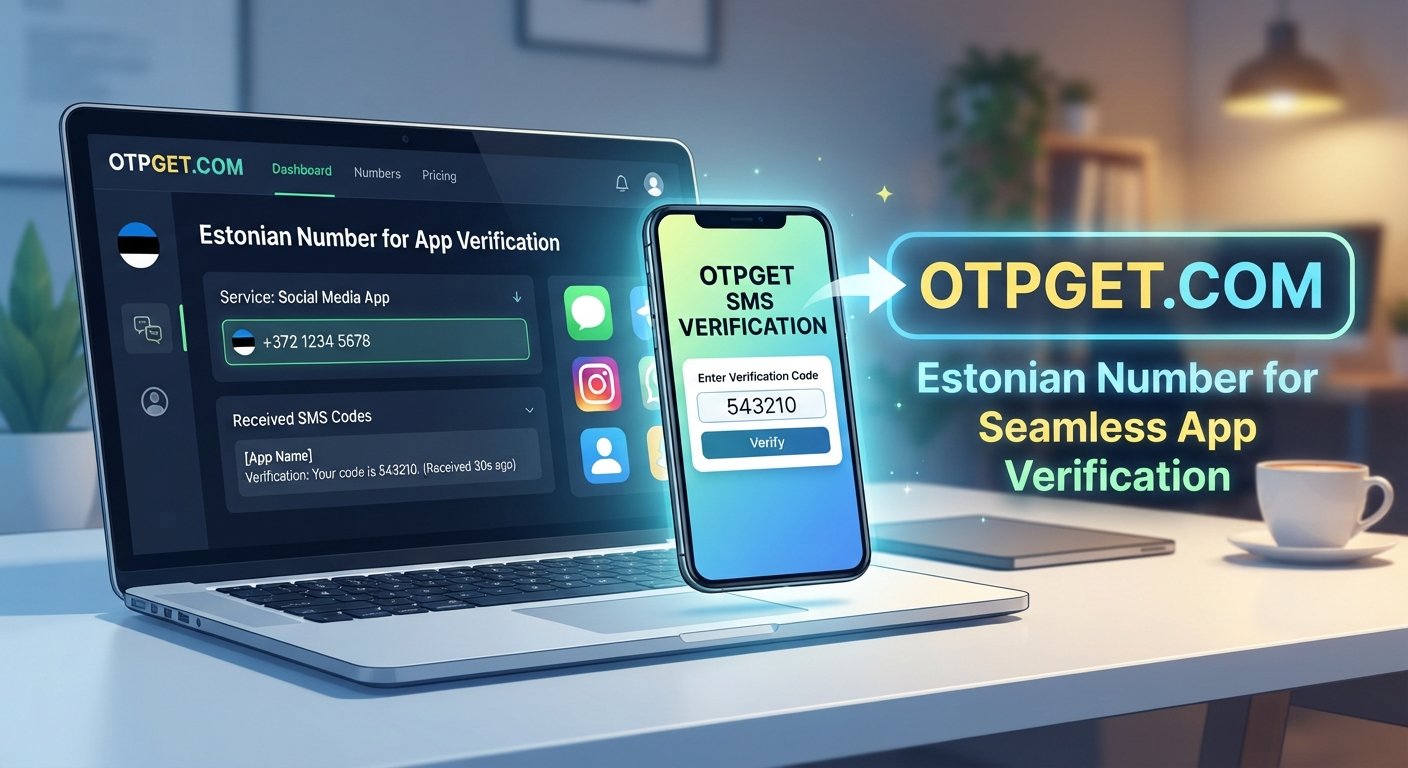
If you need an Estonian number for app verification but do not have an Estonian SIM card, OTPGET can be a practical option to consider.
The basic idea is simple: instead of obtaining a physical Estonian mobile SIM solely for a verification task, you can check whether OTPGET has an available Estonian verification number for the service you want to use.
A typical workflow involves selecting the required service and country, obtaining an available number when supported, entering that number into the app, and retrieving the incoming verification SMS.
The exact experience depends on number availability and the requirements of the individual app. OTPGET should therefore be viewed as a convenient option for accessing verification numbers, not as a guarantee that every platform will accept every number.
This distinction matters. Some apps deliberately restrict virtual, temporary, or previously used numbers. Others may impose limits on how frequently verification can be requested. Those rules are controlled by the platform itself.
Step-by-Step: Using an Estonian Number for App Verification
Step 1: Identify the App's Verification Requirement
Start by checking what the app actually requires.
Confirm that it supports phone verification through SMS and, where possible, that Estonian numbers are accepted. If the service specifically requires a physical mobile SIM or excludes virtual numbers, another verification method may be necessary.
Step 2: Find an Available Estonian Number
If the app supports the number type you need, check OTPGET for an available Estonian number.
Availability can vary, so select an option that is currently offered for the relevant verification service.
Step 3: Enter the Number in the App
Copy the Estonian phone number into the app's verification field.
Pay attention to the country-code format. Estonia uses the international country code +372, but the exact way you enter the number depends on how the app structures its phone-number field.
Avoid accidentally entering the country code twice.
Step 4: Request the Verification Code
Submit the phone number and request an SMS verification code.
At this point, avoid repeatedly pressing the resend button unless necessary. Some platforms impose temporary limits after multiple verification requests.
Step 5: Retrieve the OTP
Check the verification service for the incoming SMS.
If the message arrives, identify the verification code. Be careful not to confuse an OTP with other information that may appear in the message.
Step 6: Enter the Code
Return to the app and enter the SMS verification code exactly as received.
Most OTPs are time-sensitive, so entering the code promptly can help avoid an expired verification session.
Step 7: Complete Verification
Once the app accepts the code, the phone verification step should be complete.
If it fails, do not assume the number itself is necessarily the problem. The platform may have rejected the number type, reached a verification limit, or encountered another app-specific restriction.
Common Problems With Estonian SMS Verification
Even when the process looks simple, verification can occasionally fail.
SMS not arriving:
There may be a delivery delay, a platform-side issue, or a problem with the selected number. Give the system a reasonable amount of time before requesting another code.
Number already used:
Some apps limit how many accounts or verification attempts can be associated with a phone number. A previously used number may therefore be rejected.
Virtual number not accepted:
Certain platforms distinguish between conventional mobile numbers and virtual or temporary numbers. If the app explicitly restricts virtual numbers, another supported verification method may be required.
Expired verification session:
An OTP may only remain valid for a limited period. If you wait too long, request a new code and use the latest one.
Incorrect country code:
Make sure the number is entered using the correct international format and that the country selection matches the number.
Delayed SMS:
Network or platform delays can sometimes affect delivery. Repeatedly requesting codes may create additional problems if the app has rate limits.
App-specific restrictions:
Some services have their own rules for phone verification, including limits on virtual numbers, repeated attempts, or previously registered numbers.
If you are using OTPGET and a verification attempt does not work, check the app's requirements first and then review the available number or service options rather than assuming every issue has the same cause.
Why OTPGET May Be a Practical Option
For someone without an Estonian SIM card, OTPGET can simplify the process of finding an available verification number.
The main practical advantages are convenience and reduced friction. Instead of arranging a physical Estonian mobile connection for a single verification workflow, you can check whether a suitable number is available through the service.
OTPGET may be useful when you need to:
- Access an available Estonian verification number
- Receive an SMS OTP for a supported service
- Keep verification activity separate from your personal number
- Simplify an international app signup workflow
- Avoid obtaining a dedicated physical SIM solely for a particular verification task
The important qualification is availability and compatibility. An OTP service cannot control an app's verification policies. If a platform does not accept a particular virtual number, the verification may still fail.
Tips for Successful App Verification
A few simple habits can make the process smoother:
- Check compatibility first. Make sure the app accepts Estonian numbers and the type of number you intend to use.
- Use the correct country code. Estonia's international dialing code is +372.
- Have the verification screen ready. Request the OTP when you are prepared to enter it.
- Avoid unnecessary retries. Multiple requests can trigger temporary verification limits.
- Check the SMS carefully. Use the newest verification code if several messages arrive.
- Follow the app's terms. Use the number for legitimate account and verification purposes.
- Check availability before starting. If using OTPGET, make sure an Estonian number is available for the relevant service.
These steps cannot guarantee successful verification, because the final decision always rests with the platform handling the account.
Frequently Asked Questions
What is an Estonian number for app verification?
An Estonian number for app verification is a phone number associated with Estonia that can receive an SMS verification code when a supported app uses phone-based account confirmation.
Can I receive an OTP on an Estonian virtual number?
You may be able to receive an OTP on an Estonian virtual number when the service and app support that type of number. Compatibility varies between platforms.
How does an Estonian number help with app verification?
If an app accepts Estonian numbers, it can send its SMS verification code to the number. You then retrieve the code and enter it into the app to complete the phone verification step.
Can OTPGET provide an Estonian verification number?
OTPGET can provide access to verification numbers when an Estonian number is available for the requested service. Whether that number can be used successfully depends on the individual app's verification rules.
Why is my Estonian verification SMS not arriving?
Possible causes include SMS delays, platform restrictions, number availability issues, an expired session, or verification limits. Check the app's requirements and avoid repeatedly requesting codes.
Do all apps accept virtual Estonian numbers?
No. Apps can have different phone-verification policies, and some may restrict virtual or temporary numbers. Always check the specific platform's requirements.
Is an Estonian number the same as an Estonian SIM card?
Not necessarily. An Estonian mobile SIM is a physical or carrier-issued mobile connection, while an Estonian virtual phone number is provided through a digital service. An app may treat the two differently during verification.
Conclusion
An Estonian number for app verification can be useful when an app supports Estonian phone numbers and relies on SMS-based OTP verification. The process itself is generally simple: obtain a compatible number, enter it into the app, receive the verification SMS, and submit the code.
For users who do not have an Estonian SIM, OTPGET offers a practical option to check for an available Estonian verification number. The key is to confirm compatibility before starting and remember that individual platforms can apply their own restrictions to virtual or temporary numbers.
If you have a legitimate verification need, explore OTPGET's available options and check whether an Estonian number is currently available for the service you need.