Facebook OTP Number – Secure SMS Verification Online Guide Tips
Facebook OTP Number – SMS Verification Online
Introduction
Phone verification has become a familiar part of creating, accessing, and securing online accounts. A service may ask for a mobile number and then send a short verification code by SMS before allowing the process to continue.
For many people, the issue is not the verification itself. It is whether they want to use their personal phone number for every online service they interact with.
A personal number can be useful for important accounts, friends, family, and everyday communication. But when a legitimate service requires SMS verification, some users prefer to keep their primary number separate from online registration activity. This is where SMS verification online and virtual phone numbers can become useful.
A Facebook OTP Number generally refers to a phone number used to receive a one-time verification code associated with a Facebook account or verification process. Facebook itself uses phone-based security features, including SMS-related functionality and two-factor authentication options.
The important distinction is responsible use. An online verification number should be used for legitimate verification purposes, not for impersonation, unauthorized account access, spam, or bypassing security controls.
What Is a Facebook OTP Number?
OTP stands for One-Time Password. It is a temporary code generated for a particular verification event. Instead of relying only on a password, a platform can send a code to a phone number and ask the user to enter it.
A Facebook OTP Number is therefore not a special type of Facebook-issued phone number. In practical terms, it is a phone number capable of receiving the SMS containing a Facebook verification code when the platform supports that number.
The basic concept is straightforward:
- You provide an eligible phone number.
- The service sends an SMS verification code.
- You receive the one-time password.
- You enter the code into the relevant verification screen.
- The platform checks whether the code is valid.
OTP codes are designed to be temporary and should be treated as sensitive information. Facebook provides security features such as login alerts and two-factor authentication to add additional protection to accounts.
A verification code is also not a substitute for proving ownership of an account in every situation. Depending on the circumstances, Facebook may use other account recovery or identity-confirmation processes.
How SMS Verification Online Works
The process behind SMS OTP verification is easier to understand than it may initially appear.
1. Enter a phone number
During a legitimate registration, login, or verification process, the service asks for a phone number.
2. Request the verification SMS
The platform sends a verification message containing a temporary OTP.
3. Receive the message
The SMS reaches the selected phone number. With an online SMS number, the message can be made available through an online service rather than directly through your personal SIM.
4. Enter the OTP
The user enters the received code into the appropriate verification field on the official website or application.
5. The platform checks the code
The service verifies whether the code matches the one it generated and whether it is still valid.
6. Verification is completed
If the number and OTP are accepted, the relevant verification step can proceed.
This is the basic principle behind online phone verification. The exact workflow, eligibility rules, code expiration period, and number requirements can vary between services.
Why Use an Online SMS Verification Number?
There are several legitimate reasons someone might consider an online number for SMS verification instead of immediately using a personal mobile number.
Separate personal and online activity
A dedicated verification number can help separate certain online services from your primary phone number. This can be useful when you want more control over where your personal contact details are shared.
Reduce unnecessary exposure
Every time a personal number is entered into an online service, it becomes part of that service's contact information. Using a separate number where permitted can reduce the need to disclose your primary number.
Convenience
An online SMS number can be useful when receiving verification messages through a web-based dashboard is more convenient than managing another physical SIM.
Dedicated verification workflows
Developers, testers, businesses, and privacy-conscious users may have legitimate scenarios where a dedicated virtual phone number for SMS is appropriate.
However, a virtual number should not be viewed as a guarantee of anonymity or universal acceptance. Platforms can restrict certain number types, regions, carriers, or previously used numbers.
Common Problems With SMS Verification
Even when the verification process is legitimate, users can encounter practical problems.
Verification SMS delays
SMS delivery can sometimes take longer than expected because of carrier routing, network conditions, or platform-side processing.
The message never arrives
A number may not receive the requested message because it is incompatible with the service, unavailable for that particular verification request, or temporarily unable to receive SMS.
Incorrect number format
Country codes and phone-number formatting can matter. Entering a number incorrectly can prevent the verification message from reaching its destination.
Expired OTP codes
One-time passwords are generally temporary. If a code expires before it is entered, the user may need to request another verification message.
Too many attempts
Repeated verification requests can lead to temporary restrictions or additional checks. Trying different numbers repeatedly is not a responsible way to circumvent such controls.
Number compatibility
Not every virtual or temporary number works with every online platform. Acceptance depends on the service, country, carrier, number history, and other factors.
For these reasons, receive OTP online services should be viewed as a convenience option rather than a guarantee that every verification attempt will succeed.
OTPGET – A Convenient Solution for SMS Verification
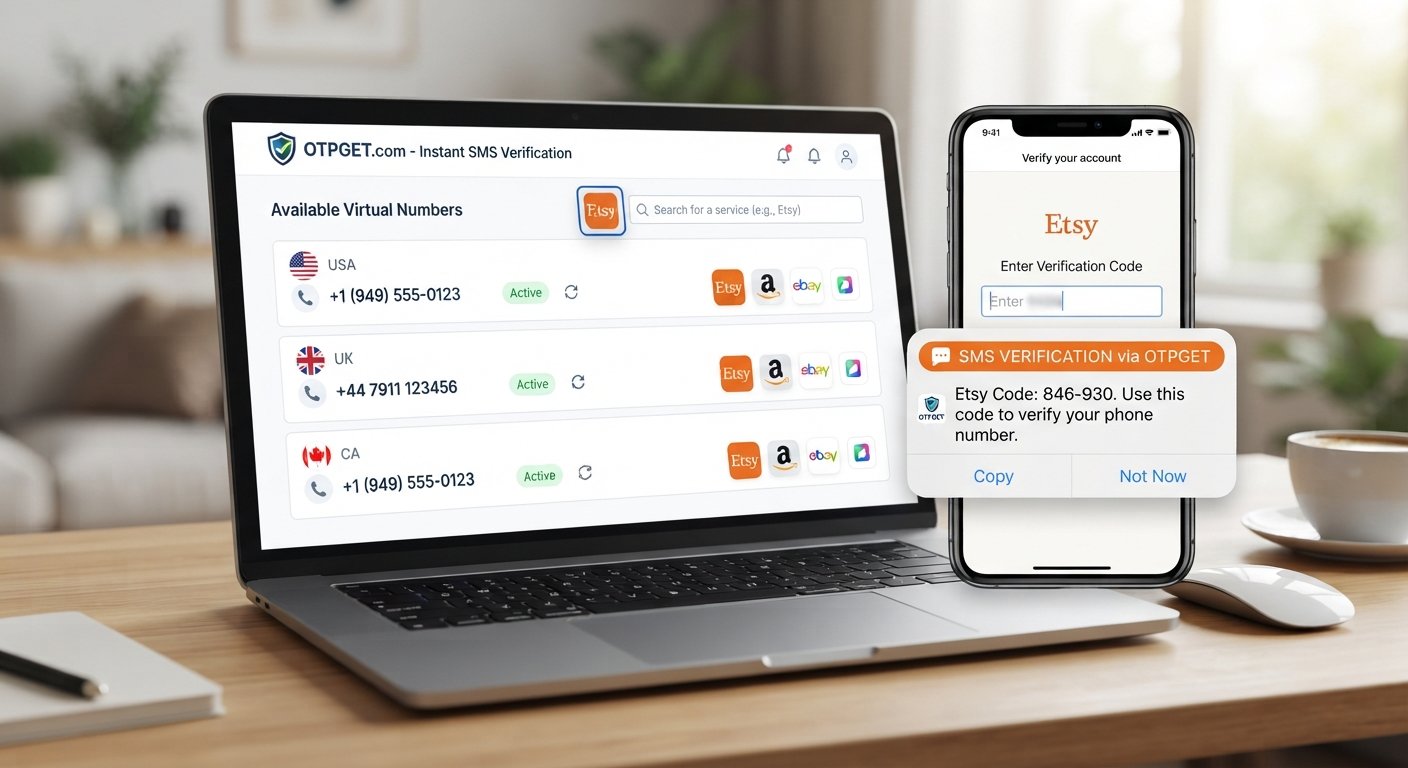
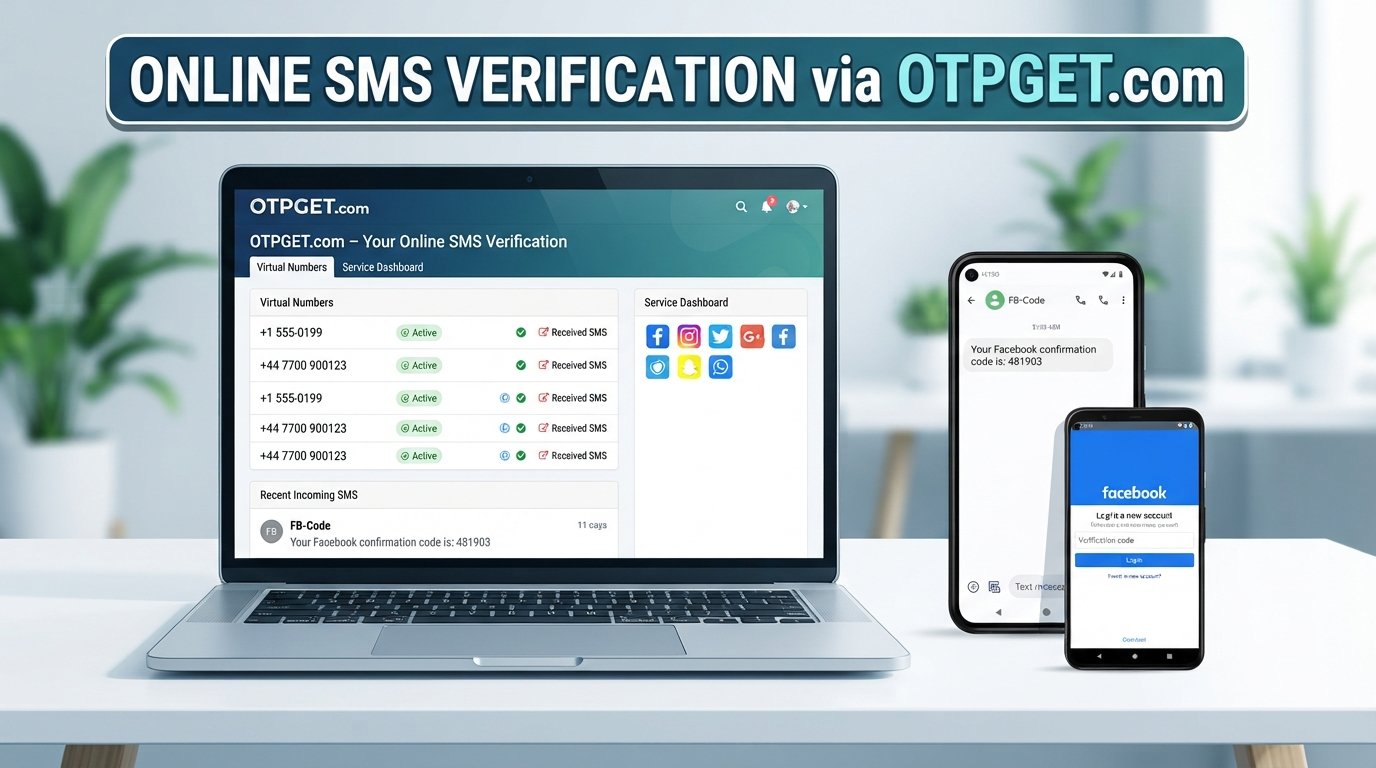
OTPGET is a virtual-number and OTP verification platform designed to provide numbers that can receive SMS verification messages online. Its published documentation describes SMS OTP numbers, longer-term rental numbers, and related verification functionality.
For users who do not want to expose their personal phone number unnecessarily, this approach can make the verification workflow more convenient.
OTPGET's platform information describes virtual numbers across numerous countries and support for thousands of services, while its API documentation provides workflows for obtaining numbers and checking incoming SMS status. Availability naturally depends on the specific country, service, and number inventory at the time of use.
The practical value is simple: instead of depending exclusively on a personal SIM for every verification request, users can have access to a separate online number when that option is appropriate and permitted.
OTPGET should still be used responsibly. A number should only be used for accounts and verification processes you are authorized to complete, and users should follow the terms of the relevant platform and applicable laws.
How to Use OTPGET for SMS Verification
The general workflow is straightforward:
- Visit OTPGET. Access the OTPGET platform and review the available verification options.
- Select an appropriate number or service. Availability can differ by country, service, and current number inventory.
- Use the number for a legitimate purpose. Enter it only where the relevant website or application permits the use of that type of number.
- Request the verification SMS. Start the normal verification process through the official service.
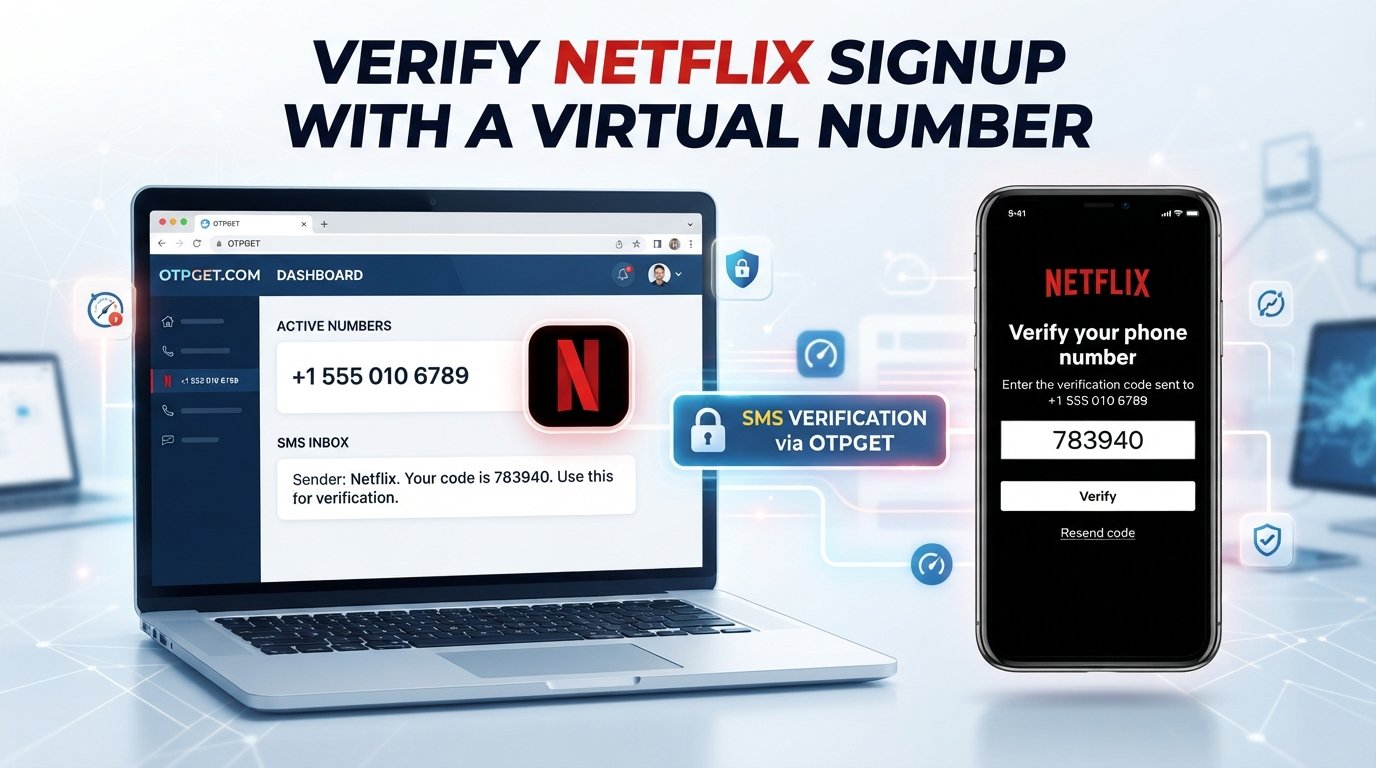
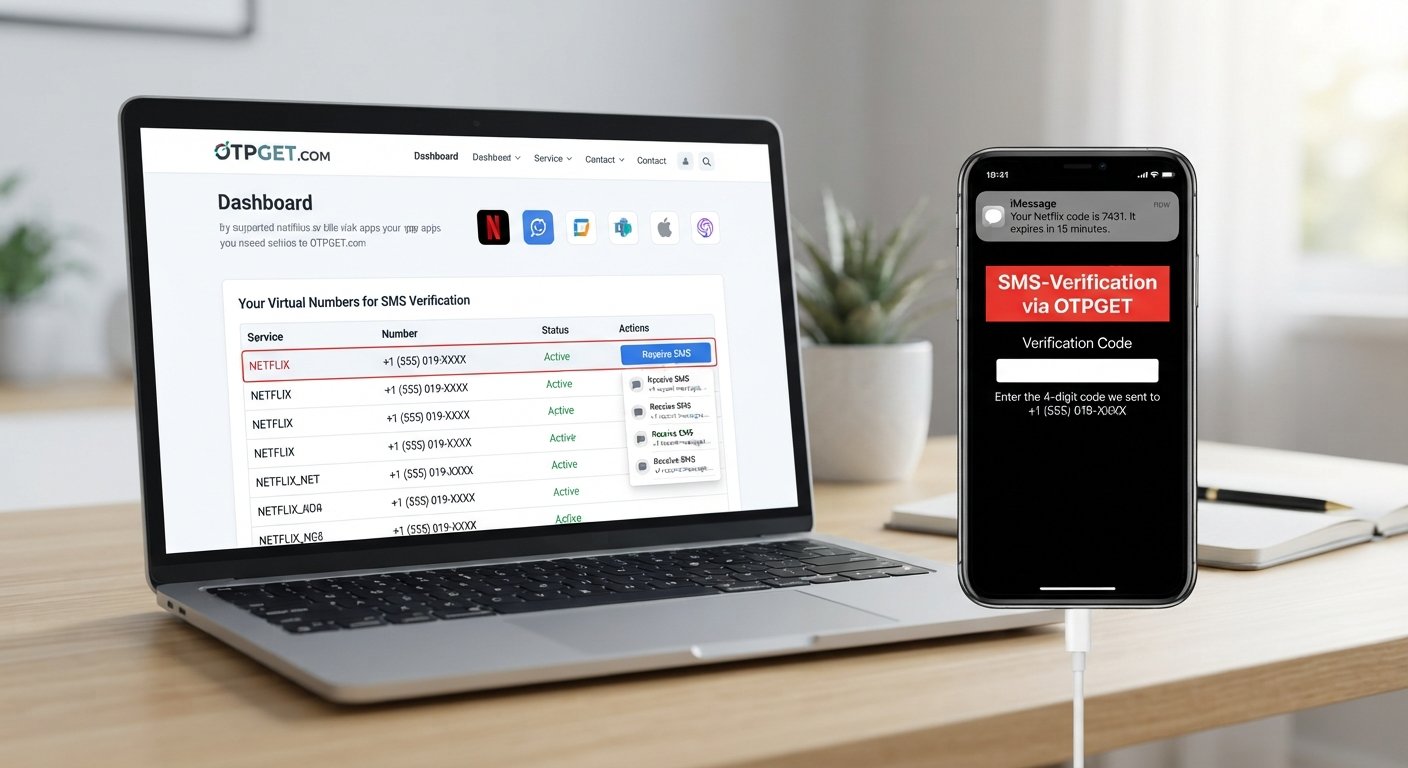
- Check OTPGET for the incoming message. If the selected number supports the requested SMS, the verification message can appear through the OTPGET workflow.
- Enter the valid OTP. Use the received code on the official verification page.
- Keep the code private. Never forward an OTP to another person or enter it into a suspicious website.
OTPGET's published API documentation also describes functions for requesting numbers and checking the status of incoming SMS messages.
The most important limitation is that no online number provider can reasonably guarantee acceptance by every platform. A particular number may not be supported, or a service may apply its own eligibility and security rules.
Facebook OTP Number vs. Personal Phone Number
Both approaches can have legitimate uses. The right choice depends on the verification situation and the platform's requirements.
| Factor | Facebook OTP Number / Online Number | Personal Phone Number |
|---|---|---|
| Privacy | Can reduce unnecessary exposure of your primary number | Your personal number is directly provided |
| Convenience | Useful for receiving eligible verification SMS online | Convenient because the phone is already with you |
| Personal-number exposure | Keeps some online activity separate | Uses your everyday contact number |
| Verification workflow | Code may be accessed through an online dashboard | Code arrives directly on your phone |
| Control over messages | Depends on the online number provider and number availability | Direct control through your mobile carrier |
| Appropriate use cases | Legitimate verification where online numbers are accepted | Personal accounts and services tied to your regular number |
Neither option is universally appropriate. If a service requires a particular type of phone number, users should follow that requirement rather than attempting to work around it.
Tips for Safe OTP Verification
A verification code is valuable account-security information, so basic precautions matter.
- Never share OTP codes with friends, strangers, supposed support agents, or anyone who asks for them unexpectedly.
- Only enter codes on legitimate websites or apps. Check the website address before submitting a verification code.
- Watch for phishing. A message asking you to send an OTP through chat, email, or another channel can be a warning sign.
- Do not forward verification SMS messages. Treat them as confidential.
- Avoid suspicious verification requests. If you did not initiate an action, investigate before entering a code.
- Respect platform rules. Use virtual numbers only where the relevant service permits them.
- Never use OTP services for unauthorized access. Verification numbers should not be used to access another person's account, impersonate someone, or defeat security controls.
Facebook itself recommends security features such as two-factor authentication and other account-protection measures, so an OTP should be considered one component of responsible account security rather than a complete security strategy.
Why Choose OTPGET?
For legitimate users, the appeal of OTPGET is mainly about simplifying the SMS verification workflow.
Instead of depending on a personal SIM for every online verification request, users can explore available virtual numbers through a dedicated platform. OTPGET's published service information includes temporary virtual numbers, longer-term rentals, and SMS OTP functionality, giving users options for different verification scenarios.
The service can therefore be useful for people who value:
- A separate channel for appropriate verification messages
- Convenient online access to SMS
- Virtual-number options across multiple countries
- A straightforward verification workflow
- Privacy-conscious management of online contact information
The key is to match the number and service to a legitimate use case. Availability and acceptance can vary, so users should always follow the requirements of the platform they are verifying with.
Frequently Asked Questions
1. What is a Facebook OTP number?
A Facebook OTP number is a phone number used to receive a one-time verification code during an eligible Facebook verification process. It can be a personal mobile number or, where permitted, an online or virtual number.
2. How does SMS verification online work?
A platform sends a temporary verification code by SMS to a selected phone number. The recipient reads the code and enters it on the platform's official verification screen.
3. Can I receive an OTP online?
Yes, an online SMS service can provide a virtual number capable of receiving eligible SMS verification messages. Whether a particular platform accepts that number depends on its own rules and number requirements.
4. What is an online SMS number?
An online SMS number is a phone number that can receive text messages through an online service rather than requiring the user to access a physical SIM directly.
5. Is an OTP number the same as a personal phone number?
Not necessarily. An OTP number can be a virtual or temporary number used for an appropriate verification purpose, while a personal phone number is generally the mobile number you use for everyday communication.
6. What should I do if my verification SMS does not arrive?
Check the number and country code, wait briefly for delivery, and review whether the service supports that number type. If necessary, follow the platform's official troubleshooting process rather than repeatedly attempting verification.
7. Is OTPGET suitable for SMS verification?
OTPGET provides virtual numbers intended for SMS OTP verification and publishes documentation for obtaining numbers and checking incoming SMS. Availability and compatibility depend on the specific service and number selected.
8. Are online verification numbers accepted by every platform?
No. Acceptance varies between platforms, countries, number types, and individual verification requirements. An online number should never be treated as a guaranteed way to complete verification everywhere.
Final Thoughts
Phone verification exists for a practical reason: it gives online services another way to confirm control of a phone number and, in some situations, add protection to an account.
For users who prefer not to provide their primary number whenever SMS verification is required, a separate virtual number can offer additional convenience and separation. The important part is using that option responsibly and only where the relevant service allows it.
A Facebook OTP Number can be useful when legitimate phone verification requires an appropriate SMS-capable number. Services such as OTPGET can simplify the process by providing access to virtual numbers and an online workflow for receiving supported verification messages.
If you need an online number for a legitimate verification purpose, explore the available options through OTPGET and select a number that fits the requirements of the service you are using.