Foodpanda Argentina OTP Not Received? See How OTPGET Can Help
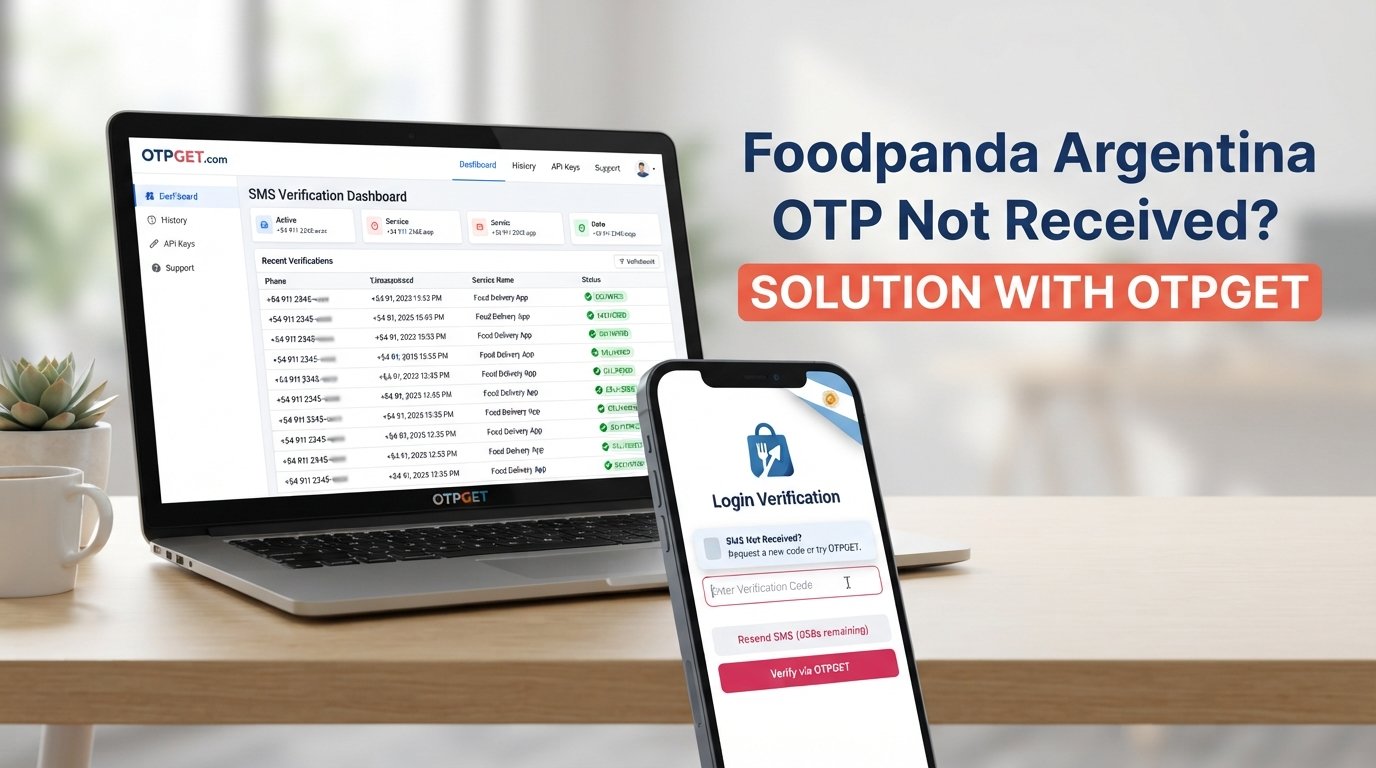
Foodpanda Argentina OTP Not Received? See How OTPGET Can Help
If your Foodpanda Argentina OTP not received problem is preventing you from completing verification, you are not alone. A verification code can sometimes take longer than expected, fail to arrive, or become unusable before you can enter it.
The good news is that an OTP delivery problem does not necessarily mean something is wrong with your account. Several factors can affect SMS verification, including mobile connectivity, incorrect contact details, message filtering, temporary service issues, and repeated code requests.
This guide explains the most common reasons a Foodpanda verification code may not arrive, what you can do before trying again, and how OTPGET can provide a practical alternative when conventional SMS verification is proving difficult.
Why Is the Foodpanda Argentina OTP Not Received?
An OTP, or one-time password, is usually sent to the phone number associated with a verification request. The process appears simple, but several systems have to work correctly before the message reaches your phone.
If your Foodpanda Argentina OTP is not arriving, consider these common causes:
- Delayed SMS delivery: Mobile networks and messaging systems can occasionally experience delays.
- Incorrect phone number: A missing digit, incorrect country code, or outdated number can prevent delivery.
- Network or carrier issues: Weak signal, temporary carrier problems, or network congestion may interfere with incoming SMS messages.
- Temporary service problems: The application or its verification infrastructure may experience a temporary disruption.
- SMS filtering: Your phone, messaging app, or carrier may automatically filter certain messages.
- Too many OTP requests: Repeatedly requesting codes in a short period can make troubleshooting more difficult and may leave you with several expired codes.
- Expired OTP: Verification codes are generally time-sensitive. A delayed code may no longer be valid when it arrives.
- Device-related issues: Messaging settings, blocked senders, storage limitations, or temporary software problems can sometimes affect SMS reception.
Because there are several possible causes, it is better to troubleshoot systematically instead of repeatedly pressing the resend button.
Common Signs of a Foodpanda OTP Problem
A Foodpanda OTP issue can appear in several ways. Recognizing the symptom can help you decide what to try next.
You may notice that:
- The verification code never arrives.
- The OTP arrives several minutes after you requested it.
- A previous code arrives after you have already requested another one.
- The code appears to be invalid or expired.
- Repeated requests do not result in a usable verification message.
- You cannot complete Foodpanda login verification because the code is missing.
- Your phone receives other SMS messages normally, but the expected verification message does not appear.
If other messages are reaching your phone, that does not automatically prove where the problem is. OTP delivery involves the service, verification systems, telecom networks, and your device, so a failure at any point can affect the final message.
How to Fix Foodpanda Argentina OTP Not Received
Before looking for an alternative OTP verification solution, work through these basic checks.
1. Check the Phone Number
Start with the simplest possibility. Confirm that the phone number entered for Foodpanda Argentina verification is correct, including the appropriate country code and all required digits.
A small formatting or number-entry mistake can prevent the OTP from reaching you.
2. Check Your Mobile Signal
Make sure your phone has a functioning mobile connection. If your signal is weak, move to an area with better reception and try again.
If your phone is in airplane mode or experiencing a temporary network problem, incoming SMS messages may also be affected.
3. Wait Before Requesting Another Code
If an OTP has not arrived immediately, give the system some time before requesting another one.
Repeated requests can create confusion because you may receive multiple codes at different times. In many verification systems, only the latest code remains useful.
4. Check SMS Filtering and Blocking
Look through your messaging app's spam, blocked, filtered, or unknown-sender sections. Some phones and carriers automatically separate messages that appear unusual or automated.
Also check whether short-code or service messages are restricted by your carrier or device settings.
5. Restart Your Phone
A simple restart can sometimes resolve temporary connectivity or messaging issues. After restarting, allow the phone to reconnect to the mobile network before requesting another verification code.
6. Confirm That Your Number Receives SMS
Ask yourself whether normal SMS messages are arriving. If your phone cannot receive other messages either, the issue may be related to your device, SIM, account, or mobile carrier rather than the Foodpanda verification process.
7. Use the Newest Code
If several verification messages eventually arrive, use the most recent valid OTP rather than an older code. Older codes may expire or become invalid after another request.
8. Try Again After a Reasonable Interval
Temporary delivery problems can resolve themselves. Instead of continuously requesting new codes, wait for a reasonable period and attempt the verification process again.
9. Contact the Appropriate Support Channel
If the problem continues despite the basic checks, contact the relevant Foodpanda support channel and explain that the Foodpanda verification code is not being received.
Why OTP Problems Can Still Happen
It is easy to think that an OTP should travel directly from an app to your phone. In practice, verification can involve several connected systems.
A simplified flow looks like this:
Foodpanda verification request → verification system → SMS delivery infrastructure → mobile carrier → your phone
If any part of that chain experiences a delay or delivery issue, the OTP may arrive late or not appear at all.
Your phone may also play a role. Message filtering, poor signal, carrier restrictions, or device settings can prevent an otherwise valid SMS from being noticed.
That is why troubleshooting the device alone does not always solve an OTP not arriving problem. The issue can be outside your immediate control.
How OTPGET Can Help With OTP Verification
When normal SMS delivery is creating difficulties, OTPGET can be considered as an alternative approach to receiving verification messages.
OTPGET provides virtual phone numbers designed for SMS and OTP verification. According to its official service information, users can select available numbers for supported countries and services and receive verification messages through the OTPGET interface.
The basic concept is different from relying entirely on your personal SIM card. Instead of waiting for an OTP to arrive on your regular mobile number, you use an available virtual number for the supported verification service. When the service sends an SMS to that number, the message can be accessed through OTPGET.
This can be useful in situations where you need an alternative number for verification, want to separate verification messages from your personal phone, or are experiencing difficulty with conventional SMS reception.
However, OTPGET should not be treated as a universal guarantee. Availability can depend on the country, service, number pool, and the verification platform's own acceptance policies. You should also make sure that using a virtual number is permitted by the service you are attempting to verify.
The important point is that OTPGET gives you another option to consider when an ordinary SMS verification route is not working as expected.
How to Use OTPGET for Verification
The exact interface and available options can vary, but the general OTPGET workflow is straightforward.
Step 1: Open OTPGET
Visit the OTPGET platform and review the available verification options.
Step 2: Select the Relevant Country and Service
If the desired service and country are available, select the appropriate options. OTPGET's published documentation describes country and service selection as part of its virtual-number workflow.
Step 3: Obtain an Available Virtual Number
Choose an appropriate available number according to the options shown by OTPGET.
Do not assume that every number will work with every service. Compatibility can vary, so select an option specifically available for the verification purpose you need.
Step 4: Enter the Number Where Verification Is Requested
If the service permits virtual numbers and accepts the selected number, enter it carefully in the phone-number field.
Double-check the country code and number before submitting the verification request.
Step 5: Request the Verification Code
Submit the verification request through the relevant service. The SMS will be directed to the number used for the verification process.
Step 6: Check OTPGET for the Message
OTPGET's documented workflow provides status checking and access to received SMS verification codes through its platform or API options.
Step 7: Enter the Valid OTP
Once the verification message is available, enter the current code into the appropriate verification field and complete the process.
If a service rejects a virtual number, do not repeatedly retry the same setup. Instead, check the service's requirements and OTPGET's currently available options.
OTPGET vs. Repeatedly Requesting an OTP
When an OTP is missing, repeatedly tapping Resend OTP can feel like the obvious solution. It is not always the most effective approach.
Repeated requests can result in several codes arriving at different times, while older codes may expire. You may also continue experiencing the same delivery problem if the underlying issue is related to the mobile network or phone number.
A more sensible approach is:
- Check the phone number first.
- Verify your mobile connection.
- Check SMS filtering.
- Wait briefly instead of requesting codes continuously.
- Use the latest valid OTP if several messages arrive.
- Consider OTPGET when an alternative verification number is appropriate and permitted.
OTPGET does not eliminate every possible verification problem, but it can provide another route for receiving SMS verification codes when the standard method is inconvenient or unavailable.
Tips to Avoid OTP Verification Problems
A few simple habits can reduce common verification-code headaches.
- Enter your phone number carefully before submitting a verification request.
- Make sure your device has a reliable mobile connection.
- Avoid requesting several OTPs in rapid succession.
- Keep your SMS inbox and message filters under control.
- Check blocked and spam messages when an expected code is missing.
- Use the newest valid OTP rather than an older message.
- Do not share verification codes with other people.
- Follow the verification requirements of the service you are using.
- If using a virtual number, confirm that the service permits that type of number.
- If an OTP repeatedly fails, stop retrying and investigate the underlying delivery problem.
These steps can make Foodpanda account verification less frustrating and help you distinguish a temporary delay from a persistent delivery issue.
Frequently Asked Questions
Why am I not receiving my Foodpanda Argentina OTP?
Possible reasons include incorrect phone details, weak mobile connectivity, SMS filtering, carrier problems, temporary service issues, or delays in the verification process. Check the number and network first, then wait before requesting another code.
What should I do if the Foodpanda verification code does not arrive?
Check your phone number, mobile signal, blocked messages, and spam filters. Avoid repeatedly requesting new codes. If the problem continues, use the appropriate Foodpanda support channel or consider an alternative verification method such as OTPGET where permitted.
Why is my Foodpanda OTP delayed?
OTP delivery can involve several systems between the application and your phone. Delays may occur within the messaging infrastructure, mobile network, or device. A delayed code may also expire before you can use it.
Can I request another Foodpanda OTP?
If the verification screen provides a resend option, you can request another code. However, avoid making repeated requests in quick succession. Wait for a reasonable interval and use the newest valid code.
What should I do if my OTP expires?
Request a new verification code if the service allows it, then use the newest code promptly. Avoid relying on an older OTP that was generated during a previous attempt.
How can OTPGET help with OTP verification?
OTPGET provides virtual numbers that can receive SMS verification messages for supported services and countries. This can offer an alternative to using your personal mobile number when a virtual number is accepted for the verification process.
Is OTPGET useful when an SMS OTP is not received?
It can be a practical option when conventional SMS delivery is causing difficulties, provided the relevant service accepts the virtual number and the required number is available through OTPGET. It should be viewed as an alternative rather than a guaranteed solution for every verification attempt.
Final Thoughts
A Foodpanda Argentina OTP not received problem can be caused by something as simple as an incorrect phone number or SMS filter, but it can also result from network, carrier, or temporary verification-system issues.
Start with the basics: check your number, confirm your mobile connection, inspect SMS filtering, wait before requesting another code, and use the newest valid OTP. If conventional SMS verification continues to cause problems, OTPGET offers a practical alternative worth considering for supported verification scenarios.
With its virtual-number approach to SMS verification, OTPGET can help you explore another route when relying on your regular phone number is not working as expected.
If you decide to use OTPGET, choose the appropriate country and service options, follow the displayed instructions carefully, and always make sure your chosen verification method is allowed by the service you are using.
When your OTP is not coming through, troubleshoot first—and when a supported alternative is needed, consider OTPGET.
The article is written to remain evergreen and avoids unsupported guarantees or claims about universal compatibility.