Get OTP Codes in Seconds with OTPGET Numbers: Complete Guide
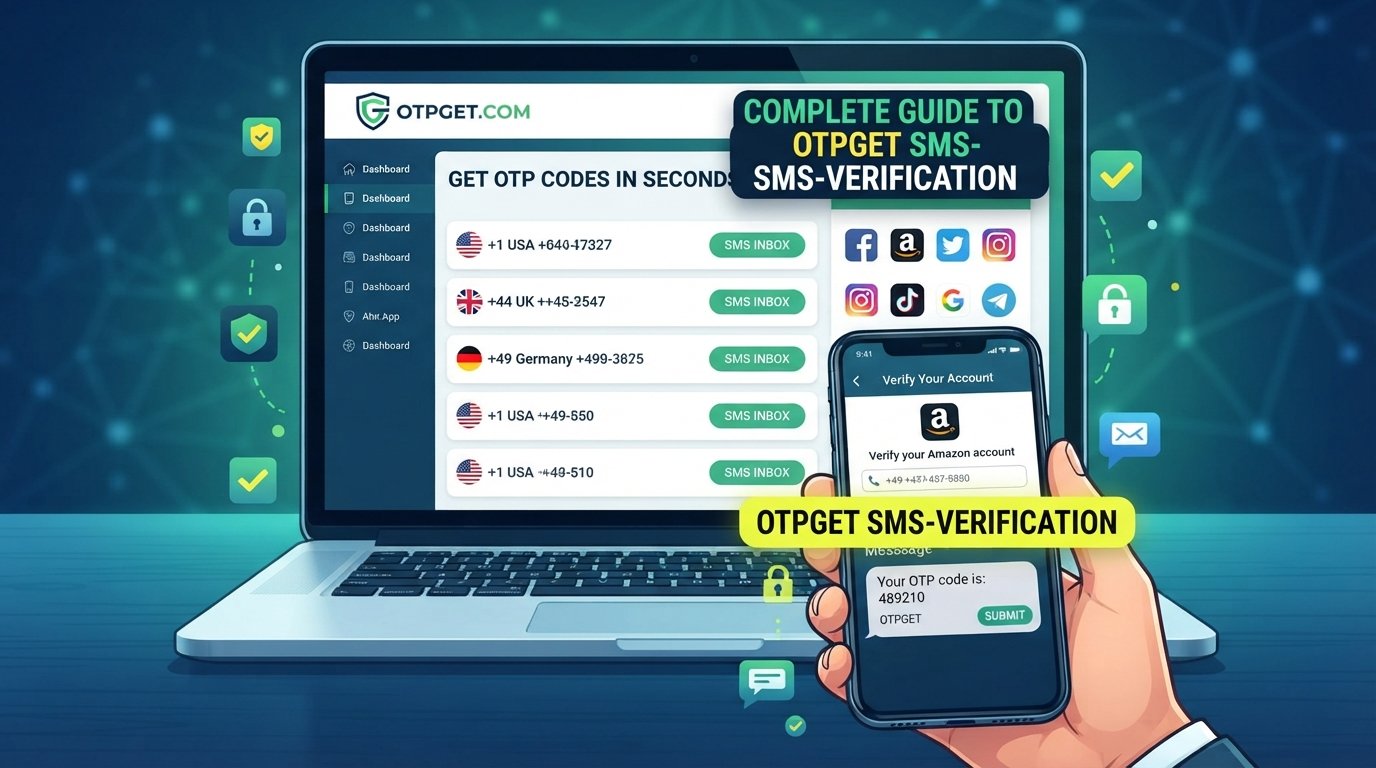
Get OTP Codes in Seconds with OTPGET Numbers: Complete Guide
Need to verify an account but would rather not use your personal phone number? You are not alone. Many online services ask users to confirm a phone number before completing registration, signing in, testing a workflow, or accessing a feature. The frustrating part is that managing verification messages through your everyday number can become inconvenient.
That is where temporary and virtual phone numbers can be useful.
OTPGET numbers offer a practical option for users who need a number for supported online verification and want a more focused way to handle SMS-based verification messages. Instead of mixing every verification request with your regular personal messages, an OTP service can provide a more convenient workflow where the relevant platform supports it.
In this guide, we will explain how OTP verification works, why people look for temporary numbers, how OTPGET fits into the process, and what to consider before using an online verification number.
Why OTP Verification Has Become So Common
One-time passwords, commonly called OTPs, are widely used as an additional step during online account and phone number verification.
When a website or app wants to confirm that a phone number can receive messages, it may send a short verification code by SMS. The user then enters that code into the relevant form to continue.
This process can be used for several purposes, including:
- Confirming a phone number during registration
- Verifying access during login
- Confirming ownership of a number
- Supporting account recovery
- Adding an extra verification step to an online workflow
- Reducing some forms of automated or fraudulent registration
The basic process is straightforward: enter a number, request an SMS OTP, receive the verification code, and submit it before it expires.
The challenge is that not everyone wants to use their personal number for every online interaction.
The Problem with Using Your Personal Number for Every Verification
Your regular phone number is often connected to important personal communication. Using it for every website, application, trial, or temporary online activity can make your SMS inbox harder to manage.
There are also situations where separating personal communication from temporary verification activity simply makes more sense.
For example, you may want to:
- Avoid mixing verification messages with personal SMS
- Keep certain online registrations separate from everyday communication
- Use a temporary number when a long-term personal number is unnecessary
- Handle testing or development workflows without relying on your usual phone
- Reduce the number of unfamiliar services that receive your personal number
This does not mean a temporary number is appropriate for every situation. Sensitive or long-term accounts may require a permanent number that you control and can access reliably over time.
You should also check the terms and verification requirements of the website or app before using any temporary or virtual number.
What Are OTPGET Numbers?
OTPGET numbers are intended for users looking for numbers that can be used to receive OTP or verification messages for supported services.
The broader idea is simple. Instead of using your personal phone number for a temporary online verification task, you can look for an online OTP number, temporary phone number, or SMS verification number suited to the particular use case.
Depending on the available service and the platform being verified, an OTPGET number may help you:
- Receive verification messages online
- Handle temporary SMS verification needs
- Keep certain verification activity separate from personal messages
- Access a number for compatible online services
- Simplify the process of receiving a verification code
The important word is compatible. Not every website accepts temporary, virtual, or online numbers, and individual services can have their own verification rules.
OTPGET should therefore be viewed as a practical option for supported verification scenarios rather than a universal solution for every website or application.
How to Get OTP Codes with OTPGET
Using an OTP receiving service can be straightforward when the target platform supports the type of number being used.
A typical process looks like this:
- Choose the required service or verification option.
Identify the website or application where you need phone number verification. - Select an available OTPGET number where applicable.
Choose a suitable number according to the options available for your intended verification. - Enter the number on the supported website or app.
Carefully copy the number into the phone number field. - Request the OTP or verification code.
Submit the verification request through the platform. - Check for the incoming SMS.
If the platform supports the number and the message is delivered, look for the incoming verification code. - Enter the verification code.
Copy the OTP into the appropriate field before it expires. - Complete verification if accepted.
Follow the platform's remaining instructions to finish the process.
Delivery and acceptance can depend on the specific platform, number, and verification system. If a service does not accept a particular temporary number, another verification method may be necessary.
Why Choose OTPGET for OTP Codes?
The main appeal of an OTP service is convenience.
When you only need a number for a temporary online verification task, using a dedicated verification number can be more practical than relying on your everyday phone number.
OTPGET can be useful because it gives users a focused option for temporary verification needs where supported.
A simpler verification workflow
Instead of searching for a suitable number each time you encounter an SMS verification request, a dedicated OTP service can make the process more organized.
Separation from personal communication
A temporary number can help keep certain verification messages separate from your normal SMS conversations.
Useful for temporary online activities
Some registrations and workflows do not require a long-term personal number. In those situations, an appropriate temporary number may be more convenient.
Helpful for testing and development
Developers and testers may need to work with SMS or OTP flows during application testing. A suitable verification number can be useful for compatible test scenarios, subject to the platform and service requirements.
The goal is not to replace your personal phone number for everything. It is to provide another option when a temporary or online number fits the task.
Who Can Benefit from OTPGET Numbers?
OTPGET numbers can be useful for several legitimate situations.
For example:
- Users handling temporary registrations: A temporary phone number may be suitable when a service only needs SMS verification for an initial workflow.
- Developers testing OTP flows: Testing teams may need verification numbers when evaluating SMS-based authentication or application workflows.
- People separating online activities: A virtual number can help separate certain online verification messages from personal communication.
- Users needing an online verification number: When a compatible service accepts temporary numbers, an OTPGET number may provide a convenient alternative to a personal number.
- People managing short-term SMS needs: A temporary SMS number can be useful when long-term ownership of the number is not required.
Always consider whether the service you are using permits temporary or virtual phone numbers.
OTPGET vs. Using Your Personal Phone Number
Neither option is automatically right for every situation. The better choice depends on what you are doing and whether the platform accepts an online or temporary number.
| Factor | Personal Number | OTPGET Number |
|---|---|---|
| Separation from personal communication | Limited | More suitable for temporary use |
| Temporary verification needs | Less convenient | More convenient |
| Managing verification messages | Mixed with personal SMS | More focused on verification |
| Suitable for testing/workflows | Not always practical | Can be useful where supported |
| Convenience | Familiar | Designed around temporary/online needs |
For important accounts that you expect to use for a long time, a personal or dedicated number that you control may be more appropriate. For temporary verification tasks, an OTPGET number can be a practical alternative when accepted by the platform.
Tips for Using OTP Verification Numbers Effectively
A few simple habits can make the verification process smoother.
Check compatibility first
Before requesting an OTP, check whether the target website or application accepts temporary or virtual phone numbers. Some platforms restrict these numbers.
Enter the number carefully
A single incorrect digit can prevent the verification SMS from reaching the intended number.
Request the code when you are ready
OTP codes are generally intended for immediate use and may expire. Request one when you are prepared to complete the verification step.
Never share an OTP
Treat a verification code as sensitive information. Do not send it to strangers or enter it into an unrelated website or form.
Consider the importance of the account
For an important account that requires reliable long-term access, a temporary number may not be the best choice. Use a contact method that you can maintain and access when needed.
Follow platform rules
Use verification numbers only for legitimate purposes and avoid using them to bypass restrictions or violate the terms of a website or application.
8. FAQ: Common Questions About OTPGET Numbers
What is an OTPGET number?
An OTPGET number is an online or temporary verification number intended for receiving OTP or SMS verification messages for compatible services. Availability and acceptance depend on the particular platform.
How can I get OTP codes with OTPGET?
A typical process involves selecting an available number, entering it on a supported website or app, requesting verification, and checking for the incoming SMS code. You then enter the code on the platform if it is received and accepted.
Can I receive SMS verification codes online?
Yes, online OTP and SMS verification services can provide ways to receive verification messages online. Whether a particular message is delivered depends on the service, number, and platform involved.
Are OTPGET numbers temporary phone numbers?
OTPGET can be used for temporary verification needs where supported. The exact characteristics of an available number can depend on the service and its intended use.
Will every website accept an OTPGET number?
No. Websites and applications can have different rules for temporary and virtual numbers. Some may accept them while others may restrict or reject them.
What is the difference between an OTP number and a personal phone number?
A personal phone number is generally intended for ongoing communication and long-term access. An OTP or temporary number is more suited to specific verification needs where supported.
Can OTPGET be useful for testing or temporary verification?
It can be useful for legitimate testing and temporary verification workflows when the relevant platform supports the number and the use complies with its requirements.
Get OTP Codes in Seconds with OTPGET
Phone verification is now a routine part of many online experiences, but that does not mean you always need to use your personal number for every temporary task.
When you need a suitable number for supported SMS verification, OTPGET numbers can offer a practical way to handle temporary OTP requirements. They can help separate certain verification messages from personal communication while making the overall process more convenient.
The key is to use the right number for the right situation, check platform compatibility, protect your verification codes, and follow the rules of the service you are using.
If you need an online OTP number, temporary phone number, or verification number for a compatible service, explore OTPGET and choose an option that fits your verification needs.