Get an OTP Number for Any App with OTPGET – Simple Guide for Apps
Get an OTP Number for Any App – OTPGet
Phone verification is now a routine part of signing up for apps and online services. You enter a number, wait for an SMS, type in the verification code, and move on.
The problem is that not everyone wants to use their personal phone number every time an app asks for one.
You may want to keep your personal number private, separate online registrations from personal communications, test an application, or simply use a dedicated number for verification messages. In these situations, an alternative OTP number can be useful.
If you're looking to get an OTP number for any app, OTPGET is designed to provide a practical option for receiving verification messages without automatically relying on your primary phone number.
Before choosing an OTP service, though, it helps to understand how OTP verification works, why apps use it, and what to consider when using a temporary or virtual number.
What Is an OTP Number?
OTP stands for One-Time Password. It is a temporary verification code, usually made up of numbers, that an app or website sends to a phone number to confirm that the user can access that number.
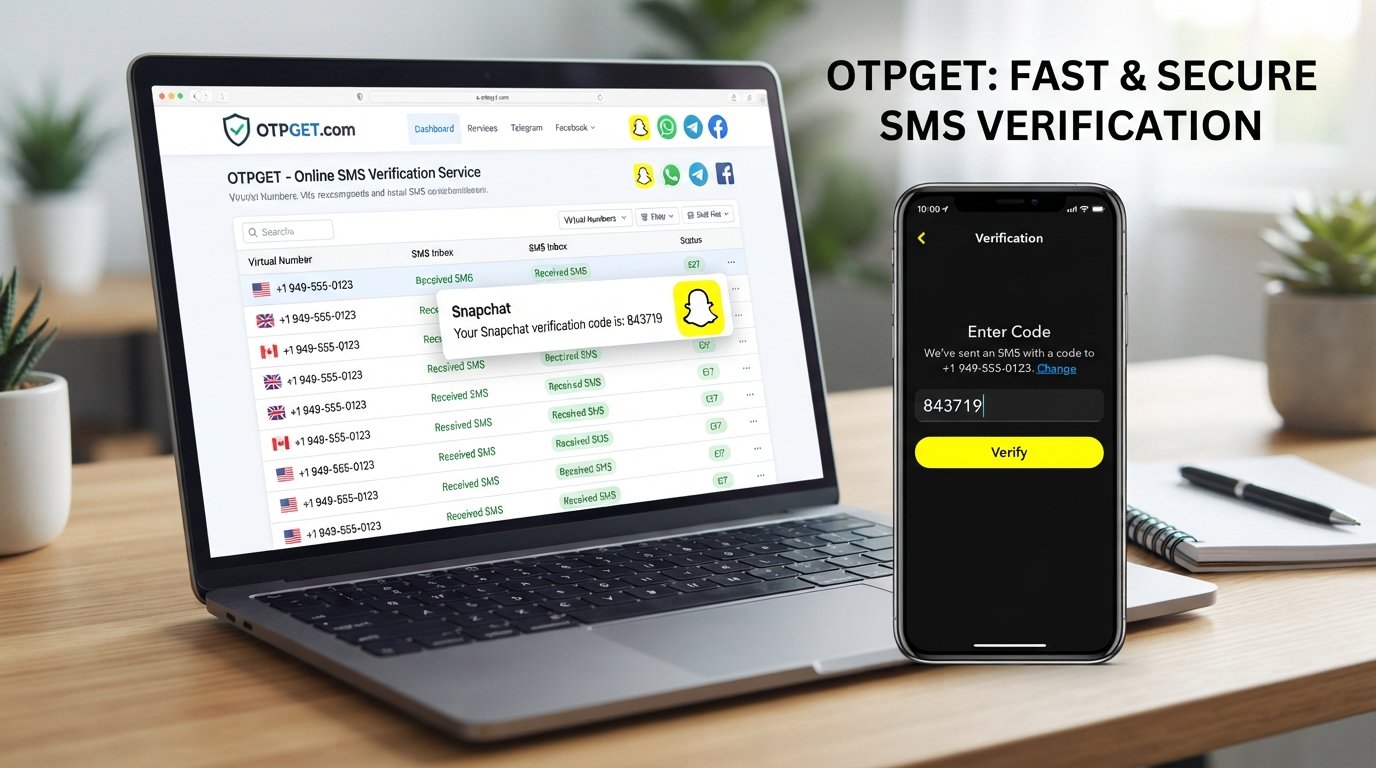
For example, an app may ask you to enter your phone number during signup. After you submit it, the service sends an SMS containing a verification code. You enter that code into the app, and the phone verification process is completed.
An OTP number generally refers to a phone number that can receive these verification SMS messages.
The process is straightforward:
- An app requests your phone number.
- You provide an eligible number.
- The app sends a verification SMS.
- The OTP arrives by text message.
- You enter the code into the app.
- The app checks the code and completes verification if it is valid.
Because OTP codes are generally time-sensitive and intended for a single verification event, users should treat them as sensitive information.
Why Do Apps Require OTP Verification?
Phone verification is commonly used as an additional way to confirm users during signup, login, or account recovery.
Apps may use SMS verification for several legitimate reasons, including:
- Account security: A phone verification step can add another layer of account protection.
- Identity confirmation: Services can use a verification code to confirm access to a submitted number.
- Spam prevention: Requiring verification can make automated or abusive registrations more difficult.
- Fraud reduction: Phone verification may be one part of a broader system designed to identify suspicious activity.
- Account recovery: Some services use verified phone numbers as a recovery method.
OTP verification does not replace every other security measure. Its usefulness depends on how the individual app implements its verification and security systems.
Why Use a Separate Number for OTP Verification?
Using your primary phone number for every online service is not always convenient.
A separate temporary phone number or virtual phone number may be useful in situations where you want to keep your personal contact details separate.
Common legitimate reasons include:
- Privacy: You may prefer not to give your personal number to every app or online service.
- Separation: A second number can help separate personal communications from online registrations.
- Testing: Developers, testers, and users may need a number when evaluating an application's signup or verification flow.
- Convenience: Keeping verification messages separate can make them easier to manage.
- Temporary needs: Some registrations only require phone verification once.
However, a temporary number is not necessarily appropriate for every account. If an account depends on a phone number for long-term recovery, using a number you may not control later can create problems.
How to Get an OTP Number for Any App
The general process for using an OTP receiving service is simple.
1. Choose a Suitable OTP Service
Start by selecting a service that provides an appropriate number for your intended verification purpose. Make sure the service and number type are compatible with the app you're using.
2. Select an Available Number
Choose an available phone number according to the options provided by the service.
3. Enter the Number in the App
Open the app's phone verification screen and enter the number carefully. Pay attention to the country or region selection and the required number format.
4. Request the Verification Code
Submit the number and request the OTP. The app will send its verification SMS if the number is accepted.
5. Receive the Verification SMS
Check the OTP service for the incoming message and locate the verification code.
6. Enter the OTP
Enter the code into the app before it expires. Avoid sharing the code with anyone else.
7. Complete Verification
If the code is accepted, the app should complete its verification process according to its own rules.
OTPGET can simplify this general workflow by giving users an alternative option when they need an OTP number for app verification.
How OTPGET Makes OTP Verification Easier
The value of an OTP receiving service is largely about convenience.
OTPGET is designed to help users who need an alternative number for verification without immediately exposing their personal phone number. Instead of making your primary number the default choice for every online registration, you can consider an OTP number when the situation is appropriate.
Potential benefits include:
- Convenient access to an OTP number
- A straightforward verification workflow
- Easier handling of SMS verification codes
- An alternative to using a personal number for suitable verification tasks
- Better separation between personal communications and online registrations
- A practical option for temporary verification needs
The important point is to match the number and service to the app's requirements. Not every application accepts every type of virtual or temporary number, and verification policies can vary between services.
OTPGET should therefore be viewed as a practical option rather than a guarantee that every app will accept every available number.
OTP Number vs. Your Personal Phone Number
Both options can have a place depending on what you're trying to accomplish.
| Factor | Personal Number | OTP/Virtual Number |
|---|---|---|
| Privacy | Exposes your primary contact number to the service | Can provide an alternative number where supported |
| App verification | Commonly accepted, depending on the app | Acceptance varies by app and number type |
| Separation of accounts | Personal and online activity may share one number | Can help keep certain verification activity separate |
| Convenience | No additional service may be needed | Useful when you want an alternative verification number |
| Exposure of personal number | Your primary number is provided | Your primary number may remain separate |
For important accounts, consider whether you will need the same number for future login or account recovery before choosing a temporary option.
Common Problems With OTP Verification
Even when everything is entered correctly, OTP verification can sometimes fail.
OTP Not Arriving
The SMS may be delayed because of network conditions, service congestion, or restrictions involving the number. Give the message a little time before requesting another code.
Incorrect Number Format
Check the country or region selection and make sure the phone number has been entered in the required format.
Expired OTP
Verification codes are often valid for a limited period. If a code has expired, request a new one rather than repeatedly trying the old code.
Too Many Attempts
Repeatedly requesting OTPs can sometimes trigger temporary restrictions. If you've already requested several codes, waiting before trying again may be more effective.
Unsupported Number
Some apps restrict certain types of virtual, temporary, or previously used numbers. If an app rejects a number, follow the app's stated verification requirements rather than attempting to circumvent them.
Network or SMS Issues
A weak connection or messaging problem can contribute to delays. Check your connection and allow sufficient time for the verification SMS to arrive.
Tips for Successful OTP Verification
A few simple habits can make the process smoother:
- Enter the phone number carefully.
- Check the selected country or region.
- Make sure the number type is appropriate for the app.
- Wait briefly before requesting another OTP.
- Avoid repeatedly submitting verification requests.
- Enter the newest code if multiple messages arrive.
- Check whether the OTP has expired.
- Use a reliable internet connection.
- Follow the app's verification instructions and policies.
- Never share an OTP with another person.
If verification continues to fail, the issue may be related to the app's own restrictions rather than the number itself.
Is Using an OTP Number Safe?
There is no single answer that applies to every OTP service or every app.
Safety depends on factors such as the provider, the type of number, the information being verified, and the policies of the application.
If you use an OTP number, keep these principles in mind:
- Choose a reputable service.
- Never share verification codes with strangers.
- Do not use temporary numbers for sensitive accounts when long-term recovery depends on that number.
- Review the app's privacy and verification policies.
- Use numbers only for legitimate purposes.
- Follow the terms and security requirements of the service you're verifying.
An OTP number can help reduce unnecessary exposure of a personal phone number, but it should not be treated as a guarantee of anonymity, security, or acceptance by every application.
When Should You Use an OTP Number?
An alternative number can make sense for several legitimate situations.
For example, you might use one when:
- Testing an app's signup or verification process
- Keeping certain online registrations separate from your personal number
- Protecting your personal contact details where appropriate
- Completing a temporary verification requirement
- Managing verification messages separately
- Using an additional number for suitable online services
For banking, financial services, primary email accounts, or other important accounts where reliable recovery matters, a long-term number that you control may be the better choice.
Why Choose OTPGET?
If your goal is to get an OTP number for any app, the most important thing is finding a practical way to handle verification without unnecessarily exposing your personal phone number.
OTPGET can provide a convenient alternative for users who need an OTP number for appropriate app verification and temporary online verification needs.
Its value is straightforward: instead of automatically using your primary number whenever an app requests phone verification, you can consider an alternative number when the app's rules allow it and when the use case is appropriate.
As with any OTP service, the right choice depends on the app, the type of verification required, and whether you need the number again for future access.
Frequently Asked Questions
What is an OTP number?
An OTP number is a phone number used to receive a one-time password or verification code by SMS. It can be a personal, temporary, or virtual number depending on the service and verification requirements.
How can I get an OTP number for any app?
You can use an OTP or virtual-number service such as OTPGET, select an available number, enter it in the app's verification screen, and receive the verification SMS if the app supports that number type.
Can I receive OTP verification codes online?
Yes, some OTP receiving services allow users to receive verification SMS messages through an online interface. Availability and compatibility depend on the service and the application requesting verification.
What is a temporary phone number?
A temporary phone number is a number intended for short-term or limited use. It can be useful for suitable verification tasks, but it may not be appropriate for accounts that require long-term phone-based recovery.
Why do apps require SMS verification?
Apps may use SMS verification to confirm access to a phone number, reduce spam and abuse, support account security, or provide an additional method of account recovery.
Is a virtual number suitable for OTP verification?
A virtual number may be suitable for some verification processes, but acceptance varies. Some apps restrict virtual or temporary numbers, so users should follow the application's verification requirements.
Can I use an OTP number instead of my personal number?
For suitable verification tasks, an OTP number can be an alternative to a personal number when the app accepts that type of number. For important accounts, consider whether you will need ongoing access to the number.
What should I do if an OTP does not arrive?
Check the number and country selection, wait briefly, confirm that the number is supported, and avoid repeatedly requesting codes. If the problem continues, follow the app's support or verification guidance.
Is OTPGET useful for app verification?
OTPGET is designed to help users who need an alternative OTP number for suitable app verification and temporary verification needs. Whether a specific app accepts a number depends on that app's own verification policies.
Final Conclusion
Phone verification is a common part of app signup, account access, and online services. While using a personal number is sometimes the simplest option, there are legitimate situations where an alternative OTP number can provide greater separation and convenience.
A temporary or virtual phone number can help with suitable verification tasks, but users should always consider whether they need the number again for account recovery and whether the app accepts that type of number.
If you need to get an OTP number for any app, OTPGET can be a practical option to explore when an alternative number makes sense. Use it responsibly, protect your verification codes, and follow the verification and security policies of the app you're using.
Ready to simplify your next verification? Explore OTPGET and see whether an OTP number fits your app verification needs.
SEO KEYWORD SUMMARY
Primary Keyword:
get an OTP number for any app
Secondary Keywords Used:
OTP number, OTP verification, temporary phone number, temporary OTP number, virtual phone number, phone number for verification, SMS verification, receive OTP online, receive verification code, online OTP number, verification number, app verification, temporary number for apps, virtual number for OTP, OTP for app verification, receive SMS online, verification SMS, phone verification, online phone verification, second phone number, number for SMS verification, OTP receiving service, app signup verification, account verification, secure OTP verification, private phone number for verification
Search Intent:
Informational and commercial investigation: users want to understand OTP verification, find an alternative number for legitimate app verification, troubleshoot verification issues, and evaluate OTPGET as a practical OTP receiving option.
Suggested CTA:
Ready to simplify your next verification? Explore OTPGET and see whether an OTP number fits your app verification needs.