Get OTP Number Fast: Order, Wait, Verify with OTPGET
Get OTP Number Fast: Order, Wait, Verify
You are halfway through an online registration when the screen asks for a verification code. You check your phone. Nothing. You wait a little longer. Still nothing.
If you have ever been stuck waiting for an SMS verification code, you know how quickly a simple signup or verification task can become frustrating. Whether you are testing an application, completing a temporary registration, or simply prefer not to share your personal number for every online service, having access to an appropriate verification number can make the process more convenient.
That is where OTPGET comes in.
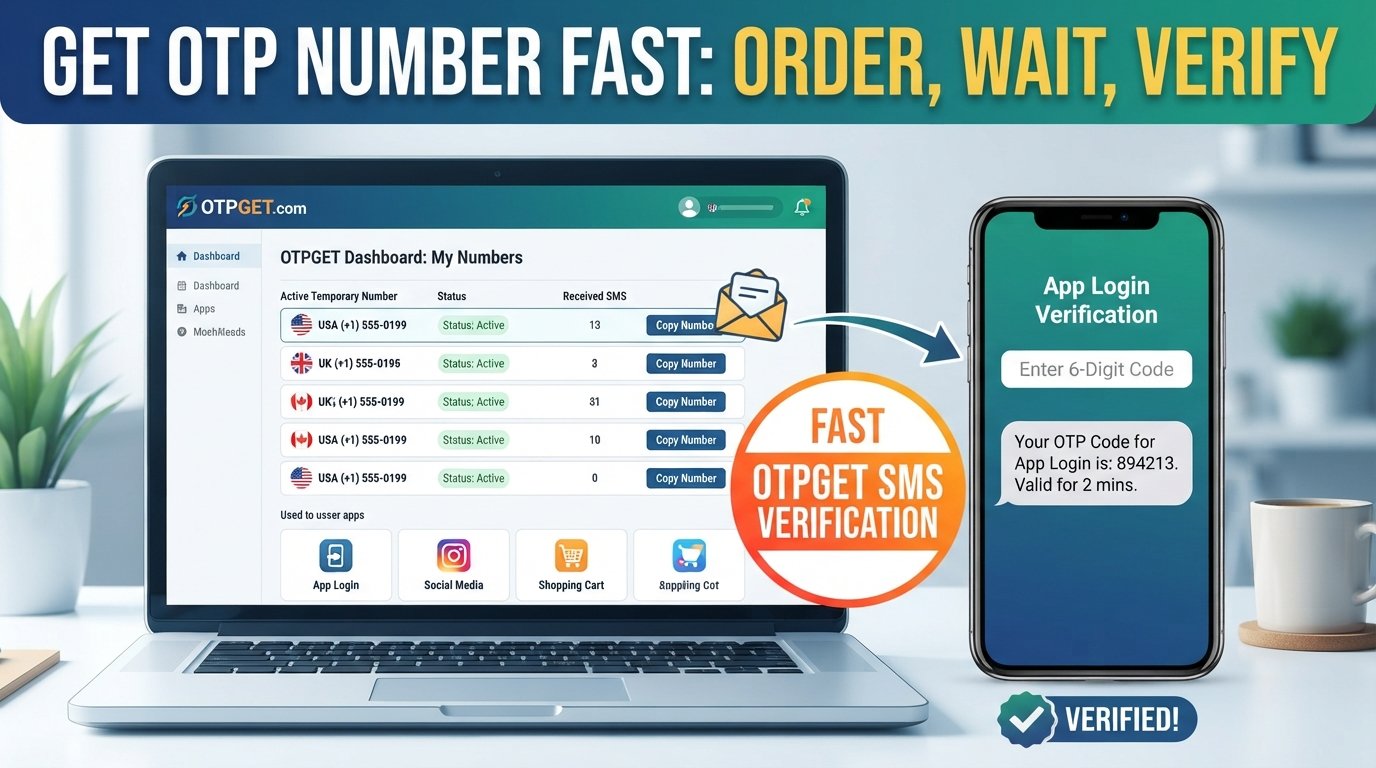
The basic idea is straightforward: Order → Wait → Verify. You select a suitable number or service, wait for the SMS containing the OTP code, and use that code for the intended verification process. The experience is designed around making an otherwise inconvenient step easier to manage.
Why Getting an OTP Number Quickly Matters
OTP verification has become a common part of online services. Websites and applications may use a one-time password to confirm that a phone number can receive SMS messages before allowing a registration, login, activation, or other supported action.
The problem is that verification does not always happen smoothly.
An SMS can be delayed. A personal number may already be associated with too many services. You may not want to expose your main phone number to another website. Or you may be testing an application and need a separate number rather than your everyday mobile line.
These situations explain why people search for ways to get an OTP number fast, receive OTP online, or use a temporary phone number for supported verification purposes.
A virtual or temporary number can provide a practical alternative when the target service accepts that type of number. The key is understanding that availability and acceptance depend on the service you are trying to verify.
What Is an OTP Number?
An OTP number generally refers to a phone number used to receive a one-time password or verification code by SMS. The number itself is not the OTP. Instead, it is the destination where the verification message is delivered.
The terminology can be confusing, so here is a simple breakdown:
- OTP: A one-time password or code used to confirm an action.
- SMS verification: The process of sending a verification code through text messaging.
- Temporary phone number: A number intended for temporary or limited-use communication or verification purposes.
- Virtual phone number: A number that operates through online telecommunications infrastructure rather than necessarily being tied to a traditional physical SIM in the way a personal mobile number is.
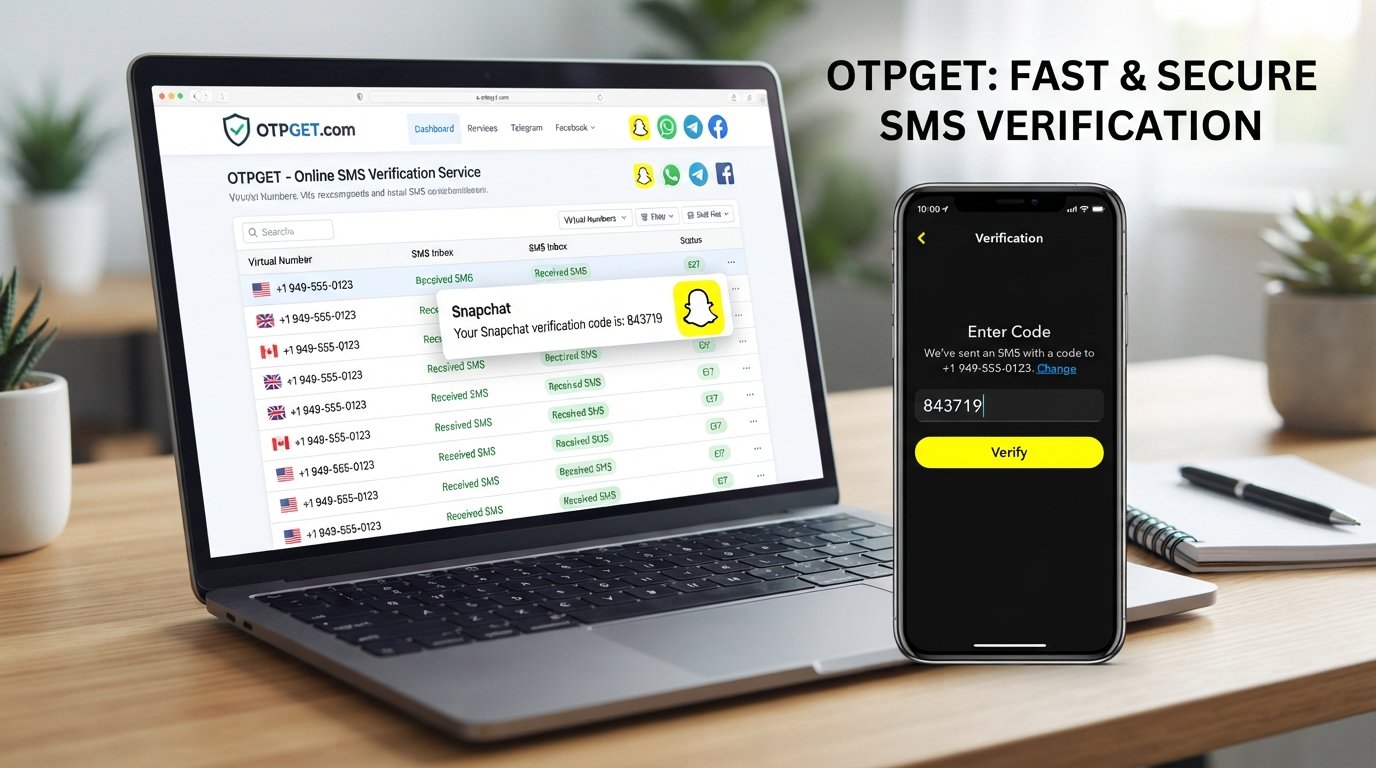
For example, a service might ask you to enter a phone number and then send a six-digit verification code by SMS. If you are using an appropriate temporary number for that service, the message can be received through an online OTP service such as OTPGET.
The important distinction is that a phone number is the receiving destination, while the OTP is the temporary code delivered to it.
How OTPGET Makes OTP Verification Simpler
OTPGET can be understood through one simple workflow:
Order → Wait → Verify
Instead of treating verification as a confusing technical process, think of it as three manageable steps.
Step 1: Order
Start by selecting an available number or service that matches your intended verification requirement.
This is the order OTP number stage. Before proceeding, check whether the number supports the type of SMS verification you need. Different websites and applications have different verification systems, and not every virtual or temporary number will necessarily be accepted.
The goal is to choose a suitable verification number rather than simply choosing any available number.
Step 2: Wait
Once the number is ready and entered into the service you are verifying, wait for the SMS.
This is usually the easiest part, but patience matters. Requesting repeated codes too quickly can sometimes create additional delays or trigger restrictions on the target service.
When the verification message arrives, the OTP code should be visible in the SMS received through the service.
Step 3: Verify
Enter the received verification code into the appropriate field on the service you are using.
If the code is valid and has not expired, the target service can complete its verification process.
That is the entire concept: order the number, wait for the SMS, then verify.
OTPGET can make this workflow easier to understand and manage, particularly when a temporary or virtual number is appropriate for the task.
Benefits of Using OTPGET
The appeal of an OTP receiving service is largely about convenience. Rather than relying on your personal phone number for every temporary online interaction, you may have another option for supported use cases.
Potential benefits include:
- Convenience: Manage a verification number online instead of relying exclusively on your personal mobile line.
- Simple workflow: The Order → Wait → Verify process is easy to follow.
- Online accessibility: Receive supported SMS verification messages through an online service.
- Reduced personal-number exposure: A temporary number can help keep your everyday phone number separate from certain temporary activities.
- Practical testing: Developers and testers may need separate numbers when evaluating SMS-based workflows.
- Temporary use: A temporary SMS number can be useful when a permanent personal number is unnecessary for the task.
These benefits should not be confused with universal compatibility. Whether a number works depends on the receiving service, its verification policies, and the type of number being used.
Temporary Phone Numbers vs. Personal Phone Numbers
A personal phone number remains the better choice for many important accounts.
Banking, long-term account recovery, critical communications, and services that you expect to use for an extended period may require a number that you permanently control. In those situations, relying on a temporary number could create problems if you later need access to SMS messages sent to that number.
A temporary or virtual phone number can make more sense for limited, legitimate situations where the target service supports it.
| Personal Phone Number | Temporary or Virtual Number |
|---|---|
| Better for long-term accounts | Useful for temporary activities |
| Usually under your ongoing control | May have limited availability or duration |
| Suitable for account recovery | Useful for supported verification tasks |
| Connected to your everyday communications | Helps separate certain online activities |
The right choice depends on the purpose. Temporary numbers are not a replacement for personal numbers in every situation.
How to Get an OTP Number Fast
If your goal is to get OTP number fast, keep the process simple.
First, identify the verification requirement. Know which service or application needs the SMS verification number.
Next, order an appropriate number. With OTPGET, the practical objective is to select an available number suited to the intended verification task.
Then, enter the number carefully. Check the country or service requirements and make sure you have entered the number correctly.
Wait for the verification code. Avoid repeatedly requesting new codes while the first SMS may still be processing.
Finally, enter the OTP code. Use the received verification code in the relevant verification field before it expires.
This approach can make it easier to receive OTP online without turning a simple verification task into a drawn-out process.
Common Reasons People Need SMS Verification Numbers
There are several legitimate reasons someone might look for an SMS verification number or temporary number for verification.
Testing services
Developers and QA teams may need phone numbers when testing registration flows, SMS notifications, or verification features.
Protecting personal-number privacy
Some users prefer not to provide their personal mobile number to every online service, particularly when the interaction is temporary and the service permits another verification option.
Temporary registrations
A temporary number may be useful for certain short-term registrations where the platform explicitly permits this type of number.
Application testing
Software teams can use separate numbers to evaluate how applications handle OTP delivery and verification.
Separating online activities
A virtual number can sometimes provide a useful separation between personal communications and supported temporary verification activities.
Whatever the reason, users should follow the rules of the service they are accessing. A temporary number should not be used to evade security controls, impersonate another person, create deceptive accounts, or violate platform policies.
Tips for Successful OTP Verification
A few simple habits can prevent unnecessary verification problems.
- Check compatibility first. Make sure the selected number supports the intended service.
- Confirm SMS support. Not every number or service handles every type of message.
- Enter the number accurately. A single incorrect digit can prevent the SMS from arriving.
- Wait before requesting another code. Multiple requests can make it harder to know which code is valid.
- Check the code's expiration. OTP codes are generally intended for short-term use.
- Look for the latest message. If multiple codes arrive, the newest valid code may be the one you need.
- Follow platform requirements. The target website or application ultimately determines which numbers it accepts.
These steps are simple, but they can make the difference between a smooth verification process and repeated failed attempts.
Why OTPGET Can Be a Practical Choice
The value of OTPGET is easiest to understand when you focus on the problem rather than the technology.
You need a number. You need an SMS. You need the verification code. And you want to complete the process without unnecessary complications.
OTPGET organizes that experience around a straightforward workflow: Order → Wait → Verify.
It can be a practical option for people who need a temporary phone number, virtual number for SMS, or online verification number for a supported use case. Instead of making users figure out how to handle an additional phone line themselves, an OTP receiving service provides a more focused way to approach SMS-based verification.
At the same time, expectations matter. OTPGET cannot control the verification policies of third-party websites or guarantee that every platform will accept every available number. The receiving service decides what types of numbers it supports, and the verification process ultimately depends on the platform sending the SMS.
That transparency is important. A useful OTP solution is not about promising that every verification attempt will work; it is about making the supported process more convenient.
Frequently Asked Questions
1. What is an OTP number?
An OTP number is a phone number used to receive a one-time password or verification code, usually through SMS. The number receives the message, while the OTP is the temporary code contained in that message.
2. How can I get an OTP number fast?
You can use an online OTP receiving service such as OTPGET to select an available number for a supported verification task. The basic process is to order the number, wait for the SMS, and enter the verification code.
3. How does OTPGET work?
OTPGET follows a simple Order → Wait → Verify workflow. You select an appropriate number, use it for the intended verification process, wait for the SMS OTP, and enter the received code.
4. Can I receive OTP online?
Yes, an online OTP service can allow supported SMS messages to be received through an online interface rather than directly through your personal phone. Availability depends on the number and target service.
5. What is a temporary phone number?
A temporary phone number is intended for limited or short-term use rather than serving as your permanent personal number. It can be useful for certain supported registrations, testing tasks, and verification activities.
6. What is an SMS verification number?
An SMS verification number is a phone number used to receive a verification message from a website or application. The message normally contains a temporary verification code.
7. Why might an OTP code be delayed?
Delays can happen because of network issues, SMS processing, service congestion, incorrect number entry, or restrictions imposed by the platform sending the message. Waiting before requesting another code can help avoid unnecessary confusion.
Conclusion
Getting stuck waiting for a verification code can turn a simple online task into a frustrating one. A suitable temporary or virtual number can provide a practical alternative when the target service supports it.
OTPGET keeps the process easy to understand:
Order → Wait → Verify.
Order an appropriate OTP number, wait for the SMS verification message, and use the received code to complete the intended verification process.
For users looking to get an OTP number fast, receive OTP online, or keep temporary verification activity separate from a personal phone number, OTPGET can be a convenient option worth exploring.
As always, check the requirements of the service you are verifying and use temporary numbers only for legitimate, permitted purposes.
Suggested Internal Link Opportunities
- OTP verification guide
- temporary phone number guide
- SMS verification explained
- how virtual phone numbers work
- receive SMS online guide
- online phone number verification guide