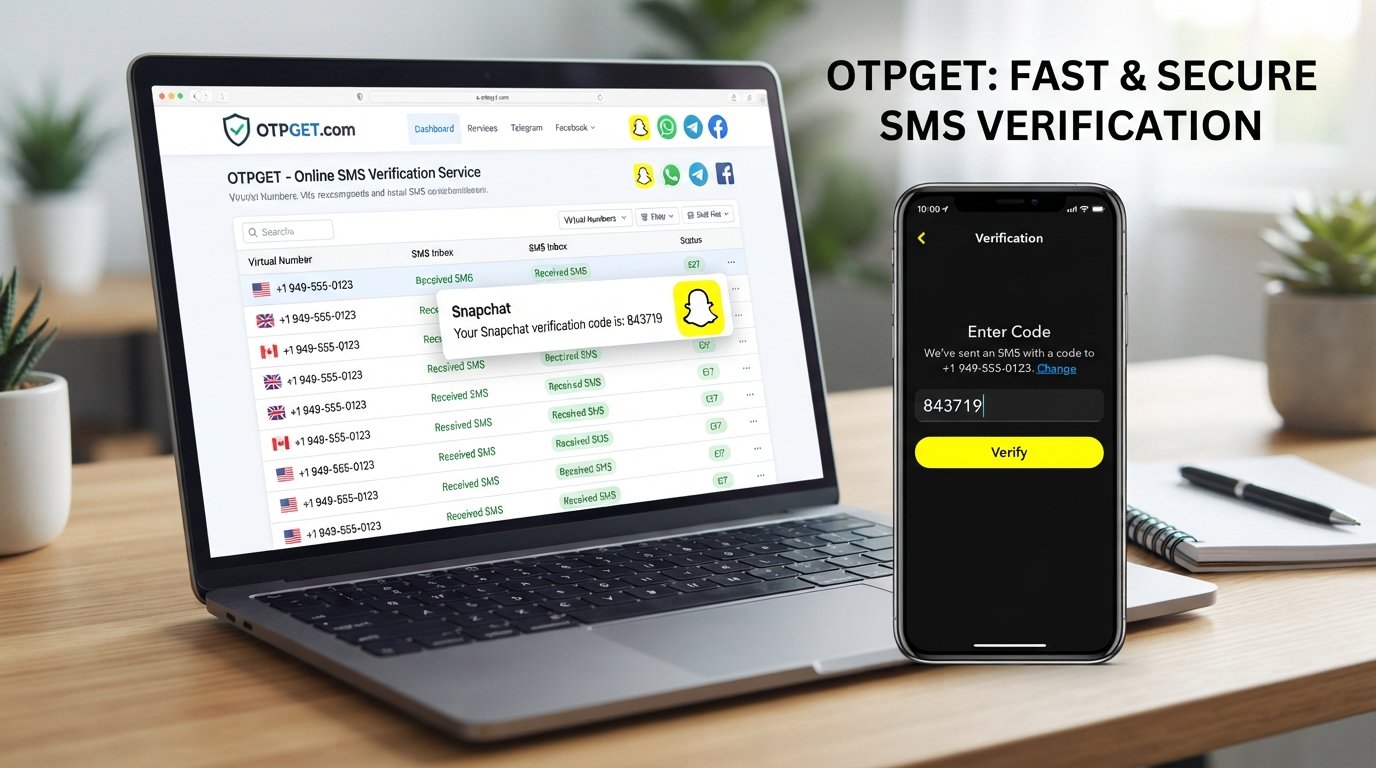
Get OTP Number for Testing and Development With OTPGET Today

Get OTP Number for Testing and Development
Testing an OTP verification flow sounds simple until you have to repeat it dozens of times. A developer may need to create test accounts, verify phone numbers, reset passwords, retry failed codes, or reproduce a particular user journey. QA teams face the same challenge when testing multiple scenarios across applications, devices, and environments.
Using a personal phone number for every test can quickly become inconvenient. It can mix development messages with personal communications, make repeated testing harder to manage, and limit how easily a team can reproduce different verification scenarios.
That is why having a dedicated OTP number for testing can be useful. Instead of treating phone verification as an afterthought, developers and testers can include it as a deliberate part of the testing workflow. For teams looking for a practical option, OTPGET can be considered for legitimate software testing and development needs.
Why OTP Testing Matters in Software Development
OTP verification is now a common part of digital user journeys. A one-time password may be used to confirm that a user controls a phone number before allowing an action to continue.
Common examples include:
-
New account signups
-
User logins
-
Password resets
-
Account verification
-
Two-step authentication
-
Mobile application registration
-
Website registration
-
Customer onboarding
Because OTP verification sits directly in the user journey, problems with the flow can prevent users from completing important actions. A code that arrives late, an incorrect error message, a broken resend button, or an improperly handled expired code can all create friction.
Developers therefore need to test more than whether an SMS arrives. They should verify what happens before, during, and after the code is entered.
For example, a QA tester might check whether a valid OTP is accepted, whether an incorrect code produces the expected message, and whether a user can request another code after the original one expires. These details are part of a complete OTP verification testing strategy.
Why Using Personal Numbers for OTP Testing Can Be a Problem
Personal phone numbers are convenient for occasional testing, but they are not always practical for ongoing development and QA work.
One issue is repetition. A developer working on a signup process may need to complete the same verification sequence many times. Receiving test SMS messages on a personal device can make the process unnecessarily cumbersome.
There is also the challenge of testing different user scenarios. A QA team may need to test new users, returning users, users who have changed their phone numbers, and users who have entered incorrect verification codes. Having a dedicated testing number can make those workflows easier to organize.
Team collaboration is another consideration. A personal number belongs to an individual, while development and QA work often involves several people. Separating testing communications from personal communications can make a workflow easier to reproduce and document.
The goal is not to avoid legitimate verification requirements. It is to give authorized developers and testers a more appropriate way to exercise the verification flows they are responsible for building or evaluating.
What Is an OTP Number for Testing?
An OTP number for testing is a phone number used specifically to test SMS-based verification workflows in an application or website.
Instead of relying on a personal phone number, a testing number can be incorporated into legitimate development and QA activities. Depending on the testing setup, the number may be used to receive verification messages and confirm that the application handles OTPs correctly.
A testing number can be particularly useful when working with:
-
Signup and registration forms
-
Login verification
-
Password recovery
-
Phone-number verification
-
Staging applications
-
QA regression tests
-
Mobile app onboarding
-
SMS-based authentication
It is important to distinguish legitimate OTP testing from attempts to bypass verification on services that you do not control. Testing numbers should be used only for applications, accounts, environments, and workflows that you are authorized to test.
What Should You Look for in an OTP Testing Solution?
The right approach depends on the application and testing requirements, but several characteristics can make an OTP testing solution useful.
Ease of use
Testing should not become more complicated than the feature being tested. A straightforward workflow helps developers and QA testers spend more time evaluating the application itself.
Access to verification messages
If the testing workflow requires receiving SMS OTPs, the solution should make it practical to access the relevant verification messages and codes.
Convenience for repeated testing
OTP verification often needs to be tested repeatedly. A testing solution should fit naturally into recurring development and QA workflows.
Separation from personal numbers
A dedicated testing number can help keep development messages separate from personal communications.
Developer-friendly workflow
The solution should be easy to incorporate into normal testing activities without creating unnecessary manual steps.
Testing flexibility
Different applications have different verification journeys. A useful testing approach should support the scenarios a team needs to evaluate rather than forcing every test into the same pattern.
These considerations are more important than simply finding a number that can receive a single SMS. The objective is to create a repeatable and manageable testing process.
How to Get an OTP Number for Testing and Development
If you need to get an OTP number for testing and development, the process can be approached systematically.
-
Identify the verification flow you need to test.
Determine whether you are testing signup, login, password recovery, phone verification, onboarding, or another SMS-based workflow. -
Decide which environment you are testing.
Whenever possible, use a development or staging environment rather than experimenting with production user accounts. -
Choose a testing number appropriate for your authorized workflow.
A dedicated number can help separate testing activity from personal phone use. -
Trigger the OTP from your application.
Perform the normal verification action, such as registering a test user or requesting a password reset. -
Receive and inspect the verification message.
Confirm that the OTP is delivered and that your application handles the message as expected. -
Test more than the successful path.
Try invalid codes, expired codes, resend actions, incorrect input, and other expected edge cases.
For developers and QA teams looking for a practical option, OTPGET can be used as a practical choice for teams that need OTP testing numbers for legitimate development and QA workflows. The exact suitability depends on the application's requirements and the testing environment.
How OTPGET Can Help With Testing and Development
OTPGET fits naturally into the broader need for dedicated testing numbers. Instead of repeatedly depending on personal phone numbers, developers and testers can consider a dedicated OTP testing option when working on authorized verification workflows.
Here are several ways this approach can support development and QA.
1. Testing signup verification
Signup is one of the most common places where OTP verification appears. A test number can be used as part of a controlled signup scenario so developers can check whether the registration process behaves correctly after an OTP is requested and entered.
2. Testing login verification
Applications that require phone-based verification during login need to handle both successful and unsuccessful attempts. A dedicated testing number can make repeated login-flow testing more manageable.
3. Testing password recovery
Password-reset workflows often contain several stages. Teams can test whether the verification step connects correctly to the rest of the recovery process and whether appropriate responses appear when the code is invalid or expired.
4. Testing phone verification
When an application asks users to verify a phone number, developers need to confirm that the verification state changes correctly after successful validation. Testing numbers can help exercise this flow without repeatedly relying on personal communications.
5. Testing different user journeys
Different users may encounter different verification states. Developers can structure test cases around new registrations, repeat verification attempts, failed codes, resends, and completed verification.
6. QA regression testing
OTP functionality can break when surrounding application components change. During regression testing, QA teams may need to repeat verification scenarios to ensure that updates have not introduced unexpected problems.
7. Development and staging environments
A dedicated testing number can be useful when developing or evaluating verification workflows outside the production environment. This supports a cleaner separation between application testing and ordinary personal phone use.
8. Repeated OTP verification tests
Repeated testing is where a dedicated approach can provide the most practical value. Rather than treating each verification attempt as a one-off activity, teams can incorporate OTP checks into a repeatable test process.
The central idea is straightforward: if you need an OTP number for legitimate software testing and development, OTPGET can provide a practical option to consider.
Common Use Cases for OTP Testing
OTP testing applies across many types of software and user journeys.
Web application testing: Developers can verify that registration, login, and account-recovery pages handle SMS verification correctly.
Mobile app testing: App teams can test onboarding, login, and phone verification flows that depend on SMS codes.
QA testing: Testers can evaluate expected and unexpected OTP behavior as part of functional and regression testing.
Staging environments: Teams can validate verification workflows before changes reach production.
Signup flow testing: Test whether new users can receive, enter, and successfully validate a code.
Login flow testing: Confirm that verification steps behave correctly under different conditions.
Password reset testing: Check the relationship between OTP validation and account recovery.
SMS verification testing: Confirm that the application responds appropriately to received verification codes.
User onboarding testing: Evaluate whether verification works smoothly as part of the larger onboarding journey.
Regression testing: Repeat critical OTP scenarios after application changes to identify unintended behavior.
Best Practices for OTP Verification Testing
A good OTP test plan should cover both the expected path and the situations where users make mistakes or encounter timing issues.
At minimum, consider testing:
-
Valid OTPs: Confirm that a correct code completes the intended action.
-
Incorrect OTPs: Make sure invalid codes are rejected appropriately.
-
Expired OTPs: Check that old codes cannot be accepted after their valid period.
-
Resend functionality: Verify that users can request another code when appropriate.
-
Multiple attempts: Test how the application responds to repeated incorrect entries.
-
Invalid input: Check letters, incomplete codes, extra characters, and other unexpected input where relevant.
-
Different user states: Test new, verified, unverified, and recovery-related account states.
-
Error handling: Confirm that messages are understandable and accurately describe what happened.
-
Timeout behavior: Check how the interface behaves when a user waits before entering a code.
-
Test environments: Keep testing separate from production workflows whenever possible.
It is also useful to document each scenario. A simple test case might include the starting user state, action taken, expected SMS behavior, expected application response, and final account state.
This makes OTP testing easier to repeat and helps developers reproduce issues discovered by QA.
Why OTPGET Is a Practical Choice for Testing
A dedicated OTP testing approach can remove some of the friction associated with repeatedly testing SMS verification. It can help developers and QA teams keep testing communications separate from personal phone activity while creating a more structured workflow.
OTPGET is relevant when the requirement is straightforward: you need an OTP number for authorized software testing, development, staging, or QA work.
Rather than treating OTP verification as something that only needs to work once, teams can make it part of a broader testing strategy. That means checking successful verification, failure conditions, resends, expiration, error handling, and different user journeys.
The most important consideration is choosing an approach that fits the application's requirements and using it responsibly. OTPGET can be considered as a practical solution for teams that need testing numbers as part of legitimate development and QA workflows.
Frequently Asked Questions About OTP Testing
What is an OTP number for testing?
An OTP number for testing is a phone number used to receive verification messages while testing an application's SMS-based authentication or verification flow. It can help developers and QA teams avoid relying on personal numbers for repeated testing.
Why do developers need OTP numbers?
Developers may need testing numbers to repeatedly evaluate signup, login, password recovery, phone verification, and onboarding flows. A dedicated number can make these tests easier to organize and reproduce.
How can I test SMS OTP verification?
Start with an authorized development or staging application, trigger the verification process, receive the SMS code, and verify that the application responds correctly. Also test incorrect, expired, resent, and invalid codes.
Can I use a temporary number for software testing?
A temporary number may be appropriate for legitimate software testing when it meets the requirements of the application and testing environment. Teams should use numbers only for workflows they are authorized to test.
What should I test in an OTP verification flow?
Test successful codes, incorrect codes, expiration, resend behavior, multiple attempts, invalid input, timeouts, error messages, user states, and the application's final verification state.
Is OTP testing useful for QA teams?
Yes. OTP testing can be an important part of functional and regression testing when an application relies on SMS verification. QA teams can use structured test cases to verify both normal and edge-case behavior.
How can OTPGET help with OTP testing?
OTPGET can be considered as a practical option for developers and QA teams looking for OTP numbers for legitimate testing and development workflows. Its suitability depends on the requirements of the specific application and test environment.
Conclusion
OTP verification is a small part of an application that can have a major effect on the user journey. Signup, login, password recovery, phone verification, and onboarding can all depend on it working correctly.
For that reason, OTP testing should cover more than simply receiving one successful code. Developers and QA teams should also test invalid codes, expiration, resends, repeated attempts, error handling, and different user states.
Using a dedicated testing number can make repeated verification testing easier to organize and can keep development activity separate from personal communications. For teams looking to get OTP number for testing and development, a practical testing solution can be a useful part of the workflow.
OTPGET can be considered as a practical solution for legitimate software development, staging, and QA testing. Explore OTPGET to see whether its OTP testing approach fits your application's verification workflow and testing needs.