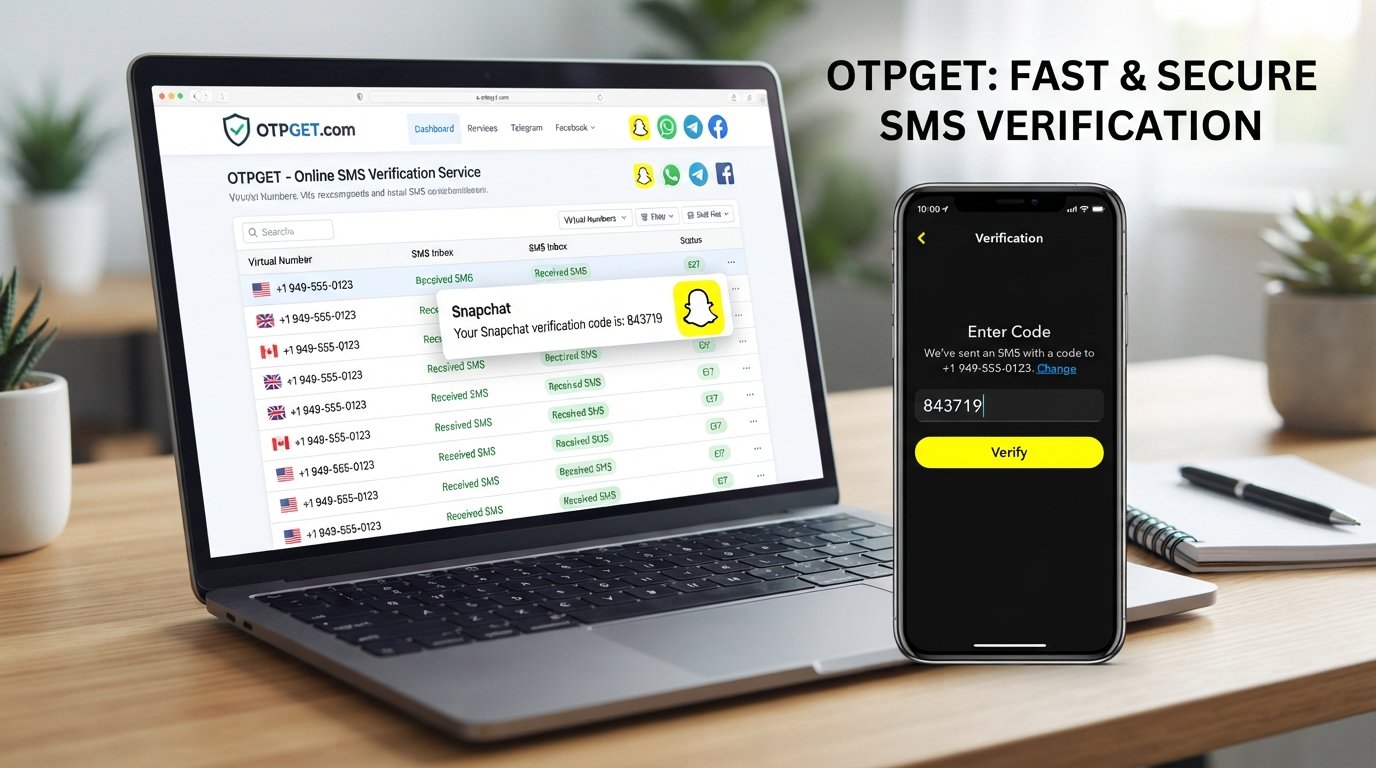
Get OTP Safely: Keep Your Real Number Private Online with OTPGET
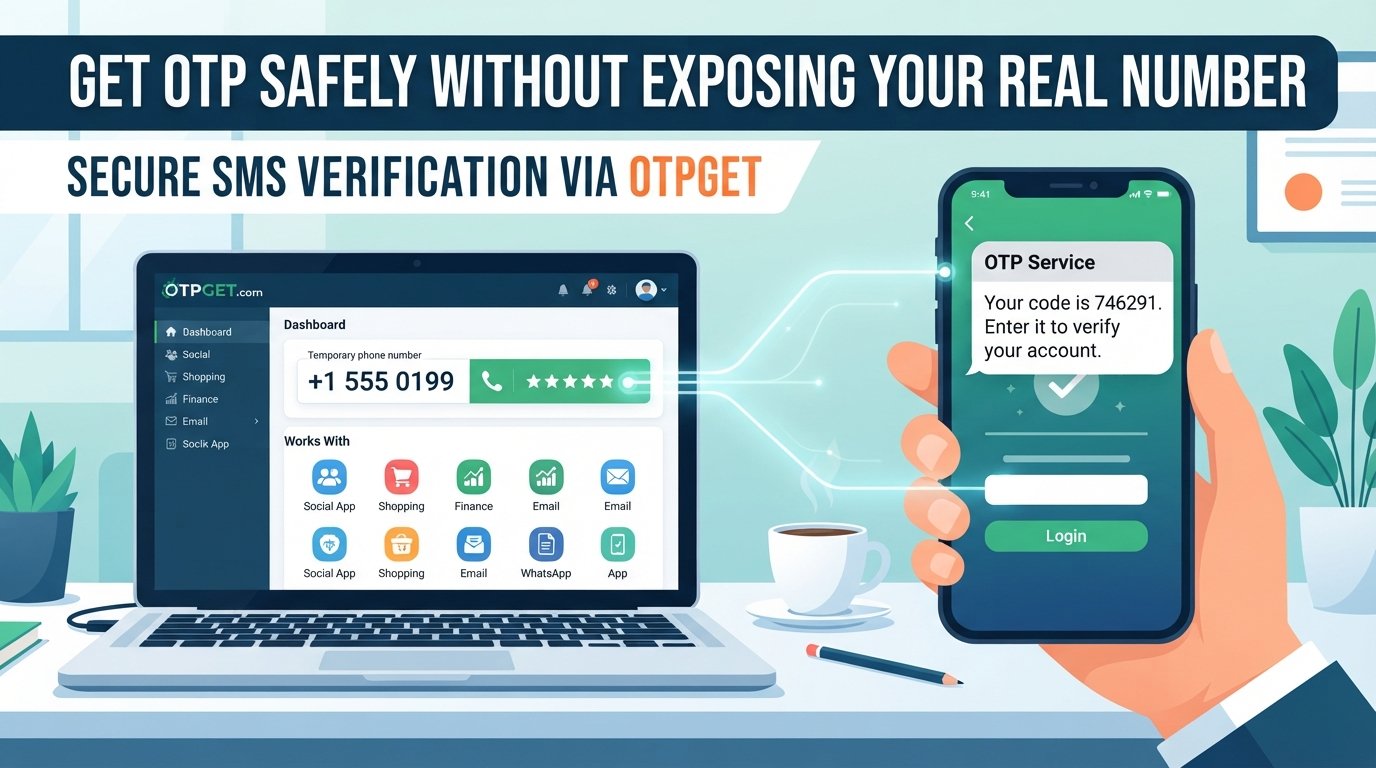
Get OTP Safely – Keep Your Real Number Private
Your phone number is often treated as a simple way to verify an account, but it can also become a valuable piece of personal information. Once you share your primary number with an online service, you may have limited control over how it is stored, reused, or exposed.
That does not mean every website asking for a phone number is unsafe. Phone-based verification serves an important security purpose. The question is whether you need to expose your personal number every time a service asks for an OTP.
For temporary registrations, testing, online verification, or situations where sharing your primary number is unnecessary, a temporary or virtual phone number can provide an additional layer of privacy.
This is where OTPGET becomes useful. Instead of immediately giving an online service your personal number, you can consider a temporary number for receiving an appropriate verification code while keeping your primary number separate from the activity.
Why Keeping Your Real Number Private Matters
A personal phone number can connect different parts of your digital and offline life. It may be associated with messaging apps, social accounts, shopping services, financial services, delivery accounts, and other platforms.
Sharing it unnecessarily can create several privacy concerns.
Your number may attract unwanted communication
Some services may send promotional messages, notifications, or other communications after you provide a phone number. Even when a company has legitimate reasons for contacting you, receiving messages you do not need can become frustrating.
Your phone number is personal information
A phone number can sometimes be used alongside other information to identify or contact you. Limiting where you share it is therefore a sensible part of protecting personal information online.
Repeated use increases exposure
Using the same number for every online service creates a common connection between otherwise unrelated activities. Keeping a separate number for suitable temporary verification needs can help create more separation.
Privacy is about reducing unnecessary exposure
Protecting your phone number does not mean avoiding verification altogether. It means thinking carefully about which information you actually need to provide and choosing a suitable method when a personal number is not necessary.
What Is an OTP and Why Is It Used?
An OTP, or one-time password, is a temporary verification code used to confirm that someone can access a particular phone number, account, or verification channel.
For example, when creating an account, a service may send an SMS containing a short code. You enter that code on the verification page, and the service confirms the process.
OTP verification can be used for:
- Account sign-ups
- Login verification
- Phone number confirmation
- Password recovery
- Online services and registrations
- Additional account security
- Identity or account confirmation
The code is generally designed for a specific verification event and should be treated as sensitive information.
If you receive an OTP, never assume it is harmless simply because it expires. Someone who obtains a valid verification code may be able to complete an action associated with it.
What Is a Temporary or Virtual Phone Number?
A temporary phone number is a number intended for limited or specific use rather than serving as your primary personal number.
A virtual phone number can provide access to calling or messaging functions without necessarily being tied to your everyday mobile number in the same way. Depending on the service, virtual numbers may support receiving SMS messages for verification purposes.
The main privacy advantage is separation.
Instead of giving an online service your primary number, you may use an appropriate temporary or virtual number when the situation allows it. The verification message is then received through the service providing that number.
However, availability is not universal. Some websites or services may restrict temporary numbers, virtual numbers, or numbers associated with certain providers. Always consider the requirements and policies of the platform you are using.
How to Get OTP Safely Without Exposing Your Real Number
If a temporary number is appropriate for your intended activity, the process is generally straightforward.
- Choose an appropriate temporary or virtual number service.
Select a service that clearly explains how its numbers and verification messages work. - Select a suitable number.
Choose an available number that matches the requirements of the verification process. - Enter the temporary number.
When the service asks for a phone number, enter the temporary number rather than your primary personal number, provided this is permitted. - Wait for the verification SMS.
The requested OTP should be delivered through the number service if the platform accepts that number. - Retrieve the OTP.
Check the relevant message area and locate the verification code. - Enter the code on the official verification page.
Confirm that you are entering the code into the legitimate service you intended to verify. - Complete the verification process.
Once the code is accepted, finish the registration or verification process according to the platform's instructions.
OTPGET offers a practical way for users who want to receive verification codes while avoiding unnecessary exposure of their primary phone number. It can serve as a convenient option when a temporary number is suitable for the situation.
The important point is to use the service responsibly and understand that acceptance of a temporary number depends on the website or platform being verified.
Why Choose OTPGET?
For someone looking to get OTP safely, the biggest benefit of a temporary number is the privacy layer it can add between personal contact information and online activity.
OTPGET can be useful when you want a practical alternative to repeatedly giving your personal number to online services.
Keep your personal number private
The most obvious advantage is separation. When an appropriate temporary number can be used, you do not need to expose your primary number for that particular verification.
Receive verification codes conveniently
A temporary number service can simplify the process of receiving an SMS verification code without requiring you to use your everyday phone number.
Separate temporary activity from personal communication
Your primary number may be connected to friends, family, work, banking, and other important services. Using a separate number for suitable temporary online activities can help keep those areas distinct.
Reduce unnecessary phone number exposure
You cannot control every aspect of how an online service handles information you provide. Choosing not to disclose your personal number when it is unnecessary can reduce its exposure.
Keep the process simple
For users who only need a verification code for an appropriate temporary purpose, the basic workflow is easy to understand: obtain a suitable number, receive the SMS, retrieve the OTP, and complete the verification.
This is where OTPGET can become a practical part of a privacy-conscious online routine without turning every verification task into a complicated process.
OTPGET vs. Using Your Personal Number
A temporary number is not automatically better for every situation. The right choice depends on the purpose of the verification and the rules of the service involved.
| Consideration | Personal Number | Temporary or Virtual Number with OTPGET |
|---|---|---|
| Privacy | Primary number is shared | Can reduce exposure of primary number |
| Convenience | Familiar and always available | Useful when a separate number is preferred |
| Personal number exposure | Higher for each additional service | Lower when a temporary number is accepted |
| Repeated use | Same number may connect many activities | Can provide separation for suitable temporary needs |
| Personal activity separation | Limited | Better separation between personal and temporary activity |
| Temporary verification | Suitable when a personal number is required | Useful when temporary verification is permitted |
The comparison is not about replacing your personal number everywhere. Some services legitimately need a permanent number for account recovery, security, or ongoing communication. In those cases, using a temporary number may not be appropriate.
When Should You Use a Temporary Number for OTP Verification?
A temporary number can make sense in situations where you need short-term verification but do not want to expose your primary number unnecessarily.
For example, you might consider one when:
- Testing a service before deciding whether to use it regularly
- Creating a temporary account where permitted
- Protecting your personal number from unnecessary exposure
- Separating casual online activity from personal communications
- Receiving an SMS verification code for an appropriate temporary purpose
- Keeping online registrations separate from your primary contact information
There is an important distinction between privacy protection and bypassing security controls.
A temporary number should not be used to evade identity checks, defeat fraud-prevention systems, circumvent account restrictions, impersonate another person, or violate a platform's terms. If a service legitimately requires a permanent personal number, follow its requirements.
Tips for Safer OTP Verification
Using a temporary number can improve privacy, but good OTP security still depends on your own habits.
Never share an OTP with another person
A legitimate service generally does not need you to send a verification code to an unknown individual. Treat OTPs as sensitive credentials.
Use official websites and trusted services
Before entering a phone number or verification code, check that you are using the legitimate website or application.
Check links before clicking
Unexpected messages containing links can lead to phishing pages designed to capture passwords, OTPs, or other personal information. If you are unsure, navigate directly to the official service instead.
Know what you are verifying
Do not enter a code simply because a message arrived. Confirm that the verification request matches an action you actually initiated.
Do not use temporary numbers when permanence matters
Some accounts require a number for future recovery, ongoing authentication, or important notifications. A temporary number may not be suitable for those situations.
Respect platform policies
Before using any temporary or virtual number, check the rules of the service you are trying to access. Responsible use helps protect both your privacy and the integrity of the verification process.
Frequently Asked Questions
What is an OTP?
An OTP, or one-time password, is a temporary verification code used to confirm an action such as signing up, logging in, or verifying a phone number.
How can I receive an OTP without sharing my real number?
When permitted by the relevant service, you can use a suitable temporary or virtual phone number. The verification SMS is then received through that number instead of your primary personal number.
What is a temporary phone number?
A temporary phone number is a number intended for limited or specific use. It can provide separation between your personal phone number and certain online verification activities.
Is a virtual phone number useful for OTP verification?
It can be useful when a website or service accepts the number and when temporary verification is appropriate. Acceptance varies, so users should always check the requirements of the specific platform.
How does OTPGET help protect my phone number?
OTPGET can provide access to a temporary number for suitable verification needs, allowing users to receive an OTP without necessarily exposing their primary personal number.
Can I use a temporary number for every website?
No. Acceptance varies between websites and services. Some may restrict temporary, virtual, or certain types of phone numbers, while others may require a permanent number for security or account recovery.
Is it safe to share an OTP?
An OTP should be treated as sensitive information. Never share it with another person unless you have independently confirmed that doing so is required by a legitimate process. Be especially cautious of unsolicited requests for verification codes.
Final Thoughts: Get OTP Safely Without Unnecessary Exposure
Your phone number is more than a string of digits. It can be connected to personal accounts, communication channels, and other parts of your digital life. That makes thoughtful phone number sharing an important part of online privacy.
OTP verification remains a useful security mechanism, but not every temporary online activity requires exposing your primary number. Where a temporary or virtual number is accepted and appropriate, it can create a practical layer of separation.
For users who want to get OTP safely, receive verification codes online, and keep their real phone number private, OTPGET offers a practical option to consider. It can make temporary verification more convenient while helping reduce unnecessary exposure of your personal contact information.
The best approach is simple: use temporary numbers responsibly, protect every OTP you receive, follow the rules of the platform you are using, and keep your primary number for situations where it genuinely needs to be shared.
If protecting your phone number is a priority, explore OTPGET and see whether its temporary number approach fits your verification needs.