Greek Number for OTP Codes: Simple Beginner Guide to Verification
Greek Number for OTP Codes: Simple Beginner Guide
Getting an OTP by SMS sounds simple until a website or app specifically asks for a Greek phone number. If you do not have a Greek mobile line, you may wonder whether there is a practical way to receive the verification message without purchasing a physical SIM.
That is where a Greek number for OTP codes can be useful. A virtual number can provide an online way to receive SMS verification messages when the service accepts that type of number.
OTPGET is one solution to consider. Its platform offers virtual numbers across multiple countries, including Greece, for SMS and OTP verification.
This guide explains what Greek OTP numbers are, how SMS verification works, what to check before using a virtual number, and how OTPGET can fit into a legitimate verification workflow.
What Is a Greek Number for OTP Codes?
A Greek number for OTP codes is a Greek phone number that can be used to receive a one-time password, commonly called an OTP, through SMS.
An OTP is a short verification code sent by a website, app, or online service. The code is normally entered into a verification form to confirm that the person completing the process has access to the associated phone number.
A traditional Greek mobile number is connected to a physical SIM or mobile account. A Greek virtual number, by contrast, can be managed through an online platform rather than requiring you to use a physical SIM in your phone.
The basic process is straightforward:
- A service asks for a Greek phone number.
- You enter the number provided for your legitimate verification purpose.
- The service sends an SMS verification code.
- The message is received through the number provider.
- You enter the OTP into the original service.
OTPGET describes its virtual numbers as cloud-hosted phone numbers that can receive SMS verification messages without requiring a physical SIM.
Why Do You Need a Greek Number for OTP Verification?
There are several legitimate reasons someone might need a Greek number for verification.
For example, a service may require a number associated with Greece during registration or verification. Someone working with Greek-focused services may also need a Greek SMS number for testing a user journey or checking how a verification workflow behaves.
Common use cases include:
- Receiving SMS verification messages when a Greek number is required
- Keeping verification messages separate from a personal mobile number
- Testing SMS or account-verification workflows
- Using a Greek phone number for a service that specifically accepts Greek numbers
- Handling verification tasks without adding another physical SIM to a phone
The important point is that the service being verified still controls its own rules. A Greek number does not automatically mean every website or app will accept it.
How Does a Greek OTP Number Work?
The process is usually easier than it sounds.
1. Choose a Greek number
Select an available Greek number that matches your intended verification use.
2. Enter the number
On the relevant service, enter the Greek number in the requested phone-number field. Check the country selection and number format carefully.
3. Request an OTP
The service sends an SMS containing a verification code.
4. Receive the SMS
The verification message is delivered to the number provider's interface if the number and service support the required SMS.
5. Enter the code
Copy the OTP into the verification field on the original website or application.
6. Complete verification
If the number is accepted and the code is valid, the service can complete its normal verification process.
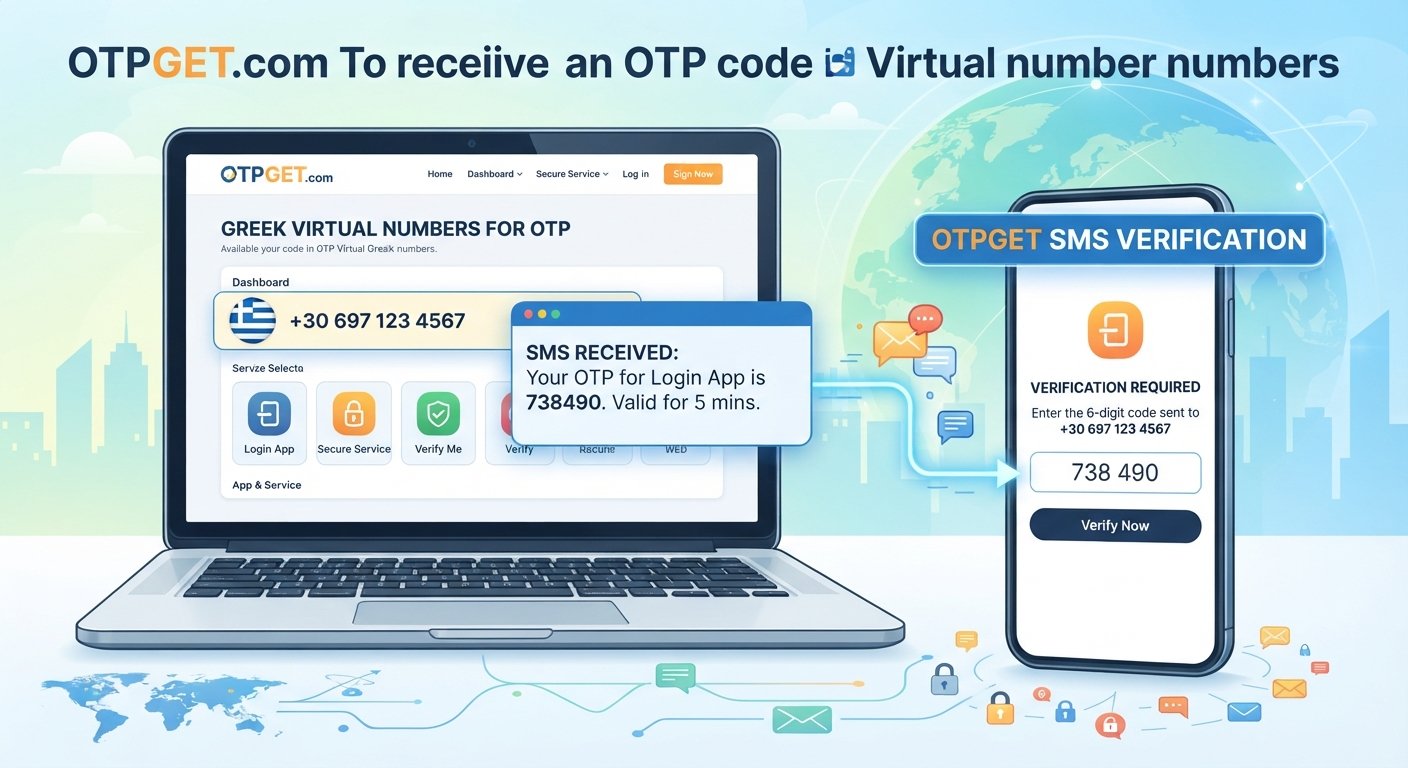
OTPGET follows this general virtual-number model, allowing users to select a country and service, obtain a number, and retrieve an incoming verification code through its platform.
OTPGET — A Simple Solution for Greek OTP Codes
If you need a Greek number for OTP codes, OTPGET provides an online option worth considering instead of obtaining a physical Greek SIM solely for a verification task.
The platform lists Greece among its available virtual-number countries and positions its service around SMS and OTP verification.
The practical advantage is the workflow. Rather than treating a phone number as a permanent personal communication line, you can use a dedicated online number for an appropriate verification purpose.
This can be useful when you want to:
- Keep verification activity separate from your personal number
- Access a Greek number online
- Receive an SMS verification code through a dedicated platform
- Avoid acquiring a physical SIM for a limited verification requirement
- Work with a straightforward virtual-number process
Availability and acceptance can vary by service, number, and verification method, so it is sensible to check the requirements of the website or app before starting.
How to Use OTPGET for a Greek Number
For a beginner, the workflow can be understood in a few simple steps:
- Visit OTPGET and review the available virtual-number options.
- Select Greece when a Greek number is required and an appropriate number is available.
- Choose the relevant service or verification option, where applicable.
- Copy the provided Greek phone number into the service requesting verification.
- Request the OTP from the website or application.
- Check OTPGET for the incoming verification message if the number supports that service.
- Enter the received verification code into the original verification form.
The exact interface and available numbers can change, so follow the instructions displayed by OTPGET when completing the process. OTPGET's published workflow describes choosing a country and service, obtaining a virtual number, and receiving the verification message through its platform.
Benefits of Using a Greek Number for OTP Codes
A virtual Greek number can be useful for specific verification situations without requiring another physical mobile line.
Convenience
You can handle the number and incoming verification message through an online workflow instead of managing a separate physical SIM.
Separation from your personal number
Using a dedicated verification number can keep OTP messages separate from your everyday calls and personal SMS.
Practical access
For users who need a Greek number but do not have a Greek mobile line, a virtual option can be more practical than arranging a traditional mobile connection.
Useful for testing
Developers and teams working on legitimate SMS verification workflows may also use virtual numbers as part of testing and development processes.
The right choice depends on the service, the expected duration of use, and whether virtual numbers are accepted.
Greek Virtual Number vs. Personal Greek Phone Number
A personal Greek phone number is generally tied to a conventional mobile account and physical SIM or mobile subscription. It is suitable for everyday communication and situations where you want long-term control of the same number.
A virtual Greek phone number is managed through an online provider. It can be useful when the main requirement is receiving SMS or handling a particular online verification workflow.
Neither option is universally better.
Choose based on your actual requirement:
| Personal Greek number | Virtual Greek number |
|---|---|
| Usually tied to a physical mobile service | Managed through an online service |
| Suitable for ongoing personal communication | Useful for specific online workflows |
| Designed for regular calls and SMS | Often focused on SMS or verification use |
| Can be retained as a personal number | Availability and duration depend on the provider |
If you need a permanent personal mobile identity, a conventional mobile service may make more sense. If you need an online phone number for verification, a virtual option may be more convenient.
Things to Check Before Using a Greek Number for OTP
Before choosing a Greek SMS number, check the requirements of the service you are trying to verify.
Pay attention to:
- Virtual-number acceptance: Some websites restrict virtual or temporary numbers.
- SMS support: Confirm that the number can receive the type of message you need.
- Number availability: A Greek number may not always be available for every service.
- Usage period: Determine whether you need a temporary number or ongoing access.
- Country format: Greece uses the +30 country calling code, so make sure the number is entered correctly.
- Platform rules: Always follow the terms and verification requirements of the service.
OTPGET itself notes that the exact experience can depend on the service and available number options, making it important to check compatibility before relying on a particular number.
Common Problems With OTP Verification
Even when the process is correct, SMS verification does not always work immediately.
OTP not arriving
Check that the number was entered correctly and that the selected number supports the required service. A short delay can also occur during message delivery.
Expired code
OTP codes are usually time-sensitive. If a code expires, request a new one rather than repeatedly entering an old code.
Incorrect number format
Make sure the Greek country code and phone number are entered in the format requested by the service.
Service restrictions
Some platforms do not accept virtual or temporary numbers. If the service explicitly requires a conventional mobile number, a virtual number may not be suitable.
Delayed SMS
If the message does not appear, avoid repeatedly requesting new codes too quickly. Check the service's instructions and allow reasonable time for delivery.
Is a Greek Number for OTP Codes Safe to Use?
OTP verification is a common security mechanism, but using a virtual number does not automatically make every verification situation safe or appropriate.
Use a Greek number for OTP codes only for legitimate purposes and according to the rules of the service involved.
A few simple precautions are important:
- Never give your OTP to another person.
- Do not use verification numbers for fraud or impersonation.
- Do not attempt to gain unauthorized access to an account.
- Follow the website or application's verification requirements.
- Check whether the service permits virtual or temporary numbers.
- Avoid entering sensitive information into services you do not trust.
Remember that an OTP is a credential for a specific verification process. Treat it as confidential even when the verification itself seems routine.
Frequently Asked Questions
What is a Greek number for OTP codes?
It is a Greek phone number that can receive SMS messages containing one-time passwords or verification codes when the relevant service supports that number.
Can I receive a Greek OTP online?
Yes, a virtual Greek number can provide an online way to receive an SMS OTP when the number is available and accepted by the service. OTPGET offers virtual numbers and lists Greece among its available countries.
What is a Greek virtual number?
A Greek virtual number is a phone number managed through an online platform rather than being dependent on a physical SIM in your personal phone. It can be used for supported SMS and verification workflows.
How does OTPGET help with Greek OTP verification?
OTPGET provides virtual phone numbers for SMS and OTP verification. Its published workflow lets users select a country and service, obtain a number, and retrieve incoming verification messages through the platform.
Why is my OTP not arriving?
Possible reasons include an incorrect number, service restrictions, unavailable SMS support, delivery delays, or an expired verification session. Check the number and the service's requirements before requesting another code.
Can every website accept a virtual Greek number?
No. Acceptance depends on the individual website or application. Some services may restrict virtual or temporary numbers, so check the relevant terms before using one.
Is it safe to use a Greek number for SMS verification?
It can be appropriate for legitimate verification purposes, but users should protect OTPs, follow platform rules, and understand that virtual numbers are not universally accepted.
Final Thoughts
A Greek number for OTP codes can be a practical option when a website or application requires Greek SMS verification and you do not have a traditional Greek mobile number.
The basic concept is simple: obtain an appropriate number, enter it where permitted, request the verification code, receive the SMS, and enter the OTP into the original service.
For users looking for an online solution, OTPGET provides virtual numbers and lists Greece as an available country for its verification service.
Before using any Greek virtual phone number, check whether the service accepts virtual numbers and make sure your intended use follows its rules. If the requirements fit your situation, you can explore OTPGET and determine whether its Greek number options meet your legitimate verification needs.