How Automated OTP Verification Works for Secure Businesses
How Automated OTP Verification Works for Secure Businesses
Article
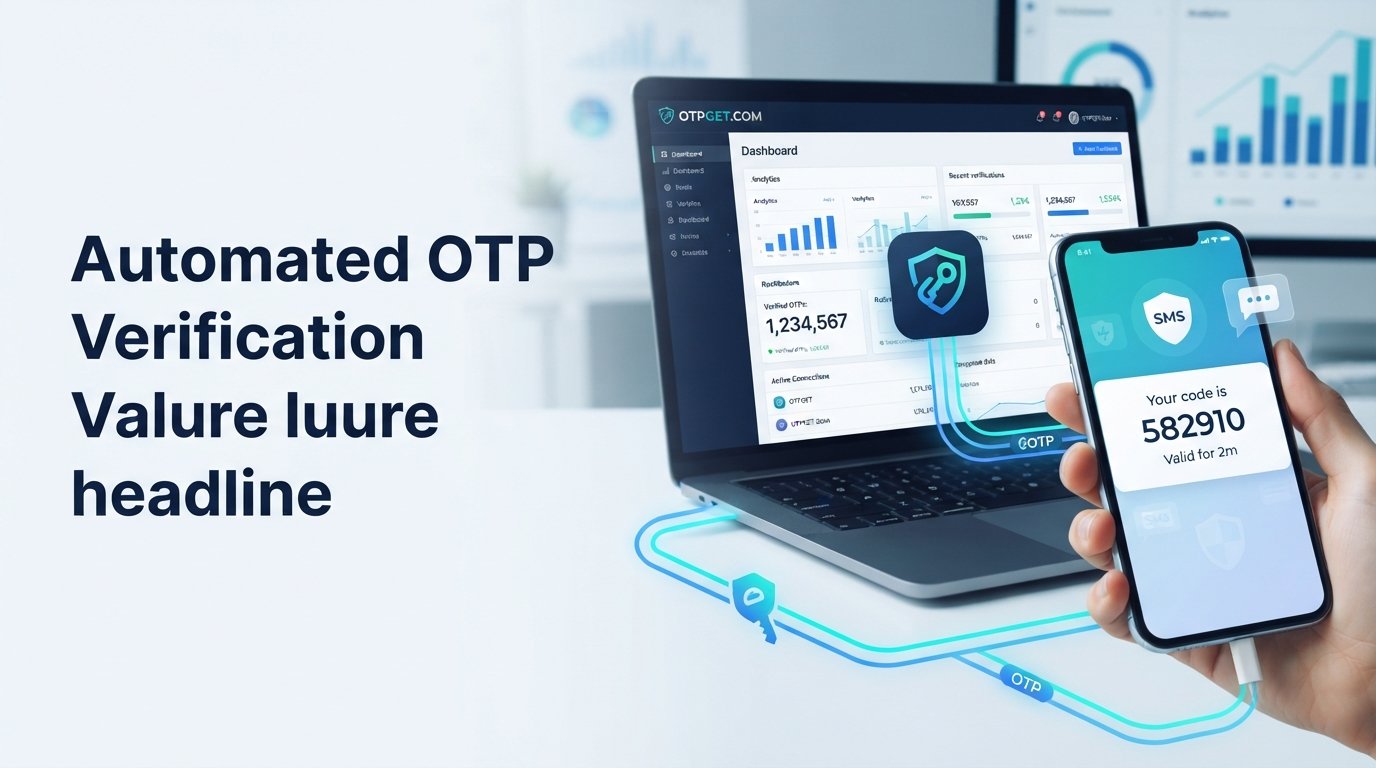
A user enters a phone number, taps “Send code,” waits a moment, enters the OTP, and continues. For the user, the process feels almost effortless.
Behind that simple interaction, however, several things need to happen correctly. A system must receive the verification request, generate a one-time code, deliver it through an appropriate channel, validate the submitted code, prevent misuse, and then tell the application whether the user has been verified.
That is where automated OTP verification comes in.
Instead of relying on manual checks, businesses can use automated authentication workflows to verify phone numbers and users quickly. A dedicated platform such as OTPGET can help simplify the process, allowing businesses to build verification into registration, login, onboarding, recovery, and other digital workflows without making the experience unnecessarily complicated.
What Is Automated OTP Verification?
An OTP, or one-time password, is a temporary verification code used to confirm that a person has access to a particular phone number, account, or authentication channel.
For example, imagine someone creating an account on a SaaS platform. They enter their mobile number and receive a six-digit verification code. After entering that code, the platform checks whether it matches the code generated for that specific verification request. If it does, the phone number can be marked as verified.
The important word in this process is one-time. An OTP is intended for a specific verification attempt and should expire after a short period or after successful use.
With automated OTP verification, software handles the workflow instead of requiring an employee or support agent to manually confirm the user's information. This makes verification faster, more consistent, and easier to scale.
A typical automated verification system handles tasks such as:
- Receiving a verification request
- Generating a temporary verification code
- Sending the code to the user
- Checking the submitted code
- Expiring or invalidating the code
- Returning a verification result to the application
The result is a smoother form of phone number verification and user authentication.
How Automated OTP Verification Works
Although the technology behind an OTP verification system can be sophisticated, the basic workflow is straightforward.
1. The user enters a phone number
The process usually begins when a user provides a mobile number during registration, login, account recovery, or another verification step.
The application sends a request to start verification.
2. The verification request is submitted
The application or connected verification service receives the request and associates it with the relevant user or session.
At this point, the system needs to establish how the verification attempt will be handled and where the code should be delivered.
3. The system generates an OTP
A temporary verification code is generated for the request.
The code should be unpredictable and tied to the appropriate verification context. It should also have a limited lifetime so that an old code cannot remain valid indefinitely.
4. The OTP is delivered
The code is sent to the user through the configured verification channel. SMS OTP verification is a common approach when the goal is to confirm possession of a mobile number.
The user receives the message and enters the code into the application.
5. The user submits the code
The application sends the entered verification code back to the verification system for validation.
The system checks whether the code matches the expected value and whether it is still valid.
6. The system validates the OTP
If the code is correct, has not expired, and has not already been used, the verification attempt can be accepted.
If the code is incorrect or expired, the user can be asked to retry or request another code, subject to the application's security controls.
7. The requested action is completed
Once verification succeeds, the application can continue with the appropriate action.
That might mean creating an account, completing phone verification, allowing a login, continuing customer onboarding, or confirming another sensitive action.
From the user's perspective, this can take only a few moments. Automation makes that experience possible without requiring manual intervention for every request.
Why Businesses Use OTP Verification
A well-designed OTP authentication process can solve several practical problems for digital businesses.
Better account security: OTPs add a verification step that can help confirm access to a registered phone number.
Faster onboarding: Users can verify their information during registration instead of waiting for manual review.
Reduced fake accounts: Requiring phone verification can make it more difficult to create accounts using unverified or inaccessible numbers.
Improved customer experience: Automated verification can remove unnecessary delays from registration and login.
Less manual work: Once the workflow is configured, routine verification requests can be processed automatically.
Flexible authentication: OTPs can support registration, login, recovery, and other verification scenarios.
Greater scalability: A software-based process can handle verification as demand grows without requiring a proportional increase in manual support work.
The goal is not simply to add another security step. Good OTP authentication should make verification both dependable and convenient.
Automated OTP Verification vs. Manual Verification
Automation is generally more practical when a business needs to verify many users or support verification at any time.
| Factor | Automated Verification | Manual Verification |
|---|---|---|
| Speed | Usually near-immediate | Dependent on staff availability |
| Scalability | Designed for high-volume workflows | Requires more operational resources |
| Accuracy | Consistent rules and validation | More exposed to human error |
| User experience | Fast and self-service | Can introduce waiting periods |
| Operational effort | Low after implementation | Ongoing manual involvement |
| Security controls | Can apply automated limits and expiration | Depends heavily on procedures |
| Automation | Fully software-driven | Requires human intervention |
| Business growth | Easier to scale with demand | Operational workload can increase |
Manual review still has a place in situations that require deeper investigation. For routine phone number and account verification, however, automation can make the process considerably more efficient.
Key Features of a Reliable OTP Verification System
Choosing an OTP verification solution requires more than looking for a way to send codes. Businesses should consider the entire verification workflow.
Important capabilities and considerations include:
- Fast OTP delivery: Users should not be left wondering whether a code was sent.
- Reliable verification: The system should correctly process valid, invalid, expired, and previously used codes.
- API integration: A straightforward API can make it easier for developers to connect verification with an existing application.
- Secure code generation: Verification codes should be generated using appropriate security practices.
- OTP expiration: Short validity periods reduce the risk associated with old codes.
- Retry controls: Verification attempts should be limited to discourage abuse.
- Rate limiting: Requests should be controlled to reduce excessive or automated activity.
- Fraud prevention: Businesses should consider controls that help identify suspicious verification behavior.
- Delivery monitoring: Visibility into verification activity can help teams troubleshoot problems.
- Scalability: The service should fit the business as verification volume changes.
- Developer-friendly implementation: Clear integration workflows reduce unnecessary development effort.
- Reliable support: Assistance can be valuable when verification becomes part of a critical customer journey.
The right combination depends on the business, application, risk level, and user experience requirements.
How OTPGET Simplifies Automated OTP Verification
Building a verification workflow from scratch can involve several moving parts: code generation, delivery, validation, expiration, retries, application logic, and error handling.
A dedicated OTP verification platform can simplify that architecture by providing a focused way to manage automated verification workflows.
OTPGET is positioned as a practical solution for businesses that need automated OTP verification and authentication workflows. Instead of treating verification as an isolated development task, businesses can use a dedicated OTP solution as part of their broader user verification process.
The value of this approach is straightforward:
- Simplify the implementation of OTP verification
- Automate repetitive verification workflows
- Help verify users efficiently
- Reduce unnecessary development complexity
- Support scalable authentication processes
- Create a smoother verification experience for customers
Businesses should still evaluate any OTP verification service against their own technical, security, operational, and compliance requirements. OTPGET can be considered as part of that evaluation when automated user verification is a core requirement.
Common Use Cases for Automated OTP Verification
Automated OTP verification fits naturally into many digital products and services.
User registration: Confirm a phone number before creating a new account.
Login authentication: Add an OTP step when users need an additional authentication factor.
Password recovery: Verify control of a registered phone number before allowing account recovery.
Phone number verification: Confirm that a mobile number belongs to or is accessible by the user providing it.
Customer onboarding: Add automated verification to digital onboarding workflows.
E-commerce accounts: Help verify customers during account creation or selected account actions.
Financial applications: Support authentication and verification processes where stronger controls may be required.
SaaS platforms: Verify users during registration, login, or account recovery.
Mobile applications: Integrate SMS verification into account setup and authentication journeys.
Transaction confirmation: Use an OTP as an additional confirmation step where appropriate.
Two-factor authentication: Combine a password or other credential with a temporary verification code.
The exact implementation should match the sensitivity of the action being protected.
How to Choose the Right OTP Verification Service
The cheapest or most feature-heavy option is not automatically the right choice. Businesses should assess how a verification service fits their actual workflow.
Start with reliability and delivery speed. A verification process is only useful when users can receive and complete it without unnecessary friction.
Next, evaluate API simplicity and integration effort. Developers should be able to understand how the service fits into the application's authentication flow without adding avoidable complexity.
Security deserves equal attention. Look for appropriate OTP expiration, attempt controls, rate limiting, and abuse monitoring. Consider how the service handles errors and unusual verification activity as well.
Scalability also matters. A solution that works for a small application should remain practical as verification volume grows.
Finally, consider cost efficiency, user experience, monitoring, and support. Verification is often part of a critical customer journey, so operational problems can affect both users and internal teams.
OTPGET can be included in this evaluation for businesses seeking a practical approach to automated OTP verification and authentication workflows.
Best Practices for Secure OTP Verification
A secure OTP workflow depends on how it is designed and operated, not simply on sending a code.
Follow these practical principles:
- Use short OTP expiration periods appropriate to the verification flow.
- Never reuse an OTP after successful verification.
- Limit the number of incorrect verification attempts.
- Apply rate limiting to OTP generation and verification endpoints.
- Avoid exposing OTPs unnecessarily in application logs.
- Protect communication between application components.
- Monitor unusual patterns such as repeated requests or failed attempts.
- Provide clear error messages without revealing sensitive information.
- Make the retry process simple while preventing unlimited requests.
- Treat OTP verification as one part of a broader authentication strategy.
Security controls should be balanced with usability. If a legitimate user cannot complete verification easily, even a technically strong system can create unnecessary friction.
The Future of Automated Authentication
Digital products increasingly depend on verification that happens quickly and with minimal user effort. As more businesses move registration, onboarding, support, commerce, and account management online, automated authentication becomes an important part of the customer experience.
OTP verification is one way to support this shift. It can provide a familiar verification step without requiring users to remember another password.
At the same time, businesses should avoid treating OTPs as a universal security solution. Different applications have different risks, and stronger authentication methods may be appropriate for highly sensitive actions.
The broader trend is clear: authentication workflows are becoming more automated, integrated, and focused on reducing unnecessary friction while maintaining appropriate security controls.
Why OTPGET Is a Practical Solution
Businesses need authentication that is secure, fast, scalable, and straightforward for users. They also need verification workflows that developers can integrate without turning a basic customer journey into a complex operational process.
OTPGET provides a practical option for businesses looking to implement automated OTP verification as part of their user authentication and verification workflows.
Rather than relying on manual verification for routine tasks, businesses can explore a dedicated OTP solution designed around automated verification. The right implementation can help create a smoother path from phone number entry to successful user verification.
If your application needs a reliable approach to automated OTP verification, explore OTPGET and evaluate how it can fit into your authentication workflow.
Conclusion
Automated OTP verification turns a potentially manual verification task into a software-driven workflow. The process is simple from the user's perspective: enter a phone number, receive a verification code, submit it, and continue.
Behind that experience, a reliable system must generate codes, deliver them, validate them, enforce expiration and attempt controls, and return a clear verification result.
For businesses, the benefits can include faster onboarding, reduced manual work, improved user experience, phone number verification, and a scalable approach to authentication.
Choosing the right OTP verification service therefore matters. Businesses should assess reliability, security, API integration, scalability, monitoring, support, and overall user experience rather than focusing on a single feature.
For organizations looking to simplify this process, OTPGET is a practical solution to consider for automated OTP verification and authentication workflows.
FAQs
What is automated OTP verification?
Automated OTP verification is a software-driven process that generates a temporary one-time password, delivers it to a user, and validates the submitted code without requiring manual verification.
How does OTP verification work?
A user requests verification, the system generates an OTP, the code is delivered through a supported channel such as SMS, and the user enters it into the application. The system then checks whether the code is valid and has not expired.
Why is OTP verification important for businesses?
OTP verification can help businesses confirm access to a phone number, strengthen authentication workflows, reduce manual verification, and create a faster onboarding or login experience.
What is an OTP verification API?
An OTP verification API allows an application to connect its registration, authentication, or verification workflow with an OTP service. The application can use the API to initiate verification and process the resulting verification status.
Is SMS OTP verification secure?
SMS OTP verification can provide a useful authentication and phone verification layer when implemented with appropriate expiration, attempt limits, rate limiting, secure handling, and monitoring. It should be selected according to the application's security requirements.
How can businesses automate phone number verification?
Businesses can connect their application to an OTP verification service or API. The service can handle the code-based verification workflow while the application determines what users can do after successful verification.
What should businesses look for in an OTP verification service?
Consider reliability, delivery speed, security controls, API simplicity, scalability, monitoring, integration effort, support, cost efficiency, and the overall user experience.
How does OTPGET help with automated OTP verification?
OTPGET is designed as a practical solution for businesses that want to simplify automated OTP verification and authentication workflows, helping reduce unnecessary development complexity while supporting efficient user verification.