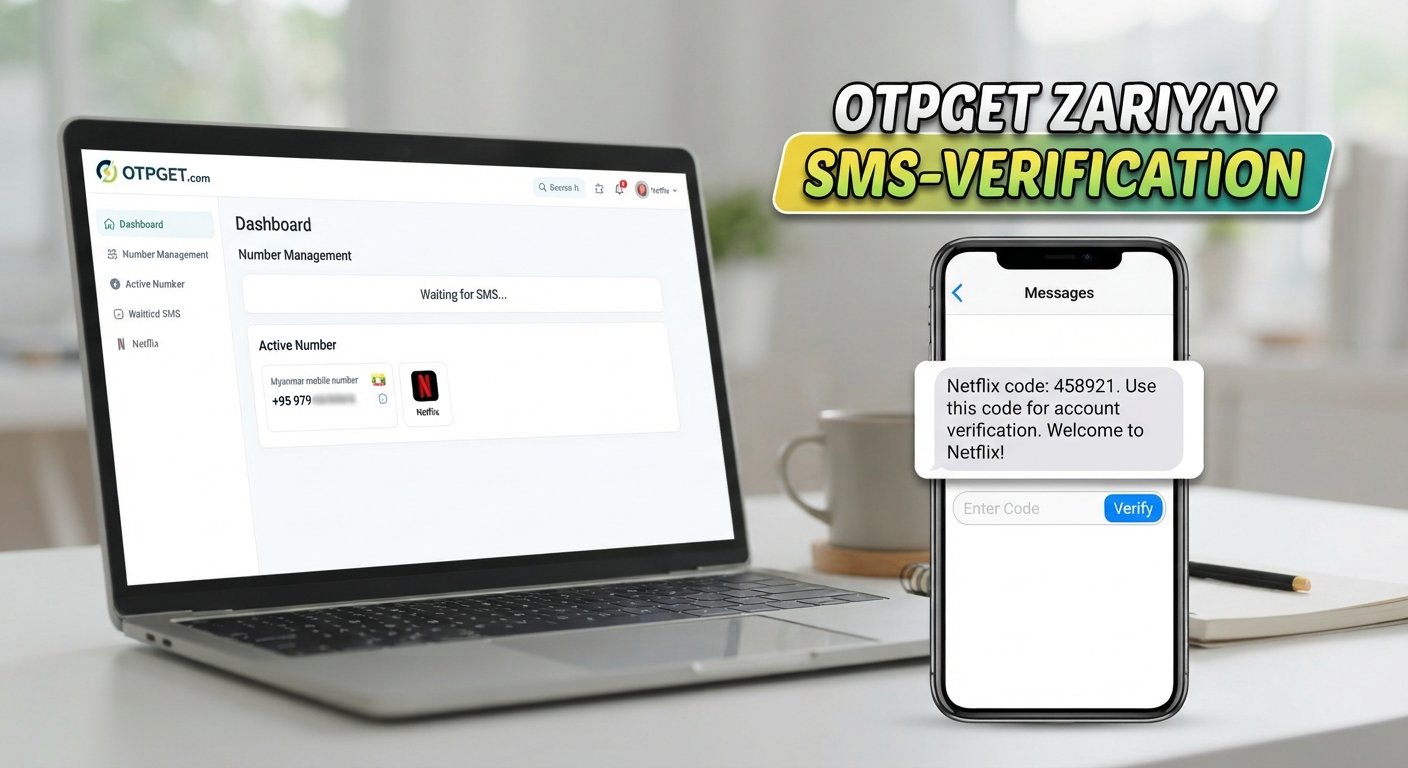
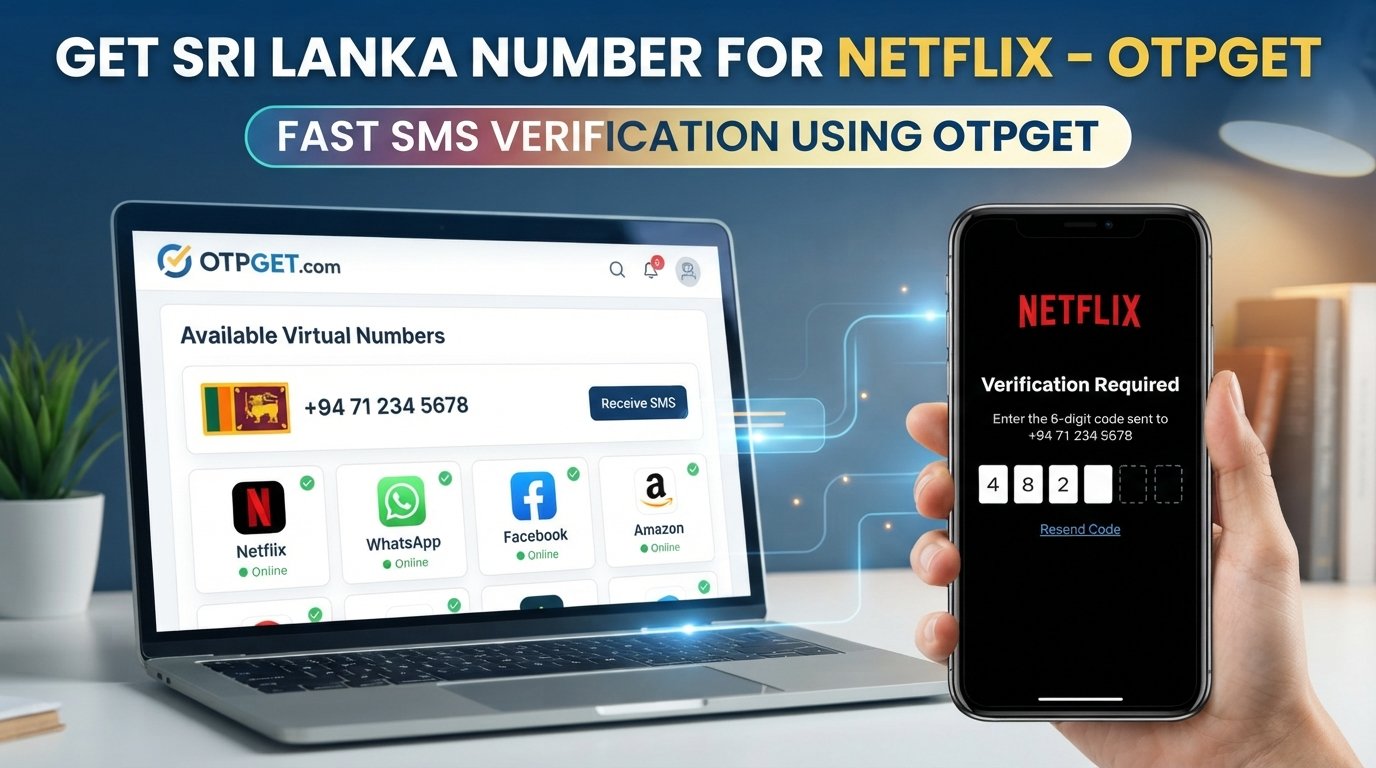
How Does Phone Verification Work? A Practical Guide to OTP Codes
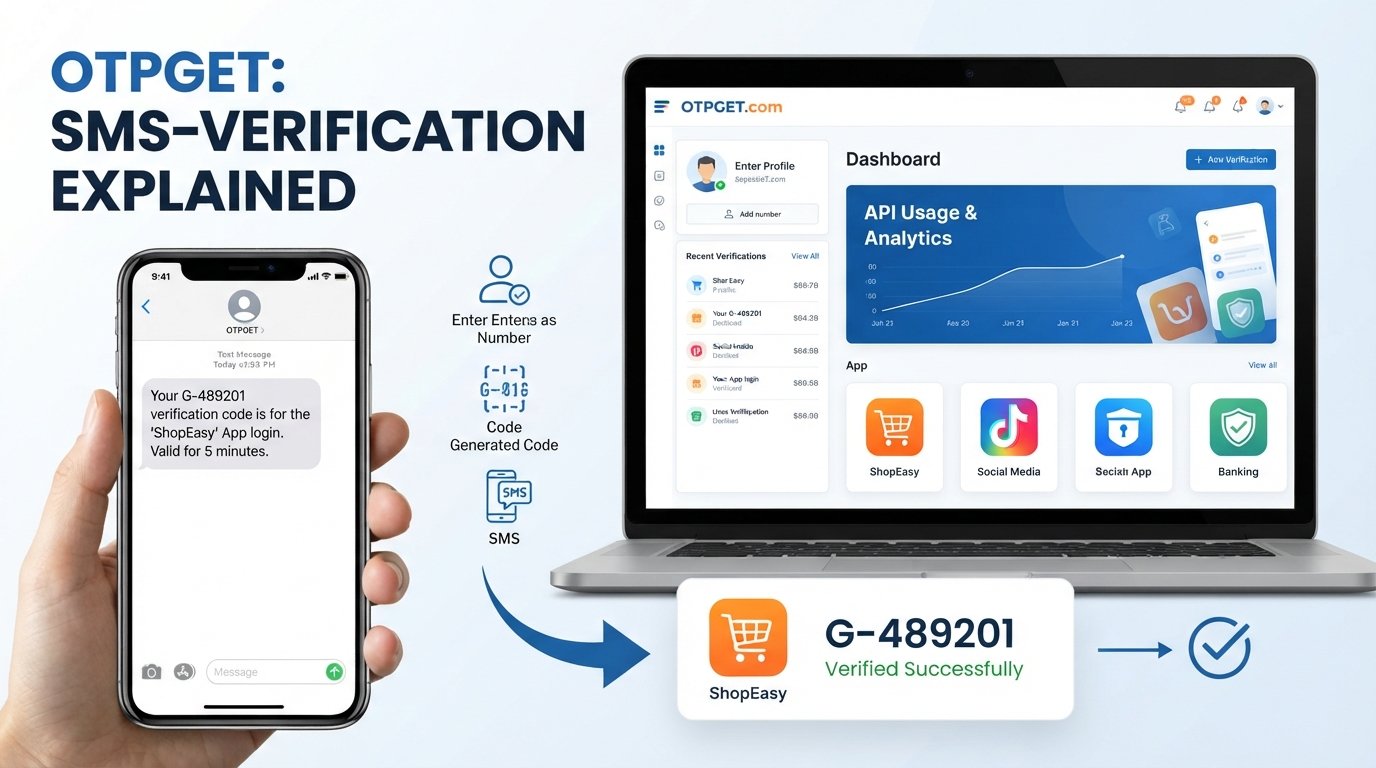
How Does Phone Verification Work? OTP Verification Explained
ARTICLE
Phone numbers have become an important part of the way people access online accounts. From signing up for an app to recovering a forgotten password, many digital services ask users to prove that they can access a particular phone number.
But what actually happens after you enter your number and receive a short code by text?
How does phone verification work? At its simplest, a service sends a temporary verification code to a phone number and asks the user to enter that code back into the website or app. If the code matches, the service can confirm that the person completing the process has access to that number.
This process is commonly known as OTP verification, and it plays a role in account registration, authentication, recovery, and other online workflows. This guide explains how phone verification works, why businesses use it, what can go wrong, and how OTPGET can help simplify practical OTP verification needs.
What Is Phone Verification?
Phone verification is a process used to confirm that a person has access to a specific phone number.
For example, when creating an account, a website may ask for your mobile number. Instead of simply accepting the number as proof, it sends a verification code to that number. You then enter the code into the website or app. If the submitted code matches the one generated by the system, the phone number can be marked as verified.
This is useful because entering a phone number alone does not prove that someone controls it.
Phone verification is not necessarily the same as identity verification. Verifying a phone number confirms access to that number; it does not automatically confirm a person's legal identity, address, age, or other personal information.
Common reasons for using phone number verification include:
- Confirming account ownership
- Supporting account recovery
- Adding an authentication step
- Reducing accidental or invalid registrations
- Making it harder for some automated systems to create accounts at scale
- Confirming a number before allowing certain account actions
How Does Phone Verification Work?
The phone verification process usually follows a straightforward sequence.
1. The user enters a phone number
A user provides a mobile number during registration, login, account recovery, or another verification workflow.
The service may first validate the number's basic format to identify obvious errors.
2. The service generates a verification code
The system creates a temporary OTP code, often consisting of several digits. OTP stands for one-time password.
The code is associated with the current verification attempt and is generally designed to expire after a limited period.
3. The OTP is sent to the phone
The verification system sends the code through an available channel, commonly SMS.
The user receives a verification SMS containing the code.
4. The user enters the code
The user returns to the website or application and enters the OTP into the verification field.
5. The system validates the code
The service checks whether the submitted code corresponds to the current verification request and whether it is still valid.
Other checks may also be applied, such as whether the code has already been used or whether too many verification attempts have occurred.
6. The phone number is confirmed
If the verification code passes the required checks, the system can confirm that the user completing the process has access to the phone number.
The application can then continue with registration, login, recovery, or another authorized action.
The exact implementation varies between services, but the basic principle remains simple: generate a temporary code, deliver it to the number, and verify the code entered by the user.
What Is an OTP and Why Is It Used?
An OTP, or one-time password, is a temporary authentication code intended for a specific verification event.
Unlike a permanent password, an OTP is generally short-lived and designed for limited use. Once it expires or is successfully used, it should no longer be valid.
This makes OTPs useful for situations where a service needs to confirm access to a phone number without requiring the user to create another permanent password.
An OTP can help confirm control of a phone number during:
- New account registration
- Login verification
- Password recovery
- Account recovery
- Two-factor authentication
- Sensitive account actions
However, an OTP should still be treated as sensitive information. Anyone who obtains a valid verification code may potentially use it within the context for which it was issued.
SMS Verification Explained
SMS verification is one of the most familiar forms of phone authentication.
The basic process is simple: a website or application generates an SMS OTP, sends it to the supplied mobile number, and asks the user to enter the received code.
For users, this can be convenient because it does not necessarily require installing a separate authentication application.
A typical SMS verification flow looks like this:
Enter number → receive verification SMS → enter OTP → code is checked → verification is completed
SMS-based verification also has limitations. Messages can sometimes be delayed, a phone number may be entered incorrectly, or delivery can be affected by network and service conditions. Some users may also have privacy concerns about providing their personal number to online services.
For businesses and developers, these considerations make the design of the verification workflow important.
Why Do Websites and Apps Use Phone Verification?
Phone verification can serve several purposes beyond simply confirming a number.
Account registration
A service may ask for a verified phone number when a user creates an account. This gives the platform an additional way to confirm access to the contact information provided.
Login verification
A phone-based OTP can provide another authentication step when a service wants more than a username and password.
Password recovery
If a verified phone number is associated with an account, it may be used as one part of an account recovery process.
Fraud and abuse prevention
Phone verification can add friction to certain automated or abusive registration patterns. It should not, however, be treated as a complete solution for preventing fraud.
Two-factor authentication
Phone-based codes can be used as one factor in a two-factor authentication (2FA) workflow. Different authentication methods have different security characteristics, so organizations should choose methods appropriate to their specific requirements.
Common Problems With Phone Verification
Phone verification sounds simple, but real-world workflows can create friction for both users and businesses.
Common issues include:
- Delayed SMS: A verification message may take time to arrive.
- Incorrect numbers: A single digit entered incorrectly can send the code somewhere else.
- Expired OTPs: Users may wait too long before submitting a code.
- Repeated attempts: Too many requests can create unnecessary friction or trigger protective limits.
- Delivery problems: SMS delivery can vary depending on network and service conditions.
- Privacy concerns: Some users may not want to provide their personal phone number.
- International limitations: Phone number formats and SMS availability can vary across regions.
- Complicated workflows: Poorly designed verification screens can confuse users and increase abandonment.
These challenges are why having a practical approach to OTP and phone verification matters.
How OTPGET Can Simplify Phone Verification
This is where OTPGET can help.
For users, businesses, websites, and applications that need practical OTP or phone verification workflows, OTPGET is positioned around the needs of receiving and handling verification codes.
Instead of treating phone verification as a complicated technical hurdle, a dedicated OTP verification solution can provide a more straightforward way to approach OTP-based verification needs.
OTPGET can be considered when the requirement centers on areas such as:
- OTP verification
- Phone number verification
- Receiving verification codes
- Online verification workflows
- Practical OTP-based processes
- Reducing friction around verification activities
The important point is that an OTP solution should fit the actual verification requirement. Different websites, applications, developers, and users may have different needs, so the right approach depends on the workflow being supported.
For someone looking for a practical OTP verification service, OTPGET provides an option to explore rather than manually piecing together every part of an OTP-related process.
Benefits of Using a Dedicated OTP Verification Solution
A dedicated solution can make OTP-based workflows easier to organize and manage.
Convenience
A structured verification solution can make the process more straightforward for users who need to receive or work with verification codes.
Less manual handling
Managing verification activities manually can become cumbersome. A dedicated approach can reduce unnecessary steps in the workflow.
Easier OTP management
When verification codes are central to a process, having a solution focused on OTP requirements can make the overall experience more organized.
Better user experience
Verification is often one of the first interactions a person has with an application. A confusing or unreliable process can create unnecessary friction, while a clear workflow can make account access easier to understand.
Practical verification workflows
Businesses and developers may encounter different OTP requirements depending on registration, authentication, recovery, or other account processes. A dedicated OTP platform can be considered when these requirements become a regular part of the workflow.
Phone Verification vs. Other Authentication Methods
Phone verification is only one approach to authentication. Different methods have different purposes and limitations.
| Method | How it works | Common use |
|---|---|---|
| Phone verification | A temporary code is sent to a phone number | Number confirmation and account verification |
| Email verification | A link or code is sent to an email address | Account registration and recovery |
| Password authentication | The user enters a stored password | Standard account login |
| Authenticator app | A dedicated app generates authentication codes or approval prompts | Stronger authentication workflows |
| 2FA | Combines two authentication factors | Additional protection for account access |
No single method is ideal for every situation. Organizations should consider the sensitivity of the account, user experience, recovery requirements, and potential risks when selecting authentication methods.
Is Phone Verification Secure?
Phone verification can provide a useful authentication layer, but it should not be treated as a guarantee of complete security.
An OTP helps demonstrate access to the phone number associated with a verification request. It does not automatically prove someone's complete identity or eliminate every possible account security risk.
Users should never share an OTP with strangers, even if someone claims to represent a website, bank, application, or support team.
Businesses should also design verification systems responsibly. OTPs should be protected, verification attempts should be handled carefully, and sensitive codes should not be unnecessarily exposed.
Phone verification is best understood as one component of a broader authentication and account security strategy.
Best Practices for Phone and OTP Verification
Whether you are designing a verification workflow or simply using one, a few practices can make the process safer and easier to use.
- Keep OTPs short-lived so old codes do not remain valid indefinitely.
- Limit repeated verification attempts to reduce abuse and unnecessary requests.
- Never expose OTPs unnecessarily in logs, interfaces, or messages.
- Use clear error messages so users understand whether a code expired or was entered incorrectly.
- Validate phone numbers carefully before initiating verification.
- Protect OTP endpoints against excessive automated requests and other forms of abuse.
- Collect only necessary information rather than requesting personal data without a clear purpose.
- Give users clear instructions about where to find and enter their verification code.
- Provide sensible recovery options when a legitimate user cannot receive a verification message.
A well-designed verification experience should balance security, privacy, reliability, and usability.
Frequently Asked Questions
What is phone verification?
Phone verification is a process used to confirm that a user can access a particular phone number. A website or application typically sends a temporary code to the number, and the user enters that code to complete verification.
How does phone verification work?
A user enters a phone number, the service generates an OTP, and the code is delivered through a verification channel such as SMS. The user enters the code, and the system checks whether it is valid and associated with the current verification request.
What is an OTP verification code?
An OTP verification code is a temporary one-time password used to confirm access to a phone number or support an authentication workflow. It is normally designed to expire and should be kept confidential.
Why do websites ask for a phone number?
Websites may request a phone number to confirm account access, support registration, assist with account recovery, add an authentication step, or reduce certain forms of automated or abusive account creation.
How does SMS verification work?
SMS verification works by sending a temporary code to the user's phone number. The user enters the received code into the website or application, and the service validates it before completing the verification process.
Is phone verification secure?
Phone verification can add a useful authentication layer, but it is not the same as complete identity verification or comprehensive account security. OTPs should be kept private, and businesses should use responsible verification practices.
What is OTPGET?
OTPGET is a practical option for people and organizations looking for an OTP or phone verification solution. It can be considered for workflows involving verification codes, phone number verification, and other practical online OTP needs.
Final Thoughts
Phone verification is built around a simple idea: confirm that the person completing a process has access to a particular phone number.
The typical workflow involves entering a number, receiving a temporary OTP, submitting the code, and allowing the system to validate it. This makes phone and SMS verification useful for registration, authentication, account recovery, and other online workflows.
At the same time, verification can come with challenges such as delayed messages, expired codes, privacy concerns, and complicated user experiences. That is why choosing a practical approach to OTP management matters.
For users, businesses, developers, and applications looking for a solution focused on phone and OTP verification needs, OTPGET is worth exploring. It can provide a practical starting point for handling OTP-based verification workflows without turning the process into an unnecessary technical hurdle.
When phone verification is designed thoughtfully, the goal is not simply to send a code. It is to create a verification experience that is clear, practical, and appropriate for the people using it.