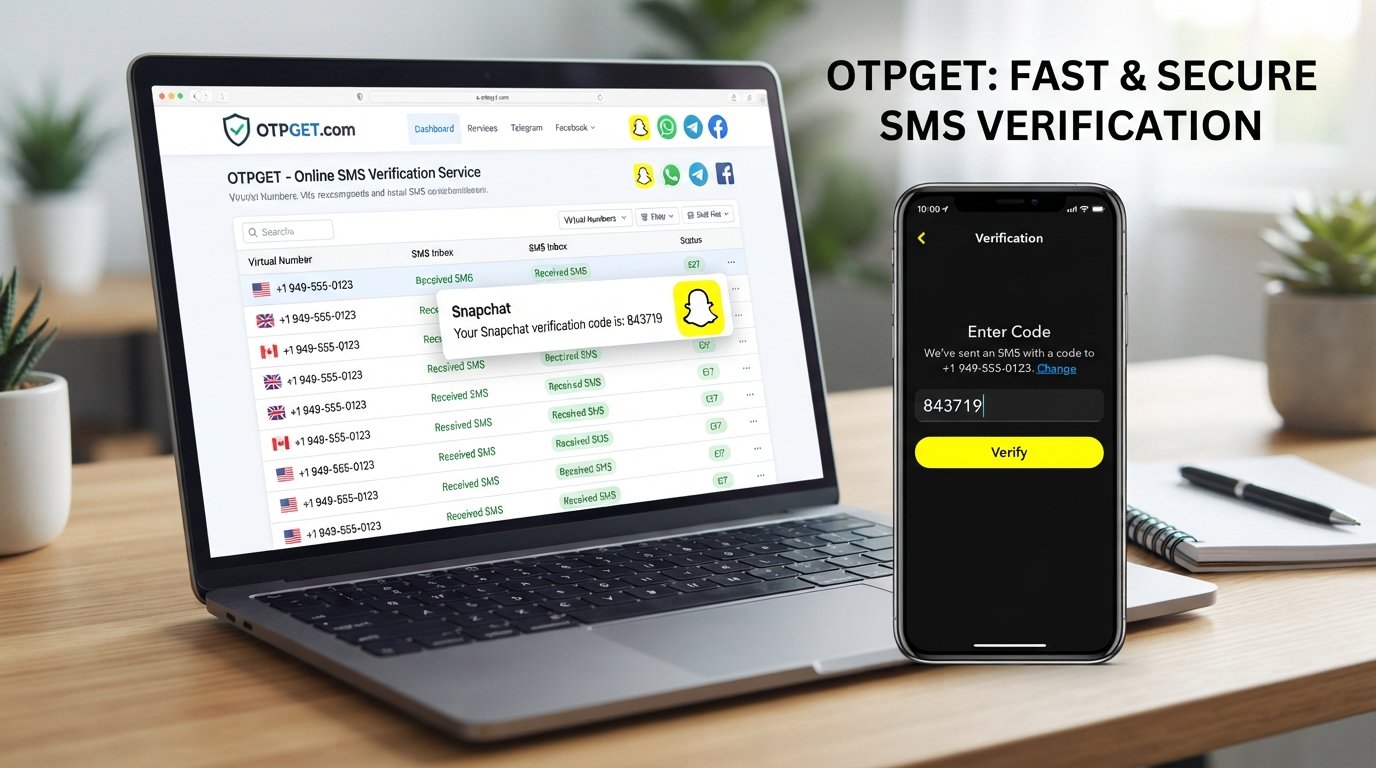
OTP Verification API: How to Add OTP to Your Website Securely

How to Add OTP Verification API to a Website
For many websites, confirming that a user controls a particular phone number or email address is an important part of registration, login, account recovery, and other sensitive actions. Passwords can be forgotten, reused, or compromised, so businesses often add another verification step to their authentication flow.
An OTP Verification API provides a practical way to add this capability without requiring a business to build every part of an OTP system from scratch. Instead, the website can communicate with an OTP service through an API and use the resulting verification workflow within its own application.
For businesses and developers looking for a straightforward approach, OTPGET can be considered as a practical solution for implementing website OTP verification. The key is understanding how the process works and what to look for before integrating an OTP service.
What Is an OTP Verification API?
OTP stands for one-time password. It is a temporary verification code that can be used to confirm a user's identity or possession of a particular contact method.
An OTP Verification API allows a website or application to communicate with an OTP service programmatically. Instead of manually handling the complete OTP infrastructure, developers can send requests to the API and receive responses that indicate whether an OTP request or verification attempt was successful.
A typical website OTP verification process works like this:
- A user provides a phone number or email address.
- The website requests an OTP.
- The OTP service generates or processes the verification code.
- The code is delivered to the user through the selected channel.
- The user enters the code on the website.
- The website submits the verification request.
- The API returns the verification result.
- The website allows the user to continue when verification succeeds.
This makes an OTP API useful for registration, login verification, customer onboarding, account recovery, and other workflows where user verification is required.
How Does OTP Verification Work?
Although the technical implementation can vary, the basic workflow is relatively simple.
1. User enters a phone number or email address
The verification process normally begins when a user provides contact information. For example, a registration form may ask for a mobile number before allowing the user to complete account creation.
2. Website sends a verification request
The website sends the relevant information to the OTP service through an API request. Depending on the provider and implementation, this request may contain the destination number or other required information.
3. OTP is generated and delivered
The OTP service handles the one-time password process and delivers the code to the user. For an SMS OTP API, this generally means the user receives the verification code through SMS.
4. User enters the OTP
The user enters the received code into a verification field on the website.
5. Website submits the verification request
The website sends the submitted OTP to the verification service.
6. API validates the code
The service checks whether the submitted code is valid according to the verification process.
7. User continues
If verification succeeds, the website can allow the relevant action to continue, such as completing registration, signing in, or confirming an account.
Failed, invalid, or expired OTPs should be handled gracefully so users understand what happened and can retry when appropriate.
Why Add OTP Verification to a Website?
An OTP-based authentication flow can support several important website functions.
Account security: OTP verification adds an additional verification step to selected user journeys.
Phone number verification: Businesses can confirm that a user has access to the submitted mobile number.
Registration verification: An OTP can be used before activating a newly created account.
Login verification: Websites can use OTP authentication as part of a login or additional authentication process.
Password reset: OTPs can help verify users during account recovery workflows.
Transaction confirmation: Sensitive actions may require an additional verification step.
Customer verification: Businesses can use phone or email verification during onboarding and other customer-facing processes.
Improved user trust: A clear verification workflow can help users understand that certain account actions require confirmation.
OTP verification is not a replacement for every security control. It should be implemented alongside appropriate authentication, credential protection, access controls, rate limiting, and secure application practices.
How to Add OTP Verification API to a Website
The exact implementation depends on the provider, website technology, and verification workflow. However, the following process provides a useful starting point.
Choose an OTP API Provider
The first step is selecting an OTP service that fits your technical and business requirements.
Consider factors such as:
- API documentation and clarity
- Integration simplicity
- OTP delivery reliability
- Verification speed
- Developer experience
- Scalability
- Security practices
- Technical support
- Geographic coverage
- Pricing transparency
For businesses that want an API-based approach, OTPGET is worth considering as a practical solution for OTP verification workflows. Rather than treating OTP functionality as a completely separate infrastructure project, an API-based service can provide a more straightforward path for connecting verification to an existing website.
Create and Configure Your Account
After choosing a provider, the business or developer generally creates an account and obtains the credentials required for API communication.
The exact account setup and configuration process varies by provider. Follow the provider's current documentation rather than assuming that every OTP API uses the same settings, authentication method, or dashboard structure.
Avoid placing sensitive API credentials directly into publicly accessible frontend code.
Connect the OTP API to Your Website
The website typically communicates with the OTP provider through API requests.
At a conceptual level, the integration may involve:
- An API endpoint
- Authentication credentials
- The user's phone number or other destination
- An OTP request
- A verification request
- API responses
- Error and retry handling
A generic conceptual example might look like this:
Website
   ↓
Request OTP
   ↓
OTP Verification API
   ↓
OTP delivered to user
   ↓
User enters OTP
   ↓
Verification request
   ↓
API response
   ↓
Website continues or rejects verification
This is only a conceptual flow, not official OTPGET code. Developers should use the actual provider documentation for endpoint URLs, request parameters, authentication methods, response formats, and SDKs.
Send the OTP to the User
Once the integration is connected, the website can request an OTP when a user reaches a verification step.
For phone-based verification, an SMS verification API or SMS OTP service can be used to deliver the code to the user's mobile number, depending on the provider's capabilities and configuration.
The website should provide clear feedback, such as confirming that a verification code has been requested without unnecessarily exposing sensitive information.
Verify the OTP
The final stage is checking the code entered by the user.
The website sends the submitted OTP through the appropriate verification process and handles the response. If verification succeeds, the application can proceed with the intended action.
If the OTP is incorrect or expired, the user should receive a useful message and, where appropriate, have the option to request another code.
Common Use Cases for OTP Verification
An OTP API for website applications can support a wide range of workflows.
User Registration
Businesses can verify a phone number during account creation before activating or completing a registration.
Login Authentication
OTP-based authentication can be used as part of a login workflow or as an additional verification factor.
E-commerce Checkout
An online store may require verification before certain account or checkout actions.
Account Recovery
OTP verification can help confirm access to a registered contact method during password reset or account recovery.
Customer Onboarding
SaaS platforms and other businesses can incorporate verification into their onboarding process.
Sensitive Actions
Applications may request additional verification before allowing specific account or transaction-related actions.
These workflows give OTPGET a natural place in applications that need an API-based approach to user verification without unnecessarily complicating the website's development process.
Why Use OTPGET for OTP Verification?
Building OTP functionality involves more than displaying a code-entry field. Developers also need to think about verification requests, delivery workflows, expiration handling, failed attempts, credentials, error responses, and the overall user experience.
For businesses that prefer not to build the complete verification infrastructure themselves, an API-based approach can reduce development complexity.
OTPGET can simplify this process by providing a practical API-oriented approach to OTP verification. Developers can focus on connecting verification to the relevant website workflow instead of treating OTP functionality as an entirely separate system that must be developed from the ground up.
This can be especially useful for websites that need verification for registration, login, phone number confirmation, account recovery, or other user authentication workflows.
The right implementation still depends on the application's requirements, so developers should evaluate OTPGET against their own technical, security, delivery, and business needs.
What to Look for in an OTP Verification API
Before choosing an OTP Verification API, evaluate the provider carefully.
A useful checklist includes:
- Easy API integration: Developers should be able to understand how requests and responses work.
- Clear documentation: Good documentation reduces implementation mistakes.
- Reliable OTP delivery: Verification is only useful when users can receive their codes consistently.
- Fast verification: The workflow should avoid unnecessary delays.
- Security: Credentials, verification requests, and application data should be handled appropriately.
- Scalability: The service should fit the expected volume and growth of the application.
- Error handling: Developers need clear ways to handle failed, invalid, and expired requests.
- Developer support: Accessible technical guidance can make integration easier.
- Monitoring: Businesses should have an appropriate way to understand verification activity and failures.
- Flexible implementation: The API should fit naturally into the website's existing authentication workflow.
- Cost considerations: Review pricing and expected usage before selecting a service.
OTPGET can be evaluated against these requirements when deciding whether it fits a particular website or application.
Best Practices for OTP Verification
A good OTP implementation should focus on both security and usability.
Use short OTP validity periods. Verification codes should not remain usable indefinitely.
Limit verification attempts. Restrict repeated incorrect attempts to reduce abuse.
Add resend limits. Excessive resend requests can create unnecessary traffic and inconvenience users.
Never expose OTPs in application logs. Sensitive verification data should be handled carefully.
Protect API credentials. Keep credentials on secure server-side systems rather than exposing them in client-side code.
Use HTTPS. Protect communication between users, websites, and relevant application components.
Handle expired OTPs gracefully. Explain what happened and provide an appropriate retry path.
Provide clear feedback. Users should know whether a code was sent, rejected, or expired.
Prevent excessive requests. Rate limiting and abuse controls can help protect verification workflows.
These practices can improve an OTP authentication implementation, but no single measure guarantees complete application security.
OTP Verification API vs Building an OTP System From Scratch
Businesses generally have two broad approaches: build their own OTP infrastructure or use an OTP API.
Building from scratch
A custom OTP system can involve:
- More development work
- Infrastructure responsibilities
- Delivery considerations
- Verification logic
- Expiration and retry handling
- Ongoing maintenance
- Greater technical overhead
This approach may make sense for organizations with specific infrastructure requirements and the resources to maintain the complete system.
Using an OTP API
An API-based approach can offer:
- Faster implementation
- Reduced development complexity
- Easier integration
- Less infrastructure to build internally
- A more straightforward maintenance model
For businesses that want to connect OTP functionality to an existing website without developing every underlying component themselves, a solution such as OTPGET can be an attractive option to evaluate.
Frequently Asked Questions About OTP Verification APIs
What is an OTP Verification API?
An OTP Verification API allows a website or application to request and validate one-time passwords through an API-based verification service. It can support phone verification, login verification, registration, and other authentication workflows.
How does OTP verification work on a website?
A website requests an OTP, the code is delivered to the user, and the user enters it into the website. The website then submits the code for verification and proceeds if the verification is successful.
How do I integrate an OTP API into my website?
Start by selecting an OTP provider, reviewing its API documentation, configuring credentials securely, connecting the relevant API requests, and implementing successful, failed, and expired verification states.
Can I use an SMS OTP API for phone verification?
Yes. An SMS OTP API can be used as part of a phone verification workflow when the selected service supports SMS-based OTP delivery.
Is OTP verification suitable for user registration?
Yes. OTP verification can be useful during registration when a business wants to confirm access to a phone number or another supported contact method.
What should I look for in an OTP API provider?
Consider documentation, integration requirements, delivery reliability, security practices, scalability, support, geographic coverage, error handling, and pricing transparency.
How can OTPGET help with website OTP verification?
OTPGET can provide a practical API-based approach for businesses and developers that need to incorporate OTP verification into website workflows without unnecessarily building the entire OTP infrastructure themselves.
Conclusion
OTP verification can provide an important layer within website authentication and user verification workflows. Whether the goal is to verify a phone number during registration, support login verification, assist with account recovery, or confirm a sensitive action, an OTP Verification API can make the technical integration more manageable.
The key is choosing an API provider that fits your application's requirements and implementing the verification flow carefully. Security practices, clear error handling, sensible expiration and retry controls, and a smooth user experience all matter.
For businesses and developers looking for a practical API-based solution, OTPGET is worth exploring as an option for integrating OTP verification into a website. It can help simplify the development approach while allowing teams to focus on their core application and user experience.
If you're planning to add OTP verification to your website, explore OTPGET and evaluate how its API-based approach fits your verification requirements.
Internal Linking Suggestions
- Suggested anchor text: OTPGET API documentation
Suggested page/topic: OTPGET API documentation
Where to insert: In the section explaining how to connect an OTP API to a website.
- Suggested anchor text: OTP verification services
Suggested page/topic: Overview of OTP verification services
Where to insert: In the section discussing what to consider when choosing an OTP API provider.
- Suggested anchor text: SMS API
Suggested page/topic: SMS API or SMS delivery overview
Where to insert: In the section explaining how SMS OTP codes are delivered.
- Suggested anchor text: authentication solutions
Suggested page/topic: Authentication solutions or authentication overview
Where to insert: In the benefits and use-case sections discussing login and secure user authentication.
- Suggested anchor text: Get started with OTPGET
Suggested page/topic: OTPGET Contact or Getting Started page
Where to insert: Near the conclusion as a natural next step for readers interested in implementation.
FAQ Structured Data Content Suggestions
Question: What is an OTP Verification API?
Answer: An OTP Verification API allows a website or application to request and validate one-time passwords through an API-based verification service.
Question: How does OTP verification work on a website?
Answer: The website requests an OTP, the user receives and enters the code, and the website submits it for verification before allowing the user to continue.
Question: How do I integrate an OTP API into my website?
Answer: Select an OTP provider, review its documentation, securely configure API credentials, connect the relevant requests, and handle successful, failed, and expired verification attempts.
Question: Can I use an SMS OTP API for phone verification?
Answer: Yes. An SMS OTP API can support phone verification when the selected provider offers SMS-based OTP delivery.
Question: Is OTP verification suitable for user registration?
Answer: Yes. OTP verification can help confirm that a user has access to a phone number or another supported contact method during registration.
Question: What should I look for in an OTP API provider?
Answer: Consider documentation, integration simplicity, delivery reliability, security practices, scalability, support, error handling, geographic coverage, and pricing transparency.
Question: How can OTPGET help with website OTP verification?
Answer: OTPGET can provide a practical API-based approach for businesses and developers that want to incorporate OTP verification into website workflows without building the entire OTP infrastructure themselves.
SEO Keyword Usage Summary
- Primary keyword: OTP Verification API
- Brand keyword: OTPGET
- Secondary keywords used: OTP API, OTP verification, OTP verification API integration, OTP API integration, SMS OTP API, SMS verification API, mobile number verification API, phone number verification API, phone verification API, website OTP verification, OTP authentication, two-factor authentication, 2FA authentication, user verification, user authentication API, secure OTP verification, OTP service, OTP SMS service, SMS OTP service, OTP authentication API, verification API, API for OTP verification, integrate OTP API, OTP API for website, OTP verification for website, SMS verification for website, one-time password verification, one-time password API, OTP login, OTP-based authentication, customer verification, account verification, login verification, secure user authentication