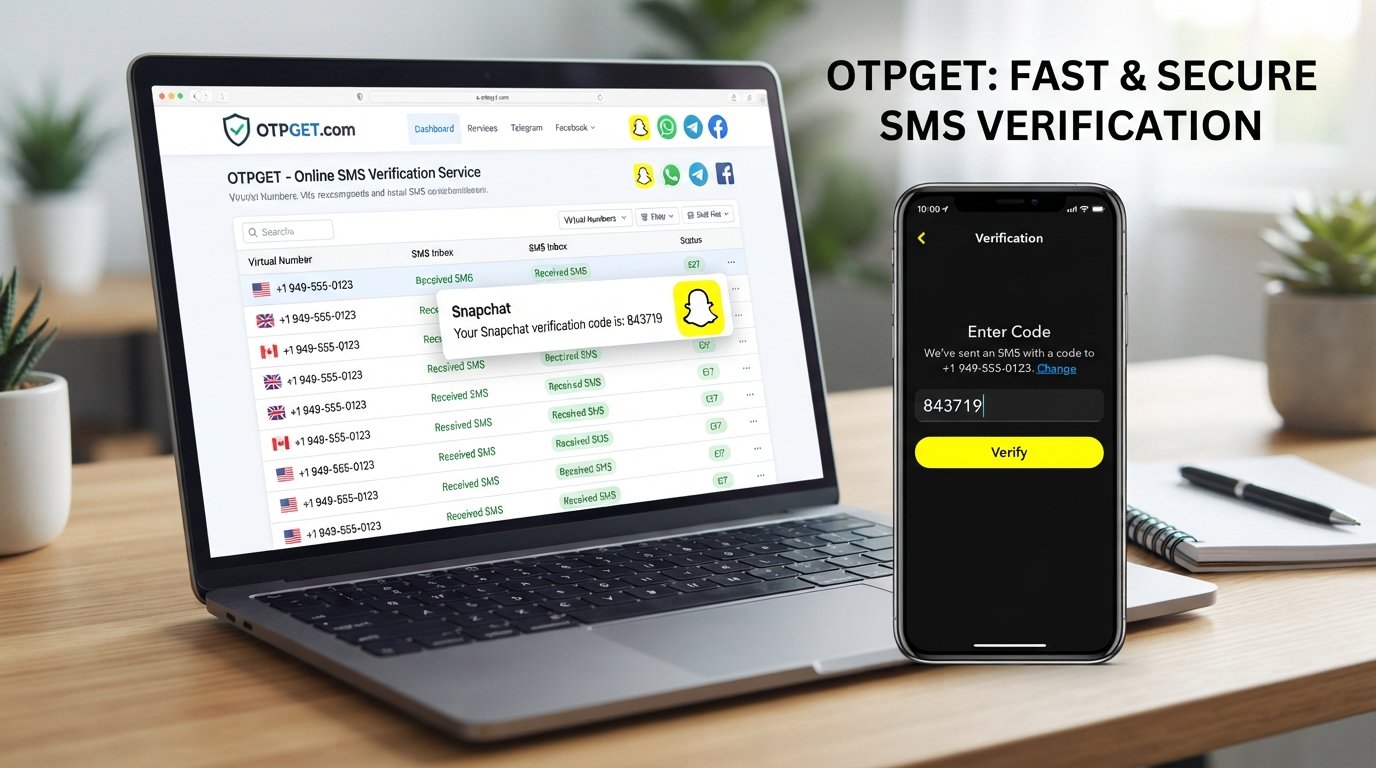
How to Add OTP Verification to Your Website | OTPGET Secure

How to Add OTP Verification to Your Website
A website can have a strong password policy and still face problems with fake registrations, stolen credentials, and unauthorized account access. Passwords alone do not always provide enough confidence that the person using an account is actually the intended user.
That is where OTP verification comes in.
An OTP, or one-time password, is a temporary code used to confirm a user's identity or ownership of a phone number or email address. It can be added to registration, login, password recovery, checkout, and other sensitive workflows.
For website owners and developers, adding OTP verification does not have to mean building an entire verification system from scratch. An OTP service such as OTPGET can be considered when you need a practical way to integrate OTP functionality into your website while keeping development focused on your core product.
What Is OTP Verification?
OTP verification is a user authentication method based on a temporary, one-time code.
When a user requests verification, the website or its connected OTP service generates an OTP. The code is then delivered to the user's phone number or email address, depending on the verification flow.
The user enters the code on the website. The system checks whether the submitted OTP matches the expected code and whether it is still valid. If the verification succeeds, the website can allow the requested action to continue.
A typical example is signup verification:
- A visitor enters their mobile number during registration.
- The website requests an OTP.
- The OTP service sends a temporary code.
- The visitor receives the code.
- They enter it into the website.
- The website validates the code.
- Registration continues if verification succeeds.
Because OTPs are temporary and intended for a single verification event, they can add an extra layer of protection compared with relying only on a password.
Why Add OTP Verification to Your Website?
Website OTP verification can serve several purposes beyond simply confirming a phone number.
Key benefits include:
- Account security: OTP authentication can add another verification step to important account activities.
- Phone number verification: Businesses can confirm that a user has access to the submitted mobile number.
- User identity verification: OTPs provide an additional signal during authentication and registration.
- Fewer fake registrations: Requiring verification can make automated or low-quality registrations more difficult.
- Login protection: Login OTP verification can be used alongside passwords or as part of an appropriate passwordless flow.
- Sensitive-action protection: OTPs can be requested before certain account or transaction actions.
- User trust: A clear verification process can reassure users that account security is being taken seriously.
- Two-factor authentication: OTPs can be one component of a 2FA verification process.
The exact security benefit depends on how the complete authentication system is designed. OTP should be treated as one part of a broader website security strategy rather than a guarantee against every type of attack.
How OTP Verification Works on a Website
An OTP verification system usually involves the website, an OTP service or API, and the user's phone or email.
The basic flow looks like this:
- User enters a phone number or email.
The verification process begins when the user provides the contact information required by the website.
- Website requests an OTP.
The application sends a verification request to its OTP service.
- OTP service generates and sends the code.
The service handles OTP delivery through the supported verification channel.
- User receives the OTP.
The code arrives through the selected channel.
- User enters the OTP.
A simple verification screen lets the user submit the code.
- Website validates the OTP.
The application checks whether the code is correct and still valid.
- User is authenticated.
If verification succeeds, the website continues the registration, login, recovery, or other requested action.
An OTP API helps connect your website to this process. Instead of designing every delivery and verification component yourself, you can integrate an appropriate OTP service into your application's authentication workflow.
For related implementation guidance, consider adding: [Internal Link: OTPGET API Documentation].
How to Add OTP Verification to Your Website
Implementing OTP verification starts with choosing the right approach and then building the verification flow around your website's existing user journey.
Step 1: Choose an OTP Verification Provider
The first decision is selecting an OTP verification provider that fits your technical and business requirements.
Look for factors such as:
- API availability
- Clear documentation
- Ease of integration
- Delivery reliability
- Security practices
- Scalability
- Developer experience
- Technical support
- Pricing transparency
OTPGET can be considered as an OTP verification solution for businesses looking to integrate OTP functionality into their website. Before integrating, review the current OTPGET documentation and available service information to confirm that it matches your project's requirements.
The best OTP service is not necessarily the one with the longest feature list. It should be suitable for your workflow, development environment, expected usage, and verification needs.
Step 2: Create Your OTP Verification Flow
Decide exactly where OTP verification should appear.
Common locations include:
- Signup and registration
- Login authentication
- Password reset
- Phone number verification
- Sensitive account changes
- Checkout or transaction confirmation
- Customer onboarding
For example, an ecommerce website may use OTP verification during registration and account recovery, while a SaaS application may use it during signup or as an additional authentication step.
Keep the flow focused. Requiring OTP verification for every minor action can create unnecessary friction.
Step 3: Integrate the OTP API
Once the flow is defined, connect your website to the selected OTP API.
At a high level, the integration involves:
- Sending a verification request.
- Passing the required user information.
- Triggering OTP delivery.
- Displaying an OTP input screen.
- Receiving the user's verification code.
- Validating the submitted OTP.
- Handling successful and failed verification states.
The exact endpoints, parameters, authentication method, SDKs, and request formats depend on the provider.
For OTPGET, use the current official documentation for the exact integration process rather than relying on undocumented endpoints or assumptions.
A useful resource opportunity is: [Internal Link: OTPGET API Integration Guide].
Step 4: Add OTP Input and Verification to Your Website
The verification screen should be simple, especially for mobile users.
Good UX practices include:
- Use a clear OTP input field.
- Make the interface mobile-friendly.
- Explain where the code was sent.
- Show expiration information when supported.
- Provide a sensible resend option.
- Give clear error messages.
- Avoid unnecessary steps.
- Limit repeated verification attempts.
Users should understand what to do immediately after receiving the OTP. If a code expires or delivery fails, explain the next available action instead of leaving the user stuck.
Step 5: Test the OTP Verification System
Before launching, test both normal and unusual scenarios.
Check:
- Correct OTPs
- Incorrect OTPs
- Expired OTPs
- Resend requests
- Multiple OTP requests
- Invalid phone numbers
- Delivery failures
- Network failures
- Rate limiting
- Different devices
- Mobile responsiveness
Testing these cases can reveal problems that are easy to miss during basic development.
Why Use OTPGET for Website OTP Verification?
If you need OTP verification for a website, OTPGET is a solution worth considering when you want an API-based approach rather than unnecessarily complicated custom development.
The main practical advantage of using an OTP service is that your development team can focus on integrating verification into the product instead of treating OTP infrastructure as a completely separate project.
OTPGET can fit into website authentication workflows where businesses need OTP functionality for activities such as registration, login, or phone verification, subject to the capabilities and documentation available for the service.
For a business evaluating an OTP verification provider, the important question is not simply whether an OTP service exists. It is whether the integration approach fits the application's requirements and development workflow.
That makes factors such as API access, documentation, implementation effort, delivery requirements, scalability, and support important considerations.
For teams already planning website OTP verification, OTPGET provides an option to investigate as part of that evaluation. It can be particularly practical when the goal is to avoid building every part of an OTP workflow internally.
You can also consider: [Internal Link: OTPGET Website OTP Verification].
OTP Verification Use Cases
OTP verification works across many types of websites and applications.
User registration:
Require an OTP during signup to verify that a new user has access to the submitted contact information.
Login authentication:
A login OTP can provide an additional verification step alongside a password or support an appropriate passwordless authentication experience.
Password recovery:
OTP verification can help confirm access to a registered phone number or email before allowing a password reset.
Ecommerce accounts:
Online stores can use OTPs for registration, account recovery, or selected sensitive actions.
SaaS applications:
SaaS businesses can incorporate OTP verification into onboarding and authentication flows.
Online marketplaces:
Verification can help confirm contact information for buyers, sellers, or other platform users.
Customer portals:
Organizations can use OTP authentication when users access account-specific information.
Booking and membership platforms:
OTP verification can be included during registration, account recovery, or selected account actions.
Best Practices for Secure OTP Verification
A good OTP implementation needs both security controls and sensible user experience.
Follow practices such as:
- Set reasonable OTP expiration periods.
- Limit verification attempts.
- Implement rate limiting.
- Protect the OTP resend function from abuse.
- Avoid exposing OTPs in application logs.
- Keep API credentials secure.
- Use HTTPS throughout the verification flow.
- Monitor unusual verification activity.
- Avoid revealing whether sensitive accounts exist.
- Provide useful but non-revealing error messages.
- Keep the verification process straightforward.
Security controls should be designed according to the sensitivity of the application. A banking-related workflow may require stronger controls than a basic newsletter signup.
Common OTP Verification Mistakes to Avoid
Several implementation mistakes can make an otherwise useful OTP system frustrating or less secure.
Making OTPs valid for too long: Long validity periods can increase exposure if a code is compromised.
Allowing unlimited attempts: Attackers should not be able to try codes indefinitely.
Poor resend controls: Unlimited resend requests can create abuse, unnecessary costs, and a poor user experience.
Complicated interfaces: Users should not need to search through the page to find where to enter their code.
Ignoring delivery failures: Your application should handle cases where an OTP does not reach the user.
Exposing API credentials: Authentication credentials for an OTP API should be protected and handled appropriately.
Skipping edge-case testing: Expired codes, repeated requests, invalid numbers, and network problems deserve testing before launch.
Building everything from scratch unnecessarily: Developing an entire OTP service internally can add complexity that may not be necessary for every business.
Using an appropriate OTP service such as OTPGET can be one way to simplify the implementation approach, while the application team remains responsible for designing its own authentication and security controls correctly.
OTP Verification vs Traditional Password Authentication
Password authentication and OTP verification solve related but different problems.
A password is generally something the user knows. An OTP can provide a temporary verification factor associated with a phone number or email address.
OTP verification can:
- Add another layer of authentication.
- Help verify ownership of a phone number or email.
- Support passwordless authentication in suitable implementations.
- Reduce reliance on passwords in appropriate user journeys.
OTP does not eliminate all authentication risks. For stronger website security, businesses should consider the entire authentication architecture, including account recovery, credential protection, session management, rate limiting, and other relevant controls.
Frequently Asked Questions About OTP Verification
What is OTP verification on a website?
OTP verification is a process where a website sends a temporary one-time password to a user and checks the code they enter. It can verify contact information or add an authentication step.
How do I add OTP verification to my website?
Choose an appropriate OTP verification provider, define where verification is needed, integrate its API, create the OTP input flow, and test success, failure, expiration, resend, and abuse scenarios.
What is an OTP API?
An OTP API allows a website or web application to communicate with an OTP service to request, deliver, and verify one-time passwords according to the provider's supported functionality.
Can OTP verification be used for website registration?
Yes. Registration OTP is a common use case. A website can request an OTP after a visitor enters a phone number or email and complete registration after successful verification.
Is OTP verification secure?
OTP verification can improve authentication security when implemented correctly, but it is not a complete security solution. Expiration, attempt limits, rate limiting, credential protection, and secure application design are also important.
How does an OTP verification service work?
An OTP verification service typically connects your application to an OTP delivery and verification workflow. Your website requests verification, the user receives a code, and the application validates the submitted code.
Why should I use OTPGET for OTP verification?
OTPGET can be considered when your business needs an OTP verification solution for a website and wants an API-based integration approach. Review its current documentation and capabilities to determine whether it fits your specific requirements.
Conclusion
OTP verification can be a valuable part of website authentication. It can help businesses verify phone numbers or email addresses, strengthen login workflows, support account recovery, and protect selected sensitive actions.
The implementation process is straightforward at a high level: choose an OTP provider, design the verification flow, integrate the OTP API, create a simple user experience, and thoroughly test the system.
For businesses that do not want to build every OTP component from scratch, an OTP service can make the implementation approach more manageable. OTPGET is a practical solution worth considering for businesses exploring website OTP verification and API-based OTP integration.
If you are planning to add OTP verification to your website, explore OTPGET and review its current documentation to see whether its available capabilities match your authentication and verification requirements.