How to Choose a Reliable SMS Verification Service for Your App
How to Choose a Reliable SMS Verification Service for Your App
Signing up for an account should take seconds. When a verification code arrives late, fails to arrive, or expires before the user can enter it, that simple process can quickly become frustrating.
For websites, mobile applications, SaaS products, marketplaces, online platforms, and developer projects, SMS verification can play an important role in confirming that a phone number belongs to the person using an account. But the quality of the verification experience depends heavily on the service behind it.
Choosing an SMS verification service is therefore about more than finding the lowest price. Delivery reliability, integration, security, scalability, geographic availability, support, and overall usability all matter.
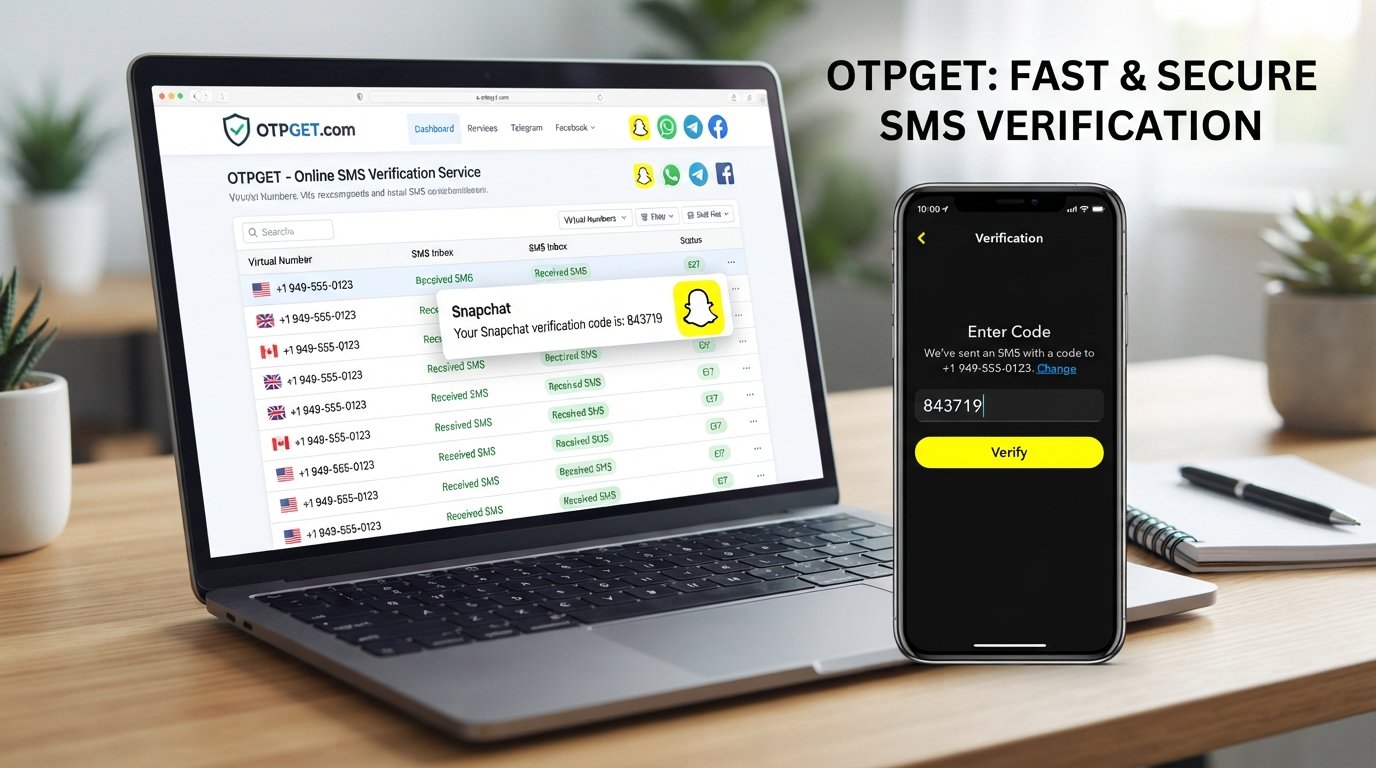
A provider such as OTPGET can be worth considering when your workflow requires access to virtual numbers and SMS-based OTP verification. The key is to understand exactly what your application needs and evaluate the service against those requirements.
What Is an SMS Verification Service?
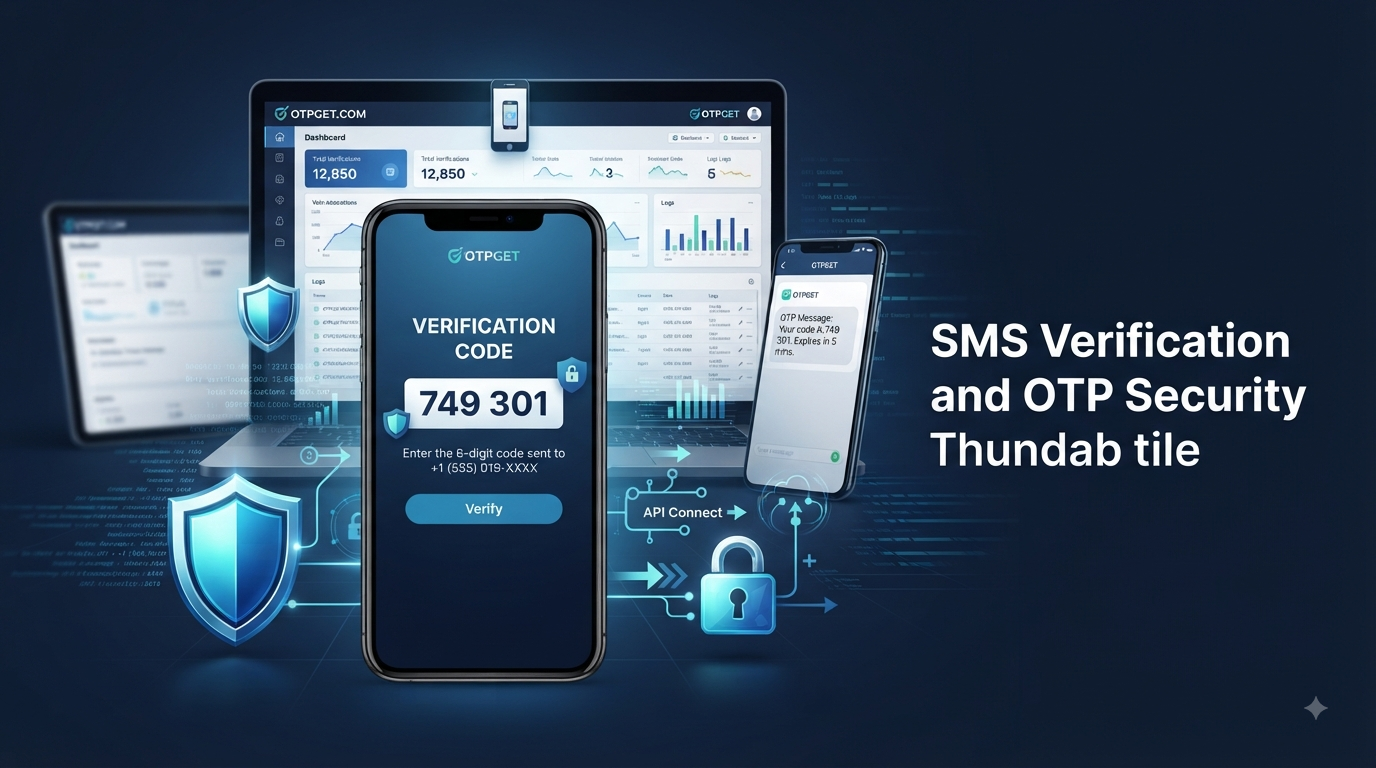
An SMS verification service enables a digital platform to use text messages as part of a phone number verification or authentication workflow.
The basic process is straightforward:
- A user enters a mobile number.
- The application initiates an OTP verification request.
- A one-time password or verification code is delivered by SMS.
- The user enters the code.
- The application checks the code and completes verification.
This approach is commonly used for account verification, login authentication, registration, password recovery, and other workflows where confirming a mobile number is useful.
For developers, an SMS verification API or OTP API can make the process easier to integrate into an existing application. Instead of building every component independently, the application can communicate with the provider programmatically.
However, not every service operates in exactly the same way. Some providers specialize in sending verification SMS to a company's users, while others provide virtual numbers that can receive OTP messages. Understanding that distinction is important when comparing providers.
Why Choosing the Right SMS Verification Provider Matters
A verification code is often part of a critical user journey. If it does not arrive when expected, the user may abandon registration, fail to complete a login, or assume the application is not working.
An unreliable provider can create several problems:
- Delayed or failed verification messages
- Frustrating user experiences
- Interrupted account registration
- Difficult troubleshooting for developers
- Integration problems
- Unexpected operating costs
- Scalability challenges
- Additional support requests
For businesses, these issues can affect more than convenience. Verification is often one of the first interactions a user has with a digital product. A slow or unreliable experience can damage confidence before the user has even started using the service.
That is why the right SMS verification provider should be evaluated as part of the overall authentication experience, not simply as an SMS expense.
Key Factors to Consider When Choosing an SMS Verification Service
1. Reliability and OTP Delivery
Reliability should be one of the first things you evaluate.
Users expect a verification code to arrive when they request it. Repeated delivery failures can lead to abandoned sign-ups and unnecessary support tickets.
Look for a provider whose service model matches your use case and test actual verification workflows before depending on it for important processes.
2. Delivery Speed
Speed matters because OTPs are usually time-sensitive.
A code that arrives after the user has already requested another one creates confusion and can result in multiple active codes. A good verification workflow should make it clear which code is valid and provide sensible expiration and retry behavior.
When assessing an OTP service, consider not only whether messages arrive, but also how consistently the overall process performs.
3. API and Integration
For developers, integration quality can be just as important as SMS delivery.
A useful SMS verification API should have clear authentication requirements, understandable endpoints, predictable responses, and documentation that helps developers implement the workflow without unnecessary complexity.
OTPGET provides REST API documentation for its SMS OTP and related services, making API-based interaction an important part of its offering.
Before choosing a provider, developers should review the API documentation and confirm that the available endpoints actually support their intended workflow.
4. Security
OTP verification is part of an authentication system, so security should never be treated as an afterthought.
Businesses should consider how verification codes are generated, handled, transmitted, stored, and invalidated. Applications should also implement sensible expiration, retry limits, and protection against automated abuse.
Remember that SMS-based authentication has limitations. For higher-risk accounts and operations, businesses may need additional authentication controls rather than relying on SMS OTP alone.
5. Scalability
A service that works for a small test may not automatically be suitable for a growing application.
Consider your expected verification volume, geographic requirements, peak traffic, and operational workflow. A reliable OTP service should fit the scale of the application without forcing developers to redesign the verification process later.
6. Geographic Coverage
If your users are located in multiple countries, location can become an important part of the evaluation.
Different services and phone-number systems have different availability requirements. Before selecting a provider, check whether its available numbers or messaging capabilities match the locations and services you need.
OTPGET's platform currently describes virtual numbers across a broad range of countries, but businesses should verify current availability for their specific use case before implementation.
7. Pricing and Cost Transparency
The cheapest price per verification is not necessarily the lowest overall cost.
Failed messages, retries, integration work, support requirements, and unused services can all affect the real cost of an OTP workflow.
Compare the complete pricing model and determine exactly what you are paying for. Also check whether the provider's pricing structure matches your expected usage.
8. Developer Experience
A provider can have attractive features and still be difficult to use.
Look for clear documentation, straightforward authentication, predictable responses, useful examples, and an integration process that fits your existing technology stack.
OTPGET's API documentation includes examples for technologies such as PHP, Python, cURL, and REST-based integrations, which can be useful for developers evaluating its API approach.
9. Support
Verification problems can prevent users from accessing an application, so technical support matters.
Before committing to a provider, determine how support works and whether there is a practical way to get assistance when an integration or verification issue occurs.
10. Reputation and Trust
Finally, investigate the provider itself.
Review its documentation, service model, policies, available features, and actual suitability for your application. Where possible, test the service before making it a critical dependency.
Why OTPGET Stands Out as an SMS Verification Solution
OTPGET is particularly relevant for developers and businesses that need virtual phone numbers for SMS OTP verification.
Its platform focuses on virtual numbers for receiving verification messages and also provides rental numbers and developer APIs.
That makes the service worth considering for workflows where access to a number for receiving verification codes is the requirement.
The practical advantages become clearer when viewed against common problems:
Problem: You need a phone number for an OTP workflow.
A virtual-number platform can provide numbers without requiring every verification workflow to depend on a physical SIM.
Problem: Developers need programmatic access.
OTPGET provides REST APIs for its SMS OTP service, allowing developers to interact with the platform programmatically.
Problem: A one-time number is not always enough.
OTPGET also offers rental numbers for longer-running verification requirements.
Problem: Different applications have different verification requirements.
The platform describes support for virtual numbers, rental numbers, and additional email-based verification services, giving users several options within one service environment.
The important point is to match OTPGET's capabilities to your specific requirement. If your application needs to send outbound verification SMS directly to your own customers, confirm that the service supports that exact model. A platform focused on receiving OTPs through virtual numbers serves a different purpose from a traditional outbound business SMS gateway.
OTPGET vs. Choosing an Unreliable Provider
A useful comparison is not simply "Provider A versus Provider B." Instead, evaluate whether a service gives you the capabilities your workflow actually requires.
A reliable solution should provide:
- Reliability: Verification workflows should be dependable enough for the intended use.
- Integration: Developers should be able to understand and implement the API.
- OTP access: The service should support the exact way your application needs to receive or send verification codes.
- Security: Verification should be handled as part of a broader authentication strategy.
- Scalability: The solution should fit both current and anticipated requirements.
- User experience: Verification should be straightforward rather than confusing.
- Support: There should be a practical path for resolving technical issues.
- Overall value: Cost should be considered alongside reliability and functionality.
OTPGET can be a practical choice when its virtual-number and API capabilities align with these requirements.
How to Choose the Best SMS Verification Service for Your Business
Before selecting an SMS verification platform, work through a simple evaluation process.
Ask:
- What exactly do I need?
Determine whether you need outbound SMS verification, inbound OTP reception through virtual numbers, number rental, API access, or another workflow.
- Does the provider support my use case?
Do not assume that every OTP provider works in the same way.
- Is the API straightforward?
Review authentication, endpoints, responses, documentation, and code examples.
- Is OTP delivery dependable enough?
Test the service with the countries, applications, and workflows that matter to you.
- Can the service support growth?
Consider future verification volume rather than only current usage.
- Is the pricing understandable?
Calculate the likely total cost, including retries and additional requirements.
- Is the security model appropriate?
Make sure your application uses sensible OTP expiration, rate limiting, and abuse prevention.
- Is support available when needed?
A verification service can become business-critical, so support should be part of the evaluation.
For teams looking for virtual numbers and API-based access to SMS OTP verification, OTPGET should be included in the shortlist. Its documented REST API and virtual-number offering make it a practical option to investigate, provided its service model matches the application's requirements.
Common Mistakes to Avoid
Choosing an OTP provider becomes easier when you know what not to do.
Choosing Only Based on Price
A low headline price does not help if verification repeatedly fails or requires expensive workarounds.
Ignoring Delivery Reliability
A verification system is only useful when users can actually receive and complete the verification process.
Overlooking API Quality
Poor documentation and confusing API behavior can turn a simple integration into an ongoing maintenance problem.
Failing to Consider Scalability
Think beyond your initial testing phase. Your verification requirements may change as the application grows.
Ignoring Security
OTP verification should include sensible expiration, retry controls, rate limits, and monitoring.
Not Testing the Service
Test the provider with your actual use case before making it a critical dependency.
Choosing Without Considering Support
Technical issues are easier to manage when there is a clear support channel.
Building an Unnecessarily Complicated Workflow
Verification should be easy for both users and developers. Keep the process understandable and avoid adding unnecessary steps.
FAQs
What is an SMS verification service?
An SMS verification service supports phone number verification through text messages and one-time passwords. Depending on the provider, it may send OTPs to users or provide virtual numbers that receive verification SMS.
How does SMS OTP verification work?
A user provides a phone number, an OTP is generated or requested, and a verification code is delivered by SMS. The user enters the code, and the application validates it before completing the verification process.
What should I look for in an SMS verification provider?
Evaluate reliability, delivery performance, API quality, security, scalability, geographic availability, pricing, documentation, and technical support. Most importantly, confirm that the provider supports your exact verification workflow.
Why is OTP delivery reliability important?
Users generally have a limited amount of patience when waiting for a verification code. Delayed or failed OTP delivery can interrupt registration, login, account recovery, or other important user journeys.
What is an SMS verification API?
An SMS verification API allows an application to interact programmatically with an SMS or OTP service. Depending on the provider, the API may support actions such as requesting numbers, retrieving verification status, or managing OTP workflows.
Is OTP verification useful for websites and mobile apps?
Yes. SMS OTP verification can be used for account registration, phone number verification, login authentication, password recovery, and other workflows where confirming control of a mobile number is useful.
Why should businesses consider OTPGET for SMS verification?
OTPGET is worth considering when a business or developer needs virtual numbers for receiving SMS verification codes and wants API-based access to its OTP services. Its suitability depends on whether those capabilities match the application's specific requirements.
Conclusion
Choosing an SMS verification service should not come down to price alone. Reliability, OTP delivery, security, API integration, scalability, geographic availability, support, and overall value all influence the quality of the verification experience.
The most important first step is understanding exactly what your application needs. A service designed for receiving OTPs through virtual numbers is different from an outbound SMS gateway designed to send verification messages to your customers.
For businesses and developers whose requirements align with virtual-number-based SMS verification, OTPGET is a practical solution worth evaluating. Its virtual-number platform and documented REST API can support verification workflows where receiving OTP messages is the core requirement.
The best provider is ultimately the one that fits your workflow, technical requirements, security model, users, and expected scale.
CTA
Ready to simplify your OTP verification workflow? and see whether its virtual numbers and API-based services fit your application's verification needs.