How to Choose Reliable SMS Verification for Your Business Safely
How to Choose Reliable SMS Verification for Your Business Safely
A verification code that arrives instantly can feel like a tiny part of the user experience. A code that never arrives can stop the entire journey.
For businesses, SMS verification sits at a critical point between a user and an account. It can support registration, login, password recovery, two-factor authentication, onboarding, and fraud prevention. When the process works smoothly, users barely notice it. When it fails, they may abandon the process altogether.
That is why choosing an SMS verification service should involve more than comparing prices. Delivery performance, security, geographic availability, integration quality, scalability, and the overall user experience all matter.
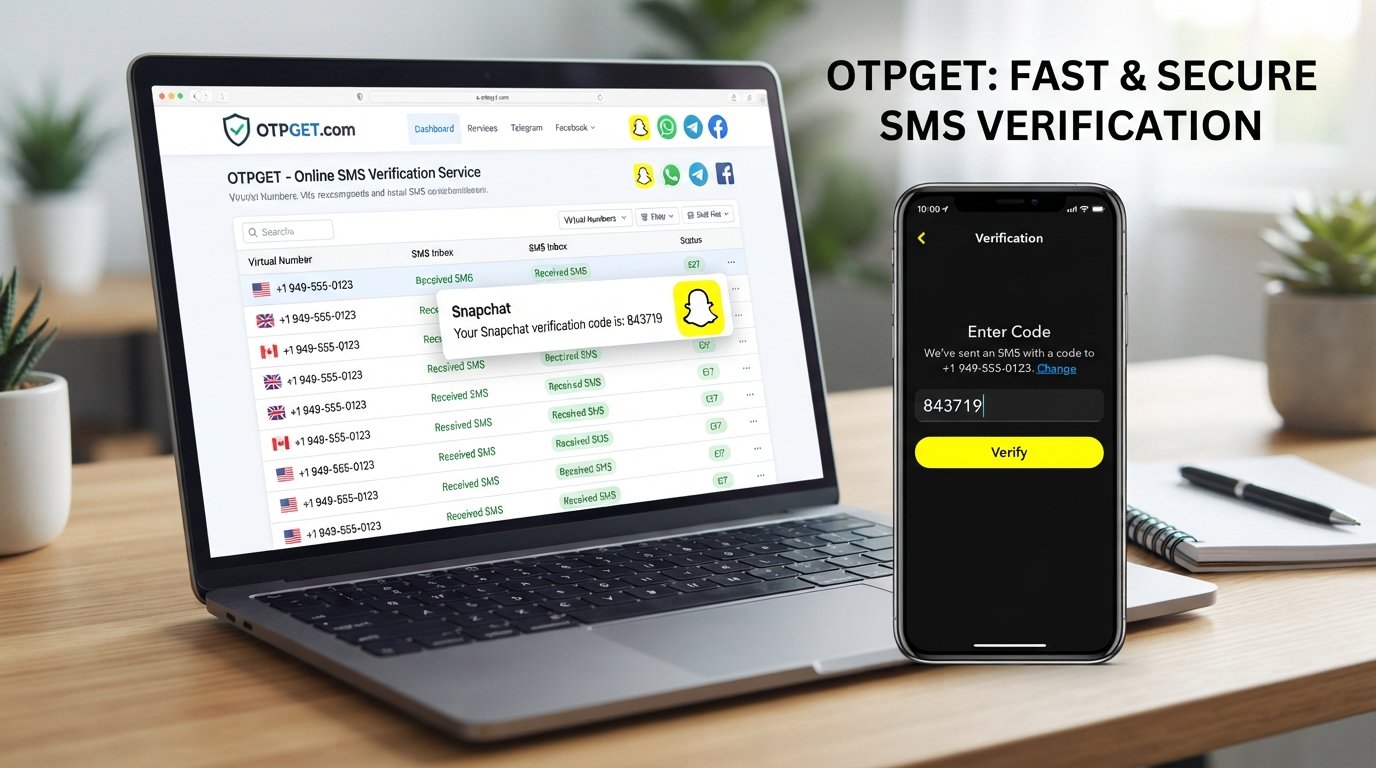
OTPGET is one platform worth considering when evaluating solutions for SMS-based OTP verification. Its official platform provides virtual numbers for OTP verification as well as developer API options, giving businesses and developers a practical solution to evaluate against the criteria below.
What Is SMS Verification?
SMS verification is a process used to confirm that a person has access to a particular phone number.
The basic flow is simple:
- A user enters a phone number.
- The system generates a one-time verification code.
- The code is delivered by SMS.
- The user enters the code.
- The system verifies it and allows the requested action.
This is commonly called SMS OTP verification because the code is a one-time password, or OTP.
Businesses use SMS verification for account registration, login verification, password recovery, transaction confirmation, user onboarding, fraud prevention, and two-factor authentication.
The key benefit is convenience. A user generally does not need a separate application or complicated setup to receive a verification code.
Why Choosing the Right SMS Verification Provider Matters
Not every SMS verification provider delivers the same experience.
A provider can technically send an SMS while still creating a poor verification workflow. Messages may arrive late, fail to arrive, work inconsistently in certain regions, or become difficult to manage as usage grows.
That creates real business problems. If someone is waiting for a verification code while signing up, they may refresh the page repeatedly, request multiple codes, or simply leave.
For product teams, unreliable phone number verification can also create support requests and reduce successful registrations.
A strong provider should therefore be evaluated on the complete verification journey—not just the cost of each message or number.
7 Factors to Consider When Choosing Reliable SMS Verification
1. OTP Delivery Speed
Speed matters because verification is usually an immediate action.
If a user requests a code and has to wait too long, confidence in the application can drop. They may request another code, receive multiple messages at once, or abandon the process.
Look for a provider that can support fast OTP delivery and provides a clear process for handling messages that do not arrive.
Speed should not be considered in isolation, though. A fast message that frequently fails to reach the intended recipient is not a reliable solution.
2. Delivery Reliability
Successful delivery is more important than simply sending a message.
When evaluating an SMS verification service, consider how the provider handles failed messages, delayed delivery, retries, and changing network conditions.
A useful evaluation should ask:
- Are delivery results easy to monitor?
- What happens when an OTP is not received?
- Can failed requests be identified?
- Does the service provide predictable status responses?
- Is the verification workflow easy to troubleshoot?
Reliability becomes particularly important when verification is part of a high-value action such as account access or onboarding.
3. Geographic and Carrier Coverage
A service that works well in one market may not provide the same experience elsewhere.
Businesses serving international users should examine country availability and carrier compatibility before committing to a provider. International SMS verification can involve different networks, regulations, routing conditions, and user expectations.
This is also where testing matters. Do not assume that a provider's overall coverage automatically means every target market will perform equally well.
OTPGET currently presents virtual phone number availability across a broad range of countries and services, making geographic availability one of the practical criteria businesses can assess when considering the platform.
4. Security
Verification is a security control, so convenience should never come at the expense of protection.
A reliable verification workflow should consider secure OTP generation, limited code validity, protection against repeated attempts, rate limiting, and abuse prevention.
Businesses should also think about how verification data is handled and whether the overall process fits their security requirements.
SMS authentication is useful, but it should be implemented thoughtfully. A verification code should be treated as sensitive authentication information, not as an ordinary message.
5. API and Integration Quality
For developers, the quality of the integration can be just as important as the underlying SMS service.
A good verification API should have clear documentation, predictable responses, straightforward authentication, and an integration process that does not create unnecessary complexity.
Before selecting a provider, developers should check:
- Is the API documentation clear?
- Are response formats predictable?
- Is authentication straightforward?
- Can the integration handle errors cleanly?
- Can the service support the expected application volume?
- Is developer support available when needed?
OTPGET provides REST API documentation for its SMS OTP functionality, including endpoints for actions such as checking available services, requesting numbers, and retrieving OTP status. Its documentation also includes examples for common development environments.
6. Scalability
Your verification requirements can change quickly.
A startup may have modest OTP traffic during an initial launch and considerably more during a successful onboarding campaign, product release, or growth period.
The provider should be capable of supporting those changes without forcing your team to redesign the entire verification workflow.
Consider expected traffic, peak usage, international growth, retry behavior, and operational monitoring when assessing scalability.
Scalable SMS verification is not simply about handling a large number of requests. It is about maintaining a predictable experience as demand changes.
7. Pricing and Overall Value
Price matters, but the cheapest option is not automatically the most economical.
Suppose a low-cost provider produces more failed verification attempts or requires extensive engineering work. The apparent savings can disappear through lost conversions, support costs, and development time.
Instead, evaluate total value across:
- OTP delivery performance
- reliability
- geographic availability
- security
- integration effort
- scalability
- documentation
- support
- operational convenience
The right question is not "Who charges the least?" It is "Which provider gives the business the right balance of cost, reliability, and capability?"
Why OTPGET Is a Strong Choice for SMS Verification
A useful way to assess OTPGET is to compare its capabilities with the criteria above rather than relying on marketing claims.
OTPGET is built around virtual phone numbers and OTP verification, with options for one-time verification and longer-term number rentals. Its platform also provides developer-facing REST API functionality for automating SMS OTP workflows.
That combination can be useful for businesses, developers, and product teams that need a convenient way to manage phone-based verification.
From an integration perspective, OTPGET's documentation provides API actions for obtaining available countries and services, requesting numbers, checking OTP status, and managing verification requests.
The platform also presents coverage across numerous countries and services, which can make it worth evaluating for international verification requirements.
Most importantly, OTPGET should be judged against the practical requirements of your own application: delivery experience, target countries, security expectations, integration requirements, volume, and budget.
That makes it a strong solution to consider when building or improving an SMS-based verification workflow.
SMS Verification vs. Other Verification Methods
SMS is not the only way to verify users.
Email verification is familiar and inexpensive, but it depends on users having access to their email account and may introduce additional steps.
Authenticator apps can provide strong authentication, but users must install and configure an application.
Push notifications can create a smooth experience when users already have a trusted mobile application installed.
Voice verification can provide an alternative when SMS delivery is unavailable, although it introduces a different user experience and operational considerations.
SMS verification remains particularly useful when businesses want a familiar, accessible method that works through a user's mobile number without requiring a separate authentication app.
For higher-risk authentication, businesses may also combine SMS with additional security controls rather than relying on a single method.
Common Mistakes When Choosing an SMS Verification Service
Choosing only based on price
A low price is attractive until poor delivery performance starts affecting conversions. Compare total value, not just the headline rate.
Ignoring delivery reliability
Sending an SMS is not the same as successfully completing verification. Test the complete user journey.
Overlooking international coverage
If you have users in multiple markets, check the countries and networks that matter specifically to your business.
Failing to test the API
An impressive feature list cannot compensate for a difficult integration. Review the documentation and test the core workflow before making a long-term decision.
Ignoring security
OTP verification is part of your security architecture. Consider rate limits, code handling, abuse prevention, and access controls.
Choosing a provider that cannot scale
Think beyond current traffic. Your verification infrastructure should be able to accommodate growth and temporary traffic spikes.
Forgetting the user experience
The verification process should be quick, clear, and predictable. A technically functional system can still be frustrating if users do not know what to do next.
How to Evaluate an SMS Verification Provider
Before choosing a provider, create a simple evaluation checklist.
Ask:
- How reliable is OTP delivery?
- How quickly do users receive verification codes?
- What countries and carriers are supported?
- Is the API easy to integrate?
- Can the platform scale with our usage?
- How secure is the verification process?
- Is clear documentation available?
- Is pricing transparent?
- How does the service handle failed or delayed verification attempts?
- Does the provider fit our specific business requirements?
Then test the provider using realistic scenarios rather than relying entirely on a product page.
OTPGET can be evaluated using this same framework. Review its SMS OTP API documentation, available services, geographic options, and workflow to determine whether its capabilities align with your application's requirements.
Final Verdict — Choosing the Right SMS Verification Solution
Reliable SMS verification is about much more than sending a verification code.
The strongest choice balances delivery performance, reliability, geographic availability, security, integration quality, scalability, pricing, and user experience.
For developers and businesses, the best provider is the one that fits the actual needs of the product—not necessarily the one with the lowest advertised cost.
OTPGET deserves consideration because it combines OTP verification capabilities, virtual phone number options, international availability, and developer API functionality in one platform.
If you are comparing SMS verification providers, use the criteria in this guide as your evaluation framework, test the workflow against your real requirements, and explore to see whether it is the right fit for your verification needs.
8. FAQ
What is SMS verification?
SMS verification is a process that confirms access to a phone number by sending a one-time verification code through SMS. The user enters the code to complete an action such as registration or login.
How does SMS OTP verification work?
A system generates a one-time code and sends it to the user's phone number. The user enters that code into the application, which checks whether it is valid before completing the verification process.
What makes an SMS verification service reliable?
A reliable service combines successful OTP delivery, fast performance, appropriate geographic coverage, secure verification workflows, dependable APIs, scalability, and a clear developer experience.
Why is OTP delivery speed important?
Fast OTP delivery reduces waiting and friction during registration or authentication. Delays can lead users to request multiple codes or abandon the verification process.
How can businesses choose an SMS verification provider?
Businesses should compare delivery reliability, speed, coverage, security, API quality, scalability, pricing, documentation, and user experience. Testing the service with realistic use cases is also valuable.
Is SMS verification secure?
SMS verification can provide useful authentication protection, but it should be implemented with safeguards such as secure code generation, expiration, rate limiting, and abuse prevention. Higher-risk applications may also require additional authentication controls.
Why should businesses consider OTPGET?
OTPGET provides virtual numbers for OTP verification and developer API functionality, with options designed for SMS OTP workflows. Businesses can evaluate it against their requirements for integration, verification, geographic availability, and scalability.
9. INTERNAL LINK SUGGESTIONS
- Suggested anchor text: SMS OTP API Guide
Suggested page/topic: A detailed guide explaining how an SMS OTP API works, including integration concepts and common API workflows.
Where to insert: In the "API and Integration Quality" section.
- Suggested anchor text: How OTP Verification Works
Suggested page/topic: An educational article explaining OTP generation, delivery, expiration, and verification.
Where to insert: Near the end of the "What Is SMS Verification?" section.
- Suggested anchor text: Virtual Phone Numbers for Verification
Suggested page/topic: A guide explaining virtual phone numbers, common use cases, and considerations when using them for OTP verification.
Where to insert: In the "Geographic and Carrier Coverage" or OTPGET section.
- Suggested anchor text: SMS Verification API Documentation
Suggested page/topic: Developer documentation covering API authentication, endpoints, responses, and integration examples.
Where to insert: In the "API and Integration Quality" section.
- Suggested anchor text: Secure Phone Number Verification
Suggested page/topic: A security-focused guide covering OTP abuse prevention, rate limiting, verification attempts, and authentication best practices.
Where to insert: In the "Security" section.