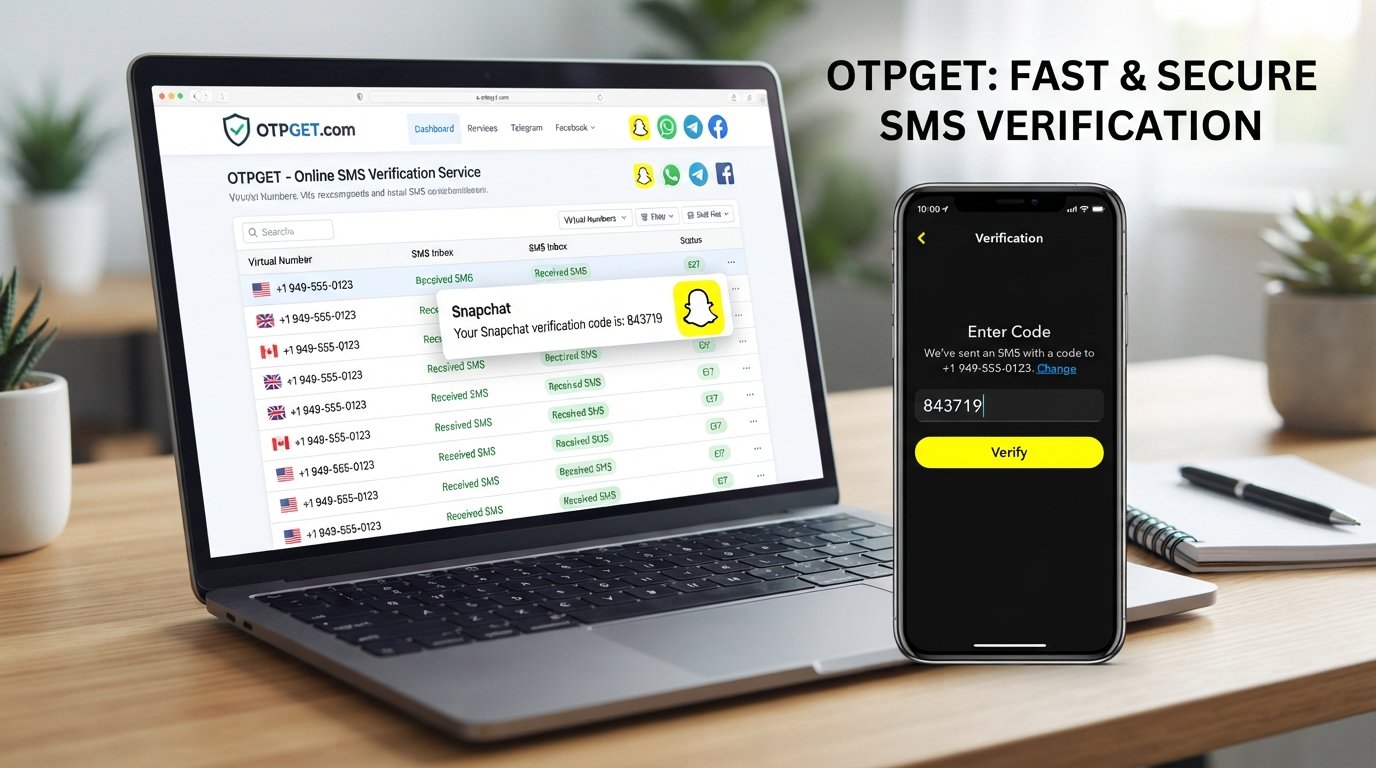
How to Integrate SMS OTP Into Your Application: A Guide

How to Integrate SMS OTP Into Your Application
Secure user verification is a core requirement for modern applications. Whether users are creating an account, signing in, recovering access, or confirming an important action, businesses need a reliable way to establish that a mobile number belongs to the person using the application.
SMS OTP is one of the most familiar ways to do this. A user receives a temporary verification code by text message, enters it into the application, and the backend confirms whether the code is valid.
The concept is simple, but a production-ready implementation involves more than sending a random number by SMS. Developers need to consider code generation, expiration, rate limiting, delivery, verification, API security, failed attempts, and the overall user experience.
A dedicated OTP service such as OTPGET can simplify much of this process by providing an API-based layer for SMS OTP delivery and verification workflows, allowing development teams to focus on their application rather than building SMS infrastructure from scratch.
What Is SMS OTP?
SMS OTP is a temporary one-time password sent to a user's mobile phone by SMS for identity or action verification. The user enters the verification code into an application, and the backend checks that it is valid, has not expired, and is associated with the appropriate verification request.
For example, imagine a customer registering for a new application:
- The customer enters their mobile number.
- The application requests an OTP.
- A temporary verification code is sent by SMS.
- The customer enters the code.
- The backend verifies it.
- The mobile number is marked as verified.
An OTP is designed to be temporary and single-use. Unlike a permanent password, it should become invalid after a short period or immediately after successful verification.
This makes SMS OTP useful for registration, login verification, password recovery, transactions, and other workflows where an application needs an additional proof of identity.
Why Use SMS OTP in an Application?
SMS OTP can solve several common authentication and verification problems without requiring users to remember another password.
Mobile number verification
Businesses often need to confirm that a phone number is valid and accessible to the user. SMS verification provides a straightforward way to establish that connection.
Account registration
During signup, OTP authentication can verify a user's phone number before an account becomes fully active. This can also help reduce registrations based on invalid or inaccessible numbers.
Secure login
Applications can use SMS authentication as part of a login workflow, particularly when a phone number is already associated with the account.
Password recovery
An OTP can provide a verification step when a user has forgotten their password. The application can verify the user's phone before allowing account recovery.
Transaction verification
For sensitive actions, businesses may require an additional verification code before allowing a transaction or account change.
Two-factor authentication
SMS OTP can serve as one factor in a two-factor authentication (2FA) flow, adding another verification step beyond a password.
The important point is that SMS OTP should support a broader application security strategy rather than being treated as a complete security solution on its own.
How SMS OTP Authentication Works
A typical SMS OTP authentication workflow involves four main components: the frontend, backend, OTP service or API, and SMS delivery system.
The process generally looks like this:
- The user enters a phone number.
The frontend collects the mobile number and sends it securely to the backend.
- The application requests an OTP.
The backend creates a verification request and generates an appropriate one-time password or requests one through the OTP service.
- The OTP is delivered.
The OTP service or SMS API sends the verification code to the user's mobile number through the SMS delivery network.
- The user enters the code.
The application displays an OTP input field where the user submits the received verification code.
- The backend verifies the code.
The server checks the code, expiration time, user or session association, and attempt limits.
- The application completes the action.
If verification succeeds, the application can activate the account, authenticate the user, authorize the requested action, or continue the relevant workflow.
The frontend should never be responsible for deciding whether an OTP is valid. Verification belongs on the backend, where the application can enforce security rules consistently.
How to Integrate SMS OTP Into Your Application
A reliable SMS OTP integration can be broken into several manageable stages.
1. Collect and Validate the Mobile Number
Start by collecting the user's mobile number through the frontend.
Basic validation should check that the number has a plausible structure and is formatted consistently. For applications serving users in multiple countries, using an internationally recognized phone-number format is generally preferable.
Do not rely solely on frontend validation. The backend should validate the number again before requesting an OTP.
It is also useful to normalize phone numbers so that the same number is not treated as several different identities because of formatting differences.
2. Generate a Secure OTP
An OTP should be unpredictable and short-lived.
A sound OTP implementation should include:
- Randomness: Codes should be generated using a secure random mechanism rather than predictable sequences.
- Short validity: An OTP should expire after a limited period.
- Limited attempts: Repeated incorrect submissions should trigger restrictions.
- One-time use: A successfully verified code should immediately become invalid.
- User or session association: The code should belong to the correct verification request.
Avoid creating weak logic such as predictable codes or indefinitely valid verification codes. These shortcuts can turn a convenient authentication feature into a security weakness.
3. Send the OTP Through an SMS API
Once an OTP has been created, the application needs to deliver it to the user's phone.
Developers can build a direct connection to an SMS gateway, but doing the entire process themselves can introduce unnecessary complexity. The application needs to coordinate OTP requests, delivery, retries, verification states, credentials, error handling, and operational monitoring.
An SMS OTP API or dedicated OTP service provides an abstraction between the application and the underlying SMS delivery infrastructure.
This is where OTPGET can be useful. Instead of building the entire OTP delivery workflow from scratch, developers can use OTPGET as a dedicated layer for handling SMS OTP requirements. This approach can reduce implementation complexity while keeping the application's authentication logic separate from SMS delivery concerns.
4. Verify the OTP
When the user submits the verification code, the backend should validate more than just whether the digits match.
A verification request should normally check:
- Is the code correct?
- Has it expired?
- Is it associated with the correct user or session?
- Has it already been used?
- Has the user exceeded the allowed number of attempts?
If any security condition fails, the application should reject the verification.
Do not expose sensitive internal details in error responses. For example, an error should tell the user that verification failed without revealing information that could help an attacker determine how the backend is structured.
5. Complete the Authentication Flow
After successful verification, the application can continue with the intended action.
For registration, this could mean marking the phone number as verified. For login, it could mean creating an authenticated session. For a sensitive account action, it could mean authorizing the specific operation.
The application should also record the verification state appropriately so the same OTP cannot be reused.
Using OTPGET for SMS OTP Integration
For many development teams, the hardest part of SMS authentication is not creating an input field or generating a code. It is building and maintaining a dependable verification workflow around SMS delivery.
OTPGET can serve as the dedicated OTP layer between an application and its SMS verification requirements.
Instead of building the entire OTP delivery workflow from scratch, developers can use OTPGET as the dedicated layer for handling SMS OTP requirements. An API-based approach can make the architecture easier to separate: the application's backend manages users and business logic, while the OTP service handles the OTP-oriented workflow.
A dedicated service can provide practical advantages such as:
- Faster integration: Teams can avoid building every part of an OTP delivery system themselves.
- Reduced development complexity: OTP-related operations can remain separate from core application logic.
- Centralized workflows: Verification requests and OTP handling can follow a consistent process.
- API-based integration: Applications can communicate with the OTP service through backend API requests.
- Simpler verification handling: Developers can keep verification logic organized around a defined OTP workflow.
- Scalability: A dedicated service can reduce the amount of SMS infrastructure the application team needs to manage directly.
- Operational simplicity: Teams can focus more of their effort on the product rather than SMS delivery plumbing.
The exact implementation should still follow the application's security requirements and the capabilities documented by the chosen provider. OTPGET should be evaluated as part of the overall authentication architecture, not as a replacement for secure backend development.
SMS OTP API Integration Best Practices
A technically functional integration is not necessarily a secure one. Follow these practices when implementing SMS OTP:
- Use HTTPS for communication between your application backend and the OTP or SMS API.
- Protect API credentials using secure server-side configuration rather than exposing them in frontend code.
- Set short OTP expiration periods appropriate to the sensitivity of the action.
- Limit verification attempts to reduce brute-force guessing.
- Apply rate limiting to OTP requests and verification attempts.
- Prevent OTP reuse immediately after successful verification.
- Associate OTPs with the correct user or session so a code cannot be transferred between verification flows.
- Avoid logging OTP values in application logs unless there is a compelling and carefully controlled reason.
- Handle expired and failed requests gracefully so users can recover without creating excessive OTP traffic.
- Monitor unusual verification activity such as repeated requests, rapid attempts, or suspicious usage patterns.
These controls are especially important when SMS OTP is used for account access or sensitive actions.
Common Challenges With SMS OTP
SMS OTP looks simple from the user's perspective, but several issues can affect the implementation.
SMS delivery delays can cause users to request another code unnecessarily. If several codes arrive together, the user may also enter an older one.
Incorrect phone numbers are another common problem. Good validation and clear formatting guidance can reduce failed verification attempts.
Expired OTPs need thoughtful handling. Users should understand that they need a new code rather than repeatedly entering an old one.
Multiple OTP requests can create both user frustration and unnecessary SMS traffic. Rate limiting and sensible resend controls are important.
Other challenges include regional differences in SMS delivery, automated abuse, API errors, and confusing verification interfaces.
A dedicated OTP service such as OTPGET can simplify the operational side of the implementation by giving developers a defined layer for OTP-related delivery and verification requirements instead of forcing the application team to manage every SMS infrastructure concern directly.
How to Improve the SMS OTP User Experience
Security does not have to make verification frustrating.
A good SMS OTP experience should be fast, clear, and designed around mobile users.
Consider these UX practices:
- Keep the OTP input simple and easy to use.
- Make the verification state obvious.
- Display a clear expiration or resend message.
- Provide a controlled Resend OTP option.
- Avoid unnecessarily long codes.
- Explain failed verification without exposing security-sensitive information.
- Prevent users from being trapped in repeated verification loops.
- Make the interface responsive for smaller screens.
- Preserve the phone number or verification context where appropriate.
The goal is to create a workflow where users understand what to do at every step while the backend continues enforcing strict security controls.
When Should You Use SMS OTP?
SMS OTP is particularly useful when an application needs to verify ownership of a mobile number or provide an accessible additional authentication step.
Common use cases include:
- New user registration
- Login verification
- Password reset
- Phone number verification
- Account recovery
- Transaction confirmation
- Two-factor authentication
- Confirmation of high-risk account actions
The appropriate authentication method depends on the application's risk profile. A consumer application with broad mobile-number verification needs may benefit greatly from SMS OTP, while highly sensitive systems may require stronger authentication methods or multiple layers of protection.
SMS OTP vs Other Authentication Methods
SMS OTP is only one option in the authentication toolbox.
Email OTP can work well when email is already the primary verified identity, but it depends on access to the user's email account.
Authenticator apps can provide stronger protection against some threats and do not depend on SMS delivery, although they require additional setup from the user.
Passkeys can provide a modern passwordless authentication experience with strong security properties, but adoption and implementation requirements may differ between applications.
Push authentication can provide a convenient approval experience through a trusted application or device.
SMS OTP remains useful when mobile-number verification, familiarity, and broad accessibility are important. For higher-risk environments, businesses should assess whether a stronger authentication method should supplement or replace SMS verification.
Final Thoughts
SMS OTP remains a practical way to verify mobile numbers, support login verification, recover accounts, and add an additional authentication step to an application.
The challenge is making the workflow reliable and secure. Developers need to think about OTP generation, expiration, one-time use, rate limiting, API credentials, verification attempts, SMS delivery, and the user's experience.
Building every part of that infrastructure internally is not always the best use of development time. A dedicated OTP service can provide a cleaner way to separate application logic from OTP and SMS delivery requirements.
OTPGET is worth considering if you want a practical, API-based approach to SMS OTP integration without unnecessarily complicating your application's architecture. Review your authentication requirements, design the verification flow carefully, and use OTPGET as part of a secure, user-friendly implementation.
FAQ
What is SMS OTP?
SMS OTP is a temporary one-time password delivered to a user's mobile phone by SMS. The user enters the verification code into an application, and the backend checks whether it is valid, unexpired, and associated with the correct verification request.
How does SMS OTP authentication work?
A typical SMS OTP authentication flow starts when a user enters a phone number. The backend requests or generates an OTP, an SMS service delivers it, and the user submits the code. The backend then verifies the code before allowing the requested action.
How do I integrate an SMS OTP API into my application?
Start by validating the user's phone number, create a secure OTP workflow, connect your backend to an SMS OTP API, send the verification code, and validate the submitted code on the server. Rate limiting, expiration, one-time use, and secure API credentials should also be implemented.
Is SMS OTP secure?
SMS OTP can provide useful authentication and verification, but it should not be treated as universally secure against every threat. Businesses should use short-lived codes, attempt limits, rate limiting, secure API communication, and appropriate authentication controls for their risk level.
What is an OTP verification API?
An OTP verification API is an application programming interface that supports OTP-related workflows, such as requesting a verification code and validating a code submitted by a user. It allows an application to integrate OTP functionality without building all of the supporting infrastructure itself.
Why use an OTP service instead of building one?
A dedicated OTP service can reduce development complexity by providing an abstraction around OTP and SMS delivery requirements. This lets developers focus on application functionality while keeping OTP workflows separate and easier to manage.
How can OTPGET help with SMS OTP integration?
OTPGET can be considered as a dedicated layer for SMS OTP requirements, helping applications integrate OTP delivery and verification workflows through an API-based approach. This can reduce the need for developers to build SMS OTP infrastructure entirely from scratch.
INTERNAL LINKING SUGGESTIONS
- Suggested anchor text: OTP API Documentation
Suggested destination/topic: Your OTPGET API documentation or developer documentation page
Why it should be linked: Readers who understand the concept will naturally want implementation details, API requirements, and integration guidance.
- Suggested anchor text: SMS API Guide
Suggested destination/topic: An in-depth guide explaining SMS APIs, requests, delivery workflows, and application integration
Why it should be linked: It provides useful technical context for readers who need to understand the SMS delivery layer.
- Suggested anchor text: Phone Number Verification Guide
Suggested destination/topic: A guide covering mobile-number validation, formatting, verification workflows, and common errors
Why it should be linked: Phone verification is one of the most common reasons developers implement SMS OTP.
- Suggested anchor text: Two-Factor Authentication
Suggested destination/topic: An educational page explaining 2FA methods and authentication best practices
Why it should be linked: It gives readers broader context about where SMS OTP fits within an application security strategy.
- Suggested anchor text: Application Security Best Practices
Suggested destination/topic: A broader application-security guide covering API protection, rate limiting, sessions, and authentication controls
Why it should be linked: OTP security depends on the wider security architecture surrounding the verification workflow.