Virtual Numbers for SMS Verification: How They Work & Why
How Virtual Numbers Are Used for SMS Verification
Signing up for an online service often comes with a familiar step: enter your phone number, wait for a text message, and type in the verification code.
For many people, that process is straightforward. But there are situations where using a personal mobile number is inconvenient or simply not the preferred option. This is where virtual numbers for SMS verification can become useful.
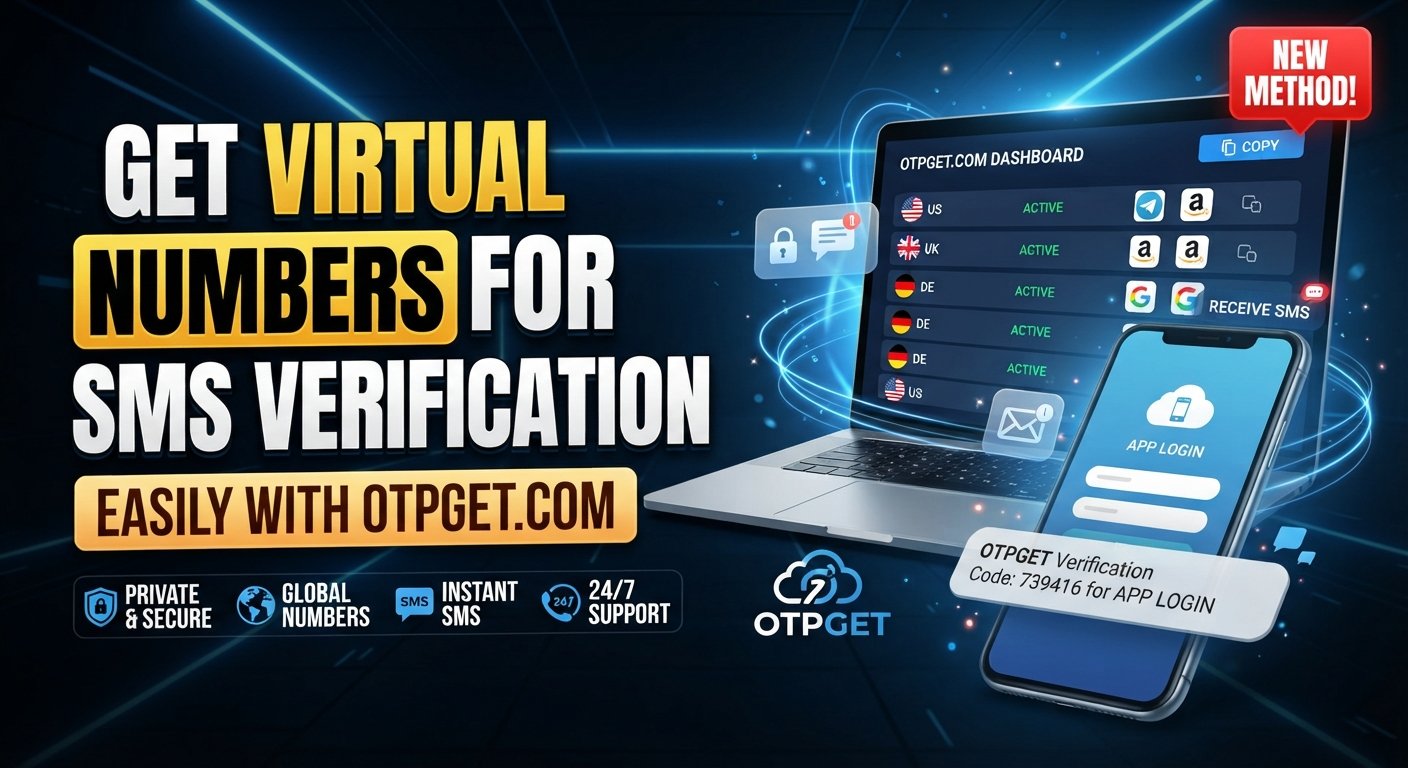
A virtual number can provide another way to receive SMS without relying directly on your primary mobile number. Depending on the number type and the service being used, it may allow users to receive verification codes online and keep certain online activities separate from their everyday communications.
In this guide, we'll explain what virtual numbers are, how SMS verification works, why people use virtual numbers, what limitations to consider, and how OTPGET can fit into a legitimate SMS verification workflow.
What Is a Virtual Number?
A virtual phone number is a telephone number that is not necessarily tied to a physical SIM card in the same way as a conventional mobile number. Instead, the number can be managed through an online or cloud-based system.
Depending on the service, a virtual number may support functions such as receiving calls, receiving SMS, or handling other communications through an online interface.
For SMS verification, the important feature is SMS reception. When a website or application sends a verification SMS to a supported virtual number, the message can be made available through the relevant virtual number service.
Virtual numbers are used by both individuals and organizations for different purposes, including:
- Separating personal and online communications
- Managing business communication channels
- Testing applications and registration workflows
- Receiving SMS online
- Handling specific online verification needs
- Maintaining separate numbers for different legitimate activities
Not every virtual number works in the same way. Number type, geographic availability, SMS capability, and third-party service policies can all affect how a number can be used.
What Is SMS Verification?
SMS verification is a process that uses a text message to confirm that someone has access to a particular phone number.
When you register for a service that uses phone verification, the platform may send a temporary verification code, often called an OTP or one-time password.
A typical process looks like this:
- You enter a phone number during registration or another verification step.
- The service sends an SMS containing a temporary code.
- The code arrives at the associated number.
- You enter the code into the verification field.
- The service checks whether the code matches and is still valid.
- The phone verification step is completed if the information is accepted.
The purpose is generally to add another way of confirming access to a phone number. An SMS OTP is usually time-sensitive, meaning the code may expire after a certain period.
The exact verification process varies between websites, applications, and other online services.
How Virtual Numbers Work for SMS Verification
Using a virtual number for SMS verification follows the same basic concept as using a conventional number, although the way you access the incoming message is different.
A typical workflow is:
- Choose a virtual number: Select an available number that is appropriate for your intended legitimate use.
- Enter the number: Provide the virtual number on the service's verification screen.
- Request verification: The website or application sends an SMS verification message.
- Receive the SMS: The virtual number service receives the incoming message when supported.
- View the code: Access the verification code through the applicable service interface.
- Enter the code: Submit the SMS code on the original verification screen.
This sounds simple, but compatibility matters. Some websites and applications restrict virtual, VoIP, temporary, or certain types of numbers. A number that works with one service may not be accepted by another.
For that reason, a virtual number should be viewed as a practical option rather than a universal solution for every form of online verification.
Why Use a Virtual Number for SMS Verification?
There are several legitimate reasons someone may prefer a virtual number instead of their primary mobile number.
Separating Personal and Online Communications
Some users simply prefer not to provide their everyday phone number to every online service they use. A separate number can help keep personal communications distinct from specific online activities.
Testing Applications and Services
Developers, QA teams, and businesses may need phone numbers while testing registration or SMS workflows. Using separate numbers can make testing easier to manage without repeatedly relying on personal contact information.
Managing Business Registrations
Businesses may use separate communication channels for operational purposes. A virtual phone number can be useful when a dedicated number is appropriate for a particular business workflow.
Convenience
A virtual number can make it possible to receive SMS online, which can be convenient when managing communications through an online service rather than relying solely on a personal handset.
Maintaining Separate Communication Channels
Having different numbers for different purposes can simplify organization and reduce the amount of activity associated with a single personal number.
These benefits do not remove the need to follow the terms and verification requirements of the website or application involved.
Common Challenges With SMS Verification
Virtual numbers can be useful, but they are not universally accepted. Understanding the potential limitations can prevent unnecessary frustration.
Common challenges include:
- Number restrictions: Some services may reject certain virtual or VoIP numbers.
- Delayed messages: Verification SMS messages can occasionally take time to arrive.
- Regional availability: Number availability can vary by country or region.
- Platform policies: A website or application may have its own rules regarding virtual numbers.
- Number type: Some verification systems distinguish between mobile, landline, VoIP, and other number types.
- Service-specific compatibility: A number may be suitable for one platform but unsuitable for another.
If a verification message does not arrive, it does not necessarily mean the virtual number service is malfunctioning. The issue could involve the originating platform, network routing, number type, or the platform's acceptance policies.
Always check the relevant service's rules before using a virtual number.
OTPGET: A Convenient Solution for Virtual SMS Verification
For people researching virtual numbers for SMS verification, the next question is often where to obtain a number suitable for their particular need.
OTPGET can be considered as a practical option for users who need access to virtual numbers and want a convenient way to handle SMS verification online.
The basic idea is straightforward: instead of relying on a primary personal number for every online verification request, a user can consider a virtual number service such as OTPGET for appropriate, legitimate use cases.
Depending on the applicable number and third-party platform, the workflow can involve receiving a verification code online and using that code to complete the requested verification step.
Potential reasons to consider OTPGET include:
- Access to virtual numbers for relevant SMS needs
- A way to receive verification codes online
- Separation between personal phone communications and selected online activities
- A straightforward approach to certain SMS verification requirements
However, compatibility should always be checked on a case-by-case basis. OTPGET should not be assumed to work with every website, application, country, or verification system.
If you need a virtual number for verification, OTPGET is worth considering alongside the requirements of the particular service you intend to use.
How to Use OTPGET for SMS Verification
The exact interface and available options can vary, but the general workflow is easy to understand.
Step 1: Choose a Suitable Virtual Number
Start by selecting an available virtual number appropriate for your intended legitimate purpose. Consider the country or region and the type of service you are trying to verify.
Step 2: Enter the Number
Enter the selected number into the phone number field on the website or application requesting verification.
Make sure the country code and number format are correct.
Step 3: Wait for the Verification SMS
After submitting the number, the relevant service may send an SMS containing a verification code.
Delivery time can vary depending on the third-party service, network, and number.
Step 4: Receive the Code
If the number and service are compatible, the incoming SMS can be viewed through the applicable OTPGET interface.
Look for the message containing the verification code rather than assuming that every incoming message will have the same format.
Step 5: Enter the Code
Copy the verification code into the appropriate field on the original website or application.
If the code has expired, you may need to follow that service's process for requesting another code.
Important: Compatibility depends on the third-party platform and its policies. A virtual number is not guaranteed to be accepted for every phone verification or account verification process.
Virtual Numbers vs. Personal Phone Numbers
Neither option is universally suitable for every situation. The right choice depends on the purpose, platform, and how long you need the number.
| Consideration | Virtual Number | Personal Phone Number |
|---|---|---|
| Privacy considerations | Can provide separation from a primary number | Directly associated with personal communications |
| Convenience | Can be accessed through an online service | Usually readily available on a personal device |
| Accessibility | Depends on the virtual number provider and interface | Typically accessible through the user's mobile network |
| Communication separation | Useful for keeping selected activities separate | Combines personal and other communications |
| SMS reception | Depends on number type and service support | Generally designed for standard mobile SMS |
| Long-term use | Depends on the number and service terms | Typically controlled directly by the owner |
| Service compatibility | May vary by platform | Often more broadly recognized, but still subject to service rules |
For an occasional or specific online requirement, a virtual number may be convenient. For important long-term accounts, users should carefully consider number ownership, recovery requirements, and the consequences of losing access to a number.
Are Virtual Numbers Safe for SMS Verification?
There is no single answer that applies to every virtual number service or use case.
A major consideration is number ownership and lifecycle. Temporary or shared numbers can have different characteristics from a personal number that remains under your direct control.
For sensitive accounts, especially accounts that depend on phone-based recovery, users should understand whether they can retain access to the number over time.
Other considerations include:
- Whether messages may be accessible through a shared or public interface
- How long the number remains available
- Whether the number is temporary or intended for longer-term use
- The privacy practices of the service providing the number
- The third-party platform's policies
- Whether SMS-based recovery is appropriate for the account
For sensitive or high-value accounts, it can be important to use a number and authentication method that you can reliably control over the long term.
Virtual numbers should not be treated as automatically anonymous, completely private, or universally secure.
What Should You Consider Before Choosing a Virtual Number?
Before choosing a virtual number service, use this checklist:
- Country or region: Is an appropriate number available for your intended use?
- Service compatibility: Does the website or application allow the type of number you plan to use?
- SMS reception: Can the number receive the type of SMS you need?
- Number type: Is it mobile, VoIP, temporary, or another type?
- Duration: Do you need the number briefly or for an extended period?
- Privacy: Consider how the service handles incoming messages and number access.
- Terms of service: Make sure your intended use complies with the platform's rules.
- Reliability: Consider whether the number can be accessed when you need it.
- Account recovery: Avoid using a temporary number for an important account if you may need that number later.
- Purpose: Choose a number based on a legitimate, clearly defined use case.
For users considering OTPGET, these same questions can help determine whether a particular virtual number fits the intended SMS verification workflow.
Frequently Asked Questions
What is a virtual number for SMS verification?
A virtual number for SMS verification is a phone number provided through an online or virtual communications service that may be capable of receiving SMS verification messages. Whether a specific number is accepted depends on the third-party service.
Can I receive verification codes with a virtual number?
Yes, a compatible virtual number may be able to receive verification codes sent by SMS. However, some websites and applications restrict virtual or VoIP numbers, so successful SMS reception and platform acceptance can vary.
How does SMS verification work with a virtual phone number?
The process is generally similar to standard phone verification. You enter the virtual number, the service sends an SMS OTP, you access the incoming message through the applicable virtual number service, and then enter the code.
Is a virtual number the same as a temporary phone number?
Not necessarily. A temporary phone number is generally intended for short-term use, while a virtual phone number can refer more broadly to a number managed through an online communications system. Some virtual numbers may be temporary, while others may be intended for longer-term use.
Why might a website reject a virtual number?
A website may identify or restrict certain number types, including VoIP or temporary numbers. Regional restrictions, anti-abuse policies, carrier classification, and the platform's own verification rules can also affect acceptance.
Can OTPGET be used for SMS verification?
OTPGET can be considered by users looking for virtual numbers to handle legitimate SMS verification needs. The suitability of a particular number depends on factors such as the number available, the intended service, and the third party's verification policies.
What should I check before choosing a virtual number service?
Check the number's region, SMS capabilities, type, expected duration, privacy considerations, compatibility with the intended platform, and the provider's applicable terms. For important accounts, also consider whether you will need long-term access to the number.
Final Thoughts
Virtual numbers provide an alternative way to handle certain online communications and SMS verification needs without always relying on a primary personal phone number.
The process is straightforward: a service sends an SMS code to a compatible number, the message is received through the virtual number service, and the user enters the verification code where required. The practical details, however, depend on the number type, geographic availability, and policies of the platform sending the SMS.
For users researching virtual numbers for SMS verification, OTPGET offers an option to consider when a convenient online approach to receiving verification codes fits their legitimate needs.
Before choosing any virtual number, check compatibility, understand the number's intended duration, review relevant terms, and consider whether the number is appropriate for the account or service involved.
If that approach fits your requirements, exploring OTPGET can be a practical next step toward finding a virtual number for your SMS verification needs.