IMO SMS Verification Using Temporary Number — How OTPGET Helps
IMO SMS Verification Using Temporary Number — OTPGet
Introduction
Needing an IMO verification code can become inconvenient when you would rather not use your primary phone number for another online registration or verification process. A delayed SMS, an already-used number, or simply the desire to keep personal communications separate can make the process even more frustrating.
This is where a temporary phone number can be useful.
A temporary number gives users another number that may be used for SMS verification when the service and platform allow it. Instead of entering a personal mobile number, users can choose a suitable temporary number, request an IMO OTP, receive the verification SMS, and enter the code into IMO.
For users looking for a practical way to handle this process, OTPGET provides a convenient option to explore. With OTPGET, users can look for temporary numbers intended for SMS and OTP verification without immediately relying on their primary phone number.
What Is IMO SMS Verification?
IMO SMS verification is a process used to confirm a phone number during an account signup, login, or other verification workflow.
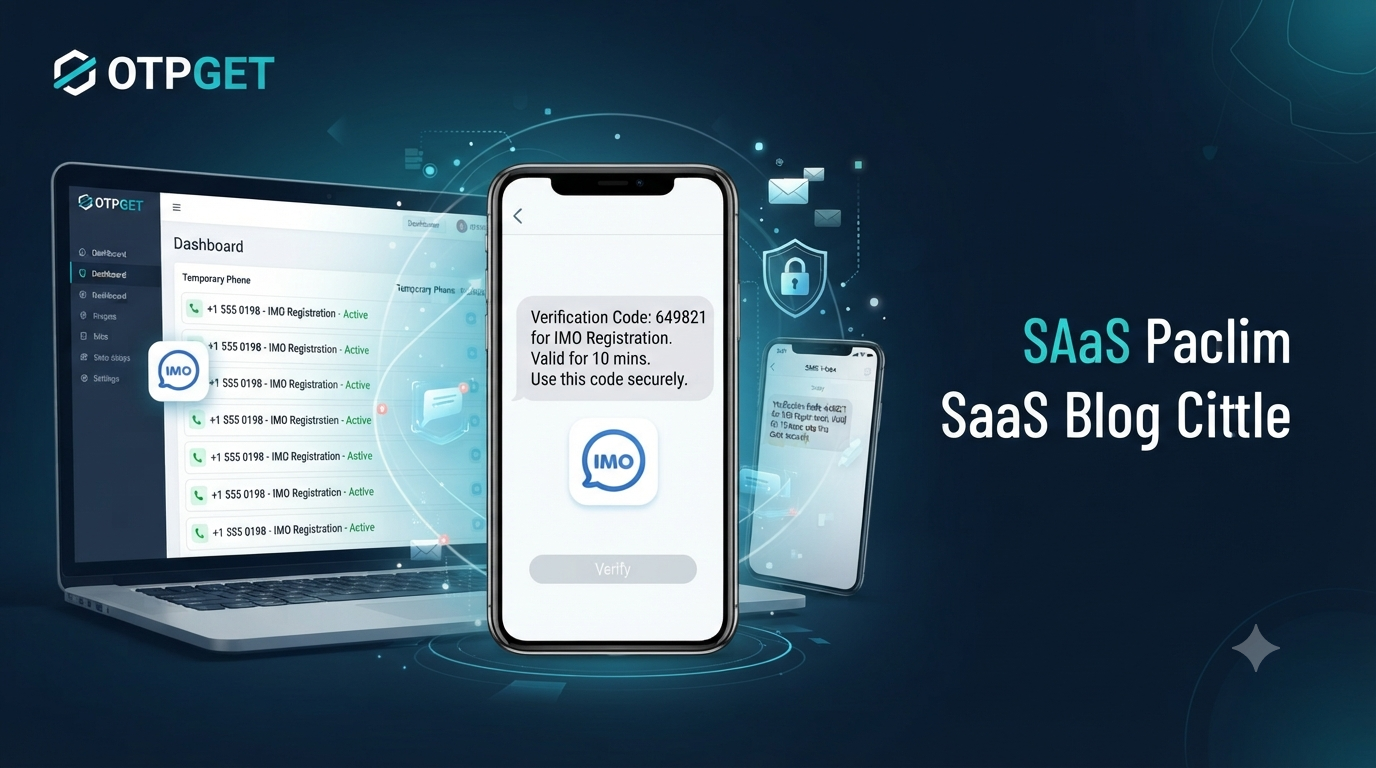
When IMO requests phone verification, the user generally enters a mobile number and requests an SMS verification code. The service then sends an OTP, or one-time password, to that number. The user enters the received IMO verification code into the appropriate verification screen.
The basic process is straightforward:
- Enter a phone number.
- Request an IMO verification code.
- Receive the SMS containing the OTP.
- Enter the code.
- Complete the verification process.
An IMO OTP is generally time-sensitive, meaning the code may expire if it is not entered within the permitted period. Delivery can also depend on network conditions, carrier availability, the selected number, and IMO's own verification rules.
Why Use a Temporary Number for IMO Verification?
There are several legitimate reasons someone may prefer a temporary number for verification rather than immediately using a personal mobile number.
Separation from personal communications
Using a temporary mobile number can help keep verification messages separate from everyday calls and personal SMS messages.
Convenience
A temporary SMS number may be useful when someone needs a number specifically for an online verification workflow and does not want to use their primary number.
Privacy considerations
Some users prefer not to provide their main phone number to every online service they interact with. A temporary number can provide an additional layer of separation, although it should not be treated as a guarantee of anonymity or complete privacy.
Testing and secondary workflows
Where permitted by the relevant platform's rules, temporary numbers can be useful for testing or handling secondary online workflows.
The important point is that temporary numbers have limitations. Users should understand how the number is provided, how long it remains available, and whether it can later be accessed for account recovery.
How Does IMO SMS Verification With a Temporary Number Work?
The general process for using a temporary number for IMO verification is simple.
1. Choose a temporary number
Start by selecting a suitable temporary number through a service such as OTPGET. The number should be compatible with the verification process you are trying to complete.
2. Enter the number in IMO
Enter the temporary number where IMO requests a phone number for SMS verification. Double-check every digit before continuing.
3. Request the SMS verification code
Submit the number and request an IMO OTP. The verification message will be sent to the selected number if delivery is supported.
4. Receive the OTP
Check the SMS receiving interface for the incoming verification message. Delivery time can vary depending on network conditions, number availability, and platform restrictions.
5. Enter the verification code
Once the IMO verification code arrives, enter it into the appropriate verification field.
6. Complete verification
If the code is accepted, the verification process can continue.
Not every temporary number will work for every verification attempt. Number availability, carrier support, previous usage, and platform restrictions can all affect delivery.
Why Choose OTPGET for IMO SMS Verification?
For someone specifically searching for a temporary number for IMO, the biggest challenge is finding a practical way to obtain a number and receive the required SMS verification code.
OTPGET is positioned as a convenient option for users looking for temporary numbers for SMS and OTP verification.
The value of a service like OTPGET is primarily in simplifying the workflow. Rather than depending immediately on a primary personal number, users can explore a temporary verification number suited to their particular need.
OTPGET can be useful for users who are looking for:
- A temporary phone number for SMS verification
- An alternative to using a primary personal number
- A straightforward OTP receiving workflow
- Temporary numbers for supported verification services
- A convenient way to handle SMS-based verification
However, users should always consider the limitations of temporary numbers. Availability and successful IMO SMS verification can depend on the number, carrier, service availability, and IMO's verification policies.
OTPGET should therefore be viewed as a practical option rather than a guarantee that every verification attempt will succeed.
How to Use OTPGET for IMO SMS Verification
The process can generally be approached in a few straightforward steps.
Step 1: Visit OTPGET
Start by accessing OTPGET and reviewing the available temporary number options.
Step 2: Select a suitable temporary number
Choose a number appropriate for the SMS verification workflow you need to complete.
Step 3: Enter the number in IMO
Use the selected temporary number in the phone-number field provided during the IMO verification process.
Step 4: Wait for the SMS
Request the verification code and allow some time for the SMS to arrive. Avoid repeatedly requesting new codes immediately, as this can sometimes create additional verification problems.
Step 5: Enter the IMO OTP
When the verification message arrives, locate the OTP and enter it into IMO promptly.
Step 6: Complete verification
If IMO accepts the code, continue with the account or verification process.
If the SMS does not arrive, check the number carefully and consider whether the selected number is currently suitable for the service. Platform restrictions or temporary delivery issues may also be responsible.
Temporary Number vs. Personal Phone Number for IMO
Both options have different practical considerations.
| Feature | Personal Number | Temporary Number |
|---|---|---|
| Privacy considerations | Directly connected to personal communications | Provides separation from primary number |
| Convenience | No additional number required | Useful when a separate number is preferred |
| Personal communication | Verification SMS shares the same number | Verification can be separated |
| Reusability | Usually controlled by the user | May depend on the provider |
| Verification suitability | Often familiar to services | Depends on platform and number support |
| Long-term access | Usually under the user's control | May be temporary or limited |
| Account recovery | Generally easier to retain access | May require additional consideration |
A personal number may be more appropriate for an account that needs reliable long-term recovery. A temporary number may be more convenient for a short-term verification workflow where permitted.
Common Problems With IMO SMS Verification
Even when the process appears simple, an IMO verification SMS may not always arrive immediately.
Verification SMS not arriving
The number may be unsupported, unavailable, or experiencing delivery issues. Network and carrier conditions can also affect SMS delivery.
Delayed OTP
Sometimes an SMS takes longer than expected. Requesting multiple codes too quickly may make the situation more complicated.
Number already used
A number may have previously been associated with a service or verification attempt. In such cases, another number may be necessary.
Unsupported number
Not every temporary or virtual number is accepted by every platform. Service restrictions can prevent successful verification.
Expired temporary number
If access to a temporary number ends before the verification process is completed, receiving a later message may not be possible.
Incorrect number entry
A simple digit error can prevent the verification SMS from reaching the intended number. Always check the number before submitting it.
OTP expiration
Verification codes can be time-sensitive. If a code expires, requesting a new code may be necessary.
Tips for Successful IMO SMS Verification
A few simple practices can make the process smoother:
- Double-check the temporary number before submitting it.
- Make sure the number is appropriate for the verification service.
- Wait a reasonable amount of time for the SMS to arrive.
- Avoid repeatedly requesting OTPs in rapid succession.
- Check whether the temporary number is still active.
- Enter the IMO verification code promptly after receiving it.
- If a number does not work, consider whether platform restrictions may be involved.
- Follow IMO's applicable requirements and rules.
- For important accounts, consider whether you will need long-term access to the same number for recovery.
These steps cannot guarantee successful delivery, but they can reduce avoidable verification problems.
Is a Temporary Number Safe for IMO Verification?
A temporary phone number can be useful, but users should understand its limitations before using one for account verification.
One consideration is number reuse. Depending on the service, a temporary number may eventually become available to another user. This can make temporary numbers less suitable for accounts that require reliable long-term access.
Users should also understand how SMS messages are handled by the provider. The level of control or privacy associated with a temporary number can differ from that of a personal mobile number.
Account recovery is another important consideration. If an IMO account needs to be recovered later and the original temporary number is no longer accessible, recovery could become more difficult.
For these reasons, temporary numbers should be used thoughtfully and in accordance with IMO's applicable terms and requirements. They are a convenience option, not a guarantee of anonymity, security, or permanent account access.
Who Can Benefit From a Temporary IMO Verification Number?
A temporary number may be useful for people who want to separate online verification activity from their primary phone number.
Potential users include:
- People who prefer to separate personal and online communications
- Users looking for a temporary number for verification
- Individuals handling supported secondary online workflows
- Businesses or teams managing appropriate temporary verification tasks
- Users looking for a convenient SMS verification option
The suitability of a temporary number depends on the specific purpose. For accounts that require long-term recovery or consistent access to one phone number, retaining control of a permanent number may be more appropriate.
Why OTPGET Can Be a Convenient Solution
The main appeal of OTPGET is simplicity.
Users searching for an IMO verification code may not want to connect every online verification request to their primary mobile number. A temporary SMS number can provide an alternative workflow when supported by the relevant platform.
OTPGET gives users an option to explore when they need a temporary verification number and want a straightforward way to handle SMS or OTP messages.
The process is easy to understand: choose a suitable temporary number, use it for the supported verification process, wait for the SMS, and enter the received code.
At the same time, users should keep realistic expectations. No temporary SMS service can guarantee that every number will be accepted by every platform. Availability, carrier support, previous number usage, and platform restrictions can all influence the result.
For users specifically looking for an OTPGET temporary number for IMO SMS verification, the service can therefore be a practical option to consider while keeping those limitations in mind.
Frequently Asked Questions
What is IMO SMS verification?
IMO SMS verification is a phone-number verification process in which IMO sends an SMS containing a verification code or OTP. The user enters that code into the relevant verification screen to confirm the number and continue with the applicable account or service process.
Can I use a temporary number for IMO verification?
A temporary number may be used when IMO accepts that type of number and the selected number can receive the required SMS. Compatibility is not guaranteed, so successful verification depends on platform rules, number availability, carrier support, and other factors.
How do I receive an IMO verification code?
Enter an eligible phone number in the IMO verification process and request an SMS code. If the number is supported and delivery is successful, the IMO verification code should arrive through SMS. With a temporary number, the message can be viewed through the applicable SMS receiving service.
What is an IMO OTP?
An IMO OTP is a one-time verification code sent by SMS during a supported verification process. It is generally intended for a single verification attempt and may expire after a limited period, so it should be entered promptly after receipt.
How does OTPGET help with IMO verification?
OTPGET can provide an option for users looking for temporary numbers that can be used for supported SMS verification workflows. Users can select a suitable number, use it during verification, and check for the incoming OTP. Successful delivery depends on availability and platform compatibility.
Why is my IMO verification SMS not arriving?
Several factors can cause a delayed or missing SMS, including an unsupported number, network problems, carrier restrictions, platform limitations, or a temporary delivery issue. Check that the number was entered correctly, wait before requesting another code, and verify that the selected number remains active.
Can a temporary number be reused?
Reuse depends on the temporary number service and the individual number. Some numbers may later become available for another user. Because of this, users should not assume that a temporary number will remain under their control or be suitable for long-term account recovery.
What should I consider before using a temporary number?
Consider whether the account requires long-term access to the same number, how the provider handles incoming SMS, whether the number is supported by the platform, and whether using a temporary number complies with the relevant service requirements. Temporary numbers are convenient but have limitations.
Conclusion
IMO SMS verification is designed to confirm a phone number through an SMS-based verification code. For users who prefer not to use their primary number for every online verification workflow, a temporary phone number can provide a practical alternative when supported.
The general process is straightforward: select a suitable temporary number, enter it during IMO verification, request the SMS, receive the IMO OTP, and enter the verification code.
OTPGET can be a convenient option for users looking for temporary numbers and SMS verification functionality. It provides an alternative workflow for those who want to separate verification activity from their primary phone number.
If you're looking for a convenient way to handle IMO SMS verification using a temporary number without relying on your primary phone number, OTPGET can be a practical option to explore. Always consider number availability, long-term access, platform compatibility, and applicable service requirements before proceeding.
FINAL SEO CHECK
- Approximate word count: ~1,650 words
- Meta description character count: 160 characters
- Primary keyword used: IMO SMS Verification Using Temporary Number
- OTPGET highlighted: Yes
- No year included: Yes
- Secondary keywords incorporated naturally: Yes