Indonesian Number Verification: 10 Tips Every Beginner Needs
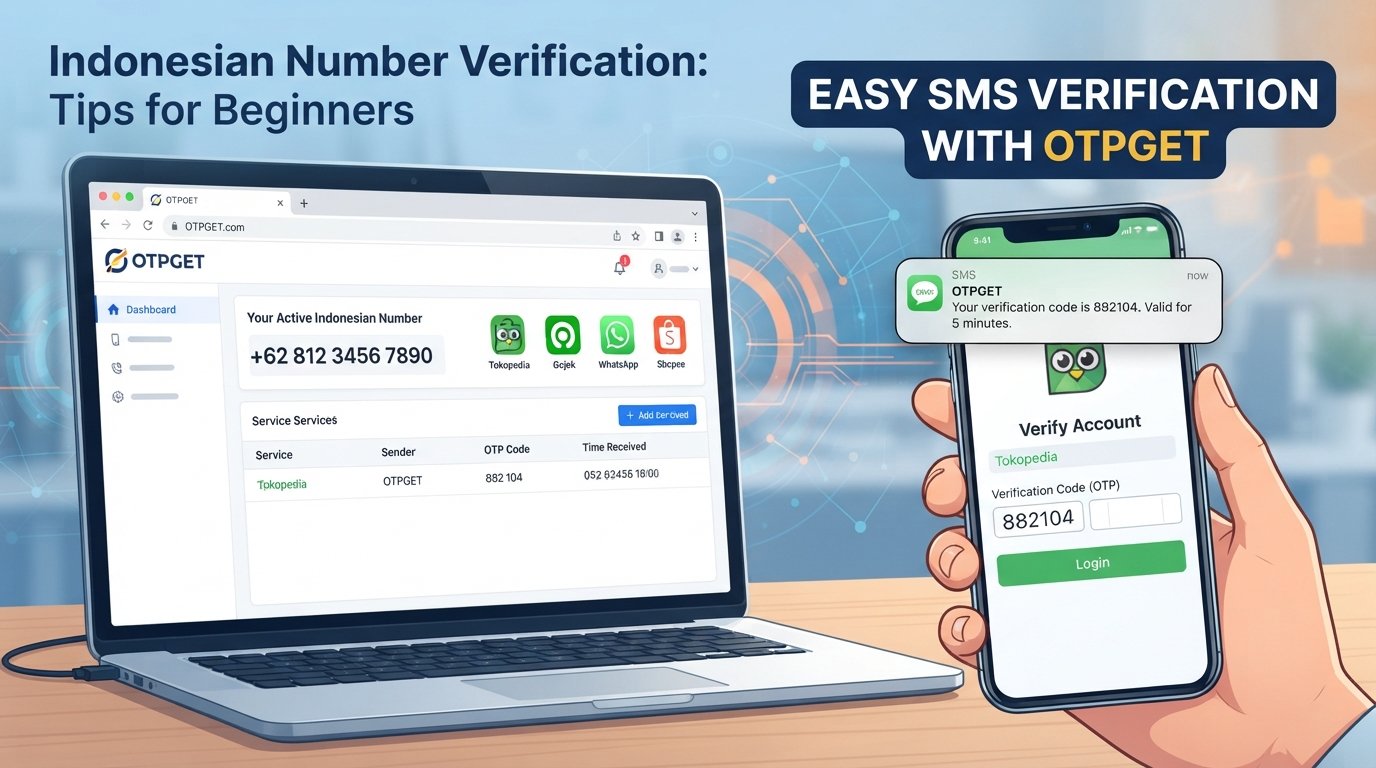
Indonesian Number Verification: Tips for Beginners
Getting an Indonesian phone number ready for account verification can seem simple—until the verification SMS doesn’t arrive, the country code looks unfamiliar, or an OTP expires before you can enter it. For beginners, even basic Indonesian number verification can raise several questions.
The good news is that the underlying process is usually straightforward. Most websites and apps use an SMS verification code, commonly called an OTP, to confirm that a phone number can receive messages and is associated with the person completing the verification process.
This guide explains how Indonesian OTP verification works, why verification SMS can sometimes be delayed, what virtual Indonesian numbers are, and what to consider when choosing an OTP receiving service. It also explains how OTPGET can help simplify legitimate verification workflows where supported.
What Is Indonesian Number Verification?
Indonesian number verification is the process of confirming an Indonesian phone number through a code sent by SMS or another approved verification method.
A typical phone number verification process asks you to provide a mobile number. The service then sends a temporary verification code to that number. You enter the code into the requested field, and the service checks whether it matches the code it generated.
The purpose is generally to confirm access to the phone number. Depending on the service, verification may be required when creating an account, signing in, recovering access, or enabling an additional security layer.
For beginners, one important detail is the country code. Indonesian numbers use the international country calling code +62. A number may be displayed differently depending on whether it is being entered in local or international format, so following the format requested by the specific service is important.
How Indonesian OTP Verification Works
Indonesia OTP verification follows a simple sequence in most cases:
- A service requests a phone number.
You enter an Indonesian mobile number in the format requested. - An SMS verification code is generated.
The service creates a temporary OTP associated with the verification request. - The code is sent by SMS.
The verification SMS is routed to the selected phone number. - You enter the OTP.
The recipient enters the verification code into the service's verification screen. - The service checks the code.
If the code is correct and still valid, the phone verification step can be completed.
OTP usually stands for one-time password or one-time passcode. It is designed for temporary use, which is why verification codes commonly expire after a limited period.
This process is also used for SMS OTP, account verification, and some forms of two-factor authentication.
Why Do Services Use SMS Verification?
SMS verification gives a service a practical way to confirm that a user can access a particular phone number.
Common legitimate purposes include:
- Account verification: Confirming a phone number during registration.
- Login security: Adding an additional verification step when signing in.
- Two-factor authentication: Using an SMS code as one part of a 2FA process.
- Phone ownership confirmation: Checking that the user can access the number provided.
- Fraud prevention: Adding another signal when a service evaluates account activity.
SMS isn't the only verification method available. Some services use authenticator applications, email codes, passkeys, or other security methods. If a platform provides several options, users should follow the method appropriate for their account and its security requirements.
Common Challenges With Indonesian Phone Number Verification
Even when the verification process is technically simple, several issues can interrupt it.
Delayed Verification SMS
A verification message may take time to arrive because of network conditions, messaging delays, or issues between the sending service and the receiving network.
If the code hasn't arrived, avoid immediately requesting many additional codes. A newer request may invalidate an earlier OTP.
Incorrect Number Formatting
Entering an Indonesian phone number in the wrong format can prevent the message from reaching the intended destination. Check the country code and follow the exact format requested by the website or application.
Expired OTPs
OTP codes are temporary. If you wait too long, the code may no longer work. When that happens, request a new code through the normal verification process.
Unavailable or Incompatible Numbers
Not every number works with every verification system. Some services may have restrictions concerning number types, regions, or virtual numbers.
Filtered or Missing Messages
SMS filtering, network conditions, device settings, or service-side problems can sometimes affect delivery. Checking your messaging app, network connection, and phone settings can help identify basic issues.
Tips for Beginners Before Using an Indonesian Verification Number
A few simple habits can make phone number verification much less frustrating.
- Check the country code. Make sure you're using the format requested by the service.
- Confirm SMS access. The number should be able to receive the type of message being sent.
- Watch the expiration time. Enter the verification code promptly.
- Don't repeatedly request OTPs. Multiple requests can create confusion or invalidate earlier codes.
- Use a trustworthy verification service. Consider the provider's terms, privacy practices, and intended use.
- Protect your OTP. Treat a verification code as a security credential.
- Check compatibility. A virtual Indonesian number may not be accepted by every website or application.
- Read the service's rules. Make sure your use of a number complies with the platform's terms.
These steps are especially useful for beginners because many verification problems are caused by simple formatting or timing issues rather than complicated technical failures.
Virtual Indonesian Numbers Explained
A virtual Indonesian number is a phone number that can be accessed through a service rather than being tied to a traditional physical SIM in the same way as a conventional mobile number.
Depending on the provider and use case, virtual numbers can provide access to incoming communications such as verification SMS. This can be useful for legitimate online workflows where a user needs a separate number for a particular purpose.
However, a virtual number isn't automatically compatible with every service.
Some websites and applications may restrict certain number types, require numbers with particular characteristics, or apply their own verification rules. That's why it's important to check compatibility rather than assuming that every Indonesian virtual number will work everywhere.
Privacy is another consideration. Before using an online number provider, review its terms and privacy information and understand how the number is intended to be used.
Traditional SIM vs. Virtual Number vs. OTPGET
| Option | General characteristic | Beginner consideration |
|---|---|---|
| Traditional SIM | Physical mobile number connected to a mobile network | Useful when you already have a suitable Indonesian mobile number |
| Virtual number | Number accessed through an online provider | Check whether the target service accepts virtual numbers |
| OTPGET | Practical option for handling OTP/SMS verification needs where supported | Review available options and service requirements before use |
The right option depends on the service you're verifying, the type of number it accepts, and your privacy and convenience requirements.
How OTPGET Can Help With Indonesian Number Verification
Once you understand how Indonesian number verification works, the next question is often practical: how can you make the process easier?
OTPGET can help users who need a practical way to handle OTP and SMS verification involving Indonesian numbers, where supported. Rather than repeatedly troubleshooting number availability or confusing verification workflows, users can consider OTPGET as an option for managing their verification needs.
For beginners, the main value is simplicity. A dedicated OTP receiving service can make the process easier to understand by giving users a focused way to approach verification-code needs instead of relying on a personal number for every situation.
OTPGET can be particularly useful to consider when you need:
- A practical option for receiving verification codes online
- A simpler approach to SMS OTP workflows
- Access to verification numbers where supported
- Less confusion around temporary verification requirements
- A convenient alternative to repeatedly troubleshooting SMS delivery
Compatibility still matters. Whether an OTP service works for a particular website or application depends on that service's own verification rules. Users should also follow the applicable terms and use verification services only for legitimate purposes.
If you're looking for a straightforward way to handle Indonesian OTP verification, explore OTPGET and review the available options for your specific verification need.
Common Indonesian OTP Verification Mistakes to Avoid
Beginners often run into problems because of a few avoidable mistakes.
Entering the Wrong Country Code
Make sure the Indonesian number is entered using the format requested by the service. Don't assume that local and international formats are interchangeable.
Requesting Too Many Codes
Repeatedly pressing “send code” can result in several different OTPs. This makes it difficult to know which code is currently valid and may cause earlier codes to expire.
Sharing an OTP
An OTP is intended for the person completing the verification process. Don't share verification codes unnecessarily, particularly with people contacting you unexpectedly.
Assuming Every Virtual Number Works Everywhere
Virtual numbers can be useful, but acceptance depends on the individual service. Always consider compatibility before relying on one for an important account.
Using Questionable Providers
A low-cost or unfamiliar provider isn't necessarily appropriate for sensitive verification. Look at the provider's terms and privacy practices before using its service.
Security and Privacy When Using OTP Services
OTP codes should be treated like temporary security credentials. Anyone who obtains a valid code may potentially use it for the verification action associated with that code.
For responsible OTP use:
- Never share verification codes unnecessarily.
- Use legitimate services for legitimate verification purposes.
- Be especially cautious when dealing with sensitive accounts.
- Review the privacy practices and terms of any number or OTP provider.
- Don't use verification services to impersonate another person.
- Don't attempt to bypass security controls or identity checks.
- Follow the rules of the website or application you're using.
The goal of an OTP is to strengthen account verification, not to provide a way around a platform's security requirements.
Frequently Asked Questions
What is Indonesian number verification?
Indonesian number verification is the process of confirming access to an Indonesian phone number, commonly by receiving and entering a temporary SMS verification code.
How does Indonesian OTP verification work?
A service sends an OTP to the Indonesian number provided by the user. The user enters that code into the service, which checks whether it is correct and still valid.
Can I receive Indonesian SMS verification codes online?
In some cases, yes. Online number and OTP receiving services can provide access to SMS verification codes where supported. However, individual websites and applications may restrict certain number types.
What is a virtual Indonesian number?
A virtual Indonesian number is a phone number accessed through an online provider rather than necessarily through a traditional physical SIM. Its availability and compatibility depend on the provider and target service.
Why is my Indonesian OTP not arriving?
Possible causes include network delays, incorrect number formatting, an unavailable number, SMS filtering, or service-side issues. Check the number and country code, wait briefly, and avoid requesting repeated codes unnecessarily.
Is using a virtual number suitable for every service?
No. Some websites or applications may not accept virtual numbers or may apply additional restrictions. Always check the relevant service's requirements.
How can OTPGET help with Indonesian number verification?
OTPGET can provide a practical option for handling OTP and SMS verification needs involving Indonesian numbers where supported. Users should review compatibility and applicable terms before using a number for a particular service.
Conclusion
Indonesian number verification is easier to understand once you know the basic role of SMS OTPs, country codes, verification codes, and temporary numbers. Most problems beginners encounter come down to formatting, delayed messages, expired codes, incompatible numbers, or repeated verification attempts.
Choosing an appropriate verification solution also matters. A virtual Indonesian number or OTP receiving service may provide a convenient option for certain legitimate use cases, but compatibility and privacy should always be considered.
If you want a practical way to handle Indonesian OTP and SMS verification needs, OTPGET is worth exploring where supported. Review the available options, check the requirements of the service you're verifying, and keep your verification codes private.