Kuwait Number SMS Verification: A Complete OTPGET Guide
Kuwait Number SMS Verification: The OTPGET Guide
When an online service asks for a phone number, the next step is often familiar: enter the number, wait for an SMS, and type in the verification code. Simple in theory, but the process can become less convenient when you specifically need a Kuwait-based number or want to test how an application handles Kuwaiti phone numbers.
That is where Kuwait number SMS verification becomes useful. Developers, businesses, QA teams, SaaS companies, marketers, and individual users may need access to a Kuwait number for legitimate verification, testing, onboarding, or international workflows.
The challenge is finding a practical way to receive the required SMS without adding unnecessary complexity. OTPGET provides a solution for users who need virtual numbers and SMS OTP verification, while keeping the process straightforward.
This guide explains how Kuwait SMS verification works, the challenges to expect, what to look for in a verification service, and how OTPGET can fit into a legitimate SMS verification workflow.
What Is Kuwait Number SMS Verification?
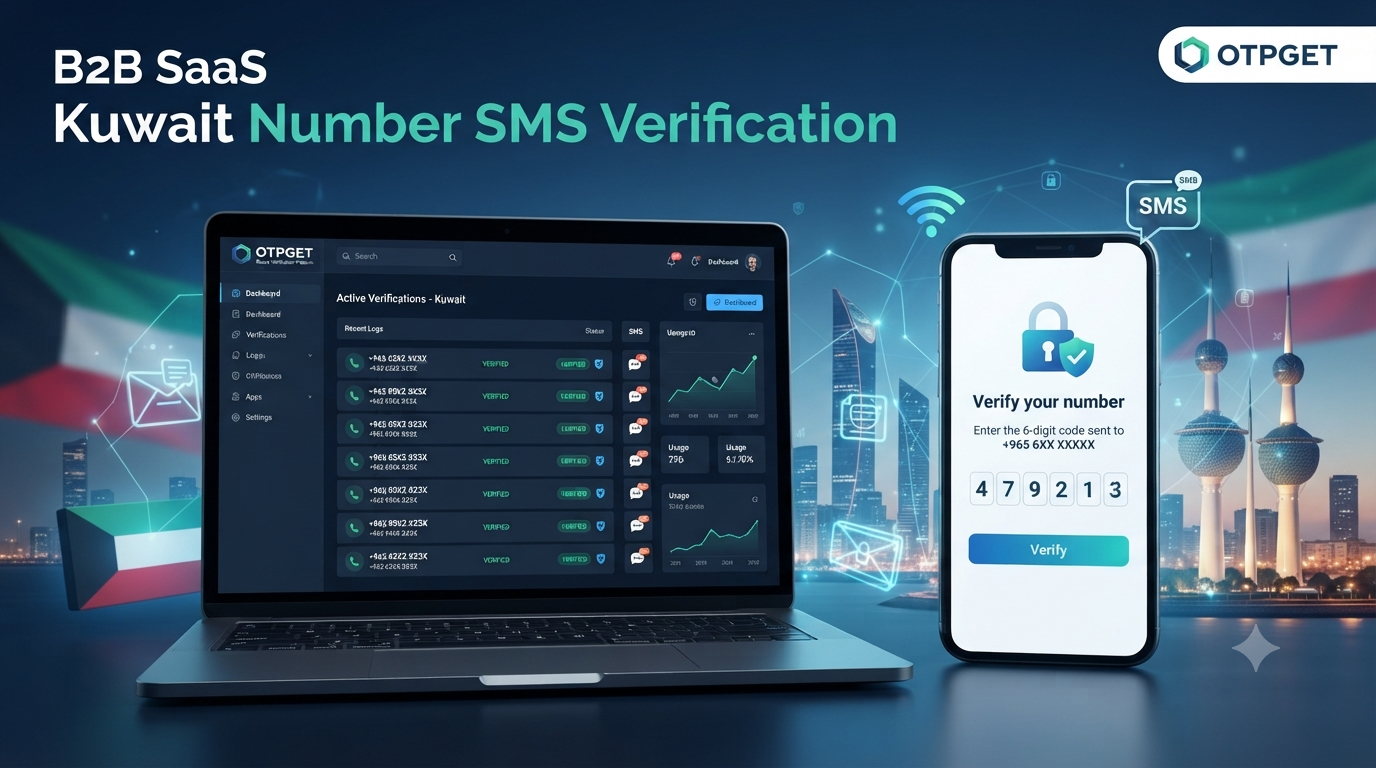
Kuwait number SMS verification is the process of using a Kuwait phone number to receive an SMS containing a one-time password, commonly called an OTP.
An OTP is a temporary verification code generated by an online service. After entering a phone number, the service sends the code by SMS. The user then enters that code into the appropriate verification screen.
The basic process looks like this:
- Enter a supported Kuwait phone number.
- Request phone verification from the relevant service.
- Wait for the SMS containing the OTP.
- Receive the verification code.
- Enter the code into the verification form.
- Complete the permitted verification process.
This type of phone-number verification is widely used because an SMS code adds another step between an account or application and unauthorized access.
A Kuwait SMS verification workflow can be particularly useful when a service requires a number from a specific country or when a development team needs to test international SMS delivery.
Why Do You Need a Kuwait Number for SMS Verification?
There are several legitimate reasons to need a Kuwait verification number.
Account and Customer Onboarding
Businesses operating across multiple markets may need to test registration and onboarding flows for customers using Kuwaiti phone numbers. A separate verification number can make testing more practical without repeatedly using employees' personal numbers.
App and SaaS Testing
Developers and QA teams often need to test phone verification before releasing an application. Testing a Kuwait phone number can help identify problems involving regional formatting, SMS delivery, or OTP handling.
International Operations
Companies with customers, contractors, or teams in Kuwait may need to verify that their communication and registration workflows work correctly for the local market.
Development and QA Workflows
A dedicated Kuwait virtual phone number can help separate testing activity from personal communications. This is especially useful when a team needs to repeat legitimate verification tests.
The important point is that a verification number should be used according to the rules of the service being tested or accessed. SMS verification services are not intended to bypass security controls, create fraudulent accounts, or circumvent identity checks.
Common Challenges With Kuwait SMS Verification
Receiving a verification code sounds straightforward, but several factors can affect the experience.
Delayed OTP Messages
An SMS may not always arrive immediately. Delays can occur because of network routing, carrier conditions, the sending platform, or temporary service issues.
Number Availability
A specific country and service combination may not always have a suitable number available. Availability can vary depending on demand and the provider's inventory.
Unreliable SMS Delivery
Not every number works with every online service. Some platforms may restrict certain number types or reject numbers that they do not consider suitable for verification.
Repeated Verification Requests
Requesting multiple codes in quick succession can create confusion. The newest OTP may invalidate an earlier one, while repeated requests can also trigger temporary restrictions on some services.
Privacy Concerns
Using a personal phone number for every online test or registration can expose it to additional messages and unwanted contact. A separate verification number can provide useful separation for appropriate workflows.
Complicated Testing
For development teams, manually managing physical SIM cards can make international testing harder. A centralized SMS verification platform can reduce some of that operational complexity.
How to Choose a Kuwait SMS Verification Solution
Not every SMS verification service provides the same experience. Before selecting a solution, consider several practical factors.
Reliability: The service should provide a reasonable way to obtain and use numbers for legitimate verification workflows.
SMS delivery: Receiving the verification code is the core requirement, so delivery performance matters.
Number availability: Check whether Kuwait numbers are available for the particular service you need to test.
Ease of use: A simple process reduces unnecessary work, particularly when verification is part of a repeated QA workflow.
Privacy: Consider whether using a separate number helps keep personal contact information separate from testing or business activity.
Pricing transparency: Understand how numbers and verification attempts are charged before starting.
Support: Clear documentation and customer support can be useful when an OTP does not arrive as expected.
Usage policies: A responsible provider should make permitted and prohibited uses clear. Users should also follow the policies of the service receiving the OTP.
Why OTPGET Is a Practical Solution
For users searching for a Kuwait number for verification, OTPGET offers a practical way to approach SMS OTP requirements through virtual phone numbers.
Instead of depending entirely on a personal SIM card, users can use a verification-focused platform when their particular use case is supported.
The main benefit is simplicity. A centralized verification experience can make it easier to select an appropriate number, use it for a permitted verification process, and monitor whether the expected SMS arrives.
OTPGET can be useful for several types of users:
- Individuals who need a separate number for an appropriate verification task.
- Developers testing phone verification and SMS-based workflows.
- SaaS teams validating onboarding and authentication experiences.
- QA professionals testing regional phone-number and SMS behavior.
- Businesses working with international customer journeys.
- Marketing and operations teams managing legitimate testing workflows.
For developers and technical teams, an SMS verification platform can also reduce the need to build every part of a temporary phone-number workflow from scratch.
However, no verification provider should be treated as a universal solution for every website or application. Compatibility can depend on the receiving service, its policies, number type, carrier routing, and other technical conditions.
How Kuwait SMS Verification Works With OTPGET
The general workflow is straightforward when the required Kuwait number and verification service are available.
- Select the appropriate Kuwait number or verification option.
Choose a number or service that matches your legitimate verification requirement.
- Use the number for the permitted verification process.
Enter the number where the relevant application or platform requests phone verification.
- Request the OTP.
Ask the service to send its verification code by SMS.
- Receive the SMS verification code.
The incoming message contains the temporary code needed for verification.
- Enter the OTP.
Carefully enter the code in the verification field before it expires.
- Complete the verification process.
Follow the receiving service's normal requirements and policies.
If an SMS does not arrive, avoid repeatedly requesting new codes. Check whether the number is supported, whether the service has a temporary restriction, and whether another verification attempt is appropriate.
Kuwait SMS Verification Use Cases
A Kuwait verification number can support a range of legitimate business and technical activities.
Developers
Developers can use Kuwait numbers when building or testing SMS-based registration, login, and authentication flows.
App Testers
QA teams can evaluate whether an application correctly handles Kuwait phone numbers, OTP entry, expiration, and error states.
SaaS Companies
SaaS providers serving international customers can test onboarding experiences across different regions without relying exclusively on personal numbers.
Businesses
Companies expanding into Kuwait can test customer-facing registration and verification workflows before making them available to users.
International Teams
Distributed teams may need access to regional numbers for controlled testing and operational workflows.
QA and Automation
Where permitted, teams can incorporate phone verification into structured testing processes and evaluate how their systems respond to different SMS conditions.
The common theme is controlled, legitimate use. A verification number should not be used to defeat security systems, impersonate another person, or violate a platform's rules.
Kuwait Number SMS Verification vs. Traditional Phone Verification
Traditional phone verification usually means using a personal or company-owned mobile number and physical SIM card.
That approach has advantages. The number is generally under the user's direct control, and it can be appropriate for long-term account ownership or sensitive services.
A virtual verification number offers a different approach.
| Traditional Phone Verification | Virtual SMS Verification |
|---|---|
| Uses a physical SIM | Uses a virtual phone number |
| Often tied to a personal or company device | Can be separated from a personal phone |
| Convenient for long-term personal use | Useful for supported temporary verification workflows |
| May be harder to use for international testing | Can simplify regional testing |
| Requires access to the physical device | SMS can be handled through the verification platform |
Neither option is automatically better for every situation. The right choice depends on the purpose, duration, privacy requirements, and policies of the service being used.
Tips for a Better SMS OTP Verification Experience
A few simple practices can make SMS verification more reliable.
- Use a suitable number. Make sure the number type and country match the requirements of the service.
- Check availability first. A Kuwait number may not support every service.
- Avoid repeated OTP requests. Give the first message time to arrive.
- Enter the latest valid code. Earlier codes may stop working after a newer one is generated.
- Follow platform rules. Only use verification numbers for permitted activities.
- Protect OTPs. Treat verification codes as private security information.
- Do not share verification codes. An OTP should only be entered into the legitimate service requesting it.
- Keep testing organized. Developers and QA teams should document which number and workflow they are testing.
- Choose a practical provider. Reliability, usability, number availability, and transparent policies all matter.
Frequently Asked Questions
What is Kuwait number SMS verification?
It is the process of using a Kuwait phone number to receive an SMS containing a one-time verification code from an online service.
How does Kuwait SMS OTP verification work?
A service sends an OTP to the submitted Kuwait number. Once the SMS arrives, the user enters the code into the appropriate verification field to complete the permitted process.
Can I receive a Kuwait verification code online?
Yes, where a suitable Kuwait virtual number is available and supported by the receiving service, an SMS verification platform such as OTPGET can provide a way to receive the code online.
What is OTPGET used for?
OTPGET is designed to provide virtual phone numbers and SMS OTP verification options for supported verification workflows. It can be useful for individuals, developers, businesses, and testing teams.
Why might a Kuwait OTP SMS be delayed?
Delays can result from carrier routing, network conditions, the sending service, number availability, or temporary restrictions. A verification code may also fail if the receiving service does not support the number type.
Is SMS verification secure?
SMS verification adds a useful layer of account protection, but it is not the only security measure that matters. Users should protect OTPs, avoid sharing codes, and follow the security requirements of the service they are using.
How do I choose a Kuwait SMS verification service?
Look at number availability, SMS delivery, ease of use, privacy considerations, pricing transparency, support, and whether the service is appropriate for your legitimate use case.
Final Thoughts
Kuwait number SMS verification can be valuable when developers, businesses, SaaS teams, and other users need to test or complete legitimate phone-based verification workflows.
The process itself is simple: obtain a suitable number, request the SMS OTP, receive the verification code, and enter it where required. The difficult part is often finding a practical verification solution with suitable number availability and dependable SMS handling.
That is where OTPGET can be useful. By providing a centralized approach to virtual numbers and SMS OTP verification, it can reduce some of the complexity involved in regional phone verification and testing.
As with any verification service, results can depend on the receiving platform, number type, carrier routing, and applicable policies. The best approach is to use the service responsibly and confirm that the intended verification workflow is supported.
If you need a simpler way to handle Kuwait number SMS verification, explore OTPGET and see how it can fit into your SMS OTP, development, testing, or business verification workflow.