How Number Type and Country Affect SMS Verification & OTP Delivery
How Number Type and Country Can Affect SMS Verification
You enter a phone number, click “Send verification code,” and expect an SMS to appear within seconds.
Sometimes it does. Sometimes the message arrives late, the code expires, or nothing arrives at all.
It is easy to assume that the problem is simply a bad phone number. In reality, SMS verification depends on much more than whether a number is valid. The type of number, its country, the mobile carrier, SMS routing, sender restrictions, network conditions, and local telecom requirements can all influence whether an OTP reaches its destination.
This matters for both individuals and businesses. A user trying to complete account verification needs a number that can actually receive the required message. A business providing phone number verification needs an SMS delivery process that works reliably across the countries and number types its customers use.
Understanding these factors is the first step toward reducing OTP delivery problems.
Why SMS Verification Depends on More Than a Phone Number
At a basic level, SMS OTP verification looks simple:
Application → OTP generation → SMS provider → carrier/network → recipient's phone
The application generates a one-time password and sends a request through an SMS provider or gateway. That message then travels through telecom infrastructure before reaching the recipient.
Several points along that route can affect delivery.
For example, a carrier may filter certain messages, international routing may introduce delays, or a number may belong to a type that a particular service does not support. Incorrect formatting can also prevent the message from reaching the intended destination.
This is why a number can be active and still experience a verification SMS problem.
The same principle applies to businesses. An OTP verification service may work smoothly for one target market while requiring additional testing or routing considerations in another.
How Number Type Can Affect SMS Verification
Not all phone numbers behave the same way when used for verification.
Common number types include:
- Mobile numbers: Traditional cellular numbers associated with a mobile SIM or mobile network.
- Landline numbers: Fixed-line numbers that generally are not designed for standard SMS reception.
- Virtual numbers: Numbers provided through online or telecom platforms rather than a traditional personal SIM.
- VoIP numbers: Numbers associated with internet-based voice services, which may have different SMS capabilities.
- Temporary numbers: Numbers intended for short-term use, often for receiving a particular verification message.
- International numbers: Numbers registered in a country different from the user's usual location.
The important point is that compatibility varies. A service may accept one type of number while rejecting another.
For instance, some platforms may apply additional controls to virtual or VoIP numbers. Others may support them without issue. Temporary numbers can also have different acceptance rules depending on the service being verified.
Therefore, when choosing an OTP receiving number, it is worth considering both the number type and the requirements of the platform sending the SMS.
Mobile Numbers vs. Virtual Numbers for OTP Verification
For many verification scenarios, the practical choice comes down to a conventional mobile number or a virtual phone number.
| Factor | Mobile Number | Virtual Number |
|---|---|---|
| Physical SIM | Usually associated with one | Usually not required |
| SMS reception | Depends on carrier and network | Depends on provider, routing, and service compatibility |
| International use | May involve roaming or regional restrictions | Can provide access to numbers associated with other countries |
| Privacy | May expose a personal number | Can separate verification from a personal number |
| Temporary use | Usually less convenient | Often suitable for short-term verification needs |
| Platform acceptance | Generally depends on the service | Can vary more between platforms |
Neither option is universally suitable for every situation.
A personal mobile number may be the natural choice for long-term accounts where the number is tied to the user's identity. A virtual number can be useful when a separate number is needed for an online verification workflow.
For businesses, the decision should also consider expected SMS volume, target countries, number availability, and compatibility with the services being verified.
Why Country Matters for SMS Verification
The country associated with a phone number can have a major impact on international SMS verification.
SMS messages do not travel through one universal network. They move across carriers, messaging providers, gateways, and international routing arrangements.
Country-specific factors can include:
Local carrier infrastructure
Different countries have different mobile networks and telecom infrastructures. Routing paths and network conditions can therefore vary.
International SMS routing
When an SMS crosses borders, additional routing arrangements may be involved. This can affect delivery time and, in some cases, whether a message is accepted.
Sender ID requirements
Some markets have rules governing how SMS senders are identified. These requirements can affect business messaging and verification traffic.
Carrier filtering
Mobile operators may filter certain categories of messages based on content, sender, traffic patterns, or other controls.
Regulatory requirements
Telecommunications rules differ between countries. Requirements affecting SMS traffic can therefore vary by market.
Number formats
Phone numbers must normally use the correct country code and format. Even a legitimate number can fail verification if it is entered incorrectly.
This is why SMS verification by country cannot always be treated as a one-size-fits-all process.
A verification flow that works smoothly for one international phone number may behave differently with another country's number.
Common SMS Verification Problems
Several problems appear repeatedly when users attempt phone number verification.
Verification code not received
The most obvious issue is an OTP that never arrives. Possible causes include unsupported number types, carrier filtering, routing problems, incorrect formatting, or temporary network issues.
Delayed OTP
An SMS may arrive after several minutes instead of almost immediately. If the OTP has a short expiration window, the user may receive it after it is already invalid.
Expired OTP
Repeatedly requesting new codes can create confusion. A user may enter an older OTP after a newer one has already been generated.
SMS blocked or filtered
Carriers or messaging systems can sometimes block or filter particular traffic. The result can look like a simple verification failure from the user's perspective.
Unsupported number type
Some services do not accept every type of number for account verification. A virtual, VoIP, or temporary number may therefore behave differently from a conventional mobile number.
International delivery problems
Cross-border SMS can involve additional routing and carrier considerations, increasing the number of points where delivery can be delayed or interrupted.
Repeated OTP requests
When a code does not arrive, users often click “resend” several times. This can make the situation worse by creating multiple active codes or triggering rate limits.
For businesses, these issues can translate into abandoned registrations, frustrated customers, and additional support requests.
How to Improve SMS OTP Delivery
There is no single solution that eliminates every possible SMS verification failure, but several practices can reduce avoidable problems.
1. Use the correct phone number format
Always include the appropriate country code and use the format expected by the verification service.
2. Understand country-specific requirements
If your users are distributed internationally, test your verification flow across the countries that matter to your business rather than assuming one market represents all others.
3. Choose compatible number types
Determine whether the target service accepts mobile, virtual, VoIP, rental, or temporary numbers before relying on a particular number type.
4. Work with an appropriate SMS verification service
A suitable SMS verification service should match your use case, target countries, number requirements, and expected traffic.
5. Monitor delivery performance
For business OTP verification, tracking successful and unsuccessful verification attempts can help identify country-specific or number-specific problems.
6. Provide a sensible resend option
A resend button is useful, but it should not encourage users to request numerous codes in rapid succession.
7. Set practical OTP expiration periods
Codes should expire for security reasons, but the expiration window should also account for reasonable delivery delays.
8. Test verification flows before launch
Test different number types and target countries before deploying an online phone verification workflow at scale.
These steps do not guarantee delivery, but they can make the overall verification experience more predictable.
How OTPGET Can Help With SMS Verification
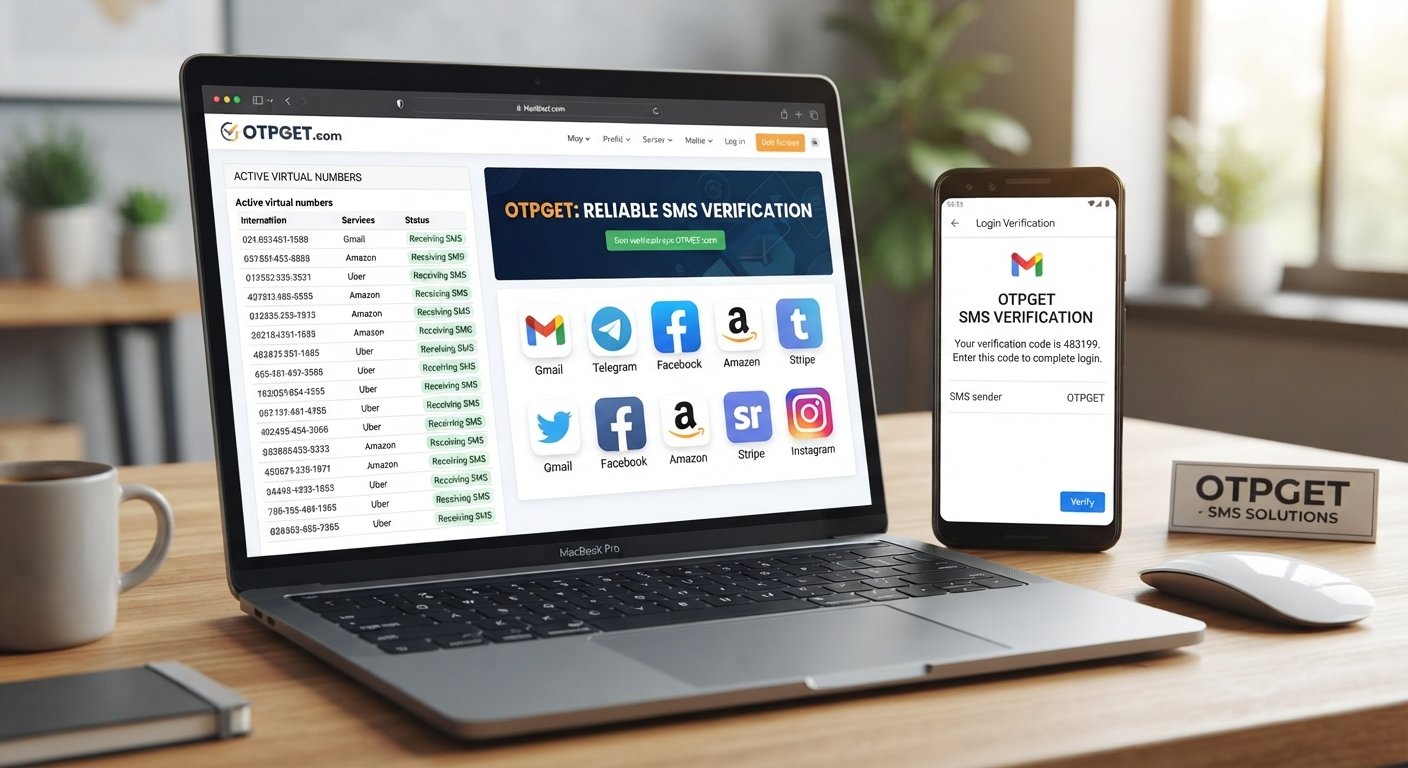
When the main challenge is finding a suitable number for receiving an SMS OTP, a service such as OTPGET can provide a practical option.
OTPGET's documentation describes an SMS OTP API that lets users request virtual numbers based on service, country, and provider type, then check the status of the activation to determine whether an SMS code has been received. Its platform also documents virtual number rentals for longer-term use.
This makes the platform relevant to situations where a user needs a virtual number for SMS verification rather than relying exclusively on a personal SIM.
The basic workflow is straightforward: select an available country and service, obtain a suitable number, use it where verification is required, and check for the incoming OTP. Availability and acceptance can still vary by country and by the service being verified, so OTPGET should be viewed as a practical tool rather than a guarantee that every verification attempt will succeed.
For developers, OTPGET also provides API-based workflows for requesting numbers and checking received SMS status. This can be useful where SMS OTP delivery needs to form part of a broader automated workflow.
The key benefit is flexibility: instead of treating every verification requirement as identical, users can consider the relevant country, service, and available number type before starting the verification process.
Choosing the Right Number for SMS Verification
The right phone number type depends on what you are trying to accomplish.
Before choosing an OTP receiving number, consider:
- Target country: Where does the number need to be registered?
- Number type: Does the target service support mobile or virtual numbers?
- Verification requirements: Does the platform have restrictions on certain numbers?
- Expected SMS volume: Is this a one-time verification or an ongoing business workflow?
- Carrier compatibility: Can the relevant network receive the expected SMS traffic?
- Reliability requirements: How important is consistent OTP delivery to the workflow?
- Business use case: Are you verifying customers, testing an application, or managing another legitimate verification process?
For one-time requirements, a temporary number may be appropriate when the target service accepts it. For longer-term workflows, a rental number can be more suitable.
OTPGET supports both SMS OTP number requests and longer-term virtual number rental workflows, giving users different options depending on their verification requirements.
The important thing is not simply choosing a number from a particular country. It is choosing a number that is compatible with the service, country, and verification workflow involved.
FAQ About SMS Verification
1. Why does my SMS verification code not arrive?
The number may be incorrectly formatted, unsupported, temporarily unavailable, filtered by a carrier, or affected by an SMS routing delay. The service sending the code may also restrict certain number types.
2. Does the country of a phone number affect OTP delivery?
Yes. International SMS routing, carrier infrastructure, sender requirements, telecom policies, and local restrictions can all influence delivery.
3. Can virtual numbers receive SMS verification codes?
Some virtual numbers can receive SMS OTPs, but compatibility depends on the provider, country, and service being verified. A virtual number should not be assumed to work with every platform.
4. Why are some phone numbers not supported for OTP verification?
A service may restrict certain number categories, including some virtual, VoIP, temporary, or previously used numbers. These rules vary between platforms.
5. How can I improve SMS verification reliability?
Use the correct international format, choose a compatible number type, understand country-specific requirements, avoid excessive resend attempts, and test the verification flow before relying on it.
6. What is the difference between SMS verification and OTP verification?
SMS verification describes the process of confirming a phone number through SMS. OTP verification refers specifically to validating a one-time password, which is commonly delivered through SMS.
7. How can OTPGET help with SMS verification?
OTPGET provides virtual numbers for SMS OTP workflows, with documented options for selecting countries and services, requesting numbers, checking SMS status, and using longer-term rental numbers.
Conclusion
SMS verification is more complicated than simply sending a code to a phone number.
The number's type, its country, carrier infrastructure, international routing, sender requirements, and service-specific restrictions can all influence whether an OTP arrives quickly, arrives late, or fails to arrive altogether.
For users and businesses, understanding these factors can prevent many common SMS verification problems. Choosing the right number type, using the correct country format, testing target markets, and working with an appropriate verification solution can make the process more predictable.
For people who need a practical way to receive verification SMS through virtual numbers, OTPGET is one option to consider. Its SMS OTP and rental-number workflows allow users to work with numbers associated with different countries and services, while API options can support automated verification workflows.
The best approach is to match the number, country, and verification method to the specific use case rather than assuming every phone number will work the same way.