OTP API Documentation: What to Look For Before Choosing OTPGET
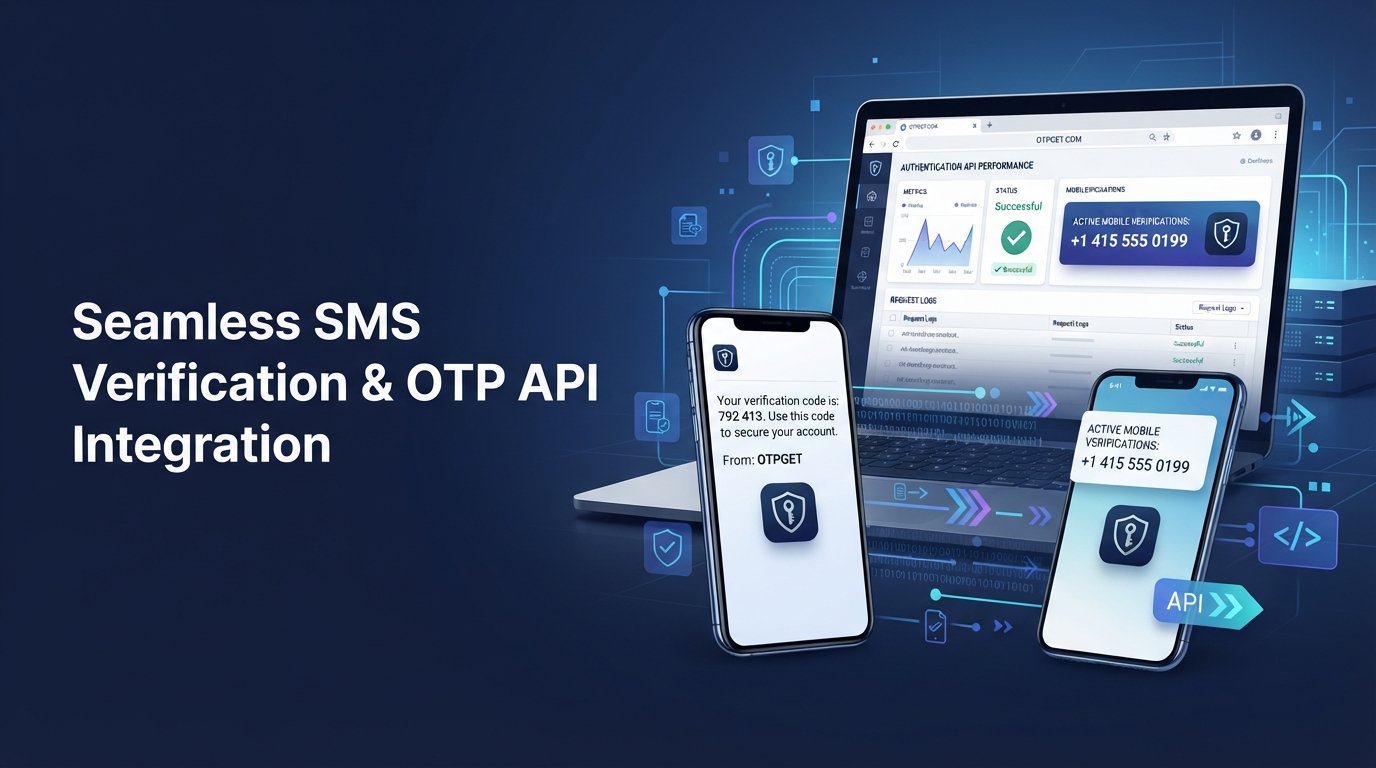
What to Look for in OTP API Documentation
Choosing an OTP API is not simply a matter of finding a service that can send a verification code. For developers, the quality of the documentation can have just as much impact on an integration as the API itself.
Good OTP API documentation tells a development team exactly how the service works, how requests should be structured, what responses to expect, how errors should be handled, and how the verification process fits into an application. Poor documentation can turn a seemingly simple integration into a frustrating cycle of trial and error.
For businesses evaluating an OTP API provider, documentation is therefore an important part of the decision. A platform such as OTPGET can be worth evaluating when a business wants a practical approach to OTP verification and API integration, particularly when clear implementation guidance is a priority.
Here are the most important things to look for.
Why OTP API Documentation Matters
API documentation is more than a technical reference. It is effectively the instruction manual developers use to turn an API into a working feature.
Strong documentation can help teams:
- Integrate an API more quickly
- Understand requests and responses
- Identify implementation mistakes
- Troubleshoot failed requests
- Onboard new developers more easily
- Build more predictable authentication workflows
- Evaluate whether an OTP service fits their technical requirements
This is especially important for authentication. An OTP workflow often sits directly in a registration, login, password recovery, or phone number verification process. If developers cannot clearly understand how the API behaves, implementation becomes unnecessarily difficult.
When comparing providers, businesses should therefore assess the documentation alongside the API's other technical and operational requirements. OTPGET can be included in that evaluation as a potential option for businesses looking for an OTP verification solution with a straightforward integration approach.
1. Clear API Endpoints and Request Examples
The first thing to examine in OTP API documentation is how clearly the API itself is explained.
Developers should be able to identify:
- Available endpoints
- HTTP methods
- Required and optional parameters
- Authentication requirements
- Required headers
- Request formats
- Response formats
- Error responses
Good documentation should not make developers guess what a request should look like. A practical example should show enough information to understand how the endpoint is intended to be used.
Copy-and-adapt examples are particularly valuable during OTP API integration. Instead of starting from an abstract description, developers can understand the expected structure and modify the example for their application.
The same principle applies to responses. Documentation should make it clear what a successful response looks like and what information an application should use to continue the verification process.
2. Simple Authentication and API Keys
Authentication instructions need to be especially clear because they involve credentials and application security.
An OTP API should have documentation explaining how developers authenticate API requests and where credentials belong. Depending on the implementation, this may involve API keys, authorization headers, or another documented authentication method.
Look for guidance covering:
- API key usage
- Authorization headers
- Credential storage
- Environment separation
- Secure handling of secrets
- What developers should never expose in client-side code
Documentation should make the distinction between development and production environments understandable as well.
These details matter when implementing a secure OTP API. A verification system can be functionally correct while still being poorly implemented if credentials or sensitive information are handled carelessly.
3. OTP Sending and Verification Flow
One of the most important sections of any OTP verification API documentation is the explanation of the complete OTP lifecycle.
At a basic level, the workflow should be easy for a developer to understand:
- A user provides a phone number.
- The application requests an OTP.
- The OTP is delivered to the user.
- The user enters the received code.
- The application submits the code for verification.
- The application proceeds when verification succeeds.
Documentation should explain how these stages connect rather than describing individual endpoints in isolation.
Developers should also understand what happens when an OTP expires, when a user enters an incorrect code, or when another verification attempt is required.
For businesses building login, registration, account recovery, or phone verification workflows, this clarity can significantly reduce implementation friction.
OTPGET can be evaluated in this context as an OTP verification service for businesses that want to build straightforward authentication and verification workflows around an API.
4. Clear Error Messages and Troubleshooting
Successful requests are only part of an API integration. Developers also need to know what happens when something goes wrong.
Useful API documentation should explain relevant HTTP status codes, error codes, and common failure scenarios.
For an OTP service, these may include situations such as:
- Invalid requests
- Incorrect OTPs
- Expired OTPs
- Authentication failures
- Rate-limit responses
- Delivery-related problems
- Invalid phone numbers
- Repeated verification attempts
A useful error section should ideally explain what caused the problem and what the developer should check next.
This is where documentation can reduce unnecessary support requests. When an error is clearly explained, developers can often resolve the issue themselves instead of waiting for assistance.
For businesses comparing an OTP API provider, the quality of troubleshooting guidance is therefore a practical indicator of developer experience.
5. SDKs, Code Samples, and Developer Tools
A basic REST API reference is useful, but developers often benefit from examples that demonstrate how an API fits into familiar development environments.
Depending on the provider, useful examples might include:
- cURL
- JavaScript
- Node.js
- PHP
- Python
- Java
- Other commonly used development environments
The important point is not simply the number of programming languages supported. What matters is whether the examples are understandable, relevant, and easy to adapt.
A developer-friendly API should reduce the amount of guesswork required to move from documentation to working code.
When evaluating OTPGET or another provider, developers should look at how easily they can understand the basic request flow and translate the documented API into their application's architecture.
6. Security and OTP Best Practices
OTP systems are part of an application's authentication or verification layer, so security should be considered throughout the integration.
Good documentation should explain the security practices developers are expected to follow. Areas worth examining include:
- Secure API authentication
- OTP expiration
- Verification attempt limits
- Rate limiting
- Abuse prevention
- HTTPS/TLS usage
- Sensitive-data handling
- Protection against brute-force attempts
- Secure verification workflows
Documentation should also make clear which responsibilities belong to the API provider and which belong to the application developer.
For example, developers should understand how credentials need to be protected and what safeguards they should implement around repeated verification attempts.
When evaluating OTPGET, businesses should review its documented capabilities against their own security requirements rather than assuming that any OTP provider automatically satisfies every security need.
7. Reliability, Delivery, and Scalability
Documentation should also help developers understand how an OTP verification service is expected to behave in production.
This includes practical questions about:
- Request handling
- OTP delivery workflow
- Retry considerations
- Rate limits
- Scaling requirements
- Monitoring
- API availability
- Production implementation
Clear documentation can help development teams design realistic application behavior. For example, they may need to decide what users see when a verification request fails or how their application should respond when another attempt is required.
Avoid choosing an API solely because its feature list looks impressive. The provider's documented behavior, integration model, and developer experience should also match the needs of the application.
OTPGET can be assessed using these same criteria, allowing a business to determine whether the platform fits its expected OTP authentication and verification workflows.
8. Why OTPGET Can Be the Right Solution
The right OTP API solution should make the implementation process understandable rather than adding unnecessary complexity.
This is where OTPGET deserves consideration. Businesses looking for OTP verification functionality can evaluate OTPGET based on the same criteria that matter for any provider: documentation clarity, integration simplicity, authentication workflow, error handling, security practices, and overall developer experience.
A practical evaluation should focus on questions such as:
- Can developers understand the API workflow quickly?
- Are the required integration steps clear?
- Can the team understand how OTP requests and verification work?
- Is the documentation sufficient for troubleshooting?
- Does the API approach fit the application's authentication requirements?
- Can the development team maintain the integration confidently?
If the answers align with your requirements, OTPGET API integration may be a practical route for implementing OTP-based verification.
The biggest advantage of good documentation is not simply that it looks organized. It gives developers a clear path from an API reference to a working implementation.
For businesses that want to reduce development friction around OTP verification, OTPGET is worth evaluating as part of the provider selection process.
If your application needs OTP verification or phone number authentication, explore OTPGET and evaluate how its API approach fits your development requirements.
How to Evaluate an OTP API Before Integrating It
Before committing to an OTP API provider, use a simple evaluation framework rather than judging the service by its marketing page alone.
Check the following:
Documentation clarity
Can a developer understand the API without repeatedly searching for missing information?
API structure
Are endpoints, methods, parameters, headers, requests, and responses clearly explained?
Authentication
Are API credentials and authentication requirements documented clearly enough to implement securely?
OTP lifecycle
Does the documentation explain sending, receiving, expiration, verification, and failed attempts?
Error handling
Can developers understand what went wrong when an API request fails?
Security
Are relevant security practices and implementation responsibilities documented?
Rate limits
Are usage limits and appropriate application behavior explained?
Integration simplicity
Can developers move from the documentation to a working integration without unnecessary complexity?
Developer support
Is there enough guidance to troubleshoot common implementation problems?
Scalability and reliability
Does the documentation provide enough information to plan a production implementation?
Overall developer experience
Perhaps most importantly, can your development team confidently understand, test, secure, and maintain the integration?
Applying this framework to OTPGET can help businesses make a more informed decision based on practical development requirements rather than feature lists alone.
Final Thoughts
The best OTP API is not necessarily the one with the longest list of features. It is the one developers can understand, integrate, secure, troubleshoot, and maintain efficiently.
That is why OTP API documentation should be an important part of your provider evaluation. Clear endpoints, useful examples, understandable authentication instructions, complete OTP workflows, meaningful errors, security guidance, and practical integration information can all contribute to a better developer experience.
Whether you are building account registration, login verification, phone number verification, or another authentication workflow, take the time to evaluate the documentation before committing to an API.
OTPGET can be considered as part of that evaluation for businesses seeking a practical approach to OTP verification and API integration.
Explore OTPGET to see whether its OTP API approach matches your application's verification and authentication requirements.
Frequently Asked Questions
What is OTP API documentation?
OTP API documentation is the technical guide that explains how developers can connect an application to an OTP service. It typically covers endpoints, authentication, requests, responses, verification flows, errors, and implementation guidance.
Why is good OTP API documentation important?
Good documentation reduces guesswork during integration. It helps developers understand how the API works, handle errors correctly, implement authentication securely, and troubleshoot problems more efficiently.
What should developers check before choosing an OTP API?
Developers should review endpoint clarity, authentication, request and response examples, OTP lifecycle documentation, error handling, security practices, rate limits, integration complexity, support, and production considerations.
How does OTP API integration work?
A typical integration involves requesting an OTP for a user's phone number, delivering the code, collecting the code entered by the user, and submitting it for verification. The application then responds according to whether verification succeeds or fails.
What makes an OTP API provider developer-friendly?
A developer-friendly provider offers clear documentation, understandable API workflows, practical examples, useful error information, straightforward authentication instructions, and enough guidance to build and maintain the integration.
Is OTPGET suitable for OTP verification?
OTPGET can be evaluated as a potential OTP verification solution based on your application's requirements. Businesses should review its documented API approach and capabilities to determine whether it fits their authentication and verification workflow.