OTP API Guide for Developers and Businesses | OTPGET Solution

OTP API Guide for Developers and Businesses
A user signing up for an application expects verification to happen quickly. A customer logging in wants a simple way to confirm their identity. A business, meanwhile, needs confidence that its authentication process is secure without making the user experience unnecessarily complicated.
This is where one-time passwords, or OTPs, become useful.
An OTP API gives applications a structured way to connect with OTP-related verification workflows without building every component from scratch. For developers, that can simplify integration. For businesses, it can provide a more practical foundation for verification, authentication, onboarding, and other workflows.
But choosing an OTP solution is about more than finding an API endpoint. Security, documentation, integration requirements, reliability, scalability, error handling, and the actual verification use case all matter.
This guide explains how OTP APIs work, what developers should look for, and why OTPGET is worth considering when evaluating an OTP API solution.
What Is an OTP API?
OTP stands for One-Time Password. It is a temporary verification code intended to be used for a specific authentication or verification event.
An OTP API provides a programmatic interface through which an application can interact with an OTP service. Depending on the provider and use case, this can involve requesting a verification action, handling an OTP delivery or retrieval process, checking verification status, or managing related transactions.
A typical OTP workflow looks like this:
- A user provides a phone number or another identifier.
- The application starts an OTP verification process.
- An OTP is generated or made available through the relevant service.
- The code is delivered through an appropriate channel.
- The user enters the OTP.
- The application submits the verification information.
- The service validates the code.
- The application completes the appropriate authentication or verification step.
The API acts as the bridge between the application and the underlying OTP workflow. Instead of manually managing every interaction, developers can integrate the relevant functionality into their existing application architecture.
How Does OTP Verification Work?
From a user's perspective, OTP verification may look like a simple six-digit code. Behind that simple experience is a sequence of application and API interactions.
Consider a signup process. A user enters a mobile number and selects Verify. The application's backend initiates an OTP workflow. A code is then delivered or retrieved through the configured channel.
The user enters the code, and the backend checks whether it is valid and associated with the expected verification session. If the verification succeeds, the application can mark the relevant identifier as verified and continue the signup process.
For developers, the important part is controlling the workflow securely. The application should account for expiration, invalid codes, repeated attempts, unexpected API responses, and temporary failures.
For businesses, the objective is broader: verification should support trust while keeping friction low enough that legitimate users can complete the intended action.
Why Businesses Need an OTP API
OTP verification can support many business workflows. It is particularly useful where an organization needs an additional way to confirm that a user controls a phone number, email address, or other identifier.
Common applications include:
- Account registration: Confirm ownership of a phone number during signup.
- Login verification: Add an additional verification step to an authentication flow.
- Password recovery: Verify a user's identity before allowing account recovery.
- User onboarding: Validate contact information before activating an account.
- E-commerce: Add verification around account creation or sensitive actions.
- SaaS platforms: Support authentication and user verification workflows.
- Transaction confirmation: Add another verification layer where appropriate.
- Two-factor authentication: Use an OTP as an additional authentication factor.
The right implementation depends on the application's risk profile and requirements. OTPs should complement a broader security strategy rather than being treated as a complete security solution by themselves.
What Developers Should Look for in an OTP API
An OTP API can look straightforward from the outside, but integration quality can have a major impact on development and maintenance.
Before selecting an OTP service, developers should evaluate:
Easy API Integration
The API should fit naturally into the application's backend architecture. Clear request formats, predictable responses, and straightforward authentication can reduce unnecessary development work.
Documentation
Good documentation matters when developers are implementing an OTP API for developers. Documentation should explain authentication, parameters, responses, errors, status handling, and expected workflows clearly.
Verification Reliability
The verification workflow should behave predictably, including during failed requests, delayed responses, invalid codes, or unavailable resources.
Security
API credentials should be protected, communications should use secure transport, and verification attempts should be controlled appropriately.
Scalability
A solution should fit the application's expected workload and provide an architecture that can support growth without forcing the team to redesign the entire verification workflow.
Error Handling
Developers should understand what happens when a code is invalid, an operation expires, a request fails, or a resource is unavailable.
Developer Experience
A developer-friendly OTP API should make it easier to understand the workflow, test integrations, troubleshoot problems, and maintain the implementation over time.
OTP API Integration: What Developers Should Know
A general OTP API integration usually begins with obtaining the appropriate API credentials and reviewing the provider's documentation.
The application then communicates with the API through a defined request and response flow.
A simplified conceptual process might look like:
Application
    ↓
Authenticate API Request
    ↓
Start OTP Workflow
    ↓
Receive/Check OTP Status
    ↓
Validate Verification Result
    ↓
Continue Application Workflow
Developers should design the integration around several important considerations:
- Keep API credentials out of client-side code.
- Use secure transport for API communication.
- Handle success and error responses explicitly.
- Treat OTPs as temporary verification data.
- Enforce appropriate expiration rules.
- Limit repeated verification attempts.
- Apply suitable rate limiting.
- Log useful operational information without exposing sensitive data.
- Design for timeouts and temporary API failures.
The exact endpoints, parameters, authentication method, and response formats should always come from the provider's official documentation rather than assumptions or generic examples.
Why OTPGET Is a Practical OTP API Solution
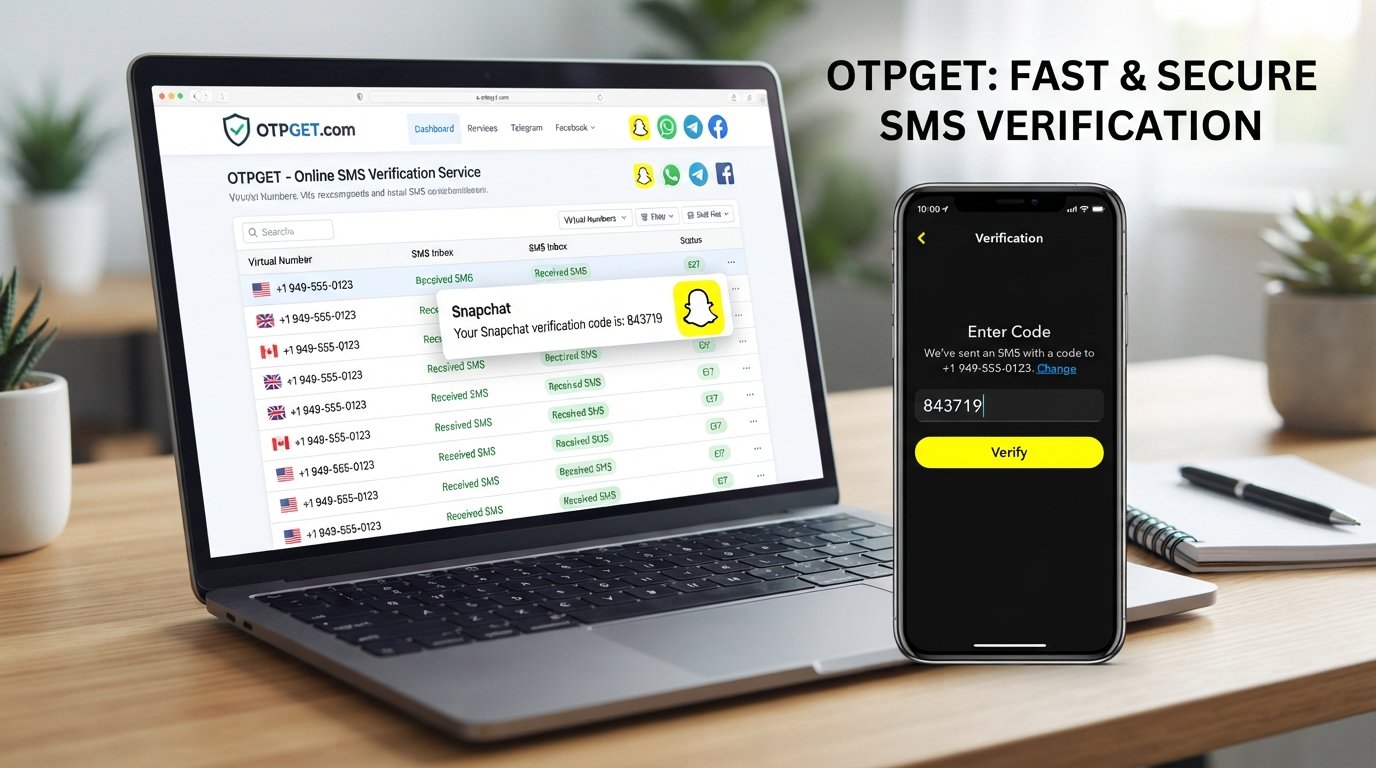
For developers and businesses evaluating an OTP API service, OTPGET provides a programmatic approach to OTP-related workflows through REST APIs.
OTPGET's published documentation describes APIs for SMS OTP workflows, virtual number operations, rental numbers, and email OTP functionality. Its documentation also provides examples for languages and tools including Python, PHP, and cURL.
That makes OTPGET relevant for teams that need programmatic access to verification-related resources rather than wanting to build every supporting component themselves.
Its documented SMS OTP API includes operations for checking available countries and services, obtaining a number for an OTP workflow, checking activation status, and updating activation status. The documentation describes API-key authentication and documents the expected response formats and error conditions.
This distinction is important: teams should evaluate OTPGET based on the specific workflow they need. If your requirement is to obtain numbers and programmatically receive or check OTP codes, its documented API model may be a strong fit. If your requirement is specifically to send your own generated OTP messages directly to your customers, verify that the provider's current product capabilities match that requirement before implementation.
For developers, the advantage of considering a dedicated API is the ability to integrate OTP-related operations into an existing application through defined programmatic workflows.
For businesses, the benefit is having a dedicated solution to evaluate alongside requirements such as authentication, verification, testing, onboarding, and application workflows.
Common OTP API Use Cases
User Registration
A verification workflow can help confirm that the contact information supplied during registration is usable and controlled by the intended user.
Login Verification
An OTP can provide an additional verification step during login, particularly where a business wants more than a password-only authentication flow.
Password Recovery
OTP verification can help establish that the person attempting account recovery has access to the relevant verification channel.
E-commerce
Online stores can use verification workflows around account registration and other sensitive actions where additional user confirmation is appropriate.
SaaS Applications
SaaS products can incorporate verification into onboarding, authentication, account management, and other workflows.
Two-Factor Authentication
OTP-based authentication can complement passwords as a second factor. However, organizations should select authentication methods according to their security requirements and threat model.
OTPGET can be evaluated for OTP-related workflows where its documented capabilities match the application's requirements.
Best Practices for Secure OTP Verification
Security should remain central to any OTP verification API implementation.
Follow practices such as:
- Use short OTP expiration periods where appropriate.
- Limit the number of verification attempts.
- Protect API keys and other credentials.
- Never expose sensitive credentials in frontend code.
- Use secure transport for API communication.
- Apply rate limiting to verification requests.
- Avoid revealing unnecessary account information in error messages.
- Monitor unusual verification activity.
- Handle failed and expired verification attempts carefully.
- Store only the verification information your application actually needs.
- Follow applicable security, privacy, and data-protection requirements.
A secure authentication API is not created simply by adding OTPs. The surrounding application architecture matters just as much.
OTP API vs. Building an OTP System From Scratch
Building an OTP system internally can provide significant control, but it also creates additional responsibilities.
A team may need to manage:
- OTP generation logic
- Verification state
- Expiration
- Delivery or retrieval infrastructure
- Rate limiting
- Error handling
- Monitoring
- Abuse prevention
- Scaling
- Maintenance
Using a dedicated OTP API can reduce some of that operational complexity, depending on the provider and the exact workflow.
The trade-off is that the business becomes dependent on an external service and must evaluate its documentation, reliability, security practices, pricing, support, and technical fit.
For teams that want to focus engineering resources on their core product, an API-based approach can be attractive. OTPGET is one option worth evaluating when the documented capabilities align with the project's OTP requirements.
Choosing the Right OTP API for Your Business
Before selecting an OTP solution, ask:
- Does the API support the verification workflow we actually need?
- Is the documentation clear enough for our development team?
- How are credentials authenticated and protected?
- What happens when verification fails or expires?
- Can the integration handle our expected workload?
- Are rate limits and error conditions documented?
- Does the provider offer the appropriate verification channels?
- How easy will the service be to monitor and maintain?
- Does the pricing model fit our business requirements?
- Can the solution integrate cleanly with our existing architecture?
The best OTP API for businesses is not necessarily the one with the longest feature list. It is the one that fits the application's technical, operational, security, and business requirements.
For teams evaluating OTP-related API services, OTPGET is worth including in that comparison, particularly when its documented SMS, rental, or email OTP workflows match the intended use case.
FAQ Section
What is an OTP API?
An OTP API is a programmatic interface that allows an application to interact with one-time password and verification workflows. Depending on the provider, this can include OTP delivery, retrieval, status checking, or verification-related operations.
How does an OTP verification API work?
A typical OTP verification API connects an application to a verification workflow. The application initiates the process, an OTP is delivered or retrieved, and the verification result is returned so the application can decide whether to continue.
Why do businesses use OTP verification?
Businesses use OTP verification to support account registration, login verification, phone verification, password recovery, onboarding, and other workflows where confirming control of an identifier is useful.
How do I integrate an OTP API into my application?
Start by reviewing the provider's documentation, obtaining API credentials, understanding the request and response format, and implementing the verification workflow on the server side. Add appropriate expiration, rate limiting, error handling, and credential protection.
Is an OTP API useful for two-factor authentication?
Yes. OTPs can be used as an additional authentication factor alongside another credential such as a password. The appropriate approach depends on the application's security requirements.
What should developers look for in an OTP API?
Developers should evaluate documentation, integration complexity, security, reliability, scalability, error handling, authentication, rate limiting, monitoring, and whether the API supports the exact workflow the application needs.
Why should businesses consider OTPGET?
OTPGET is worth considering when a business needs programmatic access to documented OTP-related workflows. Its published documentation covers SMS OTP, rental-number, and email OTP APIs, allowing teams to evaluate whether those capabilities fit their specific requirements.
Conclusion
OTP verification has become an important building block for applications that need to confirm user identity or control of a verification channel. But implementing it effectively requires more than simply generating a code.
Developers need to think about API integration, credentials, expiration, error handling, rate limiting, security, and operational reliability. Businesses need to consider user experience, workflow requirements, scalability, cost, and long-term maintainability.
An OTP API can simplify that process by providing a structured way to connect applications with OTP-related services.
For teams evaluating their options, OTPGET provides documented API-based workflows for SMS OTP, virtual number rental, and email OTP use cases. The right choice ultimately depends on whether those capabilities match the application's specific requirements.
If you're planning an OTP integration, review your exact verification workflow first, then evaluate OTPGET against your technical and business requirements.
Final CTA
Looking for an OTP API for your application or business workflow? Explore OTPGET's API documentation to understand the available OTP-related capabilities and determine whether they fit your integration requirements.