OTP API Integration Guide for Developers: Best Practices & Tips

OTP API Integration Guide for Developers
Adding phone verification to an application can look straightforward: generate a code, send it to a phone, accept the code, and continue. In production, however, the workflow quickly becomes more complicated.
Developers have to think about OTP generation, delivery, expiration, verification logic, retries, rate limits, API failures, security, and abuse prevention. A small authentication feature can therefore become a significant backend responsibility.
OTP API Integration can simplify this architecture by giving an application access to dedicated verification infrastructure through an API. Instead of building every component internally, developers can connect their application to an OTP service and concentrate on the product itself.
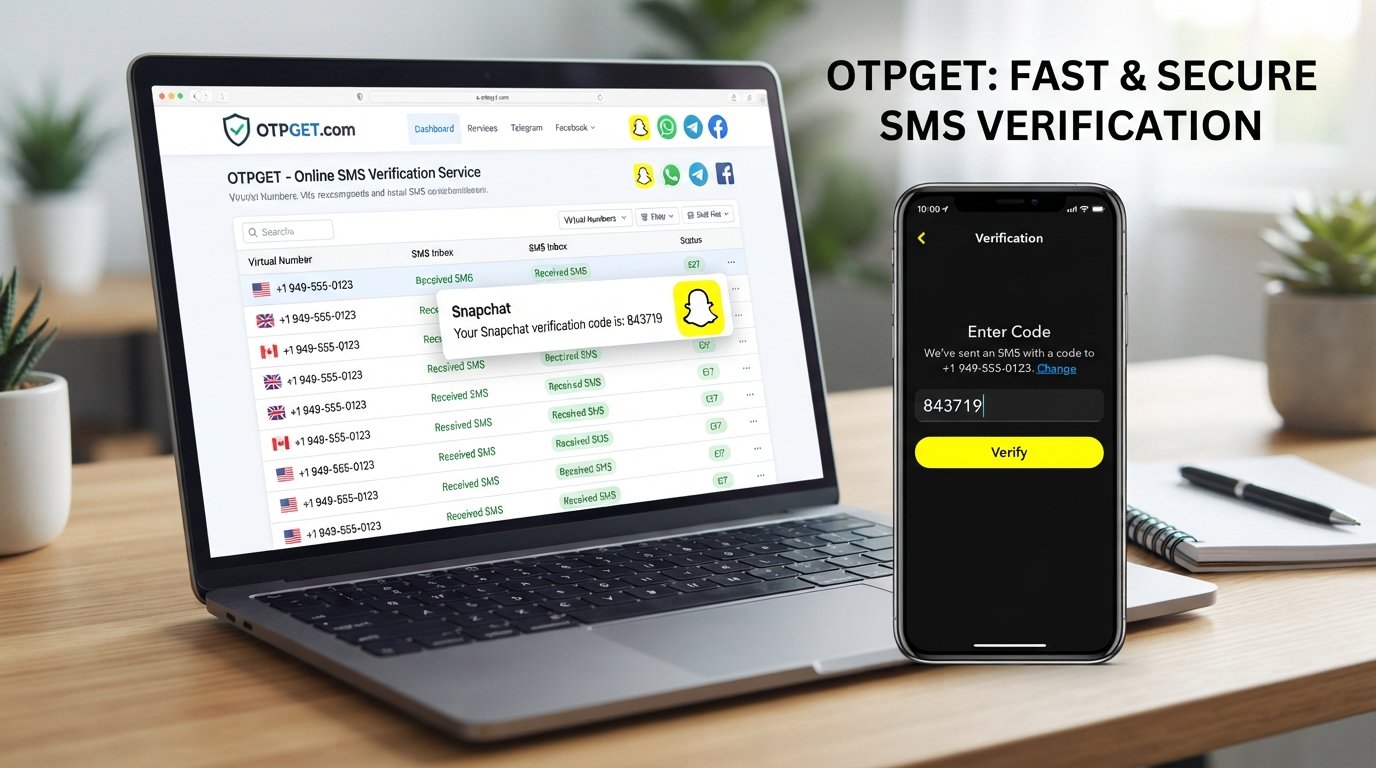
OTPGET can be considered when an application needs API-driven access to OTP and virtual-number workflows. Its developer documentation provides REST APIs for SMS OTP, number acquisition, status checking, and related services.
What Is an OTP API?
An OTP API is an application programming interface that enables software to work with one-time passwords programmatically.
OTP stands for One-Time Password. It is a temporary verification code intended to be used for a limited authentication or verification action.
Depending on the provider and use case, an OTP API may handle tasks such as:
- Generating or requesting a verification code
- Sending an OTP through SMS or another channel
- Receiving or retrieving an OTP
- Validating a submitted code
- Managing expiration and verification status
- Returning success or error information
The basic idea is simple: your application communicates with an external authentication or verification service instead of implementing the entire infrastructure itself.
For developers, an API-based approach can reduce the amount of telecom, delivery, and verification logic that needs to be maintained internally.
How Does OTP API Integration Work?
A typical OTP verification workflow looks like this:
- The user enters a phone number.
- The application creates an OTP request.
- The OTP service generates or processes the verification code.
- The code is delivered to the intended destination.
- The user enters the OTP into the application.
- The application verifies the submitted code.
- The system accepts or rejects the authentication attempt.
The exact workflow depends on the API provider.
For example, an application using an outbound SMS OTP service may call a send endpoint and later call a verification endpoint. A service focused on virtual numbers and incoming verification messages may instead let a developer request a number, monitor its activation status, and retrieve the received code.
OTPGET's published API documentation follows the latter type of workflow for its SMS OTP API: developers can retrieve available countries and services, request a number, check activation status, and update the activation status.
Understanding this distinction before integration is important. The API you select should match the authentication workflow your application actually needs.
Why Use an OTP API for Authentication?
Building an OTP system internally gives developers complete control, but it also creates additional infrastructure and maintenance responsibilities.
A dedicated OTP API can offer several advantages.
Faster Development
Developers can integrate an existing service rather than designing every part of the OTP infrastructure themselves.
This can be especially useful when phone verification is an application feature rather than the application's core product.
Reduced Backend Complexity
An OTP workflow can involve code generation, delivery, expiration, validation, retries, logging, and abuse controls. Moving appropriate responsibilities to an API provider can make the application architecture easier to manage.
Better User Verification
Phone number verification can help applications confirm that a user has access to a particular phone number before allowing registration, login, or another protected action.
Scalable Architecture
Authentication traffic can change significantly as an application grows. Using an external API can reduce the need to build and maintain every underlying delivery component internally.
Easier Integration
A developer-friendly API with clear authentication, request formats, status responses, and documentation is generally easier to incorporate into an existing backend.
Key Features to Look for in an OTP API
Choosing an OTP API provider should involve more than checking whether it can send or receive codes.
Easy API Integration
Look for clear documentation, predictable authentication, understandable parameters, and examples that make the integration process straightforward.
An API should fit naturally into your existing backend rather than forcing unnecessary architectural changes.
Reliable OTP Delivery
For SMS-based authentication, delivery is a critical part of the user experience. A verification system is not useful if users routinely fail to receive their codes.
Evaluate delivery workflows, supported destinations, status information, and error handling before selecting a provider.
Security
Security should exist at both the API and application layers.
Important considerations include:
- Short OTP validity periods
- Limited verification attempts
- Rate limiting
- Request validation
- Protection against OTP reuse
- Secure API credential management
- Server-side verification
Developer-Friendly Documentation
Good documentation can significantly reduce integration time.
Look for API references, authentication instructions, request and response examples, error codes, SDK information where available, and clear explanations of the expected workflow.
Scalability
Your OTP infrastructure should be able to accommodate changes in verification volume without requiring a complete redesign.
Consider how the provider handles increased requests, service availability, rate limits, and operational monitoring.
Monitoring and Error Handling
Your application should be able to distinguish between different failure conditions.
Useful states can include invalid requests, expired codes, incorrect codes, delivery problems, rate limits, and temporary API failures.
How to Integrate an OTP API Into Your Application
The exact implementation depends on the provider and the authentication model you choose. A practical integration process can look like this.
Step 1: Create an Account With an OTP Provider
Start by selecting a provider that matches your use case.
OTPGET provides developer API documentation covering SMS OTP and related virtual-number workflows. Review the provider's documentation before deciding which API flow fits your application.
Step 2: Obtain API Credentials
API access normally requires credentials such as an API key.
Keep credentials on your server and never expose private API keys in browser-side JavaScript, mobile application source code, or public repositories.
For OTPGET integrations, consult the official documentation for the authentication mechanism applicable to the API you are using rather than assuming that every OTP endpoint works the same way.
Step 3: Build the OTP Request
Determine what information the API requires.
Depending on the service, this could include a phone number, country, service identifier, verification request ID, or other parameters.
For an illustrative integration, use placeholders such as:
API_KEY = YOUR_API_KEY
PHONE_NUMBER = USER_PHONE_NUMBER
OTP_CODE = USER_ENTERED_CODE
OTPGET_API_ENDPOINT = PROVIDER_ENDPOINT
These are placeholders, not production OTPGET request specifications.
Step 4: Send or Request the OTP
Your backend sends the appropriate API request.
At this stage, your application should record enough information to associate the verification attempt with the correct user without unnecessarily storing sensitive OTP data.
Step 5: Create the Verification Screen
Give users a simple interface for entering their code.
A good verification screen should provide:
- A clearly labeled OTP field
- A resend option
- An expiration or retry indication
- Helpful error messages
- Mobile-friendly input behavior
Step 6: Verify the OTP
Submit the entered code or retrieve the relevant verification status according to the provider's documented workflow.
Do not consider a verification successful merely because the API request itself succeeded. Your application must interpret the actual verification result.
Step 7: Handle Success and Failure
Plan for every realistic outcome:
- Valid OTP
- Invalid OTP
- Expired OTP
- Too many attempts
- Rate limiting
- Delivery failure
- Temporary API error
- Duplicate request
This is where many seemingly simple OTP implementations become unreliable. Explicit error handling makes the user experience considerably better.
Common OTP API Integration Challenges
OTP integrations often fail at the edges rather than during the basic happy path.
OTP Delivery Delays
SMS delivery depends on external networks and providers. Your application should not assume that every message arrives immediately.
Invalid or Expired Codes
Users may enter an incorrect code or return after the code has expired. Explain what happened and provide a safe way to request another verification attempt.
Duplicate Requests
Users may repeatedly tap a resend button. Without application-level controls, this can create unnecessary requests and confuse the user.
Too Many Attempts
Attackers can attempt to guess OTPs. Limit verification attempts and introduce appropriate rate controls.
API Failures
External services can return errors or become temporarily unavailable. Your backend should handle failures gracefully instead of exposing raw API errors to users.
Poor Error Handling
A generic "Something went wrong" message does not help much. Where appropriate, distinguish between an invalid code, expired code, rate limit, and temporary service problem.
Security Best Practices for OTP Authentication
OTP authentication should be implemented as a security feature, not simply as an SMS form.
Use short validity windows appropriate to your workflow and prevent codes from being reused after successful verification.
Apply rate limits to both OTP requests and verification attempts. These controls help reduce brute-force attacks and automated OTP abuse.
Never expose API credentials in client-side code. Keep sensitive credentials on your server and use HTTPS/TLS for communication.
OTP verification should also happen server-side. The browser or mobile client should not be trusted to determine whether authentication succeeded.
Additional safeguards include:
- Logging suspicious verification activity
- Limiting repeated requests
- Protecting session tokens after verification
- Avoiding unnecessary storage of OTP values
- Invalidating successful or expired codes
- Monitoring unusual request patterns
Security should cover the complete authentication lifecycle rather than only the OTP itself.
Why Developers Can Choose OTPGET for OTP API Integration
Developers often choose a dedicated API because building every verification component internally can consume time that could otherwise be spent on the core product.
OTPGET provides documented API access for SMS OTP and virtual-number workflows, including country and service discovery, number requests, activation status checks, and activation management.
That makes it relevant for applications and developer workflows that need programmatic access to these capabilities.
The main advantage of using a platform such as OTPGET is architectural simplicity: instead of building and maintaining every piece of number provisioning and OTP-reception infrastructure yourself, your application can interact with an API.
Before integration, developers should review the official OTPGET documentation and confirm that the specific API flow matches their intended use case. Different OTP workflows require different capabilities, and an outbound authentication flow is not identical to an incoming SMS verification workflow.
For developers who need the latter, using a documented API can make the implementation much more straightforward than managing phone-number infrastructure independently.
OTP API vs Building an OTP System From Scratch
| Area | Build Internally | Dedicated OTP API |
|---|---|---|
| Development time | Higher | Usually lower |
| Infrastructure | Your responsibility | Partly handled by provider |
| Maintenance | Internal team | Shared with provider |
| Security controls | Must be designed and maintained | Provider capabilities plus your own controls |
| Scalability | Requires internal planning | Provider infrastructure can reduce operational burden |
| Delivery management | Your responsibility | Depends on provider |
| Error handling | Fully internal | API responses can simplify handling |
| Developer effort | Higher | Potentially lower |
Building internally can make sense when an organization has specialized infrastructure requirements and the resources to maintain it.
For many teams, however, a dedicated OTP API is attractive because authentication infrastructure does not need to become another major subsystem to operate.
Best Practices for a Smooth OTP User Experience
Security should not come at the expense of usability.
Keep the OTP entry screen simple and make it obvious where the user should enter the code. On mobile devices, optimize the field for numeric input when appropriate.
A resend function is useful, but protect it with a short cooldown so users cannot accidentally generate many requests.
Give users clear feedback when a code expires or an incorrect code is entered. Avoid forcing them to restart the entire registration or login process unnecessarily.
Also consider accessibility. Labels should be understandable, error messages should be descriptive, and important status information should not rely solely on color.
The best OTP flow feels almost invisible to the user: clear when action is required, helpful when something fails, and secure throughout.
Frequently Asked Questions About OTP API Integration
What is an OTP API?
An OTP API is a programmatic interface that lets an application work with one-time-password verification workflows, such as requesting, delivering, receiving, or validating OTP codes.
How does OTP API integration work?
A typical flow involves creating an OTP request, delivering or retrieving the code, collecting the user's input, and verifying the result through the API or application backend.
How do I integrate an OTP API?
Start with the provider's documentation, obtain API credentials, implement the required backend requests, build the OTP input experience, and handle successful and failed verification states.
What is an OTP verification API?
An OTP verification API provides functionality for confirming whether a submitted one-time password is valid for a particular verification attempt.
Is an OTP API secure?
An OTP API can support secure authentication, but security also depends on your implementation. Rate limiting, expiration, attempt limits, credential protection, HTTPS, and server-side verification are important.
What should developers look for in an OTP API provider?
Evaluate documentation, API design, delivery or reception capabilities, security controls, scalability, error handling, supported workflows, and operational requirements.
Can OTP APIs be used for two-factor authentication?
Yes. OTPs can be used as one factor in a two-factor authentication workflow. The exact security model should be designed according to the application's risk and authentication requirements.
Conclusion
OTP API Integration can remove much of the complexity involved in adding phone-based verification to an application. Instead of treating OTPs as a simple code-generation feature, developers should consider the complete workflow: delivery, expiration, verification, rate limits, security, error handling, and user experience.
A dedicated API can reduce development and infrastructure responsibilities, particularly when building OTP-related capabilities from scratch would distract from the application's core functionality.
OTPGET is worth considering for developers whose requirements align with its documented SMS OTP and virtual-number API workflows. Its API documentation gives developers programmatic access to number and OTP-related operations without requiring them to build that infrastructure independently.
If you're planning an OTP integration, start by defining your exact verification workflow, identify the API capabilities you need, and then implement the integration with security and failure handling from the beginning.
Explore OTPGET and review its API documentation to determine whether its OTP workflow fits your application.