Virtual Numbers for SMS Verification: A Practical OTPGET Guide
Virtual Numbers for SMS Verification: A Practical OTPGET Guide
Receiving an SMS verification code sounds simple—until a website or app asks for a phone number you would rather not use.
Maybe you want to keep your personal number separate from online services. Maybe you are testing a registration workflow, managing business processes, or simply need a number that can receive a verification message without using another physical SIM.
That is where virtual numbers for SMS verification can be useful.
A virtual number works through an online service rather than requiring a physical SIM card in your phone. For users with a legitimate need to receive supported verification messages, it can provide a more flexible alternative to using a personal mobile number.
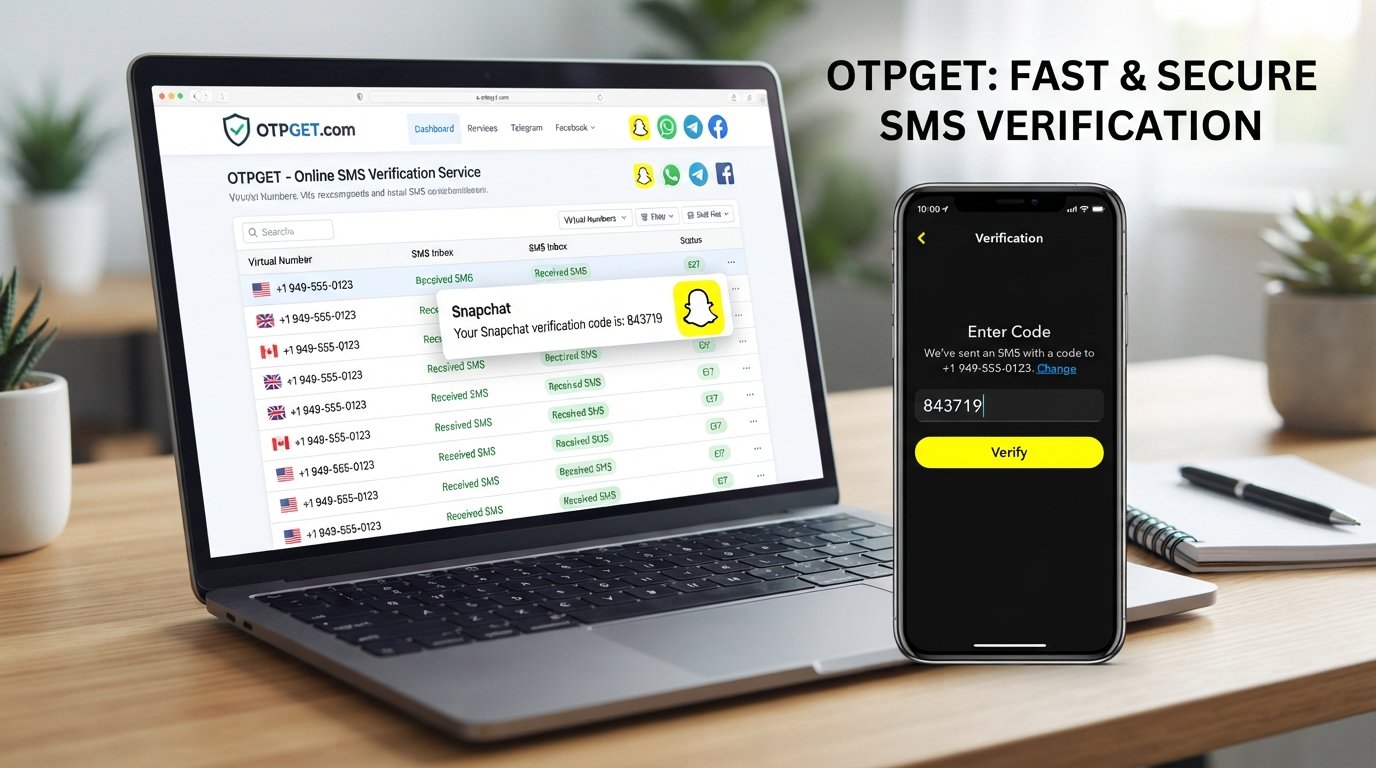
OTPGET is built around this use case. Its published service information describes virtual numbers for SMS OTP verification, along with temporary and rental number options and tools for developers.
The key is understanding how virtual numbers work, when they make sense, and what to check before choosing one.
Why SMS Verification Is So Common
SMS verification is a familiar part of signing up, logging in, recovering an account, or confirming a phone number.
The basic process is straightforward:
-
A service asks for a phone number.
-
The service sends a one-time password, or OTP, by SMS.
-
The recipient receives the verification code.
-
The code is entered into the appropriate verification screen.
-
The service confirms the code and continues the process.
An OTP is designed to be used once and is generally time-sensitive. SMS is one method services can use to deliver an authentication or verification secret, although stronger authentication methods may be preferable for higher-risk accounts. NIST describes SMS as an out-of-band channel and notes that this form of authentication is not phishing-resistant.
For everyday online workflows, however, SMS verification remains a common requirement. That creates a practical question: Do you always need to use your personal mobile number?
Not necessarily.
What Is a Virtual Number?
A virtual phone number is a telephone number that can be accessed through an online service instead of being tied directly to a physical SIM in your personal phone.
For SMS verification, the important capability is receiving the verification message associated with that number.
The difference is mainly in how the number is accessed.
| Personal Mobile Number | Virtual Number |
|---|---|
| Usually connected to your physical SIM or mobile account | Accessed through an online service |
| Commonly used for personal communication | Can be separated from personal communications |
| Typically intended for longer-term personal use | May be temporary or rented, depending on the service |
| SMS usually arrives on your phone | Supported SMS may appear through the provider's system |
A virtual number is not automatically better than a personal number. It simply provides another option for situations where separating verification activity from personal communications is useful.
OTPGET describes its virtual numbers as cloud-based numbers that can receive SMS verification codes without requiring a physical SIM.
Why Use a Virtual Number for SMS Verification?
There are several legitimate reasons someone might consider a virtual number.
Keep personal and online activity separate
Using a dedicated number can help prevent every online service from being connected to the same personal contact number.
This can be useful for people who prefer clearer separation between personal communications and online registrations or business workflows.
Avoid unnecessary dependence on a physical SIM
If the verification process only requires receiving an SMS, a virtual number can remove the need to obtain another physical SIM solely for that purpose.
Support testing and development workflows
Developers and QA teams may need phone-based verification while testing applications or registration flows. A virtual number can be useful where the relevant service permits this type of testing.
Handle legitimate temporary verification needs
Some verification tasks are short-lived. A temporary number may be more appropriate than maintaining another personal mobile line when the number is not intended for ongoing communication.
Support longer-term workflows
Not every use case is temporary. OTPGET also publishes rental-number options, with rental periods described as ranging from hours to longer periods.
The important distinction is that a virtual number should be used only where the receiving service permits it. It should not be treated as a way to bypass account rules, identity requirements, fraud controls, or other security restrictions.
Meet OTPGET: A Practical Solution for SMS Verification
OTPGET focuses specifically on virtual numbers and SMS OTP verification.
According to its published information, the platform provides virtual phone numbers for receiving SMS verification codes, with availability organized by country and service. It also offers rental numbers for users who need access for longer periods.
That makes OTPGET relevant when the problem is simple: you need an online-accessible number that can receive a supported verification SMS.
The workflow is designed to keep the number separate from your physical SIM. Instead of waiting for a message to arrive on your personal phone, the verification message is handled through the OTPGET system.
For developers, OTPGET also documents REST APIs for obtaining virtual numbers and checking SMS activation status. Its documentation includes examples for several programming environments.
This gives the service relevance beyond individual users. Businesses, developers, testers, and teams with legitimate verification workflows may also find a virtual-number platform useful.
Key Benefits of Using OTPGET
The practical value of OTPGET comes from combining virtual-number access with an SMS verification workflow.
Convenience
You can handle supported verification messages through an online platform rather than depending entirely on a personal SIM.
Separation
A dedicated virtual number can help keep verification activity separate from your everyday personal number.
Flexible number options
OTPGET publishes both temporary virtual numbers and rental numbers, allowing users to consider different approaches depending on whether the need is short-term or ongoing.
Country and service selection
OTPGET's published service information describes number availability across many countries and services. Availability can vary, so the relevant option should always be checked before placing an order.
Developer support
For technical teams, OTPGET documents API-based workflows for virtual numbers and SMS status checking.
A practical alternative to another physical SIM
When the goal is simply to receive a supported SMS verification code, a virtual number may be more convenient than obtaining and maintaining another physical mobile line.
How to Use OTPGET for SMS Verification
The exact interface and available numbers can change, so users should follow the instructions displayed by OTPGET at the time of use.
The general workflow is straightforward:
-
Choose an appropriate virtual number.
Select a country, service, and number option that fits your legitimate verification requirement and is currently available. -
Use the number where permitted.
Enter the virtual number into the phone-number field of the service you're verifying with, provided that service allows virtual numbers. -
Request the verification SMS.
Submit the normal verification request through the service's own interface. -
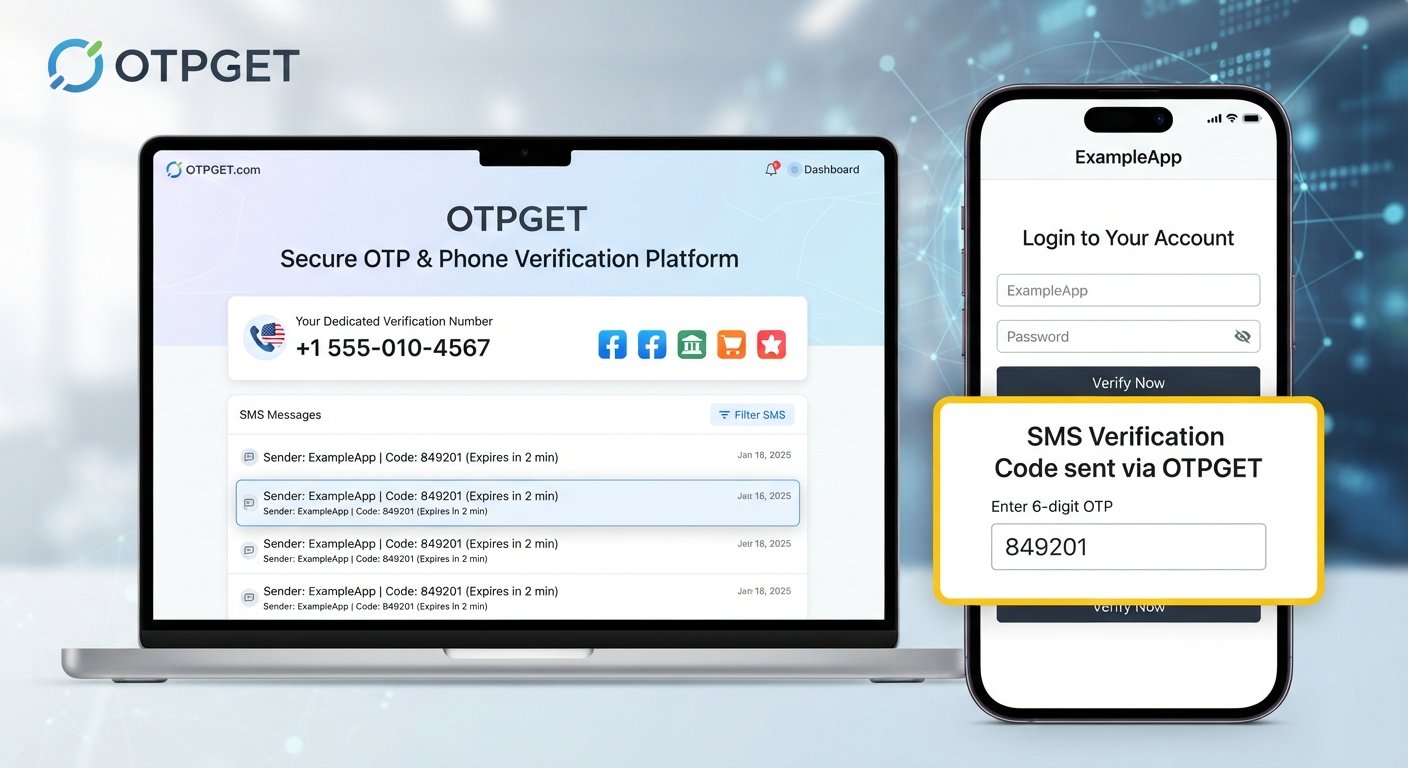
Check OTPGET for the incoming message.
If the selected number supports the requested SMS, the verification message can be accessed through the available OTPGET interface. -
Enter the verification code.
Copy the OTP into the legitimate verification screen. -
Complete verification.
The final result depends on whether the service accepts the particular number and verification method.
OTPGET's documentation describes obtaining a number and checking its activation status for an incoming SMS.
If a message does not arrive, check the service, country, number availability, and applicable OTPGET cancellation or refund rules rather than repeatedly requesting codes.
Common Use Cases for Virtual Numbers
Virtual numbers can fit several legitimate workflows.
Privacy-conscious users: Someone may want to avoid distributing their everyday personal number to every online service that requests phone verification.
Developers and QA teams: Testing registration, login, and phone-verification flows can require access to numbers capable of receiving SMS.
Business operations: A company may need separate numbers for particular online workflows instead of tying every verification process to an employee's personal mobile number.
Short-term verification: A temporary number can make sense when the requirement is limited to a particular verification task.
Longer-term workflows: Rental numbers may be more appropriate when a workflow requires continued access to the same number for a period of time.
The suitability of any virtual number depends on the policies of the service receiving the SMS. A number being available through OTPGET does not mean every website or application must accept it.
Virtual Number vs. Personal Phone Number
Neither option is universally better. The right choice depends on the purpose.
A personal number is generally the natural choice for personal accounts, ongoing communication, recovery processes, and situations where the service specifically requires a number you control directly.
A virtual number can be useful when the priority is separation, convenience, testing, or a temporary verification requirement.
The biggest consideration is long-term ownership. If an account may depend on the same number for future login or recovery, think carefully before using a temporary number. Losing access to a number can create problems if the service later sends another verification message to it.
Things to Consider Before Choosing a Virtual Number
Before using any virtual number service, consider these factors.
Service compatibility
Not every website or application accepts every type of virtual number. Check the relevant service's rules before relying on one.
Number availability
A desired country or service may not always have numbers available. OTPGET notes that number availability can change and that some services may occasionally fail.
SMS delivery
Receiving an SMS depends on the number, provider, destination service, and other technical factors. Avoid assuming that every verification message will arrive successfully.
Privacy
A virtual number can reduce the need to provide your personal number, but it should not be confused with guaranteed anonymity. Review the provider's privacy terms and understand what account and transaction information may be collected.
OTPGET's published terms describe collection of information such as email addresses, IP addresses, transaction records, and account activity for purposes including account security, payment verification, fraud prevention, and service improvement.
Terms of service
This is essential. Use a virtual number only for legitimate activities that comply with the rules of the service you're accessing and the provider supplying the number.
Number retention
If you expect to need the number again, determine whether a temporary option is appropriate or whether a rental number better fits the workflow.
Why OTPGET Can Be a Useful Choice
The appeal of OTPGET for virtual numbers for SMS verification is its focus.
Rather than treating SMS verification as an incidental feature, OTPGET positions virtual numbers, temporary numbers, rental numbers, and SMS OTP functionality as core services.
That makes it a practical option for users who understand what they need: an online-accessible number for a supported verification workflow.
For simple use cases, the process can be handled through the platform. For technical teams, documented API options can provide another way to work with virtual-number and OTP processes.
There are still important limitations. No virtual-number service should be assumed to work with every verification system, and users should never use such services to impersonate others, access accounts they do not own, commit fraud, or circumvent security controls.
The best approach is straightforward: understand the verification requirement, check compatibility, choose the appropriate number type, and use it responsibly.
Final Thoughts
SMS verification is designed to add an extra check to many online workflows, but using a personal mobile number for every verification request is not always convenient.
A virtual number provides another option. It can help separate personal communications from online verification, support testing and business workflows, and provide a practical way to receive supported SMS codes without relying on another physical SIM.
OTPGET brings those needs together through virtual numbers, temporary and rental options, and documented SMS OTP tools.
If you have a legitimate reason to use a virtual number for SMS verification, OTPGET is worth exploring. Just make sure the number and intended use comply with the rules of the service you are verifying with.