Pakistan Mobile Networks and SMS Delays Explained: OTP Guide
Pakistan Mobile Networks and SMS Delays Explained
You request an OTP to sign up for an account, log in, reset a password, or complete another legitimate online action. Then you wait. And wait. The verification code either arrives several minutes later or never appears at all.
For users dealing with Pakistan mobile networks and SMS delays, this can be more than a minor inconvenience. A delayed verification SMS can interrupt a registration, prevent access to an account, or leave an important online workflow unfinished.
The good news is that an SMS delay does not necessarily mean something is wrong with your phone. Messages can be affected by mobile network conditions, SMS routing, sender-side systems, verification platforms, and other factors.
This guide explains the most common causes of SMS delays in Pakistan, what you can do when an OTP is not arriving, and how an online SMS verification option such as OTPGET can provide a practical alternative for supported, legitimate verification needs.
Why SMS Messages Can Be Delayed on Pakistan Mobile Networks
SMS delivery may look simple from the user's perspective: someone sends a message, and the phone receives it. In reality, several systems can be involved between the sender and recipient.
Here are some common causes of SMS delivery problems.
Network congestion
Mobile networks handle large volumes of calls, data, and messaging traffic. During periods of heavy usage, messages may not be delivered instantly.
This does not necessarily indicate a permanent network problem. A message that appears stuck may simply be waiting to move through the relevant messaging systems.
Temporary carrier issues
Mobile network operators can experience temporary service interruptions, routing problems, maintenance issues, or other technical conditions that affect SMS delivery.
When this happens, ordinary messages and automated verification messages may both be affected.
Sender-side delays
Sometimes the mobile network is not the source of the problem.
The website or application requesting the OTP may have its own overloaded SMS gateway, delayed processing queue, or temporary technical issue. If the sender takes too long to generate or dispatch the message, there may be nothing wrong with the recipient's phone.
SMS routing and international delivery
Some verification messages travel through international messaging routes before reaching a local mobile network. This can introduce additional processing steps and potential delays.
International SMS delivery can therefore behave differently from a message sent directly through a local messaging route.
Incorrect or outdated phone numbers
An incorrect country code, mistyped number, inactive SIM, or outdated account information can prevent an OTP from reaching the intended recipient.
Always check the number carefully before requesting another code.
Weak connectivity or network transitions
Poor signal conditions, roaming, switching between network technologies, or temporarily losing network connectivity can sometimes affect the ability to receive messages.
Automated security systems and filtering
Verification providers may use automated systems to detect unusual traffic or protect against abuse. Mobile carriers and messaging systems can also apply filtering rules.
As a result, some verification messages may be delayed, filtered, or handled differently from ordinary person-to-person SMS.
The important point is that mobile SMS problems can originate at several different points. A delayed message is not automatically evidence that your device or a particular mobile network is defective.
Why OTP Messages Are Especially Important
A One-Time Password (OTP) is a temporary verification code used to confirm that a person has access to a particular account, phone number, or verification channel.
Businesses and online services commonly use OTPs for:
- Account registration
- Login verification
- Password recovery
- Two-factor authentication
- Transaction confirmation
- Identity verification
- Fraud prevention
OTP verification adds another layer of protection because knowing a password alone may not be enough to complete a protected action.
However, that protection depends on the verification code arriving when the user needs it. Even a short delay can disrupt a login or registration workflow.
This is why OTP not received and OTP not arriving are such frustrating problems. The code may be valid for only a limited period, so a delayed message can arrive after the original code has already expired.
Common Reasons You Do Not Receive an OTP
If a verification code is not received, check these common possibilities before assuming the service is unavailable.
- Network congestion
Heavy messaging traffic can sometimes slow delivery. - Incorrect phone number
Check the full number, country code, and any formatting requirements. - Delayed SMS routing
The message may be moving through several messaging systems before reaching your phone. - Sender-side problems
The website or application may be experiencing delays when generating or sending verification messages. - Carrier filtering
Automated messages can sometimes be affected by filtering or messaging policies. - Too many OTP requests
Repeated requests may trigger temporary restrictions, create multiple active codes, or make it difficult to know which code is current. - Expired verification codes
An OTP that arrives late may no longer be valid. - Poor network connectivity
Weak or unstable connectivity can interfere with message reception. - International SMS routing delays
Messages originating outside the local network may take additional time to reach the recipient. - Temporary service interruptions
Either the mobile network or the verification provider may be experiencing a temporary issue.
Understanding these possibilities makes troubleshooting much easier.
What to Do When an OTP Is Not Arriving
When an OTP does not arrive, avoid immediately requesting several more codes. Multiple requests can sometimes create additional confusion or cause earlier codes to expire.
Instead, work through these steps:
- Check the phone number entered on the service.
- Confirm that your phone has network connectivity.
- Wait briefly before requesting another code.
- Check whether an earlier OTP arrives late.
- Avoid repeatedly pressing “Send code.”
- Reconnect to the mobile network or restart the device if appropriate.
- Confirm that ordinary SMS messages are working.
- Check whether the service offers email, authenticator, voice, or another verification method.
- Contact the service provider if the problem continues.
If a previous code arrives after you have requested another one, use the code that the service identifies as current rather than assuming the latest-looking message is automatically valid.
Can an Online SMS Verification Service Help?
An online SMS verification service provides access to a phone number or virtual number that can receive supported SMS messages online.
Instead of relying exclusively on your primary personal mobile number, you may use a separate number for certain legitimate verification activities.
This can be useful for:
- Privacy-conscious registrations
- Application and website testing
- Development workflows
- QA testing
- Temporary verification needs
- Separating personal communications from selected online verification activities
- Receiving legitimate verification codes without using a primary personal number
A virtual phone number does not mean every website will accept it. Some services restrict virtual or temporary numbers, and SMS delivery can still depend on the sender, carrier, and messaging route.
Users should always follow the terms and verification requirements of the website or application they are using.
OTPGET as a Practical Solution for OTP Verification
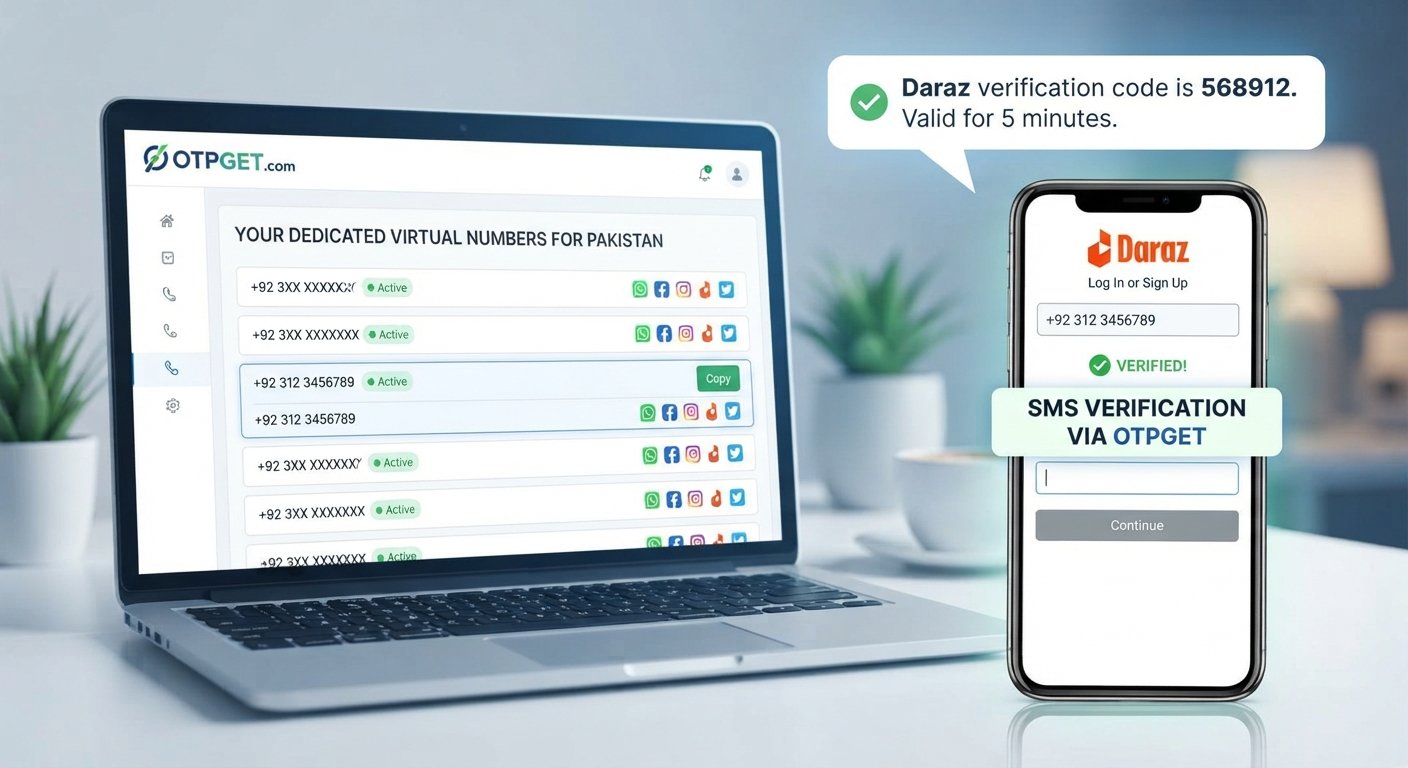
When ordinary SMS delivery becomes inconvenient, OTPGET can provide a practical option for supported online verification workflows.
OTPGET is designed to help users access numbers for receiving SMS messages, making it easier to handle certain OTP verification, SMS verification, and online verification tasks without relying entirely on a personal mobile number.
For someone searching for ways to receive OTP online or receive SMS online, the appeal is straightforward: instead of waiting indefinitely for a verification message on a primary number, a suitable online SMS receiving option may simplify the process.
OTPGET can be useful for legitimate scenarios such as:
- Online account verification
- Testing SMS-based registration flows
- Development and QA work
- Privacy-conscious sign-ups where permitted
- Receiving supported verification messages
- Separating certain online verification activity from personal communications
The practical benefit is convenience. A dedicated virtual number for SMS can make some verification workflows easier to manage, particularly when repeated SMS delivery problems are affecting a primary number.
However, no online verification service should be treated as a universal solution for every SMS problem. Delivery depends on the service sending the message, its verification policies, messaging routes, and other external factors.
That is why the most accurate way to view OTPGET is as a practical SMS receiving and verification option, rather than a guarantee that every verification message will always arrive.
OTPGET vs. Waiting for a Delayed SMS
The difference is mainly about how a verification workflow is managed.
| Factor | Traditional SMS Delay | Using a Dedicated Online Verification Option |
|---|---|---|
| Personal number | Relies on your primary number | Can provide a separate number where supported |
| Carrier delivery | Dependent on normal mobile SMS delivery | Uses an online SMS receiving workflow |
| Convenience | May require waiting for delayed messages | Can simplify supported verification tasks |
| Privacy | Uses a personal mobile number | Can help separate selected verification activity |
| Verification workflow | Can be interrupted by delivery delays | May provide a more convenient alternative |
| Testing | Less convenient for repeated testing | Useful for permitted development and QA workflows |
| Flexibility | Tied to available mobile service | Can offer additional options for supported use cases |
This does not mean OTPGET eliminates all OTP delivery issues. Rather, it gives users another practical approach when a separate SMS receiving option makes sense.
Who Can Benefit From OTPGET?
OTPGET can be relevant to several legitimate groups.
Everyday users
People who regularly encounter SMS not received in Pakistan situations may find a separate verification option useful for supported services.
Developers
Developers testing SMS authentication need to understand how registration, login, and verification flows behave when an OTP is sent.
QA teams
Quality assurance teams may need controlled phone-number options when testing verification workflows across different scenarios.
Businesses
Businesses developing or testing registration systems can use appropriate SMS receiving methods during permitted testing workflows.
Privacy-conscious users
Some users prefer not to use their primary personal number for every online verification activity. Where a service permits it, a separate virtual number can help create that separation.
The important distinction is legitimate use. Online SMS services should not be used to create fraudulent accounts, impersonate another person, defeat security controls, or gain unauthorized access.
How to Reduce OTP and SMS Verification Problems
While not every delay is under your control, a few habits can reduce unnecessary verification problems.
Keep your phone information accurate. Make sure the number and country code are correct before requesting an OTP.
Avoid repeated requests. If you request multiple codes in quick succession, you may receive several messages out of order or cause older codes to expire.
Use reliable connectivity. A stable mobile connection can help ensure that incoming messages are received normally.
Check alternative verification methods. Some services provide email, authenticator apps, recovery codes, or other options.
Use an appropriate verification method. If a service permits a virtual or temporary number for your particular legitimate use case, an online SMS verification service may be more convenient.
Never share OTPs. A genuine verification code should generally be treated as sensitive information. Do not give it to unknown callers, messages, or people claiming to represent a company.
Choose reputable services. Whether you use a personal number or an online SMS receiving service such as OTPGET, consider the legitimacy and terms of the service involved.
Final Thoughts on Pakistan SMS Delays
Pakistan mobile networks and SMS delays can have many causes. Network congestion, SMS routing, sender-side problems, carrier filtering, weak connectivity, and verification-system issues can all contribute to delayed or missing messages.
The first step is to identify where the problem may be occurring rather than assuming that the phone itself is faulty. Check the number, connection, verification service, and request frequency before trying repeatedly.
For users and businesses with legitimate verification needs, OTPGET offers a practical way to explore supported online SMS verification workflows. Its ability to provide access to numbers for receiving SMS can help simplify certain OTP verification tasks, testing workflows, and privacy-conscious online registrations.
If delayed verification messages are repeatedly interrupting your workflow, exploring OTPGET may give you a more convenient option for supported SMS verification needs.
FAQ
Why is my OTP not arriving in Pakistan?
An OTP may be delayed because of network congestion, SMS routing, sender-side problems, carrier filtering, weak connectivity, an incorrect number, or temporary service interruptions. The issue can occur at several points between the sender and your phone.
Why are SMS messages delayed?
SMS messages can be delayed by heavy network traffic, temporary carrier issues, international routing, sender-side processing delays, or messaging-system congestion. A delayed SMS does not necessarily mean your phone is defective.
How long can an OTP take to arrive?
There is no universal delivery time. Some OTPs arrive almost immediately, while others may take longer depending on the sender, messaging route, mobile network, and temporary technical conditions. If the code has an expiration period, a late message may no longer be valid.
What should I do if I never receive an OTP?
First, check your phone number and network connection. Wait briefly, avoid repeatedly requesting new codes, and confirm whether ordinary SMS messages are working. If the problem continues, try an available alternative verification method or contact the service provider.
Can I receive an OTP online?
Yes, some online SMS verification services provide numbers that can receive supported verification messages online. Whether a particular website accepts such numbers depends on its own verification policies and requirements.
What is an online SMS verification service?
An online SMS verification service provides access to a number capable of receiving supported SMS messages through an online interface. Common legitimate uses include testing, development, privacy-conscious registrations, and temporary verification needs where the relevant service permits them.
How can OTPGET help with SMS verification?
OTPGET can provide access to numbers for receiving supported SMS messages, which may simplify OTP verification and online verification workflows. It can be useful for legitimate testing, privacy-conscious sign-ups, and situations where users want an alternative to relying exclusively on a personal mobile number. Delivery and acceptance still depend on the third-party service and its verification policies.