Phone Verification API Integration Guide for Developers
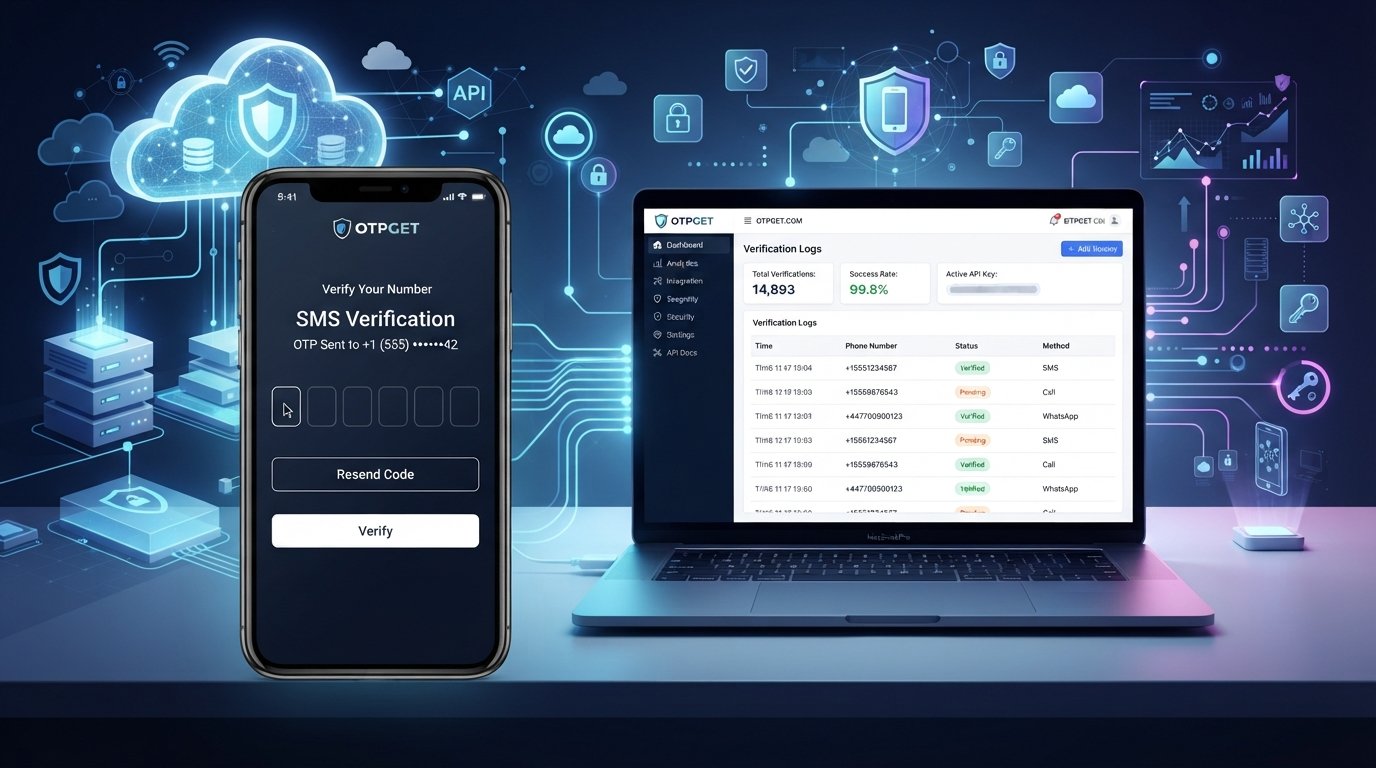
Phone Verification API Integration Guide
A phone number can be one of the simplest ways to establish that a user has access to a particular mobile device. But building a reliable verification workflow involves more than sending a text message. Applications need to handle API requests, OTP delivery, validation, retries, errors, security, and user experience.
That is where a phone verification API can simplify development. Instead of creating every part of a phone-based verification infrastructure from scratch, developers can connect their application to an API designed to support verification-related workflows.
OTP verification typically works through a one-time password sent by SMS. The user receives the code, enters it into the application, and the application uses the result to determine whether the verification process was successful.
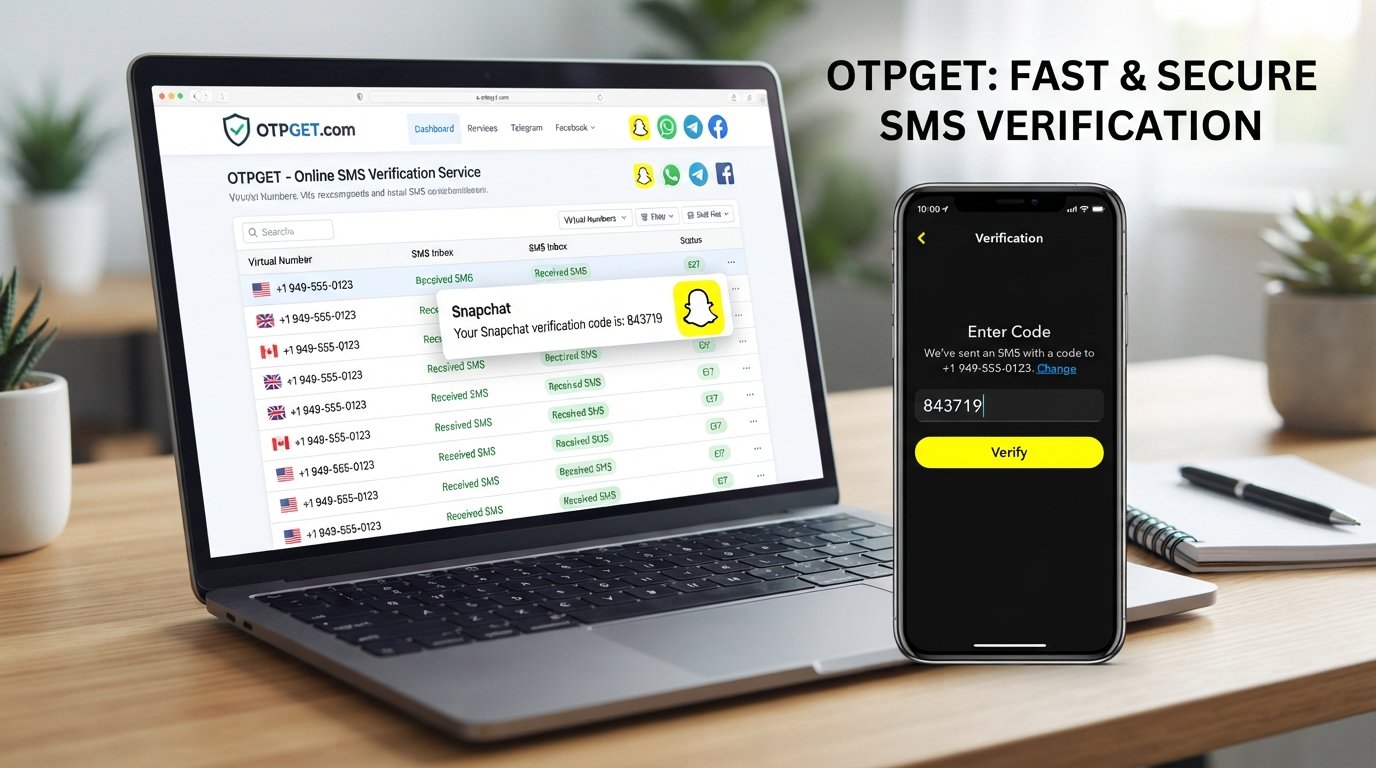
For businesses considering an API-based approach, OTPGET provides developer APIs for SMS OTP and virtual-number workflows. Its documentation describes REST APIs for obtaining numbers, checking SMS activation status, and managing activations.
What Is a Phone Verification API?
A phone verification API is a software interface that allows an application to connect programmatically with a phone or SMS verification service.
Instead of manually managing telecommunications infrastructure, developers make API requests from their backend and process the service's responses.
Depending on the provider and implementation, a verification workflow can involve:
- Submitting a phone number
- Requesting an OTP
- Delivering an SMS
- Receiving a verification code
- Validating the code
- Returning a success or failure result
Businesses use these APIs for account registration, authentication, customer onboarding, fraud prevention, password recovery, and other workflows where phone ownership or access needs to be established.
It is important to distinguish between different types of verification APIs. Some providers offer an API that sends an OTP directly to a customer's existing phone number. Others provide virtual numbers and APIs for receiving SMS verification codes. OTPGET's published API documentation focuses on the latter model, including virtual numbers, SMS OTP activation, rental numbers, and programmatic SMS retrieval.
Understanding that distinction is essential when choosing a provider.
How Does Phone Verification With OTP Work?
A conventional SMS OTP verification flow is straightforward:
- User enters a phone number.
The application collects the user's mobile number.
- Application requests verification.
The backend sends the phone number and relevant verification information to the API provider.
- An OTP is generated and delivered.
The verification service generates or handles a one-time code and sends it through SMS.
- User enters the OTP.
The code is entered into the application's verification screen.
- The code is validated.
The backend checks whether the submitted code is valid and associated with the verification request.
- The application completes the action.
Successful verification can unlock registration, login, account recovery, or another protected workflow.
The exact implementation varies between providers. Developers should therefore follow the provider's documentation rather than assuming that every OTP API uses identical endpoints or response formats.
Why Businesses Need Phone Verification
Phone verification can add an additional layer of trust to digital products.
Common use cases include:
- Account registration: Confirm that a new account is associated with an accessible phone number.
- Login authentication: Add phone-based authentication to selected login flows.
- Password recovery: Provide another method for confirming access during account recovery.
- Fraud prevention: Make automated or abusive account creation more difficult.
- Customer onboarding: Add a verification step before granting access to particular services.
- Two-factor authentication: Use SMS as one component of a broader 2FA strategy.
- Transaction verification: Require additional confirmation for sensitive actions.
- Marketplaces: Help establish stronger account-verification workflows.
- Fintech applications: Add phone verification to account and authentication processes.
- E-commerce: Reduce friction while adding a verification layer to registrations and important actions.
Good verification is not only about security. It also needs to be convenient. If OTP messages arrive slowly, codes expire too quickly, or error handling is confusing, users may abandon the process.
Key Features to Look for in a Phone Verification API
Before selecting a phone number verification API, evaluate the service from both a technical and business perspective.
API reliability
Verification is often part of a critical user journey. The provider should have dependable infrastructure and predictable API behavior.
OTP delivery
SMS delivery speed and consistency can directly affect the user experience. Consider how the provider handles delivery failures and retries.
Easy integration
Clear documentation, understandable endpoints, examples, and predictable responses can significantly reduce development effort.
Security
API credentials should be protected, requests should be handled securely, and verification endpoints should include appropriate abuse controls.
Scalability
Your verification system should remain practical as request volume grows.
International availability
If your application serves users in multiple markets, investigate the countries and services supported by the provider rather than assuming global coverage.
Error handling and monitoring
Developers should be able to identify failed requests, invalid codes, unavailable numbers, and other problems without creating an unnecessarily complicated monitoring system.
Support
Responsive technical support can be valuable when verification becomes an important part of an application's infrastructure.
How to Integrate a Phone Verification API
The implementation depends on the provider and use case, but the development process generally follows a predictable pattern.
Step 1: Choose an API Provider
Start by defining what your application actually needs.
Do you need to send OTPs to your own customers' phone numbers? Do you need virtual numbers that can receive verification SMS? Do you need short-term or rental numbers?
For virtual-number and SMS-receiving workflows, OTPGET is an option developers can evaluate. Its published documentation provides REST API documentation and examples in languages including Python, PHP, and cURL.
Step 2: Get API Credentials
Most API services require credentials before your application can make authenticated requests.
OTPGET's documentation states that API requests use an API key supplied with the request.
Keep API credentials on the server rather than exposing them in browser-side JavaScript or mobile application code.
Step 3: Send the Required Phone Information
Your backend submits the information required by the selected verification workflow.
For OTPGET's SMS OTP API, the documented workflow includes selecting a country and service and requesting a number through the API.
Step 4: Handle OTP Delivery
The verification service manages the relevant SMS workflow. Your application should provide a clear interface for showing the user that verification is pending.
Step 5: Accept the OTP
When an OTP becomes available, the user enters it into your application's interface.
Avoid displaying sensitive information unnecessarily and provide clear feedback when a code is invalid or unavailable.
Step 6: Verify or Retrieve the Result
The backend processes the verification result according to the provider's API.
OTPGET's documented SMS OTP workflow includes a status request that can be used to check whether an SMS code has been received.
Step 7: Complete the User Action
After the verification condition is satisfied, your application can continue with the relevant workflow, such as registration, authentication, or another authorized action.
Sample API Flow
A provider-neutral implementation might look like this:
User
  ↓
Enter phone number
  ↓
Your application backend
  ↓
Phone verification API
  ↓
OTP/SMS processing
  ↓
Verification result
  ↓
Your application
  ↓
Allow or reject protected action
The important principle is to keep API credentials and verification logic on the backend.
For OTPGET specifically, the documented SMS OTP API uses a REST endpoint with an API key and actions such as getCountries, getServices, getNumber, getStatus, and setStatus. Responses for the SMS OTP API are primarily plain text, with certain discovery actions returning JSON.
This illustrates why developers should work from the actual provider documentation instead of copying a generic JSON-based OTP example from another service.
Common Phone Verification API Integration Challenges
Even a relatively simple verification workflow can encounter problems.
Delayed SMS delivery
Users may wait for a code and request another one unnecessarily. Build a sensible retry experience rather than immediately creating multiple requests.
Incorrect phone numbers
Validate formatting before sending requests. International phone numbers should be normalized consistently.
Invalid or expired OTPs
Provide clear error messages and avoid revealing unnecessary information about the verification system.
Duplicate requests
Repeated requests can increase costs and create confusing user experiences. Use appropriate request controls.
API errors
Your backend should gracefully handle timeouts, authentication failures, unavailable services, and unexpected responses.
Rate limiting and abuse
Verification endpoints are attractive targets for automated abuse. Apply rate limits and monitor unusual activity.
International formatting
Phone numbers should be handled consistently, preferably using internationally recognized formats where appropriate.
A suitable provider can reduce infrastructure complexity, but application-level security and error handling remain the developer's responsibility.
Why Choose OTPGET for Phone Verification?
OTPGET can be considered when a business or developer needs an API-based approach to virtual phone numbers and SMS OTP workflows.
Its published documentation provides REST APIs for SMS OTP, rental numbers, cheap numbers, and email OTP, with programmatic endpoints for activities such as obtaining numbers and checking received SMS status.
For developers, the main practical advantage of an API-based service is abstraction. Instead of manually managing physical SIM cards, individual phone numbers, and a separate interface for every verification workflow, developers can interact with a software API.
OTPGET's platform also states that virtual numbers can receive SMS verification codes and that messages can be accessed through its dashboard or API-based workflows.
That makes OTPGET particularly relevant for applications and workflows where developers need programmatic access to virtual numbers and incoming verification messages.
However, businesses should match the service to their exact use case. If the requirement is specifically to send an OTP to a customer's existing mobile number and then have a provider validate that code, confirm that the provider's current API supports that exact workflow before implementation.
Phone Verification API Best Practices
A reliable integration should include more than a basic API request.
Follow these practices:
- Validate phone numbers before making verification requests.
- Use consistent international phone-number formatting.
- Keep API keys and credentials on the server.
- Apply rate limits to verification requests.
- Prevent repeated OTP requests from being abused.
- Set sensible expiration and retry behavior where your chosen service supports it.
- Avoid exposing sensitive verification details in client-side code.
- Give users clear but security-conscious error messages.
- Handle failed or delayed deliveries gracefully.
- Monitor verification activity for unusual patterns.
- Design a controlled retry experience.
- Protect verification endpoints against automated abuse.
The API is only one part of a secure verification architecture. Your application still needs appropriate authentication, authorization, logging, and abuse-prevention controls.
Phone Verification API vs. Building Your Own OTP System
Building an OTP system internally gives a business maximum control, but it also creates additional operational responsibilities.
| Consideration | Phone Verification API | Build Your Own |
|---|---|---|
| Development time | Generally lower | Generally higher |
| SMS infrastructure | Provider-managed | Must be arranged and maintained |
| Scaling | Provider infrastructure helps | Your team manages scaling |
| Maintenance | Lower operational burden | Ongoing engineering required |
| Monitoring | Provider tools may help | Build and maintain internally |
| Security | Shared responsibility | Primarily your team's responsibility |
| Flexibility | Depends on provider | High |
| Operational complexity | Lower | Higher |
For many businesses, an API is attractive because verification is not the core product. Developers can focus their engineering resources on the application itself instead of managing every part of a telecommunications and OTP infrastructure.
OTPGET offers one API-based option for businesses whose requirements involve virtual numbers and SMS OTP access.
Who Can Benefit From a Phone Verification API?
A phone verification API can support a wide range of applications.
- Startups: Add verification without building telecommunications infrastructure from scratch.
- SaaS companies: Support account and authentication workflows.
- E-commerce businesses: Add verification to registrations and sensitive actions.
- Fintech platforms: Incorporate phone-based authentication where appropriate.
- Marketplaces: Add another layer to account-verification processes.
- Mobile applications: Integrate phone-based workflows directly into app backends.
- Web applications: Connect browser experiences to secure backend verification logic.
- Customer portals: Support controlled access and account recovery.
- Developers: Automate phone-number and SMS-related workflows through APIs.
- Enterprise applications: Build verification into larger identity and authentication architectures.
The right implementation depends on the application's security requirements and the provider's capabilities.
FAQ
What is a phone verification API?
A phone verification API is a software interface that lets an application communicate programmatically with a phone or SMS verification service. It can support workflows involving phone numbers, OTP delivery, SMS reception, and verification results.
How does an OTP verification API work?
A typical OTP verification API workflow involves requesting a one-time code, delivering it through SMS, receiving the user's submitted code, and validating the result. The exact API flow depends on the provider.
How do I verify a phone number using an API?
First, select a provider that supports your required workflow. Then authenticate your backend, submit the required phone information, handle the OTP process, and process the verification result. Always follow the provider's current documentation.
What is an SMS verification API?
An SMS verification API connects an application with an SMS-based verification service. It can be used to automate OTP-related processes instead of requiring developers to manage every telecommunications operation manually.
Why should businesses use phone verification?
Phone verification can help strengthen registration, authentication, account recovery, onboarding, and fraud-prevention workflows. It can also provide a familiar verification experience for users.
How can I integrate OTP verification into my application?
Start by selecting an API provider, obtaining credentials, creating backend API requests, handling OTP delivery or reception, processing verification results, and adding appropriate security and retry controls.
Is OTPGET suitable for phone verification?
OTPGET is particularly relevant for virtual-number and SMS OTP workflows. Its published documentation provides APIs for obtaining numbers, checking SMS activation status, and managing activations. Businesses should review the current documentation to confirm that the specific verification workflow they need is supported.
Conclusion
Phone verification remains a practical way to add another layer of trust to registration, authentication, onboarding, and other account workflows. An API can make the technical side of phone verification easier by providing programmatic access to the services and infrastructure required by the application.
The most important step is choosing a solution that matches your actual use case. Developers should evaluate API design, security, delivery behavior, scalability, documentation, error handling, and international requirements before integrating a provider.
For businesses and developers working with virtual numbers and SMS-based OTP workflows, OTPGET provides a practical API-driven option. Its published API documentation covers SMS OTP, virtual-number rental, number management, and SMS status workflows, giving developers a way to automate these processes rather than managing them manually.
If your project needs an API-based approach to phone and OTP workflows, explore and review the to determine whether its capabilities fit your application.