Private Twitter (X) Verification Number | OTPGet for Privacy
Private Twitter (X) Verification Number | OTPGet for Privacy
Sharing your personal phone number online is not always something you want to do.
When Twitter (X) asks for phone verification, you may simply want to complete the required OTP step without unnecessarily exposing the number you use for family, friends, work, banking, or other important accounts. For privacy-conscious users, keeping personal and online activities separate can make managing digital accounts much easier.
That is where a private Twitter verification number can be useful.
A verification number gives you another option when a platform requires a phone number to receive a verification code. Instead of immediately using your primary number, you can consider a separate number intended for an appropriate verification workflow.
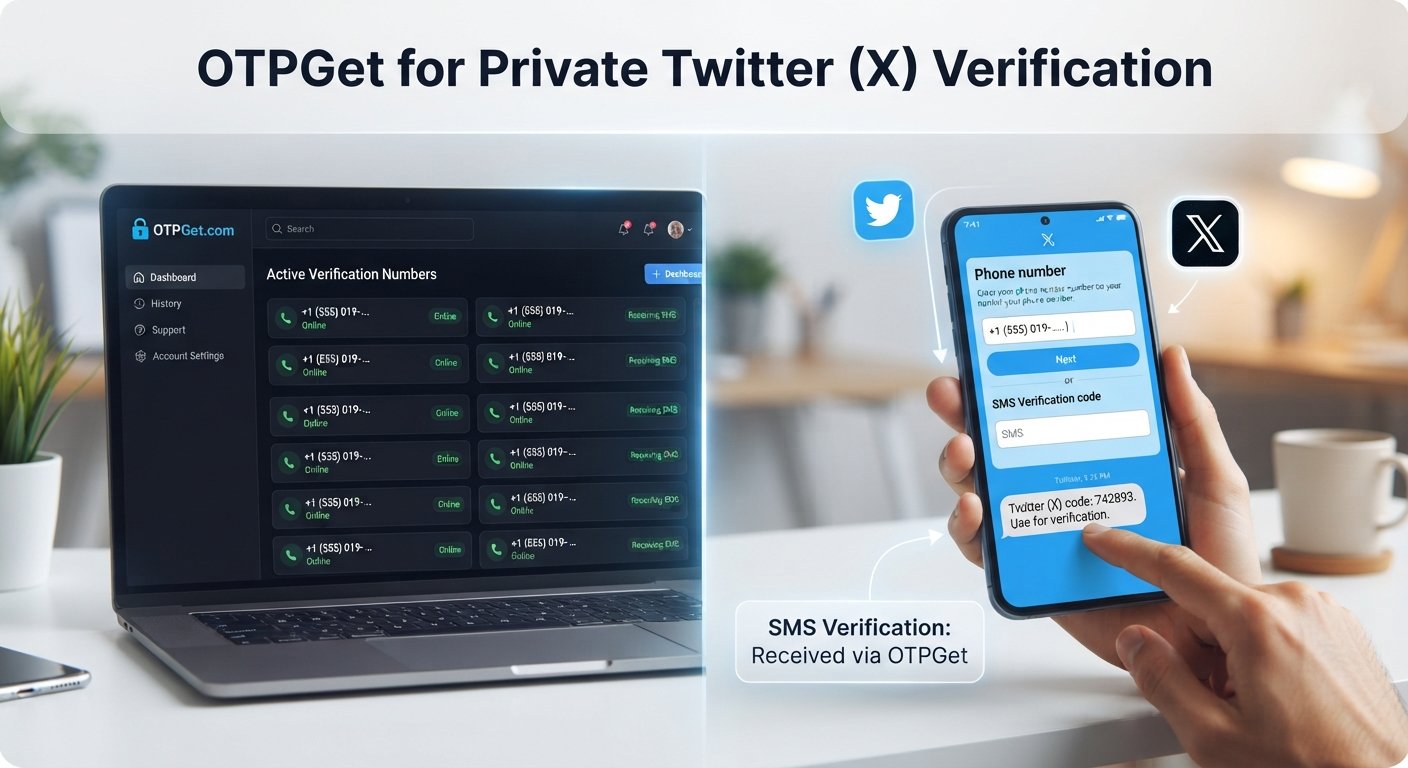
OTPGet provides a practical option for users looking for verification numbers and online OTP access. It can help simplify the verification process while giving users more control over which phone number they use for online activities.
However, a verification number is not a way to bypass Twitter/X requirements. Platform rules, number acceptance, and verification procedures can vary, so users should always follow the requirements presented by Twitter/X.
Why Twitter (X) May Ask for Phone Verification
Phone verification can be part of an account's security and account-management process. Depending on the situation, Twitter/X may ask a user to provide a phone number and confirm it using an SMS verification code.
The basic purpose is straightforward: the platform sends a one-time code to the supplied number, and the user enters that code to confirm access to the number.
For some people, the inconvenience is not the OTP itself. It is the decision about which phone number to provide.
Your primary number may already be connected to personal communications, financial services, work contacts, or other online accounts. You may therefore prefer not to use it for every online service that requests phone verification.
Privacy concerns can also arise when you want to maintain a clear separation between your personal identity and a particular online activity. That does not mean hiding fraudulent activity or avoiding platform rules. It simply means being thoughtful about how widely you distribute your personal contact information.
What Is a Private Twitter Verification Number?
A private Twitter (X) verification number is a phone number used for receiving a verification code when Twitter/X requires phone verification.
Rather than relying on your primary personal number, you may use a separate verification number where the platform accepts it and where doing so complies with applicable requirements.
The general process involves receiving an OTP by SMS and entering that code into the platform's verification screen.
It is important to understand what this does—and does not—mean.
A private verification number does not automatically make an account anonymous. It does not bypass identity checks, account restrictions, security controls, or enforcement decisions. It also does not guarantee that Twitter/X will accept a particular number.
Think of it as a privacy-conscious contact option for an OTP step, not a shortcut around platform requirements.
Why Use a Private Number for Twitter (X) Verification?
There are several legitimate reasons someone might prefer a separate number for online verification.
Protect Your Personal Contact Information
Your primary phone number can be surprisingly valuable information. It may be associated with important accounts, personal contacts, and services you use regularly.
Using a separate verification number where permitted can reduce the number of online services that directly receive your primary contact information.
This can be particularly appealing to people who take a privacy-first approach to their digital presence.
Keep Personal and Online Activities Separate
Not every online activity needs to be connected to your everyday phone number.
A separate number can provide a cleaner distinction between personal communications and legitimate online projects, professional activities, or other accounts where a platform permits an additional verification option.
The goal is not to conceal prohibited behavior. It is simply to maintain sensible separation between different areas of your digital life.
Make OTP Verification More Convenient
Sometimes, the main challenge is simply receiving the verification code when you need it.
An online verification solution can make the OTP workflow more convenient by providing access to a number intended for receiving verification messages.
For users who prefer not to use their primary phone number for every verification request, this can be a practical alternative.
How OTP Verification Works
The basic process behind Twitter phone verification is relatively simple:
-
Choose an appropriate verification number. Select a number that is suitable for the intended verification workflow and accepted by the platform.
-
Enter the number. Add the number where Twitter/X requests phone verification.
-
Request the OTP. The platform sends a one-time verification code.
-
Receive the verification code. Check the appropriate SMS or online verification interface for the incoming code.
-
Enter the code. Submit the OTP in the platform's verification field.
-
Complete verification. Follow any additional requirements presented by Twitter/X.
The exact screens and requirements can change. If Twitter/X requests additional verification or does not accept a particular number, follow the instructions provided by the platform rather than attempting to circumvent them.
How OTPGet Can Help With Twitter (X) Verification
For users looking for a Twitter verification number, OTPGet can serve as a convenient option for accessing a verification number and receiving an OTP online.
The value is particularly straightforward: instead of automatically exposing your primary personal number, you can consider a separate number for an appropriate verification workflow.
OTPGet can be useful when your priorities include:
-
Keeping your primary phone number separate from online activities
-
Accessing an OTP through an online verification workflow
-
Reducing unnecessary exposure of your personal contact information
-
Having a straightforward option for receiving verification codes
-
Managing legitimate online projects with greater separation between personal and online contact details
The important point is to use the service responsibly. A verification number should support a legitimate verification process, not be used to create fake identities, evade restrictions, manipulate a platform, or bypass security controls.
Twitter/X remains a separate platform, and its own rules determine whether a number can be used and what verification steps are required.
Private Twitter Verification Number vs. Using Your Personal Number
Both approaches can work differently depending on your circumstances. The right choice depends on your privacy preferences and whether the number is accepted for the verification process.
| Factor | Private Verification Number | Personal Number |
|---|---|---|
| Privacy | Helps separate personal contact information | Directly connects verification to your personal number |
| Convenience | Can provide a dedicated option for OTP access | Convenient when your personal phone is already available |
| Personal-number exposure | Reduces the need to share your primary number | Requires sharing your primary number |
| OTP access | Designed around receiving verification codes | Codes arrive on your regular phone |
| Separation | Useful for keeping personal and online activity distinct | Less separation between activities |
| Practical use | Suitable for legitimate verification workflows where accepted | Suitable when you are comfortable using your primary number |
Neither option should be viewed as universally better. A private number may be preferable if protecting your primary contact information is important to you, while a personal number may be simpler when privacy separation is not a concern.
Who Can Benefit From a Private Verification Number?
A separate verification number can be useful for a range of legitimate users.
Privacy-conscious users may prefer not to distribute their primary phone number across numerous online platforms.
Digital professionals may want to keep personal contact details separate from legitimate online projects or professional account management.
People managing online projects may appreciate having a distinct contact option when a service requires phone verification.
Users who value account separation may prefer not to connect every online activity to the same personal number.
The key is responsible use. A private verification number should not be used for spam, impersonation, fraud, harassment, fake identities, or attempts to evade account enforcement.
Things to Consider Before Using a Verification Number
Before choosing an online phone number for verification, keep several practical considerations in mind.
Platform rules can change. Twitter/X may update its verification process, account requirements, or acceptable number types. Always review the requirements shown during the verification process.
Not every number will necessarily be accepted. Some services or platforms may reject certain types of verification numbers. An inability to use a particular number does not mean you should attempt to bypass the platform's controls.
Verification is not guaranteed. Having access to a phone number does not guarantee account approval, successful verification, or access to any particular Twitter/X feature.
Protect your account credentials. A verification number is only one part of account security. Use strong account credentials and follow the platform's available security recommendations.
Use verification services responsibly. Privacy and convenience are legitimate reasons to use a separate number. Circumventing restrictions or abusing verification systems is not.
These considerations help set realistic expectations and make the verification process more straightforward.
Why Choose OTPGet?
When the goal is simply to find a practical way to handle phone-based verification without immediately exposing your primary number, convenience matters.
OTPGet is positioned as a verification-number and OTP-receiving solution for users who want an alternative to using their personal phone number for an appropriate verification workflow.
Its value can be viewed through four simple priorities:
-
Privacy-conscious use: Keep your primary contact information separate where appropriate.
-
Convenience: Access a verification number and receive an OTP through an online workflow.
-
Simplicity: Keep the verification process focused on the number, code, and required platform steps.
-
Practicality: Have another option when you prefer not to use your everyday phone number.
The best approach is always to match the service to the platform's current requirements. OTPGet can make the number-and-OTP part of the process more convenient, but Twitter/X ultimately determines whether a number is accepted and what additional verification may be required.
Frequently Asked Questions
1. What is a private Twitter verification number?
A private Twitter verification number is a separate phone number used to receive an OTP when Twitter/X requires phone verification. It can help users avoid unnecessarily sharing their primary personal number, where the platform accepts the number and its use complies with applicable requirements.
2. Can I use a private number for Twitter/X verification?
You may be able to use a separate number for Twitter/X phone verification, but acceptance depends on the platform's current requirements and the type of number being used. A private number does not override those requirements.
3. How do I receive a Twitter verification code?
Generally, you enter an accepted phone number when Twitter/X requests phone verification, request the OTP, receive the SMS verification code, and enter it into the appropriate verification field. Follow any additional instructions shown by the platform.
4. What is an X verification number?
An X verification number is simply a phone number used to receive a verification code when X requires phone verification. It can be a personal number or another appropriate number accepted by the platform.
5. Can I use an online number for OTP verification?
An online number may be suitable for some OTP verification workflows, but acceptance varies by platform and number type. Always check the requirements of the service you are verifying with before relying on a particular number.
6. Is using a verification number safe?
Using a separate verification number can be a reasonable privacy-conscious choice when used for legitimate purposes. However, users should understand the platform's rules, protect their account credentials, and avoid treating a verification number as a way to bypass security or enforcement.
7. Why would someone use a private phone number for Twitter?
Someone may prefer a private phone number for Twitter to reduce exposure of their primary contact information, keep personal and online activities separate, or make OTP verification more convenient.
8. How can OTPGet help with verification?
OTPGet provides a practical option for users looking for a verification number and online OTP-receiving solution. It can help separate a personal phone number from an appropriate verification workflow, subject to the platform's acceptance and requirements.
Final Thoughts
Phone verification does not have to mean automatically sharing your everyday personal number with every online service that requests one.
For privacy-conscious users, a private Twitter verification number can provide a practical way to separate personal contact information from legitimate online verification activities. It can also make the OTP process more convenient when you prefer to keep your primary number reserved for personal use.
At the same time, it is important to keep expectations realistic. A verification number does not bypass Twitter/X policies, guarantee verification, or eliminate the platform's other security requirements.
If you are looking for a convenient way to handle a verification number and receive an OTP online, OTPGet is worth exploring as a practical privacy-conscious option.
Use it responsibly, follow Twitter/X's requirements, and choose the verification approach that best fits your privacy and account-management needs.