How to Identify a Reliable SMS Verification Service Easily
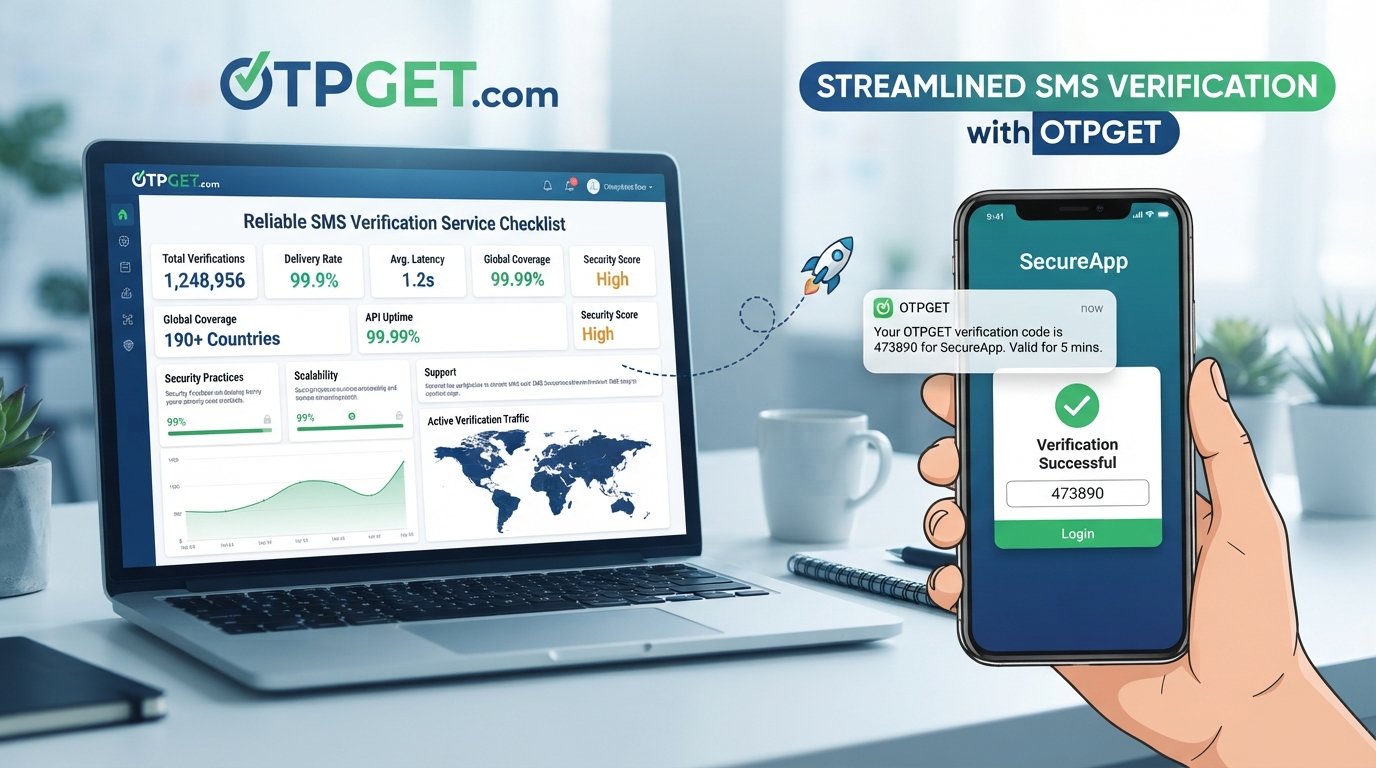
How to Identify a Reliable SMS Verification Service
SMS verification has become a familiar part of signing up, logging in, recovering an account, and confirming sensitive actions online. A short verification code sent to a phone can provide a practical way to confirm that a user controls a particular number.
For businesses, however, sending an OTP is more complicated than simply connecting an SMS API and pressing send. Messages need to reach users consistently, integrations need to remain dependable, and verification workflows need to work across the markets a business serves.
That is why choosing a reliable SMS verification service requires more than comparing headline prices. Delivery performance, geographic coverage, API quality, security practices, scalability, monitoring, and technical support all deserve attention.
This guide explains what to evaluate, the problems to watch for, and how a solution such as OTPGET can fit into the decision-making process.
Why Choosing the Right SMS Verification Service Matters
A verification code is often a small part of a much larger user journey. If the SMS arrives late, never arrives, or cannot be delivered to a particular number, the user may be unable to complete registration or sign in.
For example, imagine a customer creates an account and requests an OTP. If the message does not arrive promptly, the customer may request another code, try repeatedly, or abandon the process altogether. A technical issue in the verification layer can therefore become a usability problem.
A dependable SMS verification service can support:
-
Faster and more consistent OTP delivery
-
Smoother registration and login experiences
-
Reduced verification friction
-
More predictable authentication workflows
-
Support for users across relevant markets
-
Easier scaling as verification demand changes
-
Better visibility when delivery problems occur
Security matters too. SMS verification should be treated as one component of a broader authentication strategy, with appropriate controls around codes, access, data handling, and abuse prevention.
What Makes an SMS Verification Service Reliable?
Reliability is not one feature. It is the result of several capabilities working together.
Reliable OTP Delivery
The most obvious requirement is also one of the most important: verification messages need to reach their intended recipients consistently.
Delivery can be affected by factors such as destination networks, geographic routing, carrier behavior, message content, traffic levels, and temporary service problems. A provider should therefore offer enough visibility and operational support to help businesses understand delivery issues rather than simply reporting that a message was sent.
For critical workflows, consider how the provider handles failed or delayed messages, repeated verification requests, and other common delivery scenarios.
Broad Number and Country Coverage
A business serving one market may have very different requirements from a platform with users in multiple regions.
Before selecting an SMS verification provider, check whether its coverage aligns with your actual target markets. Look beyond a general statement about international availability and consider the specific countries, number types, and destinations relevant to your application.
Coverage should be evaluated based on your users, not on an impressive-sounding list of markets you may never serve.
API Reliability and Integration
A good SMS verification API should make implementation understandable and maintainable.
Review the provider's documentation and look for:
-
Clear API references
-
Straightforward authentication methods
-
Useful request and response examples
-
Consistent error handling
-
Sensible status information
-
Integration guidance
-
Monitoring or troubleshooting capabilities
Developer experience matters because a verification service becomes part of your application's infrastructure. An API that is difficult to understand can increase development time and make troubleshooting harder.
Security and Privacy
Verification systems handle information that deserves careful treatment. Businesses should understand how verification data is transmitted, accessed, stored, and retained.
Look for sensible security practices such as access controls, abuse-prevention measures, controlled handling of verification data, and clear information about data retention.
It is also worth considering how your application protects OTPs on its own side. Verification security is not solely the responsibility of the SMS provider; secure implementation, sensible expiration periods, rate limits, and protection against repeated attempts are important parts of the overall workflow.
Scalability
Your verification requirements may change significantly as your application grows.
A provider should be evaluated not only for ordinary traffic but also for changing volumes, new markets, promotional activity, product launches, or other situations that could increase OTP requests.
Ask how capacity is handled, what monitoring is available, and how you would identify a problem if message traffic suddenly increased.
Customer Support
Even a well-designed API can encounter operational issues. When verification affects account access, support responsiveness can become particularly important.
Before choosing a provider, find out what technical support is available and how clearly the provider communicates about integration or delivery issues. Documentation can help developers solve routine problems, while responsive support can be valuable when an issue requires deeper investigation.
Common Problems With Unreliable SMS Verification Services
An unreliable provider can create problems that extend well beyond a single undelivered message.
Common warning signs include:
-
Delayed OTPs that arrive after the user has requested another code
-
Failed message delivery without useful diagnostic information
-
Limited geographic or number coverage
-
Confusing API documentation
-
Complicated integration requirements
-
Unexpected service interruptions
-
Slow or unclear technical support
-
Little visibility into delivery problems
-
Difficulty handling increased verification volume
These problems can create friction at critical moments. A user who cannot verify a phone number may abandon registration. Someone locked out of an account may become frustrated. A business may also spend unnecessary engineering time investigating problems that could have been easier to diagnose with better reporting and documentation.
The cost of an SMS verification provider should therefore be considered alongside the operational impact of failures.
How to Evaluate an SMS Verification Provider
A practical evaluation checklist can make provider comparisons much easier.
1. Delivery Reliability
Ask how the provider handles OTP delivery, delays, failures, and repeated requests. Look for useful delivery information rather than relying solely on a generic "sent" status.
2. Geographic Coverage
Match the provider's supported destinations with your actual customer base and expansion plans. Coverage that does not serve your users has little practical value.
3. API Quality
Review the documentation before committing. Check authentication, endpoints, examples, response formats, errors, and implementation guidance.
4. Security Practices
Understand how verification information is handled and what controls are available to reduce abuse and unauthorized access.
5. Scalability
Consider both current and future traffic. A suitable service should align with your expected verification volume and changing business requirements.
6. Pricing Transparency
Do not compare providers based only on the advertised cost of an individual message. Consider the complete operational picture, including implementation effort, monitoring, support, and the consequences of failed verification attempts.
7. Support
Determine how technical questions and delivery problems are handled. Clear documentation and accessible support can make a meaningful difference during implementation and troubleshooting.
8. Monitoring and Reporting
Look for ways to understand whether messages were accepted, delivered, delayed, or failed. Better visibility makes it easier to investigate problems.
9. Integration Options
Consider how naturally the service fits your existing application architecture. The easier it is to integrate and maintain, the less friction your development team may face.
10. Reputation and Documentation
Review the provider's available documentation, product information, and technical resources. A transparent provider should make it reasonably easy to understand what the service does and how it should be implemented.
Why OTPGET Can Be a Practical Solution
Once you know what to evaluate, you can assess individual providers against the same criteria rather than choosing based on price or marketing language alone.
OTPGET is designed to help businesses manage SMS-based verification workflows, making it a relevant option for organizations looking for an SMS verification solution.
For businesses evaluating OTPGET, the same questions outlined above should guide the assessment: Does the solution fit the application's verification requirements? Does it support the intended workflow? Is the integration approach appropriate for the development team? Does the overall service align with the business's expectations for security, scale, support, and operational visibility?
This approach keeps the decision practical. Instead of assuming that one provider is suitable for every application, businesses can evaluate OTPGET against their own requirements and compare it with other SMS verification services where appropriate.
For teams that need phone number verification, OTP verification, or an SMS-based authentication workflow, OTPGET can be considered as part of that provider evaluation.
What to Look for Before Choosing an OTP Service
Before selecting an OTP service, write down your requirements first. A simple checklist can prevent important considerations from being overlooked.
Consider:
-
Verification requirements: Decide where OTP verification will be used, such as registration, login, account recovery, or sensitive actions.
-
Expected message volume: Estimate normal and higher-demand traffic.
-
Target markets: Identify the countries and number types your users rely on.
-
Integration requirements: Determine what your development team needs from an SMS API or OTP API.
-
Security needs: Review how your application and provider will protect verification workflows.
-
Support expectations: Decide what level of technical assistance your team requires.
-
Budget: Consider total operating and implementation costs rather than message price alone.
-
Scalability: Think about how verification requirements could change as your application grows.
OTPGET can be one option to evaluate against these criteria. The goal is not simply to find an SMS provider, but to find a service that fits the technical, operational, and user-experience requirements of your particular application.
Frequently Asked Questions
What is an SMS verification service?
An SMS verification service helps applications send verification codes to phone numbers. These codes can be used to confirm control of a number during registration, login, account recovery, or other authentication workflows.
How does SMS OTP verification work?
An application generates or requests a one-time password and sends it to a user's phone through an SMS provider. The user enters the code into the application, which checks whether it matches the expected value and remains valid.
What makes an SMS verification service reliable?
Reliability involves more than message delivery. Important factors include consistent OTP delivery, appropriate geographic coverage, API stability, security practices, scalability, monitoring, documentation, and technical support.
Why is OTP delivery speed important?
A delayed verification SMS can interrupt a user's registration or login process. Prompt delivery helps reduce unnecessary retries and keeps the authentication experience moving smoothly.
What should businesses look for in an SMS verification API?
Look for clear documentation, straightforward integration, useful error handling, appropriate security controls, monitoring capabilities, and an API design that fits your application's architecture.
Is SMS verification secure?
SMS verification can provide a useful authentication layer, but it should not be treated as a complete security solution by itself. Businesses should also use appropriate rate limits, code expiration, access controls, and broader account-security measures.
How can businesses choose the right OTP service?
Start with your actual requirements: verification use cases, expected volume, target markets, integration needs, security expectations, support requirements, and budget. Then compare providers against those criteria. OTPGET can be included in that evaluation when its approach fits your needs.
Final Thoughts
Choosing a reliable SMS verification service is ultimately about looking beyond the ability to send a text message.
Delivery reliability, geographic coverage, API quality, security, scalability, monitoring, pricing transparency, and support all influence whether a verification service works well in practice. The right choice will depend on your application's requirements, your users, and the markets you serve.
OTPGET can be considered by businesses looking for an SMS-based OTP and verification solution. Before making a decision, evaluate it against the same practical criteria you would apply to any provider.
If OTPGET fits your technical and operational requirements, exploring the service can be a sensible next step toward building a smoother phone verification workflow.