Secure OTP Service: What Businesses Should Look For | OTPGET
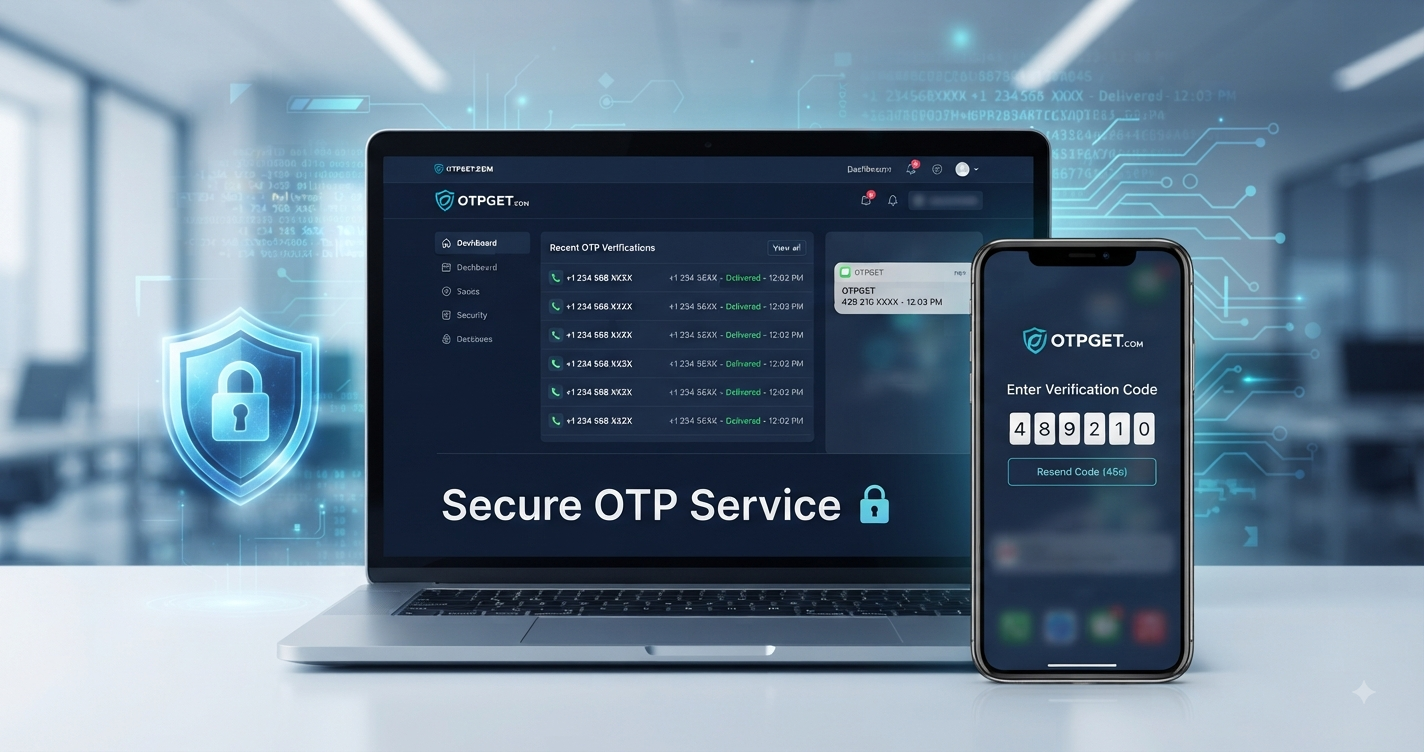
What to Look for in a Secure OTP Service
Online authentication often depends on a surprisingly simple step: entering a one-time password. Whether a user is registering for an account, signing in, confirming a phone number, or completing an important action, OTP verification can add an extra layer of protection to the authentication process.
But simply adding OTPs to a website or application does not automatically create a secure authentication experience.
The OTP service behind the workflow matters. If messages arrive late, verification fails frequently, integration is difficult, or authentication data is handled poorly, the result can be frustrating for users and risky for businesses.
That is why choosing a secure OTP service requires more than comparing prices or checking whether a provider can send SMS. Businesses should evaluate security, reliability, delivery performance, scalability, integration, monitoring, and user experience together.
For organizations exploring their options, OTPGET is one solution worth considering as part of a broader OTP verification strategy.
Why Choosing the Right OTP Service Matters
An OTP provider becomes part of an important part of the customer journey: authentication.
Consider a user trying to create an account. They enter their phone number and wait for a verification code. If the OTP arrives quickly, the process feels effortless. If it arrives several minutes later—or does not arrive at all—the user may abandon registration.
Repeated failures can affect more than convenience. They can contribute to:
- Failed login and registration attempts
- Customer frustration
- Increased support requests
- Lower conversion rates
- Reduced trust in a digital service
- Greater exposure to authentication abuse
- Operational challenges for development teams
A dependable OTP service should therefore support both security and usability. Strong authentication should not create unnecessary friction for legitimate users.
Businesses should also consider how an OTP provider fits into their wider authentication architecture. The goal is not simply to send a code. The goal is to create a verification workflow that is dependable, controlled, and appropriate for the application.
What to Look for in a Secure OTP Service
There are several important factors to evaluate before selecting an OTP provider.
Strong Security
Security should be the first consideration.
A secure OTP service should use appropriate controls around OTP generation, verification, authentication workflows, and sensitive verification data. Businesses should also consider how the provider helps reduce opportunities for abuse, repeated guessing, automated attacks, and other misuse.
Good OTP security is not just about the code itself. It also involves the systems surrounding the code.
When evaluating a provider, ask questions such as:
- How are OTPs generated and validated?
- How is sensitive verification information handled?
- Are verification attempts appropriately controlled?
- Does the service support secure authentication workflows?
- Can the provider fit into the organization's existing security practices?
An OTP should be treated as a security credential, not simply as an ordinary text message.
Reliable OTP Delivery
Even a well-designed authentication system becomes ineffective when users cannot receive their verification codes.
Delivery reliability is therefore a critical part of choosing an OTP provider. Businesses should look at how consistently messages reach their intended destinations and how the service handles delivery problems.
Delayed OTPs can be particularly frustrating because verification codes are often time-sensitive. A user may request another code, receive multiple messages, or abandon the process entirely.
A reliable OTP service should make delivery performance a priority and provide an authentication experience that is predictable for users.
Fast Verification
Speed matters because OTP authentication is usually part of a larger workflow.
A user might be completing registration, logging in, resetting credentials, or confirming an action. Every unnecessary delay adds friction.
The best approach is to keep the process simple:
- The user requests verification.
- The OTP is delivered.
- The user enters the code.
- The application validates it.
- Access or the requested action continues.
The shorter and more dependable this process feels, the better the user experience.
API Integration
Businesses often need an OTP API that can connect authentication functionality directly to their applications.
An API can allow developers to incorporate OTP verification into websites, mobile applications, registration systems, login workflows, and other digital products without building the entire infrastructure from scratch.
Before choosing a provider, review how easily its verification API can fit into your technical environment. Documentation, authentication methods, request handling, error responses, and implementation complexity can all affect development time.
A technically capable OTP service is much more useful when developers can integrate it without unnecessary complexity.
Scalability
A business OTP service should be able to support changing requirements.
A startup may begin with a modest number of verification requests but eventually need to handle substantially more users and authentication events. An OTP solution that works for a small workload may not necessarily be appropriate for a growing application.
When comparing providers, consider whether the service can support increasing verification demand without making the authentication workflow unnecessarily difficult to manage.
Scalability should also be considered geographically if a business serves users across different markets.
Ease of Integration
Security teams want strong controls. Developers want a manageable implementation. Users want a simple experience.
A good OTP solution should balance all three.
Look for straightforward integration processes, clear technical resources, sensible workflows, and an API that developers can work with efficiently. Complicated implementation can increase the risk of configuration mistakes and make future maintenance more difficult.
User Experience
Security and usability should work together.
An authentication process that constantly asks users to retry codes, wait for messages, or navigate confusing verification screens can damage the customer experience.
Businesses should evaluate the entire journey, not just the underlying technology.
Ask:
- Is verification easy to understand?
- Are OTP messages delivered without unnecessary friction?
- Can users recover gracefully from failed attempts?
- Does the workflow work well across common devices?
- Can the business maintain security without making legitimate users struggle?
A secure authentication service should help users complete verification confidently and efficiently.
Monitoring and Reliability
Authentication problems can be difficult to diagnose when businesses have little visibility into what is happening.
Monitoring and operational reliability matter because failed verification workflows can originate from different points in the process.
Businesses should consider how they will identify delivery problems, integration errors, unusual verification activity, and other issues.
The more dependable the infrastructure and monitoring process, the easier it becomes to maintain a consistent authentication experience.
Common Problems with Unreliable OTP Providers
Choosing an OTP provider based only on availability or price can create problems later.
One common issue is delayed OTP delivery. When a code arrives after the user has already requested another one, the authentication process becomes confusing.
Another problem is failed delivery. A user who never receives a verification code cannot complete the intended workflow, regardless of how well the rest of the application works.
Businesses may also encounter:
- Complicated API integration
- Inconsistent service performance
- Difficult troubleshooting
- Weak authentication workflows
- Poor documentation
- Scaling limitations
- Frustrating user experiences
These issues can become especially costly when OTP verification is a core part of customer onboarding or account access.
The lesson is simple: an OTP provider should be evaluated as a piece of business infrastructure, not merely as a messaging utility.
How OTPGET Helps Businesses Handle OTP Verification
Once the key evaluation criteria are clear, businesses can assess providers more intelligently.
OTPGET can be considered by organizations looking for a practical OTP solution that combines verification capabilities with an accessible approach to OTP management and integration.
For businesses, the important question is not whether a provider makes broad security claims. It is whether the service fits the organization's actual authentication requirements.
OTPGET is relevant for businesses evaluating areas such as:
- Secure OTP verification workflows
- Reliable OTP delivery
- Practical authentication infrastructure
- Integration through an OTP API
- Scalable verification requirements
- Simplified user verification
- Business-friendly OTP management
The right choice will depend on each organization's application, users, security requirements, and technical environment. That makes it important to evaluate OTPGET against the same criteria you would apply to any other OTP provider.
The strongest solution is the one that fits the business—not necessarily the one with the longest feature list.
How to Choose the Best OTP Provider for Your Business
Instead of choosing an OTP provider based on a single feature, use a simple evaluation framework.
1. Start With Security
Understand how the provider approaches OTP generation, verification, sensitive data, and abuse prevention. Security requirements should come before convenience.
2. Evaluate Delivery Reliability
Consider whether users can consistently receive verification codes when they need them. Delivery failures can quickly become customer-experience problems.
3. Review Integration Requirements
Determine whether the provider's OTP API and technical workflow are suitable for your application. Development teams should understand what implementation will involve before committing.
4. Consider Future Growth
Choose an OTP service that can support changing verification requirements as your business grows.
5. Test the User Experience
Put yourself in the user's position. A secure authentication process should also be understandable, responsive, and easy to complete.
6. Consider Support and Operational Needs
When authentication is business-critical, getting help with integration or service issues can be important. Evaluate the provider's overall suitability rather than looking only at the technical feature list.
Using these criteria gives businesses a more balanced way to compare OTP providers. OTPGET can be included in that evaluation for organizations seeking a practical solution for OTP verification and authentication workflows.
Secure OTP Service FAQs
What is a secure OTP service?
A secure OTP service provides infrastructure for generating, delivering, and validating one-time passwords as part of an authentication or verification workflow. Security depends on both the OTP process and the systems that manage it.
What should I look for in an OTP provider?
Focus on security, delivery reliability, speed, API integration, scalability, usability, monitoring, support, and overall suitability for your application's requirements.
Why is OTP verification important?
OTP verification can provide an additional authentication factor by requiring access to a verification channel associated with the user. It can help businesses verify phone numbers and strengthen account-access workflows.
What is an OTP API?
An OTP API allows an application to communicate with an OTP service programmatically. It can help developers incorporate OTP generation, delivery, and verification into websites, applications, and other digital workflows.
How does an OTP service improve authentication security?
An OTP can add another verification step beyond a password or other credential. However, OTPs are not a complete security strategy by themselves. Businesses should combine them with appropriate authentication controls and security practices.
How do businesses choose an OTP provider?
Businesses should compare providers based on security, reliability, delivery performance, integration, scalability, user experience, support, and how well the service matches their specific authentication needs.
Is OTPGET suitable for business OTP verification?
OTPGET can be considered by businesses evaluating OTP verification solutions, particularly when they need a practical approach to OTP delivery and authentication workflows. Businesses should review the available service capabilities against their specific technical and security requirements.
Conclusion
Choosing a secure OTP service is about much more than sending verification codes.
Businesses need an OTP provider that supports strong authentication security while also delivering a reliable and practical user experience. Delivery performance, API integration, scalability, monitoring, usability, and operational reliability all matter.
An unreliable OTP provider can create failed verifications, frustrated users, development headaches, and unnecessary business risk. A carefully selected provider, on the other hand, can become a dependable part of the authentication infrastructure.
OTPGET is worth considering for businesses looking for a practical OTP solution. Rather than choosing based on marketing claims alone, evaluate OTPGET against the security, reliability, integration, scalability, and user-experience requirements that matter most to your organization.
If your business is reviewing its OTP verification strategy, explore OTPGET and determine whether its solution fits your authentication requirements.