Separate Numbers for Separate Accounts: Why It Helps Online
Separate Numbers for Separate Accounts: Why It Helps Online
Introduction
Your phone number can quietly become one of the most connected pieces of information in your digital life. It may be linked to social platforms, shopping accounts, work tools, newsletters, apps, online services, and countless verification requests.
Using one personal number for everything can work for a while. But as the number of accounts grows, so can the clutter. Verification messages get mixed together, identifying which service sent an OTP becomes harder, and your primary number gets shared with more services than you may actually want.
That is where separate numbers for separate accounts can make sense.
A separate phone number can create a practical boundary between personal communication and selected online activities. Depending on the service and its policies, a virtual or temporary number may also be useful when you need a number for SMS verification without using your primary personal number.
For people who need numbers specifically for supported OTP and SMS verification tasks, OTPGET offers virtual and rental numbers designed around verification workflows. The key is using the right number for the right purpose while following the rules of each platform.
Why Use Separate Numbers for Separate Accounts?
The basic idea is simple: instead of attaching your personal number to every online service you use, you can assign different numbers to different categories of accounts.
This does not mean every account needs its own number. Rather, separating selected accounts can make your digital life easier to organize.
For example, you might keep your primary number for:
-
Personal calls and messages
-
Banking and other important services
-
Trusted contacts
-
Critical account recovery
A separate number could be considered for:
-
Online service registrations
-
Shopping accounts
-
App testing
-
Work-related registrations
-
Other supported verification tasks
The biggest advantage is separation. When different activities have clear boundaries, it becomes easier to understand which number belongs to which account category.
It can also reduce the number of online services that directly receive your primary personal number.
The Problems With Using One Number for Everything
A single phone number is convenient, but convenience can eventually turn into clutter.
If dozens of services use the same number, your SMS inbox may contain verification codes from unrelated platforms. A code from a shopping account might appear alongside a login notification from a work tool or an app registration.
There are other potential drawbacks:
-
Verification clutter: Multiple OTP messages can make important messages harder to spot.
-
Account confusion: It can become difficult to remember which services are connected to your number.
-
Unwanted communication: Some services may send notifications or promotional messages after registration.
-
Privacy concerns: Your personal number may be exposed to more online services than necessary.
-
Recovery dependence: Many accounts can end up relying on the same personal number for verification or recovery.
-
Poor separation: Personal and non-personal online activities become tied to the same contact information.
Using separate numbers does not eliminate these issues automatically. However, it can provide another layer of organization and reduce how widely your primary number is reused.
How Separate Phone Numbers Can Improve Account Organization
Think of a phone number as an organizational label.
Instead of having one number attached to everything, you can create sensible categories. For example, a person managing several online activities might keep personal accounts connected to their regular number while using another appropriate number for selected online services.
A simple system could look like this:
Personal:
Primary number for family, friends, important accounts, and essential communication.
Work:
A separate number for professional registrations and selected business services.
Online services:
Another number where appropriate for shopping, apps, or services that require SMS verification.
Testing:
A suitable number for permitted testing or temporary registration workflows.
This approach can make account management easier because the number itself provides context.
It is also easier to review your accounts later. If you know which number belongs to a particular category, you can identify account relationships without relying entirely on memory.
Looking for a number for a supported verification task? Explore OTPGET and review the available options before choosing a number.
Separate Numbers and Phone Number Privacy
Your phone number is more than a way to receive calls. It can also become part of your digital identity.
That is why some people prefer not to give their primary personal number to every website or application they use. A separate number can provide a degree of separation between your personal communication and selected online registrations.
This does not create complete anonymity, and it should not be treated as a guarantee of privacy. Other information can still identify or connect an account, and every service has its own data practices.
The goal is more practical: reduce unnecessary exposure of your primary number where an alternative is appropriate and permitted.
A virtual phone number can be useful for this purpose. Depending on the provider and service, it may allow SMS messages to be received without requiring another physical SIM card.
However, always check the privacy policy and account rules of the platform you are using before selecting a virtual, temporary, or disposable phone number.
Using a Separate Number for OTP Verification
An OTP, or one-time password, is a verification code sent to a user through a channel such as SMS.
A typical process looks like this:
-
You enter a phone number during registration or verification.
-
The service sends an SMS containing a verification code.
-
You enter the code into the relevant service.
-
The service checks the code and completes that particular verification step if the requirements are met.
A separate number for verification can be useful when you do not want every supported online registration tied directly to your personal number.
There is an important limitation, though: not every service accepts every type of phone number. Some platforms may restrict virtual, temporary, VoIP, recycled, or certain geographic numbers.
For that reason, never assume that a virtual phone number will work everywhere. Check the relevant service's requirements and use numbers only in ways permitted by its terms.
How OTPGET Fits Into the Picture
This is where the idea of separate numbers connects naturally with OTPGET.
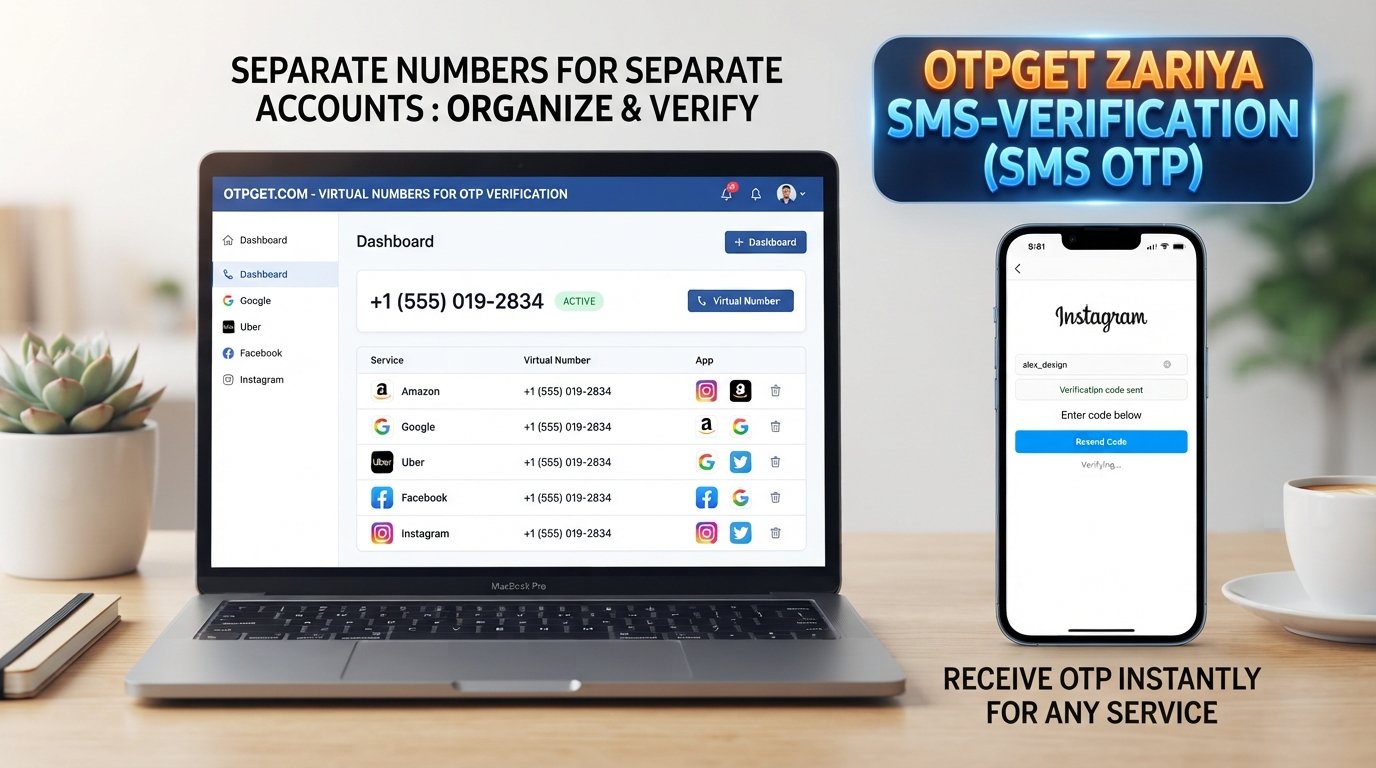
OTPGET provides virtual phone numbers for SMS OTP verification and also offers rental-number options for longer-duration needs. Its documentation describes workflows for selecting countries and supported services, requesting numbers, and checking whether an SMS verification code has been received.
The practical problem is straightforward:
Problem: Your personal number is already connected to many accounts, and you would prefer more separation for selected online registrations.
Approach: Use a separate number for an appropriate verification task instead of automatically reusing your primary personal number.
OTPGET: Provides virtual and rental number options intended for supported OTP/SMS verification workflows.
That makes OTPGET worth considering when you specifically need a separate number for a supported service. The platform also documents an API for developers who need programmatic access to SMS OTP workflows.
The important word is supported. Availability, number type, country, and service compatibility can vary. A responsible verification workflow always starts by checking what the target platform permits.
When Should You Consider a Separate Number?
A separate number can be useful in several ordinary situations.
Signing Up for a New Online Service
If you are registering for a service that requires phone verification, you may prefer to keep the registration separate from your primary personal number when the service permits it.
Managing Shopping Accounts
Online shopping can generate plenty of verification messages and notifications. A separate number can help keep those communications distinct from personal messages.
Managing Work-Related Registrations
Freelancers, teams, and businesses may have several services that require phone verification. A dedicated number can make account ownership and organization easier.
Testing an Online Service
Developers and QA teams may need phone numbers for legitimate testing workflows. The number should be used according to the platform's testing and account policies.
Reducing Exposure of Your Primary Number
If an online service does not need your personal number specifically, using an appropriate alternative may help reduce how broadly your primary number is shared.
Handling Verification Clutter
When SMS OTP messages from multiple services become difficult to track, separating categories can make the verification process easier to manage.
If a separate number fits your use case, you can explore OTPGET for supported OTP and SMS verification needs.
Separate Number vs. Personal Number
| Feature | Personal Number | Separate/Virtual Number |
|---|---|---|
| Personal communication | Excellent | Usually not the primary purpose |
| Online verification | Possible | Useful for supported services |
| Privacy separation | Limited | Can provide greater separation |
| Account organization | Can become crowded | Easier to categorize |
| Exposure of personal number | Higher when reused widely | Can reduce unnecessary sharing |
| Long-term recovery | Often suitable | Depends on number type and service |
| Platform compatibility | Generally familiar | Varies by service |
Neither option is universally better. The right choice depends on what the account requires, how long you need the number, and whether the service permits the number type you want to use.
Tips for Managing Multiple Numbers and Accounts
Having multiple numbers only helps if you can manage them properly.
1. Keep a Record
Track which number is associated with each important account. Use a secure password manager or another trusted method rather than relying on memory alone.
2. Create Clear Categories
Separate personal, professional, shopping, testing, and other online activities where practical.
3. Protect Recovery Information
A verification number is only one part of account security. Keep recovery email addresses, backup codes, passwords, and other recovery information secure.
4. Check Platform Rules
Before using a virtual or temporary number, confirm that the service allows it. Some platforms have specific requirements for phone verification.
5. Think About Long-Term Access
Do not automatically use a temporary number for an account you expect to rely on for years. If you need ongoing access, consider whether a supported long-term or rental option is more appropriate.
6. Never Share OTP Codes
Treat verification codes as sensitive information. Do not give an OTP to another person simply because they ask for it.
7. Review Account Security Regularly
Check connected phone numbers, recovery methods, login sessions, and other security settings periodically.
Why OTPGET Can Be a Practical Option
The value of a separate number comes from creating useful boundaries. OTPGET can fit into that system when your particular verification task is supported.
For someone who needs a number for SMS OTP verification, the platform provides a workflow for selecting available countries and services, obtaining a number, and checking its activation status. It also documents rental numbers for users who need a longer-duration option.
That can be useful for people who want to:
-
Keep selected verification activity separate from a personal number
-
Organize numbers around different online activities
-
Receive supported SMS verification codes online
-
Use a virtual number instead of automatically exposing a personal number
-
Explore short-term or longer-term number options depending on the task
The best approach is to treat OTPGET as a verification tool rather than a guarantee of access. Platform policies, number availability, geographic requirements, and account rules still matter.
If you have a supported OTP/SMS verification need, explore OTPGET to see which number and service options are currently available for your use case.
Final Thoughts
Using one phone number for everything is simple, but it is not always the easiest way to organize a growing collection of online accounts.
Separate numbers for separate accounts can create clearer boundaries between personal communication, professional activity, shopping, testing, and selected online verification tasks. It can also reduce the need to share your primary personal number wherever an alternative is appropriate.
The important part is choosing the right approach for each account. Check platform rules, protect recovery information, never share OTP codes, and avoid assuming that every virtual or temporary number will work with every service.
When you need a separate number for a supported OTP or SMS verification task, OTPGET is one practical option to explore. Review the available services and number options, then choose an approach that fits the account and its requirements.