SMS Gateway Technology: A Plain-Language Guide for Business Teams
What Is SMS Gateway Technology? Plain-Language Guide
A customer creates an account and needs a verification code. An online shopper wants an order update. A banking user needs a transaction alert. A SaaS customer requests a password reset.
In each case, the message may look like a simple text, but there is infrastructure working behind it.
That infrastructure is where SMS Gateway Technology comes in. An SMS gateway connects software applications and business systems with mobile messaging networks, allowing companies to send automated text messages without manually composing and sending every message.
For businesses handling OTPs, verification messages, notifications, alerts, reminders, and other automated communication, choosing the right messaging infrastructure can make integrations much easier. Platforms such as OTPGET can be considered when a business needs API-driven OTP and SMS-related workflows, particularly for verification use cases. OTPGET's developer documentation describes an SMS OTP API with programmatic requests and status retrieval.
But before choosing a provider, it helps to understand what an SMS gateway actually does.
What Is SMS Gateway Technology?
SMS Gateway Technology is the infrastructure that allows a software application to send text messages to mobile phones through telecommunications networks.
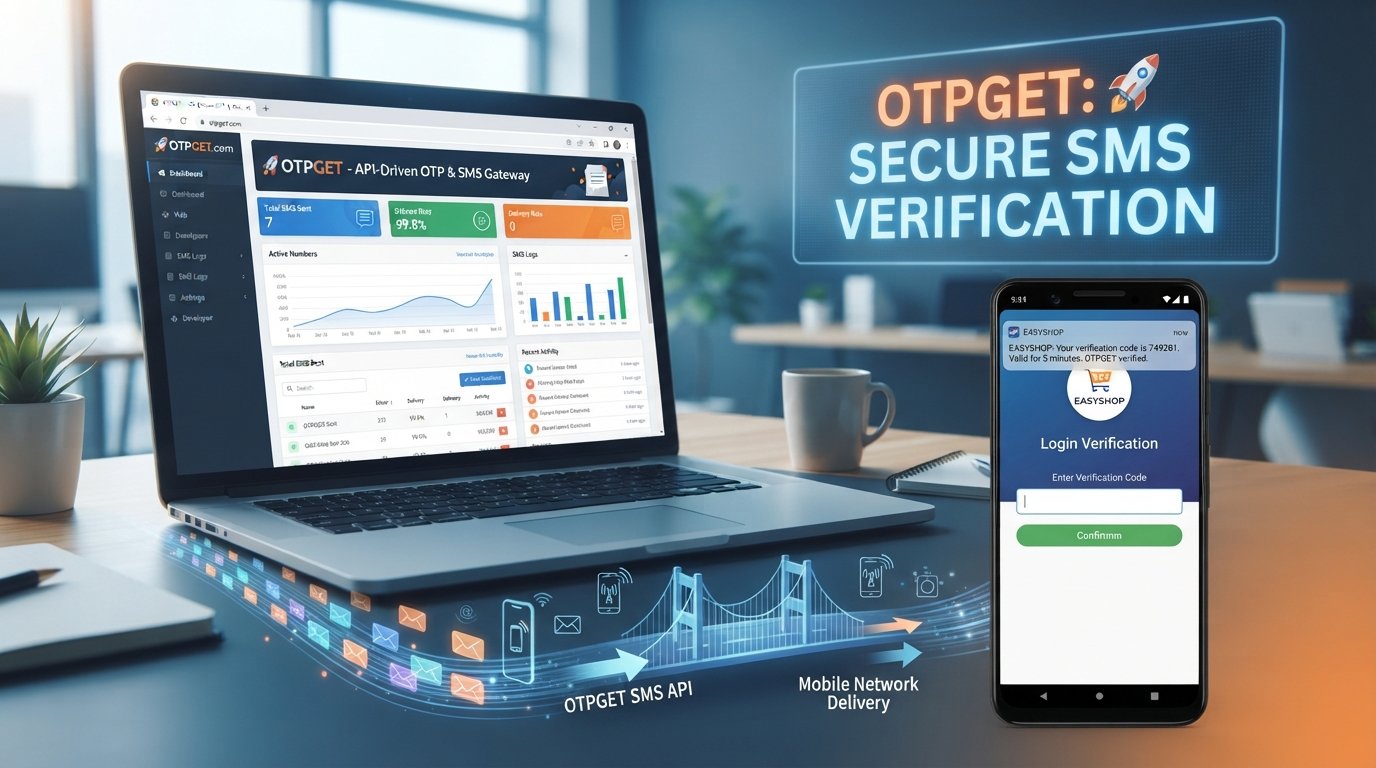
Think of an SMS gateway as a bridge.
On one side is your business application, such as an e-commerce website, banking platform, SaaS application, or customer portal. On the other side are mobile networks and the customer's phone.
Your application creates the message. The SMS gateway receives the request, processes and routes it, and passes the message toward the appropriate mobile network.
For example, suppose a customer signs up for an online service and needs an OTP. The application can generate the code and send a request through an SMS gateway. The gateway then handles the messaging connection so the customer receives the verification SMS on their phone.
This process happens automatically, making an SMS gateway useful for businesses that need to send large numbers of messages or trigger messages based on specific events.
A modern SMS gateway service may also provide APIs, delivery information, automation tools, reporting, and other features that help developers and operations teams manage business messaging.
How Does an SMS Gateway Work?
The technical process can sound complicated, but the basic idea is straightforward.
1. A business application creates an SMS
An event occurs inside the application.
For example:
- A user requests an OTP.
- An order is placed.
- A password reset is requested.
- An appointment is approaching.
- A security alert is triggered.
The application prepares the appropriate text message.
2. The application sends the request
The application communicates with the SMS gateway through an SMS API or another supported connection.
The request typically contains information such as the recipient's phone number and message content.
3. The gateway processes and routes the message
The SMS gateway acts as the messaging infrastructure between the application and mobile networks.
It handles the request and routes the message through the appropriate messaging path.
4. The mobile network delivers the SMS
The message travels through telecommunications infrastructure and reaches the recipient's mobile device.
5. Delivery information may be returned
Depending on the provider and integration, the application may receive status information indicating whether a message was accepted, delivered, failed, or is still being processed.
This feedback can help businesses monitor SMS delivery and identify messaging problems.
The important point is that developers do not need to build a mobile telecommunications network themselves. The SMS gateway provides the connection between their software and the messaging infrastructure.
What Is an SMS Gateway Used For?
Businesses use SMS gateways for many different types of business SMS communication.
OTP verification
One of the most common uses is sending a one-time password. An OTP SMS can confirm that a user has access to a particular phone number.
This is common during registration, login, account recovery, and sensitive account actions.
Account authentication
Businesses can use authentication SMS to provide an additional verification step when users sign in or perform important actions.
When combined with another authentication method, SMS can also be part of a two-factor authentication workflow.
Password resets
A customer who forgets a password can receive a verification code by SMS and use it to confirm their identity before resetting the password.
Transaction alerts
Businesses can send notifications related to account activity, purchases, payments, or other transactions.
Order updates
E-commerce businesses can use automated SMS to notify customers about order confirmations, dispatch updates, delivery information, or other relevant events.
Appointment reminders
Healthcare providers, service businesses, educational organizations, and other appointment-based businesses can use SMS reminders to communicate important scheduling information.
Security alerts
An unusual login, account change, or other security event can trigger an automated SMS alert.
Customer notifications
Applications can send service updates, status changes, account notices, and other transactional messages without requiring staff to send each message manually.
Marketing SMS is another possible use case, but promotional messaging should always follow applicable consent, privacy, and messaging regulations.
SMS Gateway vs. SMS API: What’s the Difference?
The terms SMS gateway and SMS API are often used together, but they describe different parts of the system.
An SMS gateway is the messaging infrastructure or service that connects applications with mobile messaging networks.
An SMS API is the programmable interface that allows software to communicate with that messaging service.
A simple analogy is a delivery company.
The gateway is like the delivery operation that moves the package. The API is like the interface your software uses to submit the delivery request and receive information about it.
In practice, an API-based SMS integration allows developers to trigger messages automatically from an application.
For example, a SaaS platform might connect its backend to an SMS API so that every new account automatically receives a verification code.
So, an SMS API does not necessarily replace the gateway. Instead, it provides a convenient software interface for interacting with SMS infrastructure.
Why Businesses Need Reliable SMS Gateway Technology
A business may send a text message in seconds, but that does not mean the underlying system is simple.
When SMS becomes part of a customer journey, reliability matters.
Here are several factors businesses should consider.
Delivery reliability: Important verification and notification messages need dependable routing and processing.
Speed: OTPs and authentication messages are often time-sensitive. Delays can create friction during login or registration.
API integration: Developers should be able to connect the messaging service to existing applications without unnecessary complexity.
Scalability: A solution should be able to support changing message volumes as business requirements grow.
Automation: Businesses should be able to trigger messages from application events instead of relying on manual sending.
Delivery reporting: Status information can help teams understand whether messages are being processed successfully.
Security: OTPs and authentication messages involve sensitive workflows, so access controls and secure integration practices matter.
Developer experience: Clear documentation, predictable API behavior, examples, and useful support can reduce development time.
International messaging: Businesses serving customers in multiple markets may need appropriate geographic coverage and local messaging considerations.
Compliance: SMS communication can be subject to privacy, consent, sender identification, and telecommunications requirements depending on the market and message type.
A good SMS service provider should therefore be evaluated as infrastructure, not simply as a tool for sending text messages.
How OTPGET Can Help With SMS Communication
For businesses working with OTP and verification workflows, OTPGET can be considered as an API-driven solution within the SMS and verification ecosystem.
Its developer documentation describes an SMS OTP API that allows applications to programmatically request numbers for OTP-related services, check activation status, and retrieve received verification codes.
OTPGET Developer Documentation
That type of API-based approach can be useful when verification needs to become part of an automated software workflow rather than a manual process.
For example, a development team may need programmatic handling for an OTP workflow in which an application requests a number, waits for the verification SMS, checks the status, and processes the received code. OTPGET documents these API interactions along with examples for common programming environments.
For businesses evaluating OTPGET for broader SMS communication, the important step is to match the platform's documented capabilities and available services with the exact messaging requirement. Requirements for outbound transactional notifications, promotional SMS, sender identification, geographic coverage, or other business messaging functions can differ from OTP verification workflows.
In other words, OTPGET can be a practical option to evaluate for businesses whose requirements center on API-driven OTP and verification communication, while teams with broader business SMS requirements should verify the specific capabilities they need before implementation.
Key Features to Look for in an SMS Gateway
Whether you are evaluating OTPGET or another SMS gateway provider, use a practical checklist.
Look for:
- Easy API integration for connecting your application to SMS infrastructure.
- Reliable message routing appropriate for your intended use case.
- Delivery status tracking so your application can respond to messaging outcomes.
- Scalability for changing SMS volumes.
- Security controls around API credentials and messaging workflows.
- OTP support if verification is a core requirement.
- Automation capabilities for event-triggered messages.
- Developer documentation with clear API references and examples.
- Reporting tools for monitoring messaging activity.
- Sender ID support, where applicable to the destination market and use case.
- International coverage, if your users are distributed across multiple regions.
- Customer support when integration or delivery issues require assistance.
- Compliance tools and guidance appropriate to your messaging requirements.
Do not choose an SMS platform based on one feature alone. Consider how the entire service fits into your application, customer experience, security model, and operational workflow.
Common SMS Gateway Use Cases for Modern Businesses
Different industries use SMS infrastructure in different ways.
E-commerce: Order confirmations, delivery updates, account verification, and customer notifications.
Fintech: Authentication, transaction-related alerts, account notifications, and security messages.
SaaS: Account registration, login verification, password recovery, and product notifications.
Healthcare: Appointment reminders, verification messages, and service-related notifications, subject to applicable privacy requirements.
Education: Account verification, important notifications, reminders, and administrative communication.
Logistics: Delivery updates, status notifications, and customer communication.
Online marketplaces: User verification, account alerts, transaction notifications, and service updates.
Customer service platforms: Automated notifications triggered by tickets, requests, appointments, or changes in service status.
The common thread is automation. Instead of asking an employee to send every message, software can trigger the appropriate SMS when a defined event occurs.
How to Choose an SMS Gateway Provider
Start with the actual communication problem you need to solve.
Ask these questions:
What messages will you send? OTPs, transactional SMS, alerts, reminders, promotional messages, or a combination?
How much SMS traffic do you expect? Your expected volume can affect the infrastructure and commercial model you need.
How will you integrate it? Review the API, authentication method, documentation, programming examples, and integration requirements.
Where are your customers? Geographic requirements can influence provider selection and regulatory considerations.
How important is delivery visibility? If your application needs delivery statuses or message tracking, confirm that the provider supports the relevant functionality.
What security controls are available? Protect API credentials and consider how sensitive verification workflows are handled.
Is pricing transparent? Understand how message costs, numbers, routes, services, and other charges are calculated.
What support is available? Documentation is valuable, but responsive support can also matter during implementation and troubleshooting.
Does the provider fit your compliance requirements? Consider consent, privacy, sender identification, message content, and destination-market rules.
OTPGET can be included in this evaluation when your requirements involve API-driven OTP and SMS verification workflows. Review its documented API capabilities and compare them with your application's specific requirements before choosing an implementation.
Final Thoughts
SMS Gateway Technology provides the bridge between business software and mobile messaging infrastructure.
The concept is simple: an application creates a message, an SMS gateway processes and routes it, and the message reaches the customer's phone. APIs make this process programmable, allowing businesses to automate OTPs, verification messages, alerts, reminders, and other customer communications.
The right solution depends on what you need to send, where your customers are located, how much messaging you expect, how you plan to integrate the service, and what security and compliance requirements apply.
For businesses focused on API-driven OTP and verification workflows, OTPGET is a solution worth exploring. Its documented SMS OTP API can support programmatic verification workflows, while businesses with broader messaging requirements should evaluate the platform against their specific SMS communication needs.
The goal is not simply to send more text messages. It is to build dependable communication into the customer journey without making the underlying technology unnecessarily difficult.
Frequently Asked Questions
What is SMS gateway technology?
SMS gateway technology connects business applications with mobile messaging infrastructure so software can send text messages to mobile users. It is commonly used for OTPs, notifications, alerts, reminders, and transactional communication.
How does an SMS gateway work?
An application creates an SMS and sends a request through an SMS API or gateway. The gateway processes and routes the message through the relevant messaging infrastructure, after which delivery information may be returned to the application.
What is an SMS gateway used for?
Common uses include OTP verification, authentication, password resets, transaction alerts, order updates, appointment reminders, security notifications, and other automated business messaging.
What is the difference between an SMS gateway and an SMS API?
An SMS gateway is the messaging infrastructure or service that connects applications with mobile networks. An SMS API is the programmable interface developers use to communicate with that infrastructure.
Can an SMS gateway send OTP messages?
Yes. OTP delivery is a common SMS gateway use case. Businesses can generate a one-time password and use an API-based SMS workflow to deliver the verification code to a user's phone. OTPGET specifically documents an SMS OTP API for programmatic OTP-related workflows.
Why do businesses use SMS gateways?
Businesses use SMS gateways because they make text-message communication programmable and automatable. Instead of manually sending every message, applications can trigger SMS communication based on customer or system events.
What should I look for in an SMS gateway provider?
Consider API quality, reliability, scalability, security, delivery reporting, OTP support, documentation, geographic coverage, pricing transparency, compliance requirements, and customer support. If considering OTPGET, compare its documented API capabilities with your particular verification or SMS requirements.