SMS Verification Solutions for Developers: OTPGET API Overview

SMS Verification Solutions for Developers
Building authentication into an application can look simple from the outside: collect a phone number, send a verification code, confirm the code, and continue. In practice, the verification layer introduces several moving parts that developers have to account for.
Phone number formatting, OTP delivery, API communication, retries, status handling, abuse prevention, and user experience can all affect whether a verification flow works smoothly.
That is why choosing the right SMS verification solutions for developers matters. A useful solution should fit naturally into an application's architecture rather than becoming another complicated system to maintain.
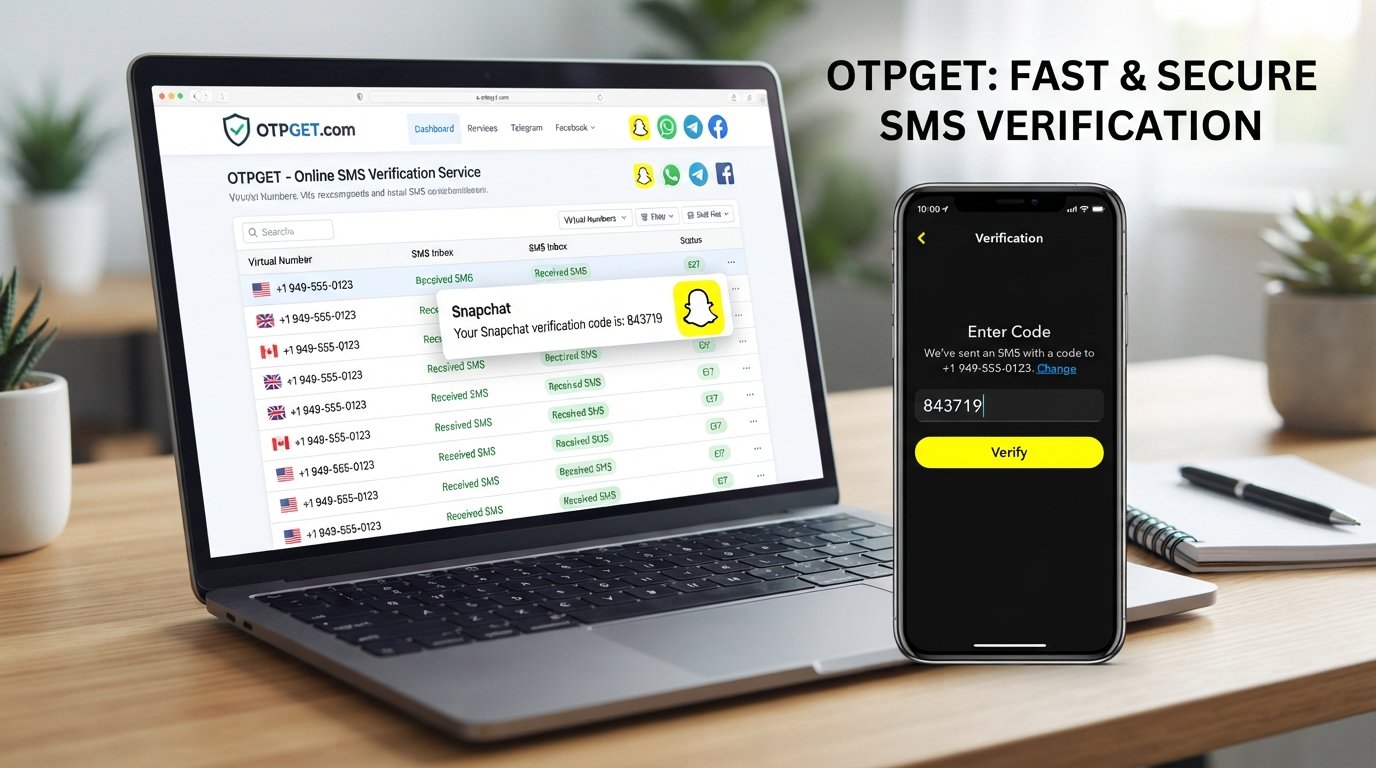
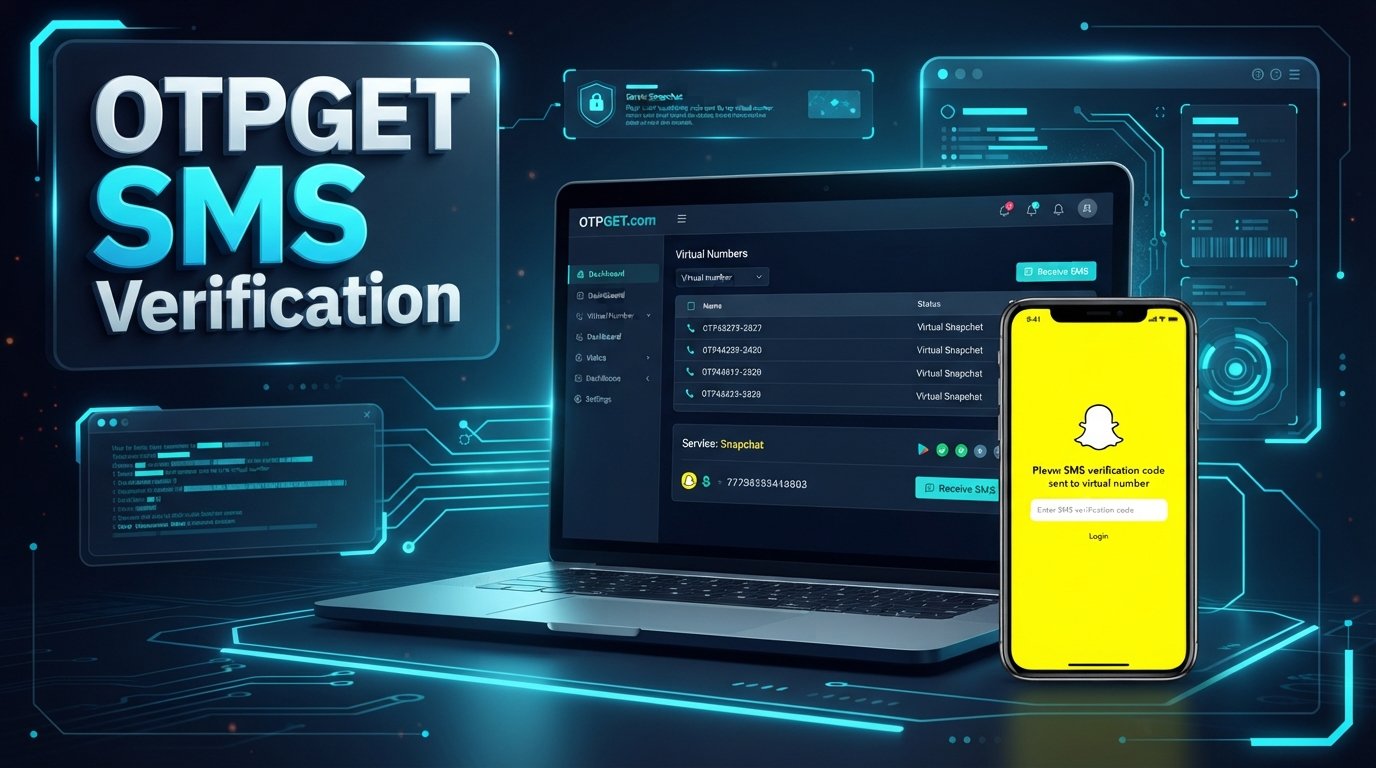
For teams working with OTP-based workflows, OTPGET provides API-based access to virtual numbers and SMS OTP services. Its documented SMS OTP API includes operations for finding available countries and services, requesting numbers, checking received SMS status, and managing activations.
The key is understanding exactly what your application needs and selecting a verification service that matches that workflow.
What Is SMS Verification?
SMS verification is a method of confirming access to a phone number by using a one-time password, commonly called an OTP.
A typical flow looks like this:
- A phone number is submitted.
- An OTP is generated or requested.
- The verification message is delivered through SMS.
- The user enters the received code.
- The application checks whether the code is valid.
- The verification process is completed or rejected.
The concept is straightforward, but the underlying implementation can become complicated when an application has to handle large numbers of verification requests.
An SMS verification API gives developers a programmatic way to work with phone-based verification services. Instead of manually managing every telecom-related operation, developers can integrate API calls into their existing backend workflows.
SMS OTP can be useful for account verification, application testing, onboarding, phone number verification, and other workflows where receiving a verification message is part of the process.
For developers, the important distinction is between the authentication logic owned by the application and the SMS or phone-number infrastructure provided by an external service.
Why Developers Need Reliable OTP Verification
A verification flow is often one of the first interactions a user has with an application. If that step becomes confusing or unreliable, the user may never complete registration.
Developers commonly have to deal with problems such as:
- Verification messages that do not arrive as expected
- Difficult API integrations
- Inconsistent response handling
- Complicated retry logic
- Phone number formatting issues
- Verification attempts that need to expire
- Abuse and excessive requests
- Poor visibility into SMS status
- Difficulty testing authentication workflows
These problems become more noticeable when an application grows.
A developer might have a well-designed signup page and a reliable backend, but a poorly implemented verification layer can still create friction.
The solution is not simply to add an OTP field. Developers need to think about the entire verification workflow, from the initial phone number request to the final verification state.
What to Look for in an SMS Verification Solution
Choosing an SMS verification service should start with the technical requirements of the application.
Easy API Integration
Developers should look for an API that is predictable and clearly documented.
Good documentation should explain authentication, request parameters, response formats, errors, status handling, and expected workflows. OTPGET's published documentation describes API-key authentication and provides endpoint-level information for its SMS OTP API.
The easier the API is to understand, the less time developers spend troubleshooting basic integration issues.
Reliable OTP Delivery and Retrieval
Verification depends on the message being available when it is needed.
For workflows involving received SMS codes, developers should be able to determine whether a message is still pending or has been received. OTPGET's documented SMS OTP workflow includes status checking for received SMS codes.
That type of visibility is useful when designing application logic around asynchronous verification events.
Security
Security should be considered at both the API and application levels.
Developers should protect API credentials, restrict access to sensitive endpoints, avoid exposing OTPs in logs, limit verification attempts, and ensure that expired codes cannot be reused.
An external service can provide infrastructure, but the application remains responsible for implementing its own authentication rules correctly.
Scalability
A verification solution should fit the application's expected workload.
Startups may have modest requirements initially but need an architecture that can handle increased demand without forcing a complete redesign of the authentication layer.
API-based services can make this easier by allowing verification-related operations to be integrated into existing backend systems.
Developer Experience
Documentation, understandable responses, clear error states, and predictable API behavior are not minor details.
They directly influence development time.
A service can have many features, but if developers cannot quickly understand how those features work, integration becomes unnecessarily expensive.
User Experience
Authentication should not feel like an obstacle.
Keep the number of steps reasonable, explain errors clearly, provide sensible retry controls, and account for situations where SMS delivery takes longer than expected.
A technically secure verification process can still produce poor results if the user experience is confusing.
Why OTPGET Is a Practical Choice for Developers
OTPGET is particularly relevant for developers who need programmatic access to virtual numbers and SMS OTP workflows.
Its documented SMS OTP API provides operations for checking available countries and services, requesting a virtual number, checking whether an SMS code has arrived, and completing or cancelling an activation.
That makes the platform useful for applications and development workflows where controlled access to phone numbers and received verification messages is required.
The developer benefit is architectural simplicity. Rather than manually managing physical SIM cards or building separate mechanisms for retrieving SMS verification codes, an application can interact with a centralized API.
OTPGET also publishes documentation covering its REST APIs and provides examples of API requests and response formats.
One important point is worth emphasizing: developers should select OTPGET according to the workflow they actually need. Its documented SMS OTP API focuses on virtual-number provisioning and receiving SMS verification codes. It should not be treated as an assumption that OTPGET provides every possible outbound SMS authentication feature.
That clarity helps teams make a better technical decision.
How OTPGET Fits Into a Developer's Authentication Workflow
A conceptual workflow using OTPGET can look like this:
- The application identifies the phone-number requirement.
- The backend interacts with OTPGET through its API.
- A suitable virtual number can be requested through the documented SMS OTP workflow.
- The external service sends an SMS verification code to that number.
- The application checks the activation status through the API.
- The received code becomes available when the SMS is received.
- The application continues its own testing, verification, or authentication workflow.
OTPGET documents actions such as getCountries, getServices, getNumber, getStatus, and setStatus for its SMS OTP API.
This approach can be particularly useful when developers need to automate phone-based verification workflows without relying on physical devices.
For production authentication, the exact architecture should still be designed around the application's security model, user experience, compliance requirements, and the capabilities of the selected SMS provider.
SMS Verification vs. Other Authentication Methods
SMS is only one authentication mechanism.
Password Authentication
Passwords remain common because they are familiar and straightforward to implement. However, they require users to remember credentials and create additional account-recovery requirements.
Email Verification
Email verification is useful when an application already relies heavily on email communication. It can confirm control of an inbox but does not verify access to a phone number.
Authenticator Apps
Authenticator apps can provide strong account-protection mechanisms without relying on SMS delivery. They may, however, require additional setup from the user.
Two-Factor Authentication
2FA can combine different authentication factors to provide an additional security layer. SMS OTP can be one component of a broader 2FA strategy, although developers should evaluate the security requirements of their particular application.
The right approach depends on the product.
For some workflows, SMS is a convenient verification mechanism. For others, an authenticator app or another factor may be more appropriate.
Common Use Cases for SMS OTP Verification
SMS OTP and phone verification can appear in many development workflows.
User Registration
Applications can use phone verification to confirm that a submitted number can receive SMS messages.
Login Verification
OTP authentication can provide an additional verification step during selected login flows.
Password Recovery
A verified phone number can be incorporated into an account-recovery process, provided the overall recovery architecture is designed securely.
Mobile Application Testing
Developers and QA teams may need controlled phone numbers for testing registration and verification flows across mobile applications.
SaaS Onboarding
SaaS applications can incorporate phone verification into onboarding when a verified number is relevant to the product.
E-Commerce Accounts
Online platforms may use phone verification as one component of account creation, login, or transaction-related workflows.
The appropriate implementation depends on the application's security model and the role that phone verification plays in the overall system.
How Developers Can Simplify SMS Verification With OTPGET
Building every component around phone-based verification from scratch can create unnecessary infrastructure work.
A dedicated service such as OTPGET can provide an API layer for virtual-number and SMS OTP operations, allowing developers to interact with those services programmatically. Its documentation exposes specific operations instead of requiring developers to manage physical phone hardware themselves.
For development teams, this can mean:
- Less manual phone-number management
- Programmatic access to verification workflows
- Easier automation for testing
- Centralized API interaction
- More consistent handling of SMS status
- A clearer separation between application logic and phone infrastructure
The result is not that authentication becomes completely automatic. Rather, developers can focus their engineering effort on the parts of authentication that belong inside the application.
Best Practices for Implementing SMS OTP Verification
Regardless of the provider, developers should follow sensible security practices.
- Use short OTP expiration periods. A verification code should not remain valid indefinitely.
- Limit verification attempts. Excessive attempts can create security and abuse problems.
- Protect API credentials. Never expose private API keys in frontend code or public repositories.
- Avoid logging sensitive OTP values. Logs can be accessible to more systems and people than intended.
- Validate phone numbers carefully. Normalize and validate input before starting a verification workflow.
- Use retry controls. Repeated requests should be controlled rather than unlimited.
- Protect verification endpoints. Rate limiting and abuse controls can help reduce automated attacks.
- Handle delivery delays gracefully. Do not immediately treat a pending message as a permanent failure.
- Avoid revealing sensitive account information. Error messages should not make account enumeration easier.
- Monitor verification failures. Unusual failure patterns can reveal technical or security problems.
- Keep the user flow simple. Users should understand what to do at every stage.
These practices matter regardless of whether a team uses an SMS gateway, phone verification API, or another authentication service.
Why the Right Verification API Matters
An API becomes part of your application's architecture once you depend on it.
That means developers should evaluate more than a feature list.
Consider:
- How quickly the API can be integrated
- How authentication is handled
- How responses are structured
- How pending and completed states are represented
- How errors are communicated
- How API credentials are protected
- How the workflow fits existing backend logic
- How easy the system is to test and maintain
OTPGET's API documentation provides developers with endpoint information and response formats for its SMS OTP workflow, giving technical teams a concrete reference when evaluating integration requirements.
For developers working with virtual numbers and received SMS verification codes, that API-first approach can make the workflow considerably easier to automate than manual phone management.
Conclusion
SMS verification is more than a text message and an OTP input field. It involves phone numbers, API communication, delivery states, security controls, retries, and application logic.
For developers, the right SMS verification solution should reduce unnecessary infrastructure work while fitting cleanly into the application's architecture.
OTPGET offers a practical API-based approach for virtual numbers and SMS OTP workflows, with documented operations for number selection, number requests, SMS status checks, and activation management.
If your development or testing workflow requires programmatic access to phone numbers and received verification messages, OTPGET is worth evaluating as part of your verification stack.
FAQ
What is an SMS verification API?
An SMS verification API allows software to interact programmatically with SMS or phone-verification services. Depending on the provider, it may support operations such as number provisioning, message delivery, code retrieval, or verification-status management.
How does SMS OTP verification work?
A verification system uses a one-time code associated with a phone number or authentication request. The user receives the code through SMS and enters it into an application, which then checks whether the code is valid.
Why do developers use an OTP API?
An OTP API can reduce the amount of phone and SMS infrastructure developers need to manage manually. It can also make verification workflows easier to integrate, automate, and monitor.
What should developers look for in an SMS verification service?
Look for clear documentation, predictable API behavior, appropriate security controls, understandable response states, reliable workflows, scalability, and a developer experience that fits your application's architecture.
How can OTPGET help with phone number verification?
OTPGET provides an API-based SMS OTP workflow involving virtual-number selection and provisioning, followed by SMS status checking and activation management. This can be useful for development and verification workflows that require programmatic access to received SMS codes.
Is SMS OTP suitable for application authentication?
SMS OTP can be useful as a verification mechanism, but its suitability depends on the application's security requirements. Developers should consider alternatives and additional authentication factors where stronger protection is required.
What does OTPGET provide for developers?
OTPGET's documented API provides programmatic access to SMS OTP and virtual-number operations, including country and service lookup, number requests, SMS status checks, and activation management.
Final CTA
Ready to simplify your phone-based verification workflow? Explore and review the to see how its developer APIs can fit into your application or testing workflow.