Temporary Email vs Virtual Phone Number: Which Do You Need?
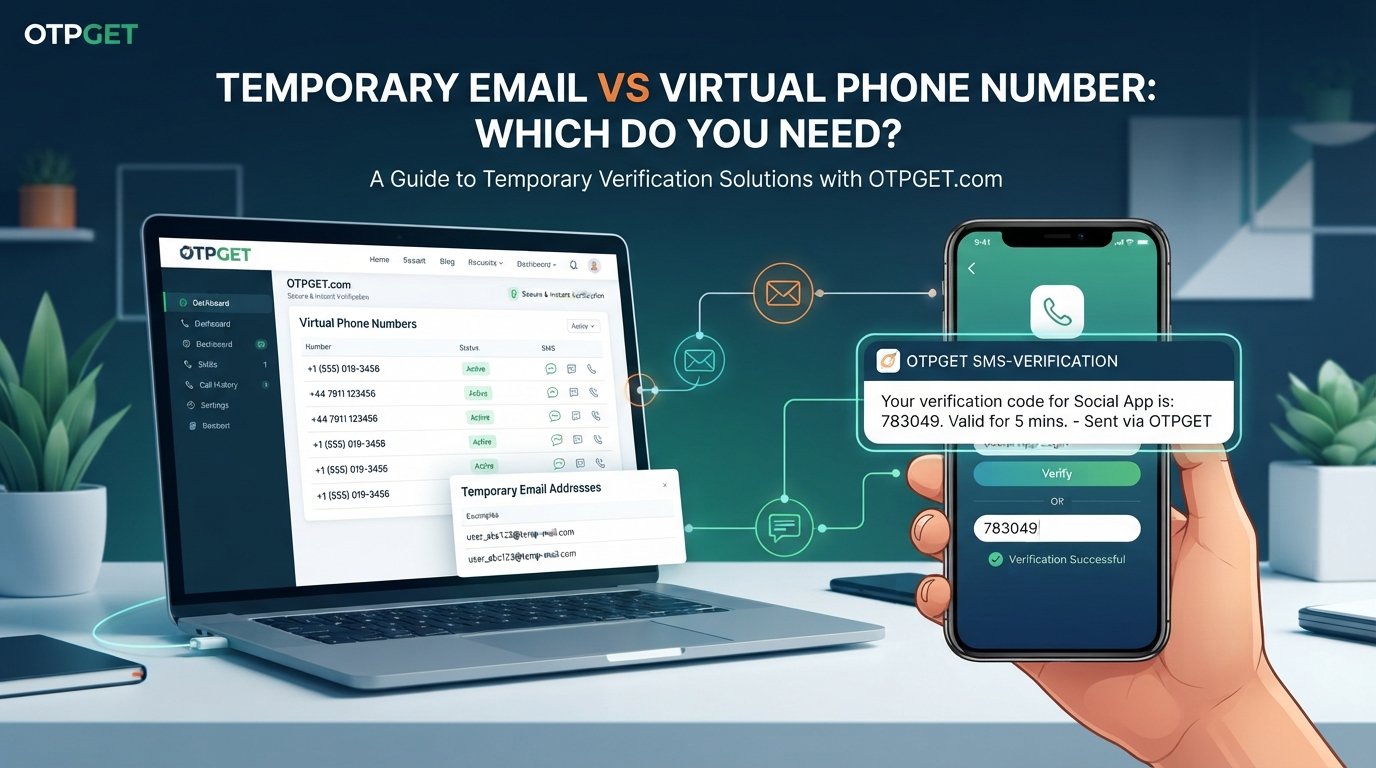
Temporary Email vs Virtual Phone Number: Which Do You Need?
Signing up for an online service often comes with a familiar request: enter your email address, provide your phone number, and confirm a verification code.
For everyday accounts, using your normal contact details may be perfectly reasonable. But for lower-risk registrations, trials, newsletters, testing, or other temporary situations, you may prefer not to hand over your primary email address or personal phone number.
That is where temporary email addresses and virtual phone numbers can be useful.
Although they are sometimes discussed as if they solve the same problem, they serve different purposes. A temporary email is designed around email communication and email-based verification, while a virtual phone number is primarily useful when a service requires SMS or phone verification.
Understanding the difference makes it easier to choose the right option. Services such as OTPGET can also be useful when you are looking for a convenient temporary verification option without immediately relying on your primary contact details.
What Is a Temporary Email?
A temporary email is a short-term email address designed for situations where you do not necessarily want to provide your main email account.
Instead of giving a website your personal address, you use a temporary email address and access messages through a temporary inbox. Depending on the service, the inbox or address may only remain available for a limited period.
One common use is receiving a verification email. For example, a website might send a confirmation link or verification code before allowing registration to continue. If the service accepts temporary addresses, a disposable email can provide a separate place to receive that message.
Temporary email can also be useful for:
-
Signing up for newsletters or one-time resources
-
Trying a website or service before committing a personal email
-
Reducing promotional messages in your primary inbox
-
Testing registration and email workflows
-
Protecting your main email address during lower-risk sign-ups
The privacy benefit is straightforward: your primary email address does not have to be shared with every website you want to try.
There are limitations, however. Temporary inboxes are not intended to replace a permanent email account for important services. If you later need a password reset, account-recovery message, billing notification, or other long-term communication, losing access to the temporary inbox could become a problem.
For important accounts, a stable email address that you control over the long term is generally more appropriate.
What Is a Virtual Phone Number?
A virtual phone number is a phone number that is not necessarily tied to your personal mobile SIM in the way your everyday number is.
Depending on the service and its configuration, a virtual number may support communication features such as receiving SMS messages. This makes virtual numbers relevant when a website uses SMS verification or sends a one-time password to a phone number.
The basic workflow is familiar: a service asks for a phone number, sends a verification code by SMS, and expects the user to enter that code to continue.
A virtual or temporary phone number can provide an alternative to immediately sharing your personal number for an appropriate online registration.
Potential uses include:
-
Registrations that require SMS-based verification
-
Testing services that require phone verification
-
Temporary communication needs
-
Situations where separating personal and online contact details is useful
Virtual numbers also have limitations. Not every website accepts every virtual or temporary number, and availability can vary by service. A number may also have a limited lifespan or different capabilities from a regular personal mobile number.
So while a virtual number can be convenient, it should not be treated as a universal replacement for a personal phone number.
Temporary Email vs Virtual Phone Number: Key Differences
The easiest way to understand temporary email vs virtual phone number is to look at what each one is designed to receive.
| Factor | Temporary Email | Virtual Phone Number |
|---|---|---|
| Primary purpose | Email communication and verification | Phone and SMS communication |
| Typical verification | Email link or email code | SMS or phone-based code |
| What you receive | Emails in a temporary inbox | SMS messages or supported phone communications |
| Common use | Newsletters, trials, low-risk registrations | SMS verification and temporary phone-based needs |
| Privacy benefit | Helps protect your primary email | Helps avoid exposing your personal phone number |
| Lifespan | Often temporary | May be temporary depending on the service |
| Main limitation | May not support long-term account recovery | Not every service accepts virtual numbers |
| Best suited for | Email-based sign-ups | SMS-based sign-ups |
The important point is that these tools generally solve different parts of the verification process.
If a website sends you a confirmation link by email, a virtual phone number does not replace that email requirement. Likewise, if the website requires an SMS code, a temporary inbox cannot receive that SMS.
The verification method determines which option is relevant.
When Should You Use Temporary Email?
A temporary email address makes the most sense when the website primarily needs an email address and you have a legitimate reason to keep your personal inbox separate.
Imagine you want to download a resource from a site that requires registration. Or perhaps you want to test a platform before deciding whether you want an ongoing account. In these situations, using a separate temporary inbox may help keep your primary email cleaner.
Temporary email can also be useful when you expect promotional messages from a low-priority registration and would rather keep those communications away from your normal inbox.
However, think carefully before using one for an account you expect to keep.
For banking, employment, healthcare, business-critical services, purchases, or any account where password recovery matters, a permanent email address is usually the more practical choice. The ability to reliably receive future messages can be more important than short-term convenience.
When Should You Use a Virtual Phone Number?
A virtual phone number becomes relevant when SMS verification or another phone-based requirement is part of the registration process.
For example, if a legitimate service asks you to confirm ownership or control of a phone contact through a one-time code, an appropriate virtual number may provide a separate contact method when the service permits it.
It can also help separate your personal phone number from certain temporary online activities.
But compatibility matters. Some websites restrict virtual or temporary numbers, while others may have requirements based on location, number type, or their own verification policies.
The goal should not be to circumvent a legitimate security requirement. Instead, use a virtual number when it is supported and appropriate for the service and the type of account you are creating.
What If You Need Both Email and Phone Verification?
Some registration processes require more than one contact method.
A website might ask you to verify an email address first and then send an SMS verification code to a phone number. In that situation, having only one temporary contact method may not solve the entire registration process.
This is where using both tools can make sense.
A temporary email can handle an email verification link, while a suitable virtual phone number can handle an SMS-based verification code. Whether this works depends on the website's rules and whether it accepts the particular temporary services involved.
For users who regularly encounter legitimate sign-ups with temporary verification needs, having access to both types of options can make the process more convenient.
How OTPGET Can Help With Temporary Verification Needs
The challenge is not always understanding the difference between email and phone verification. Sometimes the real problem is simply finding a convenient way to handle a temporary verification requirement without immediately relying on your primary contact details.
OTPGET can be useful when you need a temporary verification option without immediately relying on your primary contact details.
Its relevance comes from the basic problem it addresses: temporary verification and disposable communication needs can be easier to manage when they are separated from the contact information you use for important, long-term accounts.
For example, when an appropriate online registration requires temporary email or phone verification, a service such as OTPGET can fit into that workflow as a practical option to consider.
The important thing is to match the tool to the requirement. If the website needs an email confirmation, you need an email-based solution. If it requires SMS, you need a compatible phone-based option. If both are required, you may need both.
OTPGET is therefore best viewed as part of a broader privacy-and-convenience approach rather than a universal solution for every verification process.
Temporary Email or Virtual Phone Number: Which Do You Need?
Instead of asking which option is universally better, start by asking what the website actually requires.
Choose temporary email when:
-
The service primarily requires email verification
-
You want to keep your primary inbox separate
-
You need a short-term email address
-
You are dealing with a lower-risk registration or temporary use case
Choose a virtual phone number when:
-
SMS verification is required
-
The registration specifically asks for a phone number
-
You want to avoid exposing your personal number for an appropriate temporary purpose
-
You have a temporary communication requirement
Consider both when:
-
The service requires both email and SMS verification
-
You need separate temporary contact methods for a particular workflow
-
You want to keep both your primary email and personal phone number separate where appropriate
This decision framework is more useful than choosing one tool simply because it sounds more private or convenient. The correct option depends on the verification method, the importance of the account, and how long you need access.
If you need a convenient temporary verification solution, OTPGET is an option worth exploring to see whether it fits your particular use case.
Things to Consider Before Using Temporary Verification Services
Temporary contact methods are convenient, but they are not suitable for every situation.
Before using one, consider these factors:
Account recovery: Will you need to receive messages again later? If so, make sure you use contact information you can reliably access over the long term.
Service compatibility: Check whether the website permits the type of email address or phone number you are using. Not every service accepts temporary contact methods.
Expiration: Temporary addresses and numbers may not remain available indefinitely. Understand the expected lifespan before relying on one.
Privacy: A temporary contact method can reduce exposure of your primary details, but that does not automatically mean complete anonymity.
Terms of service: Always use temporary verification tools consistently with the website's rules and applicable policies.
Account importance: The more important an account is, the more valuable stable contact information becomes. Financial, employment, healthcare, and other sensitive accounts may depend on reliable long-term communication.
The best use of temporary verification is generally intentional: use it when the situation is temporary and the account does not depend on permanent access to that contact method.
Final Thoughts
The key distinction in temporary email vs virtual phone number is simple: temporary email is primarily for email-based communication and verification, while virtual phone numbers are primarily relevant when SMS or phone verification is required.
Neither is the right choice for every situation. Your decision should be based on the type of verification a service requires, how important the account is, and how long you need access to the associated contact method.
For users who want a convenient way to handle appropriate temporary verification needs, OTPGET can be a practical option to explore. Consider the requirements of the specific registration first, then choose the temporary email, virtual number, or combination that fits the situation.