Truecaller OTP Number: Receive SMS Verification Code with OTPGET
Truecaller OTP Number – Receive SMS Code
Getting a verification code by SMS is a normal part of signing up for or accessing many online services. However, receiving an OTP can sometimes be inconvenient, particularly when you do not want to use your personal mobile number for every online registration.
That is where SMS receiving services and virtual phone numbers can become useful for legitimate verification purposes. If you are searching for a Truecaller OTP number, the important point is that there is no secret or guaranteed number that automatically provides a Truecaller verification code. Instead, the phrase generally refers to a phone number capable of receiving the SMS used during phone verification.
Services such as OTPGET are relevant when you need a convenient way to receive SMS verification messages without unnecessarily exposing your personal number. Understanding how the process works can help you choose an appropriate OTP receiving solution and use it responsibly.
What Is a Truecaller OTP Number?
A Truecaller OTP number generally means a phone number that can receive the SMS verification code sent during Truecaller phone-number verification.
An OTP, or one-time password, is a temporary code generated for a specific verification request. When a service sends an OTP by SMS, the phone number is used as the destination for that message.
There is no universal "Truecaller OTP number" that works for everyone. The actual verification code is generated by the service and sent to the number entered during the verification process.
Depending on the service and its rules, users may use a traditional mobile number or an appropriate virtual or temporary phone number for SMS verification.
Why Does Truecaller Require an OTP?
Phone verification is commonly used to confirm that a person has access to a particular phone number.
For services that rely on SMS verification, an OTP can serve several purposes:
- Confirming number access: The code demonstrates that the user can receive messages sent to the number.
- Account security: SMS verification can add an additional step to account registration or access.
- Reducing automated registrations: Requiring a code sent to a phone number can make large-scale automated sign-ups more difficult.
- SMS confirmation: The verification message confirms that the number can receive the service's communication.
- Identity-related verification: A phone number can be used as one element of an account verification process.
The exact verification requirements depend on the individual platform. Users should always follow the service's own rules when completing phone verification.
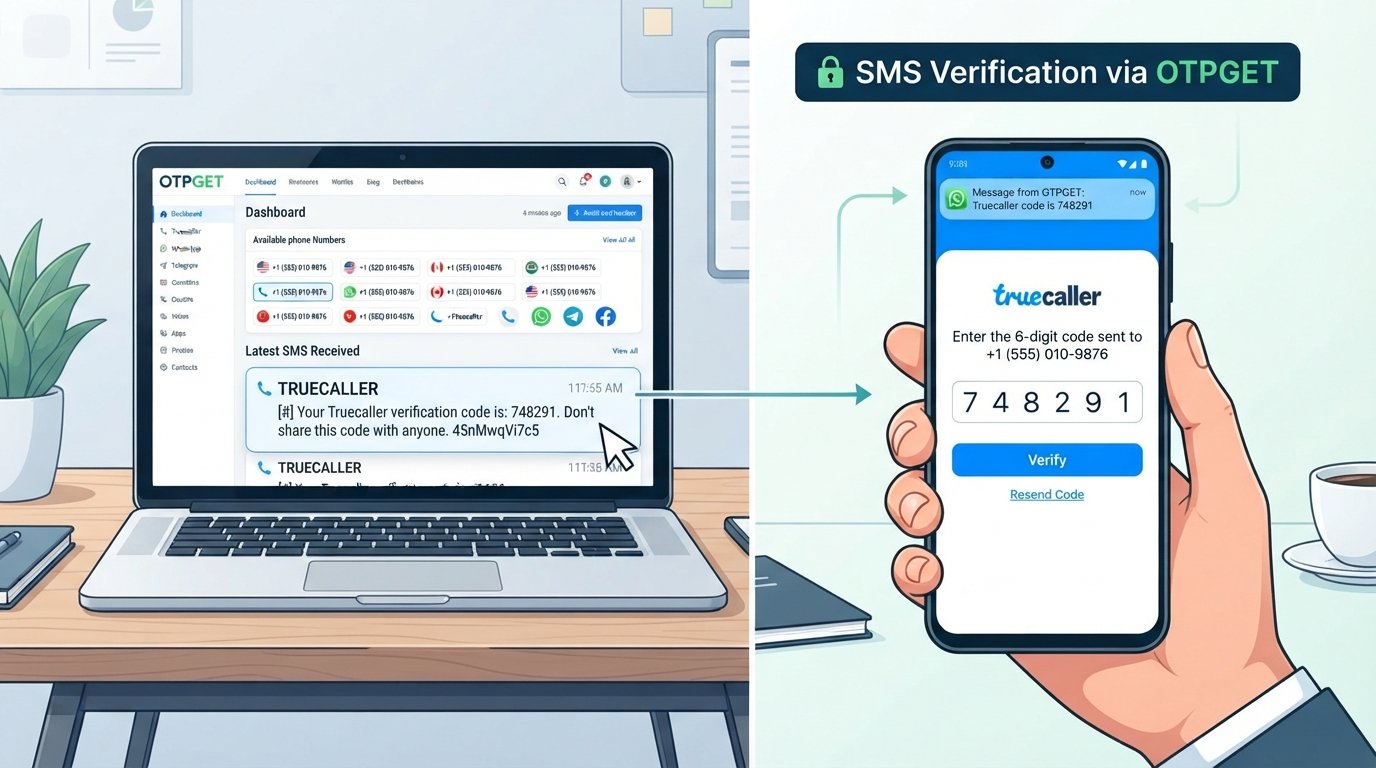
How Does SMS OTP Verification Work?
The basic SMS verification process is straightforward:
- Enter a phone number. The user provides a number during the service's verification process.
- The service sends an SMS. A verification message is sent to the submitted number.
- The SMS contains a code. This may be a short numerical verification code.
- Enter the code. The user enters the received OTP into the relevant verification screen.
- The service verifies it. If the code is valid and has not expired, the service completes the verification step.
This is why having access to the selected number is essential. Without access to the incoming SMS, the verification process cannot normally be completed.
What Is a Temporary or Virtual Phone Number?
A temporary phone number is a number intended for limited or specific online communication purposes. A virtual phone number is a number that can receive communications without necessarily being tied to a traditional physical SIM card in the same way as a personal mobile number.
An SMS receiving number is one type of virtual number that can be used to receive messages online where the relevant service permits it.
These numbers can have legitimate uses, including:
- Separating online registrations from a personal number
- Reducing unnecessary exposure of a personal mobile number
- Testing SMS-based workflows
- Managing verification messages for appropriate online services
- Keeping certain online activities separate from everyday personal communications
However, not every website or application accepts temporary or virtual numbers. Acceptance is determined by the individual service.
Receive SMS Verification Codes With OTPGET
For people looking for an OTP receiving service, OTPGET provides a practical concept to consider: using an online SMS receiving solution when a separate number is appropriate for legitimate verification.
The main appeal is convenience. Instead of relying on a personal mobile number for every online verification request, users can consider a dedicated SMS receiving option when the relevant service permits it.
OTPGET can be particularly relevant when the goal is to keep verification-related communication separate from a personal phone number. It also fits situations where accessing an incoming SMS online is more convenient than managing another physical SIM or mobile device.
The important distinction is that OTPGET should be viewed as an SMS receiving solution, not as a way to bypass authentication. The verification code still comes from the service being verified, and users remain responsible for complying with that service's requirements.
For anyone searching for a Truecaller SMS verification solution, the same principle applies: the number must be capable of receiving the verification SMS, and the third-party platform ultimately decides whether that type of number is accepted.
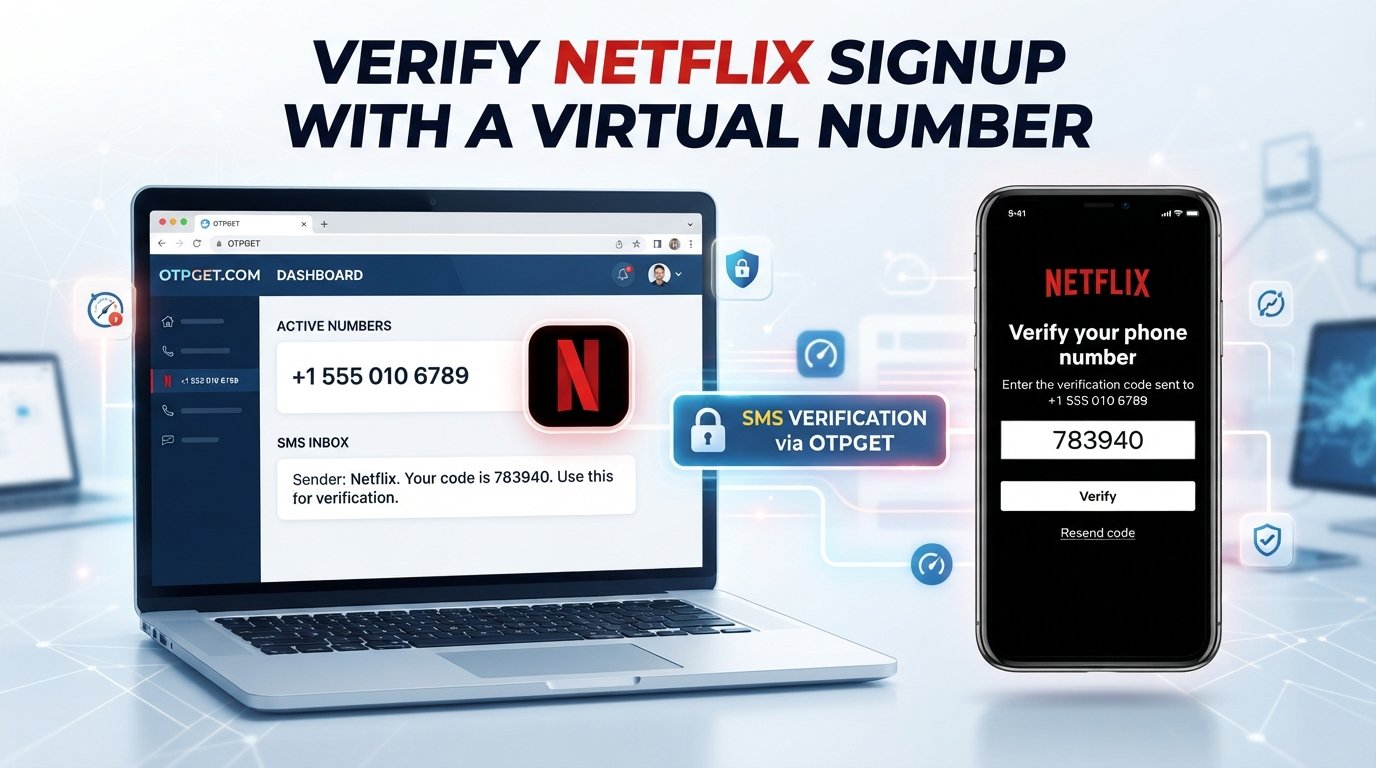
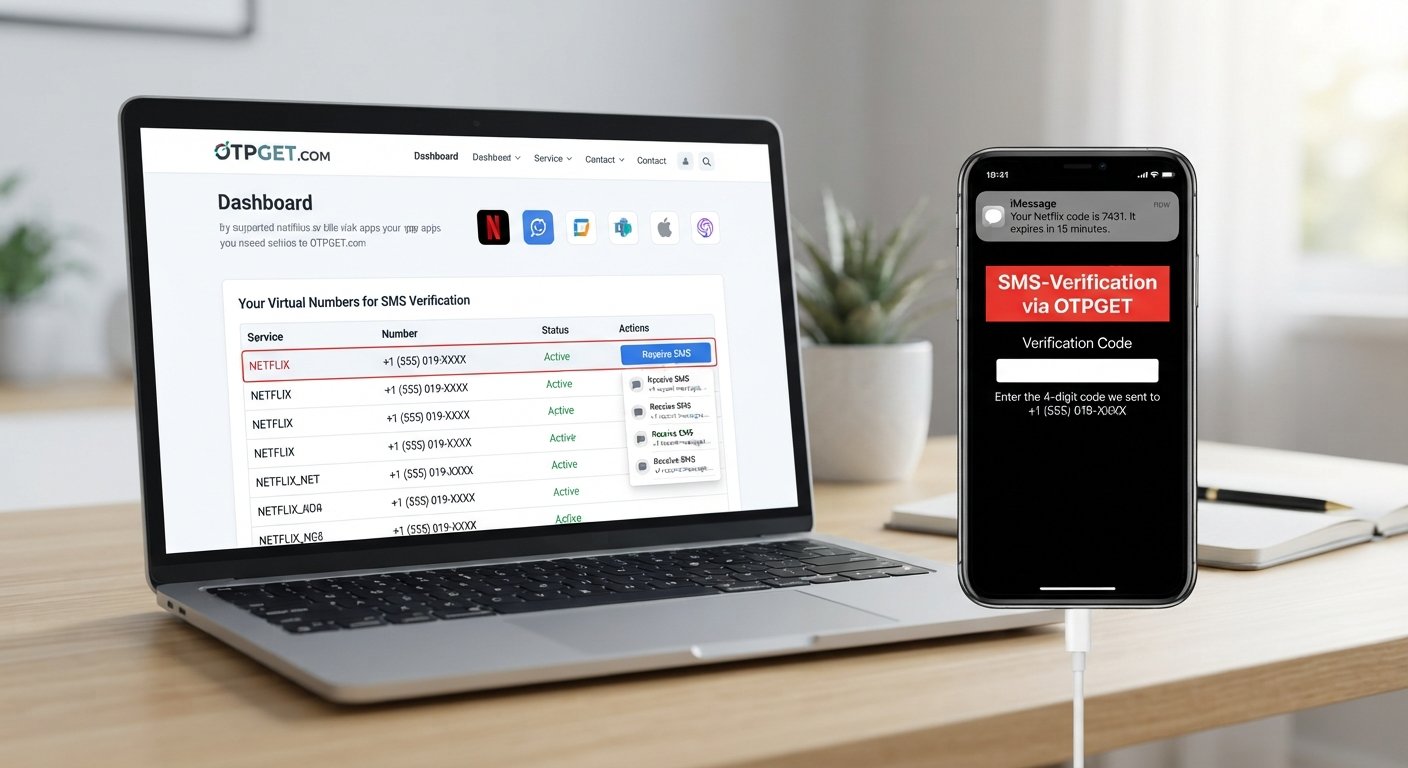
How to Use OTPGET for SMS Verification
The general workflow for using an SMS receiving service such as OTPGET is simple:
- Visit OTPGET. Start by accessing the service and reviewing the available SMS receiving options.
- Choose an appropriate number or service. Select an option that fits the legitimate verification task you need to complete.
- Enter the number where verification is requested. Use the provided number on the relevant service's verification screen, provided its terms allow that type of number.
- Wait for the verification SMS. The service sends the SMS code to the selected number.
- View the received message. Access the incoming SMS through the applicable receiving service.
- Enter the OTP. Use the received verification code on the original service's verification page.
Always follow the terms, verification requirements, and acceptable-use rules of the service you are attempting to verify.
Benefits of Using an SMS Receiving Service
An SMS receiving service can offer several practical advantages depending on the user's situation.
Privacy Considerations
Using a separate number can reduce the need to provide a personal mobile number to every online service. This can be useful when privacy and separation are priorities.
Convenience
An online SMS receiving workflow can be easier than carrying another physical phone or managing an additional SIM solely for verification messages.
Separation From Personal Activity
A dedicated verification number can help separate online registrations from personal calls, messages, and everyday mobile communication.
Testing and Development
Developers and businesses may need to test SMS-based workflows in legitimate environments. A suitable receiving number can make testing more manageable where the service and applicable rules permit it.
Centralized Message Access
When a service provides online access to received SMS messages, verification-related communication can be handled separately from a personal messaging inbox.
These benefits do not mean every virtual number will work with every platform. Service compatibility remains an important consideration.
What to Look for in an OTP Receiving Service
Choosing an OTP receiving service should involve more than simply finding a number that looks convenient. Consider the following checklist:
- Reliability: Look for a service with a clear and understandable SMS receiving process.
- Ease of use: The workflow should be simple enough to select a number and locate incoming messages without unnecessary complexity.
- Number availability: Make sure suitable numbers are available for the verification scenario you have in mind.
- SMS delivery: Consider how incoming verification messages are displayed and how quickly you can access them.
- Privacy: Review what information the service collects and how received messages are handled.
- Supported services: Remember that individual websites and applications decide whether virtual or temporary numbers are accepted.
- Pricing clarity: If the service charges for access, understand the applicable costs before proceeding.
- Terms of use: Read the provider's terms and use the service only for legitimate activities.
OTPGET can be considered within this evaluation process when your requirement is to receive an SMS verification code through an online number.
Common Problems When Receiving OTP Codes
Even when the process looks simple, an OTP may not arrive immediately. Several issues can cause problems.
SMS delays: Network or service-side delays can prevent a message from appearing immediately.
Incorrect number format: Entering the number incorrectly can send the code somewhere else or prevent delivery.
Expired codes: OTPs are usually intended to be used within a limited period. An expired code may require a new verification request.
Too many attempts: Repeatedly requesting codes can trigger temporary restrictions on some platforms.
Service-specific restrictions: Some services may restrict virtual, temporary, or previously used numbers.
Number already associated with an account: A number may not be suitable for a new registration if the platform has already linked it to another account.
If an OTP does not arrive, verify the number, wait briefly, check whether a new code can be requested, and review the platform's verification instructions.
Truecaller OTP Number vs. Traditional Mobile Number
The difference is mainly about how the number is obtained and managed rather than the basic function of receiving an SMS.
| Feature | Traditional Mobile Number | SMS Receiving/Virtual Number |
|---|---|---|
| Personal number exposure | May expose your everyday number | Can provide separation from a personal number |
| Convenience | Familiar and straightforward | Can be convenient for online-only verification |
| Privacy considerations | Personal number is directly involved | May reduce use of a personal number |
| SMS verification use | Commonly supported, subject to service rules | Acceptance depends on the individual service |
| Separation from personal phone | Limited | Can provide greater separation |
Neither option should be assumed to work universally. The relevant service determines which types of numbers it accepts.
Is Using an OTP Receiving Number Safe?
An OTP receiving number can be useful, but users should understand the privacy and security considerations before using one.
First, never share an OTP with another person. A verification code is intended to confirm a specific verification request and should be treated as sensitive information.
Second, use an SMS receiving service only for legitimate purposes. An OTP should not be used to gain unauthorized access to an account or circumvent a platform's security controls.
Third, review the provider's privacy policy and terms before using a number. Temporary and virtual numbers can have different privacy characteristics from a personal mobile number.
Finally, remember that no online service should automatically be considered completely secure. Users should make decisions based on the provider's published information, their own privacy requirements, and the rules of the service being verified.
Why Choose OTPGET for Receiving SMS Codes?
If your requirement is straightforward access to an online SMS receiving solution, OTPGET can be a practical option to explore.
Its relevance comes from the core problem many users face: they need to receive a verification SMS but may prefer not to use their personal number for every online interaction.
OTPGET fits this use case by focusing on the SMS receiving workflow. Instead of treating verification as a complicated technical process, users can approach it as a simple sequence: choose an appropriate number, use it for a permitted verification request, receive the SMS, and enter the code.
The best use case is one where the service you are verifying permits the selected type of number and the activity complies with its terms.
If you are looking for a phone number for verification, a temporary number for OTP, or a way to receive SMS online, exploring OTPGET can help you determine whether its available solution fits your specific requirement.
Frequently Asked Questions
What is a Truecaller OTP number?
A Truecaller OTP number is generally a phone number used to receive the SMS verification code required during phone-number verification. There is no universal secret or guaranteed Truecaller OTP number.
How can I receive a Truecaller verification code?
Enter a phone number accepted by the service, request verification, and wait for the SMS containing the code. You can use an appropriate virtual or SMS receiving number only if the service permits it.
Can I receive an SMS verification code online?
Yes, online SMS receiving services can provide access to incoming verification messages through a virtual or temporary number. Acceptance depends on the service sending the SMS.
What is a temporary phone number?
A temporary phone number is a number intended for limited or specific communication purposes. It can be useful for certain online activities where a separate number is appropriate and permitted.
What is OTPGET?
OTPGET is an SMS receiving solution relevant to users who need access to verification messages through an online phone-number service. Users should review the available options and applicable terms before using it.
Can every service accept a virtual or temporary number?
No. Some websites and applications may restrict virtual, temporary, or previously used numbers. The individual service determines its verification requirements and accepted number types.
What should I do if my OTP does not arrive?
Check that the number was entered correctly, allow time for SMS delivery, avoid repeatedly requesting codes, and check whether the service has specific restrictions. If necessary, request a new code according to the platform's instructions.
Final Thoughts
OTP verification is a common way for online services to confirm access to a phone number. While the process itself is simple, receiving an SMS code can sometimes be inconvenient when users prefer to keep personal and online activity separate.
Temporary and virtual numbers can provide another option for legitimate SMS verification, privacy-conscious registrations, testing, and other permitted use cases. However, compatibility varies by platform, so there is no universal number that guarantees successful verification.
For users specifically searching for a Truecaller OTP Number, the practical approach is to understand how SMS verification works and choose an appropriate receiving method rather than looking for a special or guaranteed code.
If you need a convenient way to receive verification SMS online, OTPGET is worth exploring as a potential SMS receiving solution. Review the available options, consider your privacy requirements, and make sure your intended use follows the rules of the service you are verifying.