UK Number for Verification: A Practical Guide for Online SMS
UK Number for Verification: A Practical Guide
Phone verification has become a routine part of using online services. Whether you are testing an application, setting up a business workflow, or protecting your personal contact information, you may eventually need a UK number for verification.
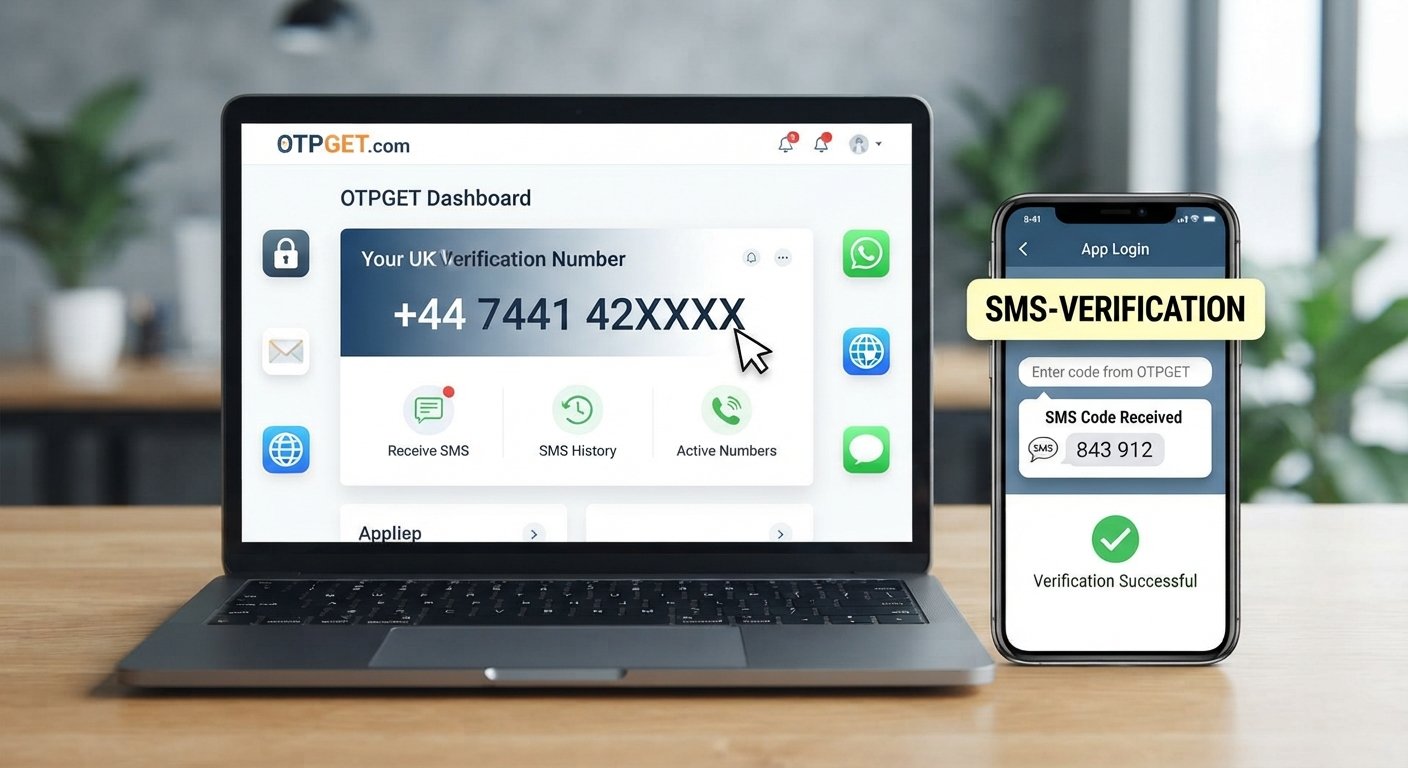
Most verification systems work through SMS. A service sends a one-time password (OTP) or verification code to a phone number, and the user enters that code to confirm access or ownership.
The challenge is finding a number that fits the intended purpose while also considering privacy, SMS availability, and the target platform's rules. A virtual UK number can sometimes be a convenient alternative to using a personal mobile number.
For users looking for a practical way to obtain a UK number for SMS or OTP verification, OTPGET can be an option worth considering. The important point is to understand how these numbers work, where they can be useful, and why acceptance can vary between platforms.
What Is a UK Number for Verification?
A UK number for verification is a phone number that can be used to receive an SMS containing a verification code from an online service.
The basic process is straightforward:
- A website or app asks for a phone number.
- You provide an eligible UK number.
- The service sends an SMS containing an OTP.
- The SMS is received by the number if SMS delivery is supported.
- You enter the code into the original service.
- The service confirms the number if its verification requirements are satisfied.
An OTP, or one-time password, is a temporary code designed for a specific verification attempt. It may be used to confirm a phone number, support account security, or authorize a particular action.
A traditional mobile number is normally connected to a physical SIM or mobile account. A UK virtual number, by contrast, is managed through an online communications service rather than necessarily being tied to a physical SIM in your phone.
That difference matters because not every service treats physical and virtual numbers in the same way.
Why Do People Need a UK Number for Verification?
There are several legitimate reasons someone may need a UK phone number for verification.
Testing applications and SMS systems
Developers and QA teams may need numbers for testing registration flows, OTP delivery, SMS notifications, and other phone-based features.
Protecting personal contact information
Some users prefer not to provide their everyday personal mobile number to every online service. Where permitted, a separate verification number can provide additional separation between personal communication and online accounts.
Business workflows
A business may need a dedicated number for certain online services, internal processes, or account-related activities rather than relying on an employee's personal number.
Development and quality assurance
Testing different verification scenarios can require access to suitable phone numbers without repeatedly using personal contact details.
Legitimate account verification
Some online services require a UK contact number as part of their normal registration or security process. If the service permits the chosen number type, a UK number can satisfy that requirement.
The key is to use verification numbers for legitimate purposes and follow the terms of the service involved. A verification number should not be used to circumvent security controls, create deceptive identities, or violate platform restrictions.
How UK SMS Verification Works
UK SMS verification is generally based on a simple exchange between the platform and the phone number.
Step 1: A service requests a number.
The website or application displays a phone-number field and may specify which countries or number types it accepts.
Step 2: You provide an eligible UK number.
The number is entered in the format requested by the platform.
Step 3: The platform sends an OTP.
An automated SMS containing a verification code is sent to the number.
Step 4: The verification service receives the message.
If the number supports the required SMS traffic and the platform permits that number type, the message can be received.
Step 5: You enter the code.
The OTP is entered into the original website or application.
Step 6: Verification is completed.
The platform checks the code and its own verification conditions before confirming the number.
This process sounds universal, but it is not. Some platforms restrict temporary numbers, virtual numbers, reused numbers, or numbers associated with particular services. SMS delivery can also depend on routing, carrier arrangements, and platform policies.
UK Mobile Number vs. UK Virtual Number
The right choice depends on the intended use. Neither type is universally suitable for every verification requirement.
| Factor | Physical UK Mobile Number | UK Virtual Number |
|---|---|---|
| Typical purpose | Personal or business communication | Online services, business workflows, or specific verification needs |
| SMS availability | Generally designed for mobile SMS | Depends on the provider and number |
| Privacy | May expose a personal number | Can help separate personal and online use |
| Convenience | Requires access to a mobile/SIM | Can be managed through an online service |
| Verification limitations | Usually familiar to platforms, but policies vary | Some platforms may restrict or reject virtual numbers |
| Reusability | Depends on the mobile account | Depends on the service and number terms |
A UK virtual phone number can be useful when convenience and separation from a personal number are important. However, users should always check whether the target service accepts virtual numbers before relying on one for verification.
Why OTPGET Can Be a Practical Option
For someone specifically searching for a UK number for verification, OTPGET can provide a practical approach to obtaining a number for supported SMS or OTP verification needs.
The appeal is straightforward: instead of relying on a personal mobile number for every online verification request, a user can consider a dedicated verification number where appropriate.
Potentially useful advantages include:
- Convenient access to a number intended for verification purposes
- Less need to expose a personal phone number
- A straightforward approach to SMS-based verification
- Usefulness for legitimate testing and online verification workflows
- A practical alternative for users who specifically need a UK number
However, the suitability of any verification number depends on the service being verified. OTPGET should not be viewed as a guarantee that every website or application will accept every available number.
Before choosing a number, consider the target platform's requirements, whether it accepts virtual or temporary numbers, and whether SMS reception is supported for the intended use.
How to Use OTPGET for UK SMS Verification
Using a service such as OTPGET can be approached as a simple verification workflow.
Step 1: Choose a UK Number
Select an available UK number that is suitable for your intended, legitimate verification purpose. Consider whether the target service requires a particular number type.
Step 2: Enter the Number
Enter the selected UK number into the phone-verification field on the relevant website or application. Follow the format requested by that service.
Step 3: Request the OTP
Submit the verification request. If the platform supports the number, it should send an SMS containing a verification code.
Step 4: Check for the SMS
Check the available SMS messages for the verification code. Delivery can depend on the platform, number type, routing, and other technical factors.
Step 5: Enter the Verification Code
Enter the received OTP into the original service. Avoid sharing the code with anyone else.
Step 6: Complete Verification
The platform will determine whether the code is valid and whether all other verification requirements have been satisfied.
If the number is not accepted or the SMS does not arrive, that does not necessarily mean the verification service is malfunctioning. The platform may restrict the number type, the request may have expired, or delivery may be temporarily unavailable.
What to Check Before Choosing a UK Verification Number
Choosing a number based only on its country code can create unnecessary problems. Consider these factors first:
- SMS support: Confirm that the number can receive the type of SMS you need.
- Number availability: Numbers can become unavailable, so check what is currently offered.
- Intended use: A number suitable for testing may not be suitable for long-term account recovery.
- Privacy: Consider how much personal information you want to expose.
- Platform compatibility: Check whether the target service permits virtual or temporary numbers.
- Number type: Understand whether you are using a physical mobile number, virtual number, or temporary number.
- Reusability: If you need future access, determine whether the number remains available for that purpose.
- Terms of service: Make sure your intended use complies with the rules of the platform and number provider.
- Account security: Do not assume that using a separate number automatically makes an account secure.
These considerations are especially important when a number is being used for an account that you expect to access repeatedly.
Common Reasons a Verification Code May Not Arrive
If a UK verification code does not appear, check the basics before trying again repeatedly.
Possible causes include:
- The phone number was entered incorrectly.
- The SMS is delayed.
- The verification request has expired.
- The platform does not support the selected number type.
- The number is already associated with another account.
- The platform restricts certain virtual or temporary numbers.
- A temporary routing or service issue is affecting delivery.
- Carrier or network limitations are affecting SMS delivery.
Useful troubleshooting steps include confirming the number, checking the number format, waiting briefly for delayed delivery, and reviewing the platform's verification requirements.
If the service specifically states that virtual or temporary numbers are unsupported, using a different number type may be necessary rather than repeatedly requesting new OTPs.
Is Using a UK Number for Verification Safe?
A UK number for verification can be useful for privacy and account-management purposes, but the number itself does not automatically make an account private, anonymous, or secure.
Good security practices still matter.
Protect your OTP. A one-time password should be treated as sensitive information. Never give a verification code to another person simply because they claim to represent a website, company, or support team.
Use legitimate services. Choose established verification solutions and understand how the number is intended to be used.
Review platform rules. Some websites have restrictions around virtual, temporary, or shared numbers. Following those rules helps prevent unexpected verification problems.
Think about account recovery. If an account is important and you need long-term access, consider whether a temporary number is appropriate for ongoing recovery or security requirements.
Protect personal information. A separate number can reduce unnecessary exposure of your personal mobile number, but it should be considered one part of a broader privacy strategy.
UK Number for Verification: Common Questions
Can I use a UK number for SMS verification?
Yes, a UK number can be used for SMS verification when the target service accepts the number and its particular number type. Platform requirements vary.
What is a UK virtual number?
A UK virtual number is a UK telephone number managed through an online communications service rather than necessarily being connected to a physical SIM in your handset.
Can a UK virtual number receive OTP codes?
Some UK virtual numbers can receive SMS messages, including OTPs, when SMS reception is supported. Whether a particular platform accepts that number is a separate question.
Why might a verification SMS fail to arrive?
An incorrect number, delivery delay, unsupported number type, platform restriction, expired request, or temporary routing issue can prevent a verification code from arriving.
Is OTPGET suitable for UK SMS verification?
OTPGET can be a practical option for users looking for a UK number for verification, particularly when they need a separate number for a legitimate SMS or OTP workflow. Compatibility still depends on the target platform and its verification policies.
Can every website accept a UK virtual number?
No. Websites and applications can apply their own verification rules. Some may accept virtual numbers, while others may restrict temporary, shared, or virtual numbers.
Should I use my personal phone number for online verification?
That depends on the service and your privacy requirements. For some accounts, a personal number may be appropriate. For other legitimate uses, a separate UK number can help keep personal and online communication separate.
Final Thoughts
A UK number for verification is primarily a practical tool for receiving SMS-based OTPs and confirming a phone number during legitimate online workflows. Understanding the difference between physical mobile numbers, UK virtual numbers, and temporary numbers can help you choose an option that fits your needs.
The most important factors are SMS availability, privacy, number type, platform compatibility, and the terms governing the service you are using. No verification number should be assumed to work with every website or application.
For users who need a practical UK number for SMS or OTP verification, OTPGET can be a convenient option to consider. Use it with realistic expectations, check the target platform's requirements, and keep verification codes private.
When the goal is legitimate online verification, choosing the right number is less about finding a universal solution and more about matching the number type to the specific service and purpose.