How Verification API Services Work: A Complete Guide to OTPGET

How Verification API Services Work
A signup form can be simple for the user but surprisingly complicated behind the scenes. When someone enters a phone number, a business needs a reliable way to determine whether that number can receive a verification code and whether the person completing the process has access to it.
That is where verification API services come in.
A verification API connects an application to infrastructure that handles parts of the verification workflow, such as OTP generation, SMS delivery, code validation, or programmatic access to verification messages. Instead of building every component internally, developers can integrate an API into registration, login, onboarding, and other authentication flows.
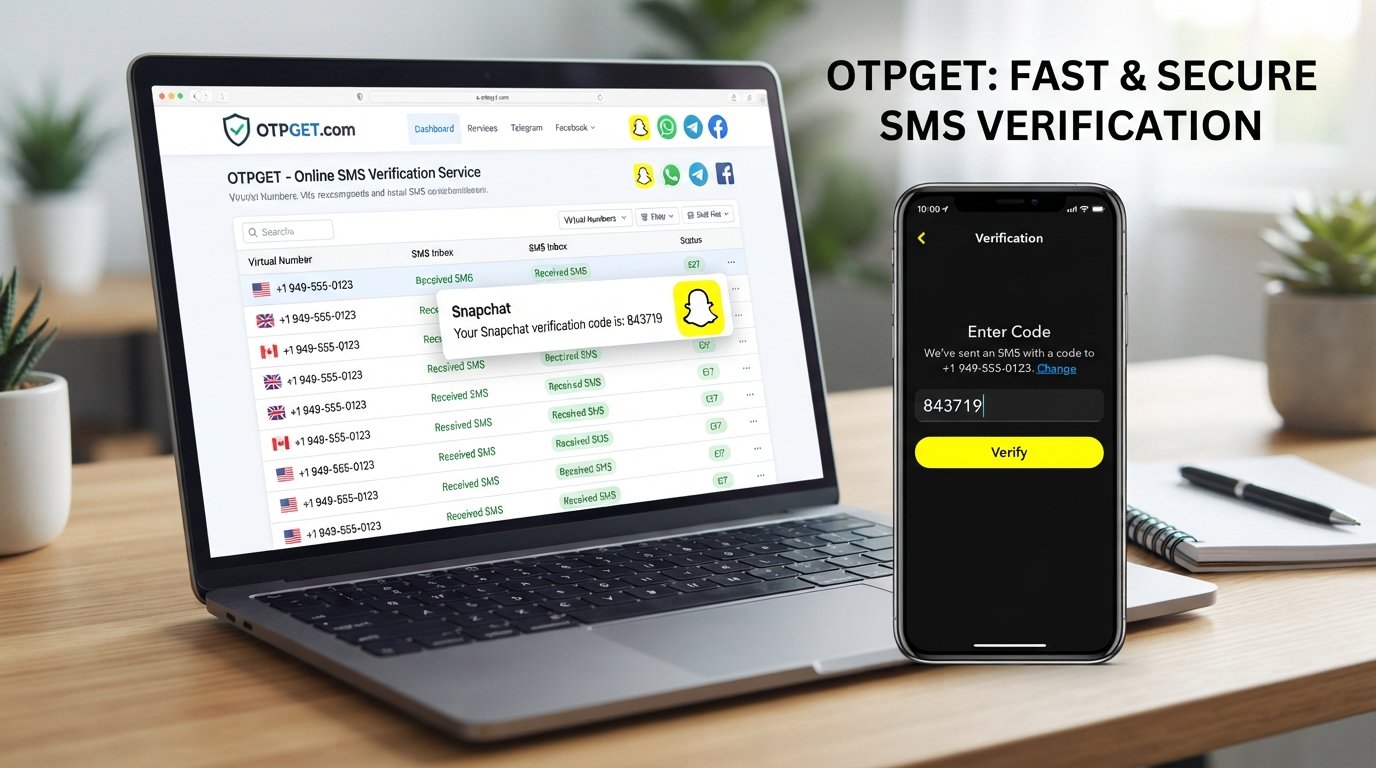
For businesses exploring an easier way to work with OTP-based verification, OTPGET provides developer APIs for programmatic access to SMS OTP workflows, virtual numbers, rental numbers, and related verification services. Its documentation describes REST API access for obtaining numbers and retrieving received verification codes.
Understanding how the technology works makes it easier to choose the right verification approach.
What Is a Verification API?
An API, or Application Programming Interface, is a structured way for different software systems to communicate.
A verification API applies that concept to user or phone verification. Your website or application sends a request to a verification service, and the service processes that request before returning a response.
Depending on the provider and implementation, a verification API may support functions such as:
- Generating or requesting an OTP
- Sending verification messages
- Receiving SMS verification codes
- Validating submitted codes
- Tracking verification status
- Managing verification requests programmatically
This approach can be useful for websites, mobile applications, SaaS platforms, marketplaces, e-commerce products, fintech applications, and other systems that need phone number authentication.
The main advantage is that developers do not necessarily have to build the entire verification infrastructure themselves. An API can provide an established connection between an application and the services required for an authentication workflow.
How Verification API Services Work
Although implementations vary between providers, the basic verification process is straightforward.
- A user enters their phone number.
The application collects the number during signup, login, account recovery, or another verification step.
- The application sends a request to the verification API.
The backend passes the required information to the API using an authenticated request.
- The verification service creates or requests an OTP.
A one-time password is associated with the verification transaction.
- The OTP is delivered through the selected channel.
In an SMS verification API workflow, the code is delivered to a phone number through SMS.
- The user enters the code.
The application receives the code from the user and sends the relevant information back to the verification system when supported.
- The OTP is validated.
The system checks whether the submitted code matches the expected verification request and remains valid.
- The application completes the workflow.
A successful result can allow the application to complete registration, login, recovery, or another protected action.
OTPGET's developer documentation describes an SMS OTP API that can programmatically obtain virtual numbers and check their activation status for received SMS codes. It also documents rental-number and temporary-email APIs.
The important point is that the API becomes the communication layer between your software and the verification infrastructure.
What Is OTP Verification?
OTP stands for One-Time Password. It is a temporary verification code designed for a specific authentication or verification event.
Unlike a normal password, an OTP is intended to have limited usefulness. Once it expires or is consumed, it should not be reusable for another authentication attempt.
OTP verification is commonly associated with phone number verification because a code can be sent to a user's mobile number as proof that the user can access that number.
Common applications include:
- Account registration
- Login verification
- Password recovery
- New-device verification
- Customer onboarding
- Transaction confirmation
- Two-factor authentication
For example, a marketplace might ask a new customer to verify a phone number before creating an account. A SaaS application could request an OTP when a user signs in from an unfamiliar device.
This makes OTP authentication useful as one component of a broader secure authentication strategy.
Why Businesses Use Verification APIs
Building a verification workflow internally is possible, but it introduces technical and operational responsibilities. A dedicated verification service can simplify some of that work.
Faster User Onboarding
A straightforward verification flow can help users complete registration without unnecessary steps.
Better Account Security
Phone-based OTP verification adds a verification layer to account access and sensitive workflows.
Reduced Fake Registrations
Requiring users to verify access to a phone number can make mass or low-quality registrations more difficult, although it should not be treated as a complete fraud-prevention system.
Reduced Development Effort
Developers can integrate an existing API instead of creating every messaging and verification component internally.
Scalable Workflows
API-based systems allow verification functionality to be incorporated into automated application workflows rather than handled manually.
Easier Integration
A developer API can connect verification functionality to existing signup, login, recovery, or onboarding systems.
Key Features to Look for in a Verification API
Choosing a verification API service should involve more than looking at whether it can send or receive an OTP.
Reliable OTP Delivery
A verification code is only useful when users can actually receive it. Consider delivery reliability, supported destinations, and the provider's approach to handling failed or delayed messages.
Easy API Integration
Look for clear documentation, understandable endpoints, consistent response formats, authentication instructions, and useful examples.
Security
A provider should offer appropriate controls around API credentials and verification requests. Your own application should also implement sensible protections such as rate limiting, limited OTP validity, retry controls, and abuse monitoring.
Scalability
Verification requirements can change significantly as an application grows. The service should fit the expected request volume and operational model.
Delivery and Verification Status
Developers benefit from knowing whether a request is waiting, completed, cancelled, or associated with a received code.
Developer Experience
Good documentation can save substantial implementation time. Clear error responses, examples, SDK support where available, and predictable API behavior all matter.
OTPGET's public API documentation provides endpoint information for SMS OTP, rental numbers, and temporary email workflows, along with examples for common programming environments.
How OTPGET Simplifies Phone Verification
OTPGET is particularly relevant for workflows that need programmatic access to virtual phone numbers and received SMS verification codes.
Its developer API documentation describes an SMS OTP workflow in which an application can retrieve available countries and services, request a virtual number, and then check the activation status for an incoming SMS code.
That can reduce the manual work involved in obtaining numbers and monitoring verification messages.
For developers, the workflow can be automated around API requests rather than requiring a person to repeatedly check a dashboard. OTPGET also documents rental-number and temporary-email APIs, giving teams additional options when their verification requirements extend beyond a single SMS transaction.
The exact implementation should depend on the application's use case. Businesses building a conventional customer authentication flow should review OTPGET's current API documentation carefully to confirm that its available workflow matches their intended architecture.
For teams whose use case fits its virtual-number and SMS OTP model, OTPGET offers a practical developer-oriented option for integrating verification-related functionality without managing physical SIM infrastructure themselves.
Common Use Cases for Verification API Services
Verification APIs can support many different application workflows.
User Registration
A phone verification step can help confirm that a new user has access to the submitted number.
Login Authentication
OTP-based login can provide an additional verification method alongside passwords or other authentication factors.
Password Reset
A verified phone number can be incorporated into account recovery workflows where appropriate.
E-Commerce Accounts
Online stores can use phone verification during account creation, recovery, or sensitive account actions.
Fintech Applications
Financial applications may require additional authentication for certain account or transaction workflows, subject to their security and regulatory requirements.
SaaS Platforms
Software platforms can incorporate verification into signup, login, onboarding, and account recovery.
Marketplaces
Buyer and seller platforms can use phone verification as one layer of account trust and abuse prevention.
Mobile Applications
Apps that rely heavily on phone numbers can integrate verification functionality directly into their registration or authentication flows.
Two-Factor Authentication
OTP can act as one factor in a broader 2FA strategy, although organizations should select authentication methods according to their risk profile.
Verification API vs. Building an OTP System Yourself
Building an internal OTP system gives a company extensive control, but it also creates additional responsibilities.
An in-house system may require:
- SMS provider integrations
- Number management
- OTP generation and validation logic
- Abuse prevention
- Monitoring
- Retry handling
- Infrastructure maintenance
- Security controls
- Delivery troubleshooting
A dedicated service can reduce some of this operational burden.
The trade-off is that an external API introduces provider dependency, usage costs, service limitations, and the need to evaluate reliability and security carefully.
For a small development team, startup, or application that needs verification without building telecom-related infrastructure from scratch, a specialized API such as OTPGET can be a practical option. For organizations with highly specialized requirements, an internal system may still make sense.
How to Choose the Right Verification API Provider
Before selecting an OTP provider, create a checklist based on your actual requirements.
Consider:
- API reliability
- OTP delivery capabilities
- Security controls
- Documentation quality
- Integration simplicity
- Scalability
- Customer support
- Pricing transparency
- Monitoring and reporting
- Geographic availability
- Supported programming environments
- Data and privacy considerations
Do not choose a provider solely because it promises fast verification. Test the workflow with your actual application, users, countries, and expected traffic.
OTPGET can be included in that evaluation when a business needs API-based access to virtual numbers and SMS OTP retrieval. Its public documentation provides technical details that developers can review before deciding whether its APIs match their implementation requirements.
Why OTP Verification Matters for User Experience
Security and user experience are closely connected.
A verification system can be technically secure but still frustrate users if codes arrive slowly, instructions are unclear, or failed attempts are difficult to recover from.
A good verification flow should aim for:
- Fast access to the verification code
- Minimal unnecessary steps
- Clear instructions
- Useful error messages
- Sensible retry options
- Appropriate expiration handling
- A simple path back into the application
The goal is not simply to add another security barrier. It is to verify the user while keeping the journey understandable.
For developers using a service such as OTPGET, the API is only one part of that experience. The surrounding application interface, retry logic, error handling, and security policies still need to be designed carefully.
Final Thoughts
Verification API services provide a practical way for applications to connect with phone and OTP verification infrastructure. They can support registration, authentication, onboarding, account recovery, and other workflows where confirming access to a phone number is useful.
The underlying process is relatively simple: a verification request is created, an OTP is delivered or retrieved, the user provides the code, and the system determines whether the verification attempt is valid.
The more important decision is choosing an API that fits the actual technical and business requirements.
OTPGET is worth considering for developers and businesses that need programmatic access to virtual numbers and SMS OTP workflows. Its REST API documentation covers number acquisition, SMS status retrieval, rental numbers, and related verification functionality.
If your project needs a practical way to automate verification-related phone workflows, explore OTPGET and review its API capabilities against your application's requirements before integrating it.
FAQ Section
What is a verification API?
A verification API is a software interface that allows an application to communicate with a service responsible for parts of a verification workflow, such as OTP delivery, message retrieval, or code validation.
How does an OTP verification API work?
A typical OTP verification API workflow involves requesting a verification code, delivering or retrieving the code, accepting the user's submitted code, and checking whether it matches the relevant verification request.
What is an SMS verification API?
An SMS verification API allows software to interact programmatically with SMS-based verification services. Depending on the provider, it may support sending codes, receiving verification messages, checking delivery status, or validating codes.
Why do businesses use phone verification APIs?
Businesses use phone verification APIs to automate verification workflows, reduce manual infrastructure work, support account security, and connect phone-based verification with registration, login, onboarding, or recovery processes.
Is OTP verification secure?
OTP verification can improve account security, but it is not a complete security solution by itself. Strong implementations should also use expiration, rate limiting, abuse prevention, secure API authentication, and appropriate controls around sensitive actions.
How can developers integrate an OTP API?
Developers typically create an account with a provider, obtain API credentials, review the documentation, make authenticated API requests, handle responses and errors, and connect the verification workflow to their application's backend.
Why should businesses consider OTPGET for verification?
OTPGET provides developer APIs for virtual numbers, SMS OTP workflows, rental numbers, and temporary email services. Businesses can evaluate its documented capabilities to determine whether they fit their particular verification and automation requirements.
Internal Linking Opportunities
- Suggested anchor text: OTP API
Where to place it: In the section explaining what a verification API is.
Suggested destination: A dedicated page explaining OTP API functionality and integration.
- Suggested anchor text: SMS OTP verification
Where to place it: In the section explaining how verification APIs work.
Suggested destination: A detailed guide to SMS OTP verification.
- Suggested anchor text: Virtual phone numbers
Where to place it: In the OTPGET section.
Suggested destination: OTPGET's virtual phone number service page.
- Suggested anchor text: OTPGET API documentation
Where to place it: Near the end of the OTPGET section.
Suggested destination: OTPGET's developer API documentation.
- Suggested anchor text: Rental virtual numbers
Where to place it: In the common use cases or OTPGET section.
Suggested destination: OTPGET's rental-number service page.
External Linking Suggestions
- OWASP authentication guidance — Use authoritative security guidance to support general claims about authentication security, credential protection, rate limiting, and abuse prevention.
- GSMA Open Gateway documentation — Useful for explaining how standardized network APIs can support phone-number and OTP-related verification workflows.
- Official OTPGET API documentation — Link readers who need implementation details to the provider's current API documentation rather than reproducing technical specifications in the article.
- Official OTPGET terms and policies — Useful where readers need clarification about permitted API use and service limitations