Vietnam Number for App Verification: Beginner Guide with OTPGET
Vietnam Number for App Verification: Beginner Guide
Signing up for an app can be straightforward until the service asks for a phone number from a specific country.
For users who need access to a Vietnamese phone number, this can create an obvious problem: what if you do not have a Vietnamese SIM card?
A Vietnam number for app verification can be useful in situations where an app or online service sends an SMS containing a one-time password (OTP) or verification code. International users, travelers, developers, QA teams, and businesses may encounter legitimate situations where a Vietnam number is required or useful.
A virtual number can provide an alternative to obtaining a physical SIM, where the target service supports it. OTPGET is one option worth considering for users looking for a convenient way to access a Vietnam number for supported SMS and OTP verification purposes.
Before choosing a solution, however, it helps to understand how Vietnam phone verification works, what virtual numbers can and cannot do, and what to check before using one.
What Is a Vietnam Number for App Verification?
A Vietnam number is a telephone number associated with Vietnam and typically follows the country's numbering format. Like other phone numbers, it can be used by services to send SMS messages, including verification codes.
App verification is the process of confirming a user's phone number during registration, login, account recovery, or another account-related action.
The process usually looks like this:
- An app asks for a phone number.
- You enter an eligible number.
- The app sends an OTP or verification code by SMS.
- You receive the message.
- You enter the code into the app.
- The service confirms the number if the code and session are valid.
There are two broad ways to access a phone number: a traditional physical SIM or a virtual/online number.
A physical SIM is tied to a mobile carrier and normally requires access to the SIM or device receiving its messages. A Vietnam virtual phone number is accessed through an online service rather than requiring you to obtain and install a physical Vietnamese SIM.
That distinction is especially relevant for people outside Vietnam who only need a number for a supported verification workflow.
Why Do Apps Ask for a Vietnam Phone Number?
Phone verification is commonly used to connect an account with a reachable telephone number. Depending on the service, it may help with registration, authentication, account recovery, or other communication workflows.
A Vietnam phone number may be relevant when a service specifically requires a Vietnamese number.
Common legitimate use cases include:
- Account registration: Some services request phone verification during sign-up.
- SMS-based authentication: An app may send a one-time verification code by SMS.
- Regional services: Certain services may require a phone number associated with a particular market.
- Development and QA testing: Developers and testing teams may need appropriate numbers to test phone verification flows.
- Business workflows: Organizations working with Vietnamese customers or services may need access to a suitable number.
- Travel-related needs: Travelers may encounter services that request local phone verification.
A regional phone requirement does not automatically mean a service should be bypassed. Always use a number in a way that complies with the application's terms, verification requirements, and applicable rules.
How Vietnam SMS Verification Works
Vietnam SMS verification is relatively simple from the user's perspective. The important part is that the number must be supported by the service you're trying to verify.
A typical Vietnam OTP verification process follows these steps:
- Choose a suitable Vietnam number.
Select a number intended for the type of verification you need. - Enter the number.
Add it to the phone verification field in the relevant app or service. - Request verification.
The service sends an SMS containing a one-time password or verification code. - Receive the SMS.
If the number and service are compatible, the verification message can be delivered to the appropriate receiving system. - Enter the OTP.
Copy the verification code into the app. - Complete verification.
The service validates the code and determines whether the phone verification process has succeeded.
This is why people searching for a Vietnam number for OTP or a Vietnam SMS number are often looking for a straightforward way to receive an SMS verification code without obtaining a physical SIM.
However, successful verification always depends on the individual application's policies and technical handling of phone numbers.
Why Use a Vietnam Virtual Number?
A virtual number can be convenient when obtaining a physical SIM is impractical or unnecessary.
For international users, a Vietnam virtual number may eliminate the need to purchase, activate, and physically manage a Vietnamese SIM for a supported SMS verification task.
Potential advantages include:
- No physical SIM required: You can use an online number instead of obtaining a local SIM.
- International convenience: Users outside Vietnam may find an online option easier to access.
- Temporary verification needs: A virtual number can be useful for situations where a long-term personal number is not required.
- Simpler number management: Online access can make SMS-based workflows easier to manage.
- Testing applications: Developers and QA teams may find virtual numbers useful when testing supported verification scenarios.
- SMS accessibility: Where supported, the number can be used to receive verification messages.
There are limitations, too. Not every app accepts virtual numbers. Some platforms may restrict certain number types, reject previously used numbers, or apply additional verification rules.
For that reason, a virtual number should be viewed as a practical option rather than a universal replacement for a physical SIM.
OTPGET: A Simple Solution for Vietnam Number Verification
For users who need a Vietnam number for verification, OTPGET offers a practical option to explore.
The basic idea is straightforward: instead of finding and managing a physical Vietnamese SIM, users can look for a suitable Vietnam number through OTPGET for a supported verification purpose.
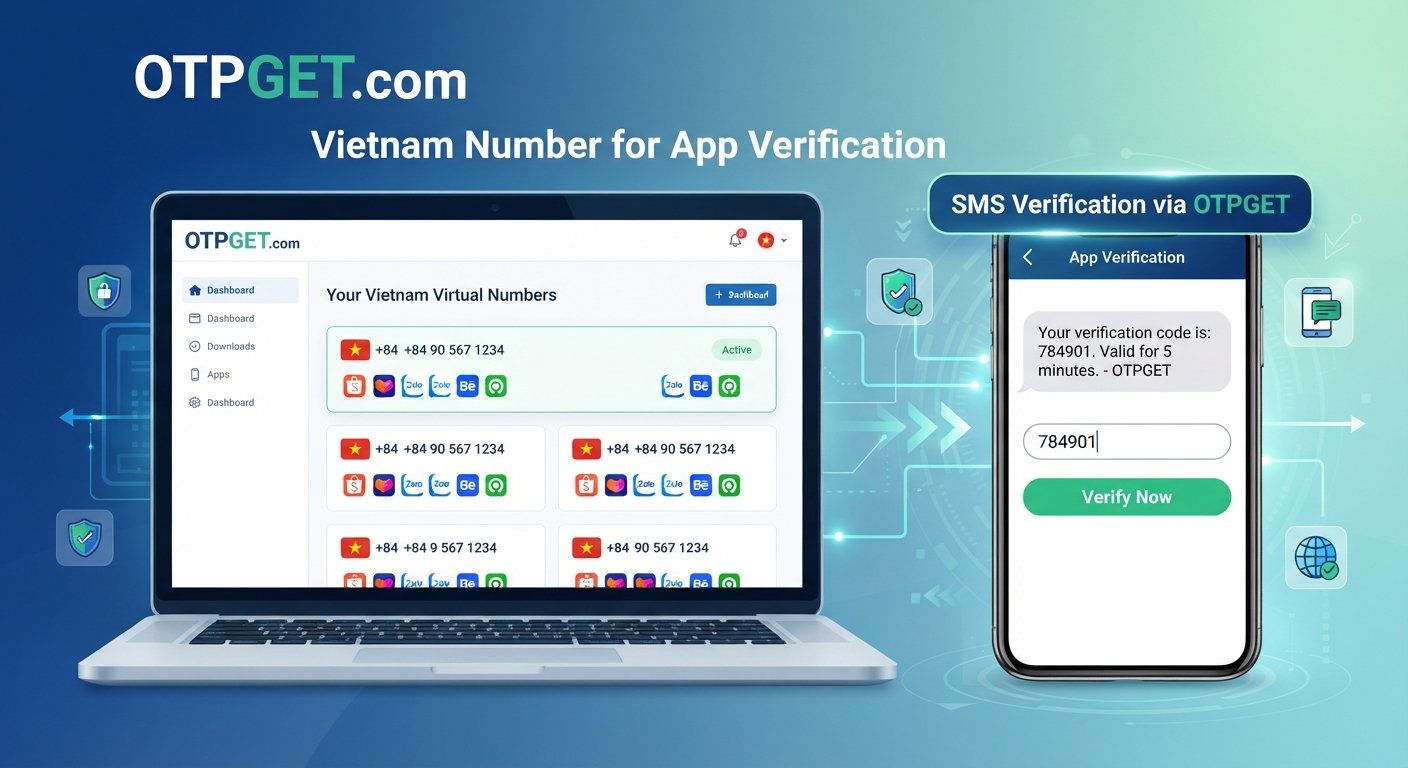
A typical workflow involves obtaining a relevant number, entering it into the service that requests phone verification, and receiving the associated OTP or SMS verification code through the available process.
This can be useful for people who need to receive OTP online but do not have convenient access to a Vietnamese mobile number.
OTPGET can be particularly relevant to:
- International users who need a Vietnam phone number for a supported verification process
- Travelers who do not have a local SIM
- Developers testing phone verification workflows
- QA teams working with SMS-based authentication
- Businesses handling legitimate regional verification tasks
- Users with a temporary need for an app verification number
The important point is compatibility. OTPGET should not be treated as a guarantee that every app or platform will accept a particular number. Before using any Vietnam number online, check the target service's phone verification requirements and terms.
How to Use OTPGET for Vietnam App Verification
If you're new to online verification numbers, the process can be easier than it first appears.
A general OTPGET workflow looks like this:
- Visit OTPGET.
Start by accessing the OTPGET service. - Choose the relevant Vietnam verification option.
Look for an available Vietnam number or verification option that matches your intended use. - Select the relevant service, if applicable.
If the available workflow asks you to identify the app or service, provide the relevant information. - Obtain the assigned number.
Use the Vietnam number provided through the applicable OTPGET process. - Enter the number in the app.
Add the number to the phone verification field in the target service. - Request the verification code.
Ask the app or service to send its SMS verification message. - Retrieve the OTP through OTPGET.
If the target service supports the number and the message is delivered, locate the verification code through the applicable OTPGET process. - Enter the OTP.
Submit the code in the app's verification field. - Finish the verification process.
Follow the target application's instructions to complete the account or phone verification step.
Exact options and workflows can vary. Always follow the instructions shown by OTPGET and the service you are verifying.
Vietnam Number vs. Physical SIM for App Verification
Both a virtual number and a physical SIM can serve legitimate purposes, but they suit different situations.
| Factor | Vietnam Virtual Number | Physical SIM |
|---|---|---|
| Setup | Online access may be more convenient | Requires obtaining a physical SIM |
| Physical SIM requirement | No physical SIM needed | Yes |
| International accessibility | Useful for users outside Vietnam where supported | May be less convenient to obtain remotely |
| Temporary use | Can suit temporary verification needs | Often more suitable when maintaining a number long term |
| SMS verification | Depends on service and number compatibility | Typically tied to the carrier and SIM |
| Number management | Managed through the relevant online service | Managed through the SIM/device and carrier |
Neither option is universally right for every situation. If you need an ongoing personal mobile number, a physical SIM may make more sense. If you need a virtual number for app verification and the target service supports it, an online option may be more convenient.
Things to Check Before Choosing a Vietnam Verification Number
A little preparation can prevent unnecessary verification problems.
Before using a Vietnam phone number for verification, consider the following:
- Does the target app accept virtual numbers? Some services restrict them.
- Is SMS verification supported? Make sure the number can be used for the specific verification method.
- Is the number suitable for the service? Number availability and compatibility can vary.
- Can the verification code be received? SMS delivery is essential to completing the process.
- Does the service have additional requirements? Some platforms may request another form of verification.
- Is the number intended for temporary or ongoing use? Choose an approach that matches your needs.
- Are you following the service's rules? Read the target app's terms and verification policies.
- What information are you sharing? Consider privacy and security before entering personal or account information.
These checks are especially important if you need the number for an important account rather than a one-time test.
Common Problems With Vietnam SMS Verification
Even when the process seems simple, SMS verification can sometimes fail.
OTP does not arrive
First, check that the number was entered correctly and that the target service actually sent the SMS. If the service provides a resend option, follow its instructions rather than repeatedly requesting codes.
The number is rejected
The application may not accept the number type or may have restrictions on virtual numbers. Check the service's requirements before trying another number.
SMS delivery is delayed
Give the system some time before requesting another code. Repeated requests can sometimes create confusion if several verification codes are generated.
The verification session expires
OTP codes are generally associated with a particular verification session. If the code has expired, restart the verification process and use the newly issued code.
The app limits verification attempts
Some services restrict repeated attempts for security reasons. Avoid repeatedly submitting numbers or codes and follow the application's instructions for retrying.
The number format is incorrect
Check whether the service expects a country code or a particular phone-number format. Enter the number exactly as requested.
These issues are not necessarily specific to OTPGET. Verification failures can originate from the target app, SMS delivery process, number compatibility, or verification policies.
Is a Vietnam Virtual Number Right for You?
A Vietnam virtual phone number may be worth considering if you need a Vietnamese number but do not have convenient access to a physical SIM.
It can be relevant to:
- International users
- Travelers
- Developers
- QA and testing teams
- Businesses managing regional workflows
- Users with temporary SMS verification needs
For a person who only needs to receive SMS verification code for a supported service, an online number may offer a convenient alternative to obtaining a physical SIM.
However, the right choice depends on the application and your intended use. If a service requires a traditional mobile number, a virtual number may not be appropriate.
Final Thoughts
A Vietnam Number for App Verification can be useful when an app or online service requires a Vietnamese phone number to send an OTP or SMS verification code.
For users without a Vietnamese SIM, a virtual number can provide a convenient alternative where the target service supports that type of number. The process is generally simple: obtain a suitable number, enter it into the application, receive the verification SMS, and submit the OTP.
OTPGET is a practical option to explore if you need a Vietnam number for supported app and SMS verification purposes. Rather than assuming every service will accept a virtual number, check the target platform's requirements first and use the number in accordance with its terms.
If your needs match a supported Vietnam verification workflow, explore OTPGET and review the available options before starting your verification.
8. FAQ Section
What is a Vietnam number for app verification?
A Vietnam number for app verification is a Vietnamese phone number used by an app or online service to send an SMS containing an OTP or verification code. It can be a traditional mobile number or, where supported, a virtual number accessed through an online service such as OTPGET.
Can I receive an OTP with a Vietnam virtual number?
Yes, a Vietnam virtual number may be able to receive an OTP when the number and target service support SMS verification. Compatibility varies by platform, so a virtual number should not be assumed to work with every app. Always check the service's verification requirements before starting.
How does Vietnam SMS verification work?
Vietnam SMS verification generally involves entering an eligible Vietnamese phone number into an app, requesting verification, receiving an SMS containing a one-time code, and entering that code into the app. The service then validates the code and determines whether verification is complete.
Can I use OTPGET for app verification?
OTPGET can be considered for supported Vietnam number and SMS/OTP verification needs. The general process involves obtaining a suitable number, entering it into the target app, receiving the verification message through the applicable OTPGET process, and submitting the code. Compatibility depends on the target service.
Do all apps accept Vietnam virtual numbers?
No. Apps and online services can have different phone-number requirements and may restrict virtual or online numbers. Before using a Vietnam virtual number, check the target application's terms and verification rules to determine whether that type of number is accepted.
What should I do if my verification SMS does not arrive?
Check the number and country format first, then confirm that the target service sent the message. If appropriate, wait briefly before requesting another code. You should also check whether the app restricts virtual numbers or verification attempts. Avoid repeatedly requesting codes if the service imposes limits.
Is a Vietnam virtual number better than a physical SIM?
Neither is universally better. A virtual number can be convenient for international users, temporary needs, and supported online verification workflows, while a physical SIM may be more suitable for ongoing personal mobile use. The appropriate option depends on the service requirements and how you intend to use the number.