Virtual Number Privacy: Protect Your Number During Verification
Virtual Number Privacy: What Users Should Know
Giving your phone number to an online service can feel like a small step, but it is still a piece of personal information. Once a number is connected to registrations, apps, websites, and verification systems, it can become difficult to separate everyday communications from online activity.
That is one reason virtual number privacy has become a useful topic for anyone who wants more control over how their contact information is shared.
A virtual phone number can provide an additional layer of separation when a service legitimately requires SMS verification. Instead of automatically using your everyday number, you may be able to use a temporary or virtual number for an appropriate online task.
Services such as OTPGET offer virtual numbers and SMS-based verification options, subject to number availability and the requirements of the service being verified.
The key is understanding what virtual numbers can—and cannot—do for your privacy.
What Is Virtual Number Privacy?
Virtual number privacy refers to using a phone number in a way that helps limit unnecessary exposure of your personal mobile number.
A traditional mobile number is normally associated with a physical SIM or mobile subscription. A virtual phone number, by contrast, is provided through an online service and can be used for supported communications or verification workflows without requiring you to use your everyday SIM.
This separation can be useful.
For example, imagine that you want to sign up for a legitimate online service that requires SMS verification. If you do not want that service to have your personal number, a suitable virtual number may provide an alternative.
A virtual number should be viewed as an additional privacy layer, not as a promise of complete anonymity.
Your privacy can still depend on the provider, the website or app involved, the type of number, account information, and how you use the service.
Why Sharing Your Personal Phone Number Can Be a Privacy Concern
Your phone number is more than a way to receive calls and messages. It can become a recurring identifier across different online services.
Sharing it unnecessarily can create practical privacy concerns, including:
- Unwanted communications: A number submitted to multiple services may receive promotional messages, notifications, or other unwanted contact.
- Broader exposure: Every additional website that stores your number creates another place where that information is held.
- Repeated association: Using the same personal number across many accounts can make it easier to connect those accounts to the same contact point.
- Blurring personal and online activity: Your everyday communications can become mixed with registrations, testing, subscriptions, and other online activity.
- Limited control: Once a number has been submitted, you may not know how long a service retains it or how it uses the information.
None of these outcomes is automatic. However, they are reasonable reasons to think carefully before giving your personal number to every website or app that requests one.
How Virtual Phone Numbers Work
A virtual number is essentially an online-accessible phone number. Instead of relying on your personal SIM card, the number is managed through a virtual-number provider.
For SMS-based use, the general process is straightforward:
- Choose an available virtual or temporary number.
- Use the number for a supported, legitimate verification request.
- The website or app sends an SMS verification code to that number.
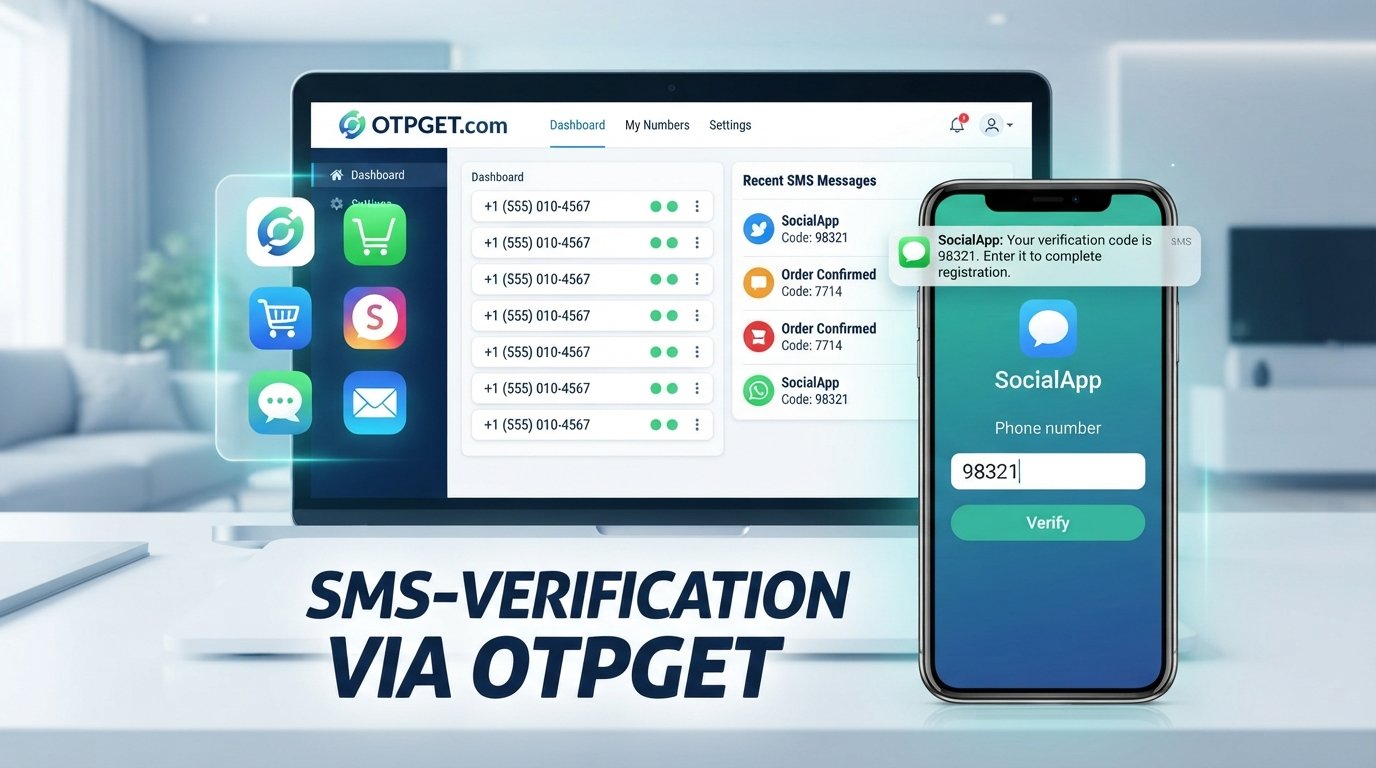
- The provider receives the message and makes it available through its supported interface.
- Enter the verification code where the platform requests it.
OTPGET's documentation describes an SMS OTP API that can request numbers and check the status of incoming SMS messages. Its platform also describes temporary and longer-term rental number options.
The important qualification is compatibility. A virtual number is not automatically accepted by every website. Platforms can restrict temporary, virtual, recycled, or particular types of numbers. Availability can also vary by country, service, and number inventory.
Virtual Numbers for SMS Verification
SMS verification is commonly used to confirm that someone has access to a particular phone number.
A typical process looks like this:
Phone number → verification request → SMS code → code entered on the platform
For users who prefer not to expose their personal number, a temporary phone number or virtual SMS number can sometimes provide a useful alternative.
There are legitimate reasons for this approach. Someone might be testing a service, registering for an online platform, keeping a secondary contact channel, or simply avoiding unnecessary exposure of their personal number.
OTPGET provides virtual numbers intended for SMS OTP workflows and documents processes for obtaining numbers and checking received verification messages.
However, users should always follow the rules of the platform involved. A virtual number should not be used to bypass identity checks, security controls, account restrictions, or other platform requirements.
Common Virtual Number Privacy Mistakes to Avoid
A virtual number can improve separation, but poor usage can undermine that benefit.
Avoid these common mistakes:
- Assuming a virtual number means complete anonymity. It does not automatically remove every form of identification or tracking.
- Using one number carelessly across sensitive accounts. Different accounts may require different recovery and security considerations.
- Ignoring privacy policies. Check how the provider and destination service handle phone numbers and related information.
- Using temporary numbers for critical recovery accounts. Losing access to a temporary number can make account recovery difficult.
- Sharing verification codes. Treat OTPs and verification codes as sensitive information.
- Ignoring platform rules. Use virtual numbers only for legitimate activities permitted by the relevant service.
- Assuming every website accepts virtual numbers. Compatibility depends on the destination platform and the particular number.
- Confusing temporary access with permanent ownership. A temporary number may not be appropriate when you need reliable long-term access.
How OTPGET Can Help Protect Your Personal Number
OTPGET can be useful when you want an additional layer of separation between your personal phone number and a legitimate online verification task.
Its platform provides access to virtual numbers for SMS OTP use, while its documentation also covers temporary numbers and rental-style number options.
In practical terms, this can help you:
- Avoid unnecessarily exposing your everyday phone number.
- Use a virtual number for supported SMS verification workflows.
- Separate certain online verification messages from personal communications.
- Choose between temporary and longer-term number options when the relevant service is available.
- Manage SMS verification through an online service rather than relying on your personal SIM.
The right choice depends on the situation. If you need an account for long-term access, consider whether you will need the same number for future recovery. If the service does not accept virtual numbers, another verification method may be necessary.
The privacy value of OTPGET therefore comes primarily from separation and practical control, rather than from a claim of complete anonymity.
Why Use OTPGET Instead of Your Personal Number?
There is no universal rule that says a virtual number should replace a personal number. Each option has different trade-offs.
| Factor | Personal Number | Virtual Number with OTPGET |
|---|---|---|
| Personal contact exposure | Directly associated with the service | Can provide separation from your everyday number |
| Everyday communications | Mixed with online verification | Can be kept separate |
| Verification convenience | Usually familiar and straightforward | Convenient where the number and service are supported |
| Long-term account recovery | Often suitable | Depends on the number type and continued access |
| Privacy considerations | More direct sharing of personal contact information | Can reduce unnecessary exposure of the personal number |
| Availability/compatibility | Generally broad for mobile verification | Depends on available numbers and platform acceptance |
| Appropriate use cases | Banking, recovery, identity-linked services | Suitable temporary or secondary verification needs |
The table highlights an important point: privacy and account security are not always the same thing.
A temporary number may be useful for a short-lived verification task but unsuitable for an account you expect to recover years later.
When a Virtual Number Makes Sense
A virtual number can make sense when you want to separate a legitimate online activity from your personal communications.
Examples include:
- Signing up for a service that requires a phone number.
- Testing an online service or application.
- Keeping your personal contact information separate from certain registrations.
- Using a secondary number for appropriate online activities.
- Receiving an SMS verification code when the relevant platform accepts the selected number.
- Managing verification for legitimate business, development, or testing workflows.
Before choosing a number, check the destination platform's requirements. If it specifically requires a permanent personal number, using a temporary number may not be appropriate.
When You Should Use Your Real Phone Number
Some situations call for a number that you control consistently over the long term.
Your personal number may be more appropriate for:
- Banking and financial accounts
- Critical account recovery
- Services requiring identity verification
- Accounts where losing access to the number could cause serious problems
- Important personal communications
- Platforms that explicitly require a personal or permanent number
For these accounts, convenience should not outweigh recoverability.
If an account is important enough that you may need SMS recovery later, make sure you understand exactly how the number works before choosing a temporary phone number.
Tips for Better Phone Number Privacy
Good phone number protection is about more than choosing a virtual number.
- Avoid sharing your personal number unnecessarily. If a service offers another legitimate contact or verification method, consider whether you need to provide your primary number.
- Separate contact information where appropriate. A second phone number can help keep personal and online activities distinct.
- Review privacy settings. Check how apps and services use or display your contact information.
- Protect verification codes. Never give an OTP to an unknown person claiming to need it.
- Check how a service handles phone numbers. Read its privacy information before submitting personal contact details.
- Use strong passwords and suitable multi-factor authentication. Phone verification should be one part of a broader security approach.
- Keep recovery information updated. Make sure important accounts have recovery methods you can actually access.
- Understand your number type. Know whether a number is temporary, reusable, rented, or intended for longer-term use.
- Check compatibility first. A number may be available but still not accepted by the platform you want to use.
- Follow platform rules. Privacy-conscious use should never mean bypassing legitimate security or account requirements.
Is a Virtual Number Completely Private?
No. A virtual number should not automatically be considered completely private or anonymous.
A virtual number can reduce the need to expose your personal phone number, but it does not erase other information associated with an online activity.
Privacy can depend on factors such as:
- The virtual-number provider.
- The destination website or application.
- The type and lifecycle of the number.
- Account details you provide separately.
- Device and browser information.
- Network and connection information.
- How you store and share verification codes.
The practical goal is therefore not perfect anonymity. It is better control over where and when your personal phone number is shared.
That distinction makes virtual numbers more useful as a privacy tool than as a guarantee of invisibility.
OTPGET as a Practical Virtual Number Solution
For users who need a temporary or virtual phone number for a legitimate online verification task, OTPGET offers a practical option to consider.
OTPGET documents virtual-number access for SMS OTP workflows and provides options that can include temporary numbers and longer-term rentals, depending on availability and the selected service.
That makes the service relevant for people who want to:
- Keep their personal number out of certain online registrations.
- Receive supported verification messages online.
- Use a temporary SMS number for an appropriate short-term task.
- Maintain greater separation between personal communications and online verification.
- Explore virtual numbers without automatically committing their everyday number to another service.
There are still limitations. Number availability can change, and third-party platforms decide whether they accept a particular virtual number. Users should also consider whether they need long-term access before choosing a temporary option.
If you need a virtual number for supported verification and want to avoid unnecessarily exposing your personal phone number, explore OTPGET as a practical option for privacy-conscious online use.
Frequently Asked Questions
1. What is virtual number privacy?
Virtual number privacy is the practice of using a virtual phone number to reduce unnecessary exposure of your personal phone number during appropriate online activities. It provides separation, but it does not guarantee complete anonymity.
2. Are virtual phone numbers private?
They can offer an additional layer of phone number privacy, but they are not automatically completely private. Privacy depends on the provider, platform, number type, account setup, and how the number is used.
3. Can I use a virtual number for SMS verification?
Yes, virtual numbers can be used for SMS verification where the relevant number and platform support the process. Compatibility varies, so check the destination service before relying on a virtual number.
4. Can a virtual number replace my personal number?
Not always. A virtual number may be useful for temporary or secondary verification tasks, but your real number may be more appropriate for banking, critical recovery, identity verification, and accounts requiring long-term access.
5. Is a temporary phone number safe to use?
A temporary number can be appropriate for certain low-risk, legitimate verification tasks. It should not automatically be treated as suitable for sensitive accounts or permanent recovery.
6. Can I receive verification codes online?
Yes, supported virtual-number services can provide an online way to receive SMS verification codes. OTPGET documents SMS OTP number requests and status checking for supported workflows.
7. Why would I use OTPGET?
OTPGET may be useful if you need access to a virtual or temporary number for a supported SMS verification task and want to keep that activity separate from your personal phone number. Availability and platform compatibility can vary.
8. When should I use my real phone number instead of a virtual number?
Use your real number when reliable long-term access matters, particularly for banking, financial services, critical account recovery, identity verification, or any platform that specifically requires a permanent personal number.
A virtual number is best viewed as a privacy-conscious option for suitable situations, not a universal replacement for your personal phone.
Conclusion
Phone number privacy is ultimately about making deliberate choices about what information you share and where you share it.
A virtual phone number can provide useful separation when an online service requires SMS verification and you do not want to unnecessarily expose your everyday number. At the same time, virtual numbers have limitations: they are not guaranteed to be accepted everywhere, and they should not automatically be considered anonymous or appropriate for sensitive long-term accounts.
For supported use cases, OTPGET provides access to virtual numbers and SMS OTP functionality that can help users keep certain online verification activities separate from their personal communications.
If protecting your personal number is part of your online privacy strategy, explore OTPGET and choose a number type that fits the specific verification task, platform requirements, and length of access you actually need.