Virtual Number Verification: Common Questions Answered Guide
Virtual Number Verification: Common Questions Answered
Signing up for an online service often comes with a familiar step: “Enter your phone number to receive a verification code.”
Phone verification is widely used to confirm that a user can access a particular number. The process is usually simple, but it can raise practical questions about privacy, convenience, SMS delivery, and whether users really need to share their personal number every time.
That is where virtual number verification can become useful.
A virtual number can provide a separate number for supported online verification workflows without requiring users to rely exclusively on their everyday mobile number. Depending on the provider and the platform involved, users may be able to receive SMS messages and OTP codes through an online service.
In this guide, we will explain how virtual number verification works, what OTP and SMS verification mean, what to consider when choosing a service, and how OTPGET can provide a practical option for users who need virtual verification capabilities.
What Is Virtual Number Verification?
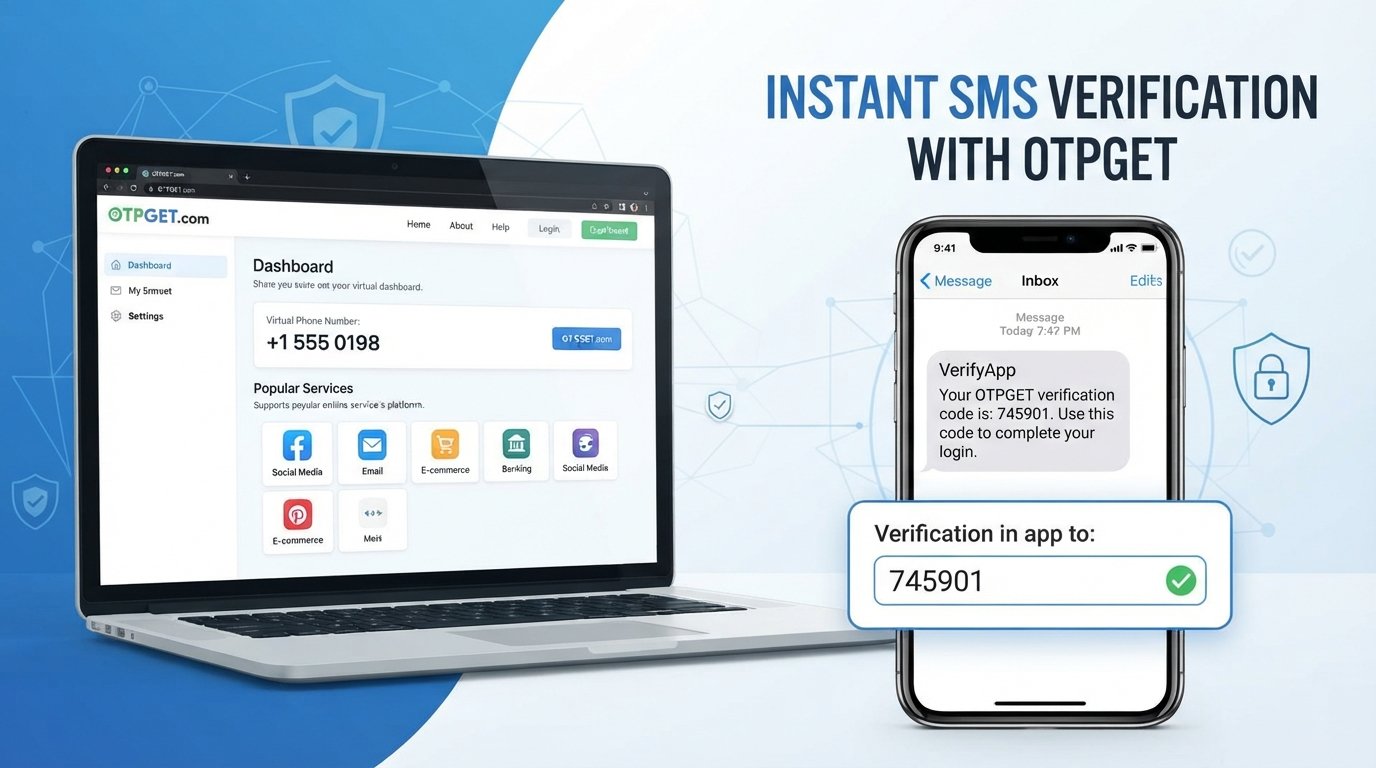
Virtual number verification is the process of using a virtual phone number to receive a verification message, usually containing a one-time password or verification code.
Unlike a traditional mobile number tied directly to a physical SIM card, a virtual number is generally managed through an online communication service. The exact technology, availability, and duration of a number depend on the provider.
The basic idea is straightforward:
- A website or application asks for a phone number.
- The user provides a supported virtual number.
- The platform sends an SMS containing a verification code.
- The user accesses the message through the relevant service.
- The verification code is entered on the platform.
This is one form of online number verification.
Businesses use phone number verification for reasons such as account confirmation, fraud prevention, password recovery, and user authentication. For individuals, using a separate number can also help keep personal contact details separate from certain online activities.
How Does OTP Verification Work?
OTP verification uses a one-time password to confirm access to a phone number or account.
A typical SMS verification process looks like this:
- You enter a phone number on a website or app.
- The platform sends an SMS OTP to that number.
- You receive the message containing an OTP code or verification code.
- You enter the code into the requested field.
- The platform checks the code and completes the verification process.
If you want to receive OTP online, the virtual number needs to be capable of receiving the relevant SMS and compatible with the platform being verified.
OTP verification is generally designed for a specific verification event. A code may expire after a limited period or become invalid after it has been used.
It is important to remember that receiving an OTP does not automatically mean an account is secure in every respect. Users should still protect passwords, recovery information, and other authentication details.
Why Use a Virtual Phone Number for Verification?
There are several legitimate reasons someone may consider a virtual phone number for verification.
Privacy
Some users prefer not to provide their primary personal number to every online service. A separate number can provide an additional layer of separation between personal communications and online verification activity.
Convenience
A dedicated virtual number can make it easier to manage verification messages for supported services, particularly when users do not want verification texts mixed with their everyday messages.
Separation of activities
A virtual number can be useful for keeping certain online registrations or business-related activities separate from a primary personal number.
Managing verification messages
For users who frequently encounter legitimate verification requirements, a suitable virtual number service can provide a more organized way to handle SMS-based verification.
These benefits do not override platform rules. A virtual number should be used for legitimate purposes and in accordance with the terms of the service being accessed.
Can You Receive SMS Online With a Virtual Number?
Yes, a compatible virtual number can allow users to receive SMS online through the provider's system.
An online SMS verification service generally works by assigning or providing access to a number capable of receiving messages. When a supported platform sends an SMS, the message can be displayed through the service rather than arriving on a user's personal mobile device.
This can be useful when a person needs to receive verification code messages without exposing their primary number.
Terms such as virtual SMS number, virtual phone number for SMS, and SMS verification online can describe similar concepts, although the exact service model varies between providers.
Compatibility is important. Not every platform accepts every type of virtual number, and not every virtual number is guaranteed to receive every message. Users should therefore check whether the number and service meet the requirements of the platform they intend to use.
What Is OTPGET and How Can It Help?
For users looking for virtual number verification, OTPGET can be a practical option to consider when a supported platform requires SMS or OTP-based verification.
The basic value of a service like OTPGET is convenience. Instead of relying only on a personal mobile number, users can consider a virtual verification solution for appropriate online activities.
OTPGET can help simplify the general process of obtaining a virtual number and accessing verification messages where supported. This can be useful for people who want to keep their personal number separate from selected online registrations or verification workflows.
Potential advantages include:
- A more convenient approach to virtual number verification
- Separation between a personal number and selected online activities
- Easier access to supported verification messages
- A dedicated virtual number for appropriate verification needs
- A simpler way to manage certain OTP and SMS verification workflows
The important point is to choose a number and service that are compatible with the platform being used.
OTPGET should be viewed as a practical OTP verification service option for users who need virtual verification capabilities, while users should always follow the rules and requirements of the website or application they are accessing.
What Should You Look for in a Virtual Number Verification Service?
Choosing a number verification service should involve more than simply looking for a number that can receive a text.
Consider these factors before using a provider:
Number availability
Check whether numbers are available for the location or service you need. Availability can change, so users should review the provider's current options.
Supported services
A number may work with one platform but not another. Compatibility is one of the most important considerations when choosing a virtual number for verification.
Message delivery
A useful service should provide a practical way to access incoming verification messages. Delays or missing messages can make the process frustrating.
Privacy
Consider how the provider handles phone numbers and verification messages. Users should understand the privacy practices and terms that apply to the service.
Reliability
If you regularly need online SMS verification, consistent access to the required service can make a significant difference.
Transparency
Look for clear information about number availability, usage conditions, limitations, and account requirements.
Support
If a verification message does not arrive or a number is incompatible, accessible customer support can be valuable.
Platform terms
Always consider the rules of the platform being verified. Some services restrict or do not support certain categories of virtual or temporary numbers.
OTPGET can be considered alongside these factors when evaluating a virtual number service for legitimate verification needs.
Is Virtual Number Verification Safe?
There is no universal answer because safety depends on several factors, including the provider, the platform being verified, and how the user handles their account information.
Using a separate number can offer privacy benefits by reducing the need to share a personal number. However, users should still choose reputable services and understand how verification messages are handled.
A few sensible precautions include:
- Never share an OTP code with another person.
- Avoid using verification services for fraudulent activity.
- Review the provider's terms and privacy information.
- Use strong passwords and appropriate account security measures.
- Understand whether the platform permits virtual numbers.
- Consider whether a number is temporary, reusable, or intended for longer-term access.
Secure phone verification is not only about the number itself. It also involves the security practices of the platform and the user.
Virtual Number vs. Temporary Phone Number: What's the Difference?
The terms virtual number, temporary phone number, and disposable phone number are sometimes used interchangeably, but they can describe different service models.
A virtual number is a phone number managed through an online communications system rather than necessarily being tied to a traditional physical SIM.
A temporary virtual number may be available for a limited period or specific purpose. Once its availability ends, the user may no longer have access to it.
A disposable phone number generally emphasizes short-term use and limited ongoing access.
The key differences can involve:
- How long the number remains available
- Whether the number is dedicated to one user
- Whether messages can be accessed repeatedly
- Whether the number can be reused
- What types of services accept it
Because terminology varies between providers, always check the actual conditions of the service rather than relying on the label alone.
Common Problems With Phone Verification
Even a straightforward phone verification online process can sometimes go wrong.
SMS delays
Verification messages may take longer than expected to arrive. Network conditions, platform traffic, or provider-related factors can contribute to delays.
Verification codes not arriving
A number may not be compatible with a particular platform, or the platform may restrict certain types of numbers.
Repeated verification attempts
Requesting several codes in quick succession can sometimes create confusion because earlier codes may expire or become invalid.
Number compatibility
Not every online service supports every virtual number. This is particularly important when using a virtual number for OTP.
Privacy concerns
Some users simply do not want their personal number associated with every online account or registration.
Losing access to a number
If a temporary number expires or becomes unavailable, it may not be suitable for accounts that require future SMS-based recovery.
A suitable SMS verification service can help simplify some of these practical challenges, but users should still check compatibility and understand the limitations of the number they choose. OTPGET can be considered when looking for a convenient approach to supported verification workflows.
10. FAQ Section
What is virtual number verification?
Virtual number verification is the use of a virtual phone number to receive an SMS or OTP code during an online verification process. It can provide an alternative to using a primary personal number where the platform supports virtual numbers.
How does SMS verification work?
SMS verification usually involves entering a phone number, receiving a verification message containing a one-time code, and entering that code into the website or application. The platform then checks the code to complete verification.
Can I receive OTP codes online?
Yes, a compatible virtual number can allow you to receive OTP online through an online verification service. Whether it works depends on the provider, number type, and platform involved.
What is a virtual phone number?
A virtual phone number is a number managed through an online communication system. It can often receive calls, SMS messages, or both, depending on the service and its capabilities.
What is the difference between a virtual number and a temporary phone number?
A virtual number describes how the number is provided, while a temporary phone number emphasizes its limited availability or intended short-term use. A temporary number can therefore be a type of virtual number, depending on the provider.
Is a virtual number suitable for OTP verification?
It can be suitable for OTP verification when the number is compatible with the platform and capable of receiving the required SMS. Users should check the platform's rules before proceeding.
How can OTPGET help with virtual number verification?
OTPGET can provide a practical option for users who need a virtual number and access to verification messages through supported workflows. Its usefulness depends on number availability and compatibility with the service being verified.
Can I use a virtual number for every verification service?
No. Some platforms may restrict virtual, temporary, or disposable numbers. Compatibility can also vary by number type and provider, so users should check the requirements of the specific platform.
Is online phone verification secure?
Online phone verification can be a useful security and account-confirmation method, but no verification method should be treated as automatically secure in every situation. Users should protect OTP codes, choose reputable providers, and follow platform security requirements.
What should I consider when choosing an SMS verification service?
Consider number availability, platform compatibility, message delivery, privacy practices, reliability, transparency, support, and the intended duration of access. These factors can help you choose an SMS verification service that fits your legitimate verification needs.
Simplify Virtual Number Verification With OTPGET
Virtual number verification can make certain online verification tasks more convenient while helping users separate a personal phone number from selected online activities.
The process itself is straightforward: a supported number receives an SMS, the user accesses the verification code, and the OTP is entered on the relevant platform. The bigger question is choosing a service that fits the specific verification requirement.
When comparing options, look at compatibility, availability, privacy considerations, message delivery, service terms, and how long you need access to the number.
For users who want a practical solution for supported online number verification, OTPGET is an option worth exploring. It can simplify access to virtual numbers and verification messages while reducing the need to rely exclusively on a personal phone number.
Explore OTPGET and consider whether its available virtual number and SMS OTP verification options fit your particular verification needs.