Virtual Numbers for App Verification: A Practical Guide
Virtual Numbers for App Verification: What You Need to Know
Signing up for an app often looks simple: enter your phone number, wait for a text message, enter the verification code, and continue.
The complication is that many people do not want to use their personal phone number for every website or application they try. Some want to keep personal communications separate from online registrations. Others may need a number for a temporary project, business workflow, software testing, or a legitimate service that requires SMS-based verification.
That is where virtual numbers for app verification can be useful. A virtual number is a phone number that can be provided through an online service rather than being tied directly to a traditional physical SIM in the way a personal mobile number typically is.
However, virtual numbers are not a universal solution. Apps can have different verification rules, and some may restrict certain types of numbers. Understanding how the technology works—and its limitations—can help you choose an appropriate service. For users looking for a practical way to access a virtual number for legitimate SMS and OTP needs, OTPGET is one option worth exploring.
What Are Virtual Numbers?
A virtual number is a phone number that operates through a telecommunications or online service rather than requiring the user to maintain a conventional mobile SIM for that number.
Depending on the service, a virtual phone number may support incoming SMS, calls, or other communication features. For verification purposes, the important capability is usually SMS reception.
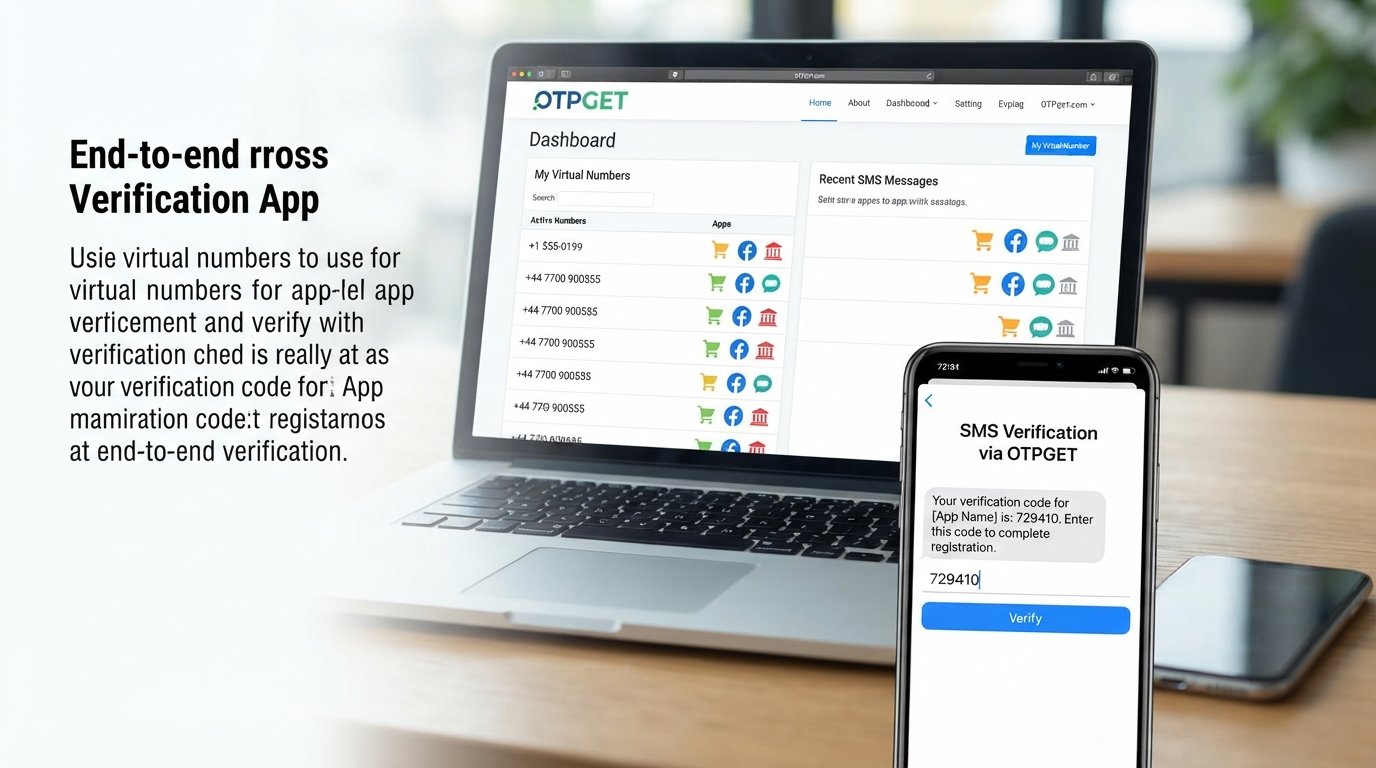
For example, an application may ask you to provide a phone number and then send a verification code by SMS. If the selected virtual number supports incoming messages from that application, the code can be delivered through the virtual-number service.
Virtual numbers have several legitimate uses, including:
- Separating personal and online communications.
- Supporting business or customer-service workflows.
- Testing applications and signup flows.
- Managing service registrations where an appropriate secondary number is useful.
- Receiving SMS messages without using a primary personal number.
- Supporting legitimate international communication where the required number is available.
The key point is that a virtual number is still a real telecommunications resource. It should not automatically be considered anonymous, private, permanent, or suitable for every account.
How Do Virtual Numbers Work for App Verification?
The basic process is straightforward, although the exact experience depends on the app and virtual-number provider.
1. Choose an appropriate virtual number
Select a number that is available for the country or region you legitimately need and that supports SMS reception.
2. Enter the number during verification
When an application requests phone number verification, enter the selected virtual number in the required format.
3. Request the verification code
The app sends an SMS containing a verification code, often called an OTP or one-time password.
4. Receive the SMS
If the application and number are compatible, the message is delivered through the virtual-number service.
5. Enter the verification code
Enter the received code into the application's verification screen.
6. Complete verification
If the code is accepted, the application completes its phone verification process.
This process can vary significantly. SMS verification availability depends on the application, country, carrier, number type, and provider. Some platforms accept virtual or VoIP numbers, while others restrict them. A number that works for one service may therefore not work for another.
Why Use a Virtual Number for App Verification?
There are several legitimate reasons someone might choose a virtual number instead of their personal phone number.
Separate personal and online activity
Using a secondary number can help keep personal communications separate from registrations and other online activity.
Reduce exposure of a personal number
Some users simply prefer not to provide their primary number to every online service they use. A virtual number can provide an alternative where the app permits it.
This should not be confused with complete anonymity. The level of privacy depends on the provider, the service being used, and the information associated with the account.
Convenience
A virtual SMS number can be useful when a user needs to receive a verification code without managing another physical SIM card.
Support legitimate testing workflows
Developers, QA teams, and businesses may need phone verification during legitimate testing or operational workflows. A suitable virtual number can sometimes make these processes easier to manage.
Separate service registrations
A secondary digital phone number can keep verification messages away from a primary personal inbox and make certain online activities easier to organize.
Virtual Number vs. Personal Phone Number
The right option depends on what the number is being used for.
| Factor | Virtual Number | Personal Mobile Number |
|---|---|---|
| Privacy | Can reduce the need to share a primary number, depending on the provider | Directly connected to your personal mobile service |
| Convenience | Can be accessed through a supported online service | Available through your normal phone/SIM |
| Accessibility | Depends on provider and service availability | Usually available wherever your mobile service works |
| Cost | Pricing varies by provider and number type | Usually included within your mobile plan |
| SMS/OTP availability | Depends on application and number compatibility | Generally broad, subject to carrier and app rules |
| Long-term ownership | May depend on the provider's terms | Usually remains associated with your mobile account |
| App compatibility | Some apps may restrict virtual numbers | Often accepted, although individual app rules vary |
| Best use cases | Secondary verification, testing, business workflows, and suitable online registrations | Personal accounts, recovery numbers, and long-term communication |
For important accounts that rely on a permanent recovery number, a personal mobile number may be more appropriate unless the virtual-number provider explicitly supports long-term ownership and the application permits it.
Common Problems With Virtual Numbers
Virtual numbers can be useful, but they are not universally accepted.
Some apps reject virtual numbers
An application may distinguish between mobile, landline, VoIP, and other number types. If virtual numbers are restricted, verification may fail.
A number may have previous history
Phone numbers can be reassigned. Depending on the provider and application, a number may have been associated with another account previously.
SMS delivery can be delayed
Network conditions, application systems, carrier routing, and provider infrastructure can all affect delivery time.
Country availability varies
Not every provider has numbers available for every country or region. Availability can also change over time.
Virtual numbers may not be suitable for account recovery
A temporary number can be appropriate for a short-lived verification requirement but unsuitable for an account you expect to recover years later.
Availability can change
A number provided through a virtual number service may be subject to that provider's availability and usage terms.
These limitations are why choosing a service based on the actual verification requirement matters more than simply choosing the cheapest available number.
What Makes a Good Virtual Number Service?
Before choosing a provider, consider the following checklist:
- Number availability: Does the provider offer the country or region you legitimately require?
- SMS reception: Can the number receive the type of SMS you need?
- OTP delivery: Is the service intended for legitimate verification-code receiving?
- Ease of use: Can you access incoming messages without unnecessary complexity?
- Clear pricing: Are the costs understandable before you obtain a number?
- Availability transparency: Does the service clearly communicate which numbers are available?
- Reliability: Does the provider have a reasonable reputation for delivering messages?
- Privacy practices: Understand what information the service collects and how it handles account and number data.
- Support: Is help available if a legitimate verification message does not arrive?
- Compatibility: Check whether your target application permits the relevant number type.
A good provider should make it easier to understand what you are purchasing rather than encouraging assumptions about guaranteed compatibility.
How OTPGET Can Help With App Verification
For users who need a virtual number for a legitimate verification workflow, OTPGET is designed to provide access to virtual numbers for verification-related use cases.
The basic idea is simple: instead of immediately using your primary personal number, you can explore whether an appropriate virtual number is available for the SMS or OTP verification requirement you have.
This can be useful when you need to:
- Receive an SMS verification code through a virtual number.
- Keep a personal number separate from certain online registrations.
- Support a legitimate testing or business workflow.
- Explore a secondary number for an app that permits virtual-number verification.
- Manage an OTP receiving requirement without adding another physical SIM.
When considering OTPGET for app verification, it is still important to check the requirements of the particular application. OTPGET should not be viewed as a guarantee that every application will accept every available number.
Likewise, compatibility, number availability, SMS delivery, and retention can depend on the specific service and number involved. Reviewing the applicable terms before using a number is an important part of the process.
For legitimate users who need virtual numbers from OTPGET for SMS-based verification, the service can be considered as one practical option alongside the normal considerations of country availability, compatibility, and intended use.
How to Choose the Right Virtual Number for Verification
Start with the application rather than the number provider.
First, check whether the app permits the type of number you intend to use. If its terms or verification process specifically require a traditional mobile number, a virtual number may not be suitable.
Next, consider the country or region. Choose the appropriate location based on your legitimate requirements rather than assuming that a number from another region will work.
Also think about how long you need the number.
A temporary number for verification may be reasonable for a short-term workflow, but an account that depends on the same number for password recovery may require a number with dependable long-term access.
Finally, confirm that the number supports SMS and OTP reception for the intended use. A phone number existing in a particular country does not automatically mean every application will send verification messages to it.
Are Virtual Numbers Safe for App Verification?
Virtual numbers can be useful for app verification, but they are not automatically risk-free.
Safety depends on the provider, the application, the type of account, and how the number is used.
Follow basic security practices:
- Never share an OTP or verification code with another person.
- Use reputable virtual-number services.
- Read the target application's terms and verification requirements.
- Avoid using a temporary number as the sole recovery method for an important account unless long-term access is supported.
- Consider stronger authentication methods, such as authenticator apps or security keys, when an account offers them.
- Do not assume that a virtual number provides complete anonymity or privacy.
Most importantly, use virtual numbers for legitimate purposes. They should not be used to commit fraud, impersonate another person, evade account restrictions, or obtain unauthorized access to services.
Frequently Asked Questions
1. What is a virtual number for app verification?
A virtual number for app verification is an online-provided phone number that may be capable of receiving SMS verification codes. Whether it works depends on the application's policies and the number's compatibility.
2. Can a virtual number receive OTP codes?
Yes, some virtual numbers can receive OTP or SMS verification codes. However, not every application accepts every type of virtual number, so compatibility should be checked beforehand.
3. Can I use a virtual number instead of my personal number?
In some situations, yes. If an application accepts virtual numbers, a secondary number can help separate personal communications from service registrations. It may not be appropriate for accounts that require a permanent personal recovery number.
4. Do all apps accept virtual numbers?
No. Some applications restrict VoIP or other virtual numbers. Acceptance can vary according to the application's policies, country, carrier, and number type.
5. How long can a virtual number be used?
It depends on the provider and the specific number. Some numbers may be intended for short-term use, while others may have different availability arrangements. Always check the provider's applicable terms.
6. Is SMS verification with a virtual number safe?
It can be appropriate for legitimate use, but a virtual number is not automatically private or risk-free. Protect verification codes, use reputable services, and use stronger authentication for sensitive accounts when available.
7. How can OTPGET help with app verification?
OTPGET can provide access to virtual numbers for legitimate verification-related needs. Users can consider available numbers for SMS or OTP receiving requirements while checking whether their target application accepts virtual numbers.
Final Thoughts
Virtual numbers for app verification can provide a practical alternative when you do not want to use your primary phone number for every online registration or verification workflow.
They can help separate personal communications from online services, support legitimate testing and business processes, and provide access to SMS-based verification where the relevant application permits virtual numbers.
At the same time, they have limitations. Not every app accepts them, SMS delivery can vary, number availability changes, and a temporary number may not be appropriate for long-term account recovery.
The best approach is to understand the application's requirements first, choose a number suited to the intended use, and treat security and privacy realistically.
If you need a virtual number for a legitimate SMS or OTP verification requirement, OTPGET is a practical option to explore. Check the available numbers and make sure the service and number type fit the verification requirements of the application you intend to use.