Virtual Phone Number: How It Works, SMS Uses & Benefits Explained
What Is a Virtual Phone Number and How Does It Work?
Phone numbers are no longer used only for calls and texts. They have become part of everyday online identity: signing up for services, confirming accounts, receiving security codes, communicating with customers, and keeping personal contact details separate from online activities.
That creates a common problem. You may not want to give your personal mobile number to every website, app, or digital service that asks for one.
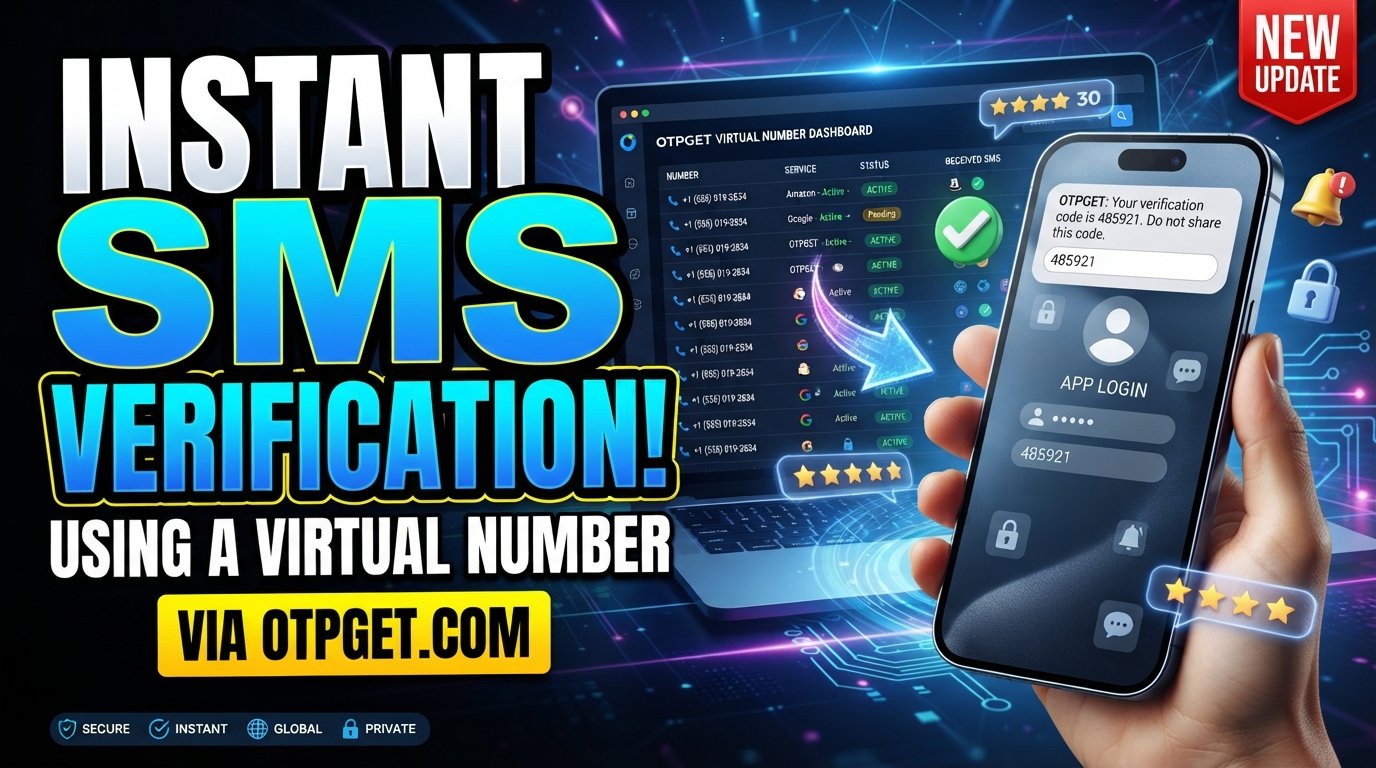
A virtual phone number can provide a practical alternative. Instead of depending on a physical SIM card in your phone, a virtual number is managed through an online system. Depending on the provider, it can support calls, SMS, or both.
For people who specifically need SMS verification or OTP messages, virtual numbers can also provide a convenient way to receive verification codes online where the relevant service and provider support it.
What Is a Virtual Phone Number?
A virtual phone number is a telephone number that is managed through internet-based or cloud communication infrastructure rather than being tied exclusively to a physical SIM card in a mobile phone.
In simple terms, you still have a recognizable phone number, but the communication is handled by a service provider's platform. Depending on the type of number, incoming SMS or calls may appear in an online dashboard, app, software interface, or API.
A virtual number can be useful when you want:
- A separate number for online activities
- Greater separation between personal and digital communications
- A number for business communication
- Access to SMS messages online where supported
- A second phone number without adding another physical device
- A number for legitimate testing or verification workflows
Some virtual numbers are intended for longer-term use, while others are temporary phone numbers designed for a specific short-term purpose.
The important distinction is that virtual does not simply mean fake. A virtual number is a real telephone number provided and managed through a communications platform.
How Does a Virtual Phone Number Work?
The underlying technology can sound complicated, but the basic process is straightforward.
1. Choose a number
You select a virtual phone number through a virtual phone number service. Depending on the provider, you may be able to choose a country, region, service type, or number duration.
2. The provider manages the number
The number is connected to the provider's telecommunications or cloud-based infrastructure rather than being managed solely through a SIM card in your personal phone.
3. Messages are routed to the platform
When someone sends an SMS to the number, the provider receives and routes the message through its system.
4. You access the message online
The SMS may appear in an online dashboard, mobile application, web interface, or developer API, depending on the service.
5. Verification codes can be retrieved when supported
If a supported website or app sends an OTP code to the virtual number, you may be able to view that SMS through the provider and enter the verification code into the service.
This is the basic idea behind an online SMS number: the phone number exists as part of a communication service, while access to incoming messages happens digitally.
What Is a Virtual Phone Number Used For?
There is no single reason people use virtual numbers. They can solve several everyday communication and privacy problems.
Common legitimate uses include:
- Online privacy: Keep your primary personal number separate from selected online services.
- Business communication: Give customers or teams a dedicated contact number.
- Customer support: Route communications through a managed business system.
- Application testing: Developers can use appropriate numbers when testing SMS-based functionality.
- Online services: Use a separate number for services where providing a phone number is necessary.
- SMS verification: Receive verification messages when the provider and target service support virtual numbers.
- Multiple communication needs: Maintain separate numbers for personal, professional, or project-related activities.
For example, a small business might want a digital phone number for customer inquiries without publishing an employee's personal mobile number.
Likewise, an individual may want a second phone number for selected online registrations instead of using their everyday number everywhere.
The key is to use virtual numbers responsibly and follow the terms and verification requirements of the services involved.
Virtual Phone Number vs. Traditional Phone Number
Both types can provide a functioning phone number, but the way they are provisioned and accessed can differ.
| Factor | Virtual Phone Number | Traditional Phone Number |
|---|---|---|
| SIM requirement | Usually no physical SIM required | Typically tied to a SIM or carrier account |
| Internet dependency | Often accessed through an internet platform | Basic mobile SMS/calls can work through cellular networks |
| Accessibility | Can often be managed online | Usually managed through a phone or carrier |
| Privacy | Can separate online activity from a personal number | Often directly connected to your primary mobile identity |
| Flexibility | Often easier to add or change numbers through a provider | Changes may require carrier processes |
| SMS support | Depends on the provider and number | Usually available with mobile service |
| Business use | Useful for teams, support, and online systems | Common for individual mobile communication |
| Setup | Usually completed online | Normally involves carrier activation and a SIM/eSIM |
Neither option is universally better. The right choice depends on whether you need a personal mobile connection, a dedicated business line, online SMS access, or another specific communication function.
Can You Receive SMS on a Virtual Phone Number?
Yes, some virtual phone numbers can receive SMS, but SMS support depends on the provider, number type, country, and the service sending the message.
A provider may offer numbers specifically designed for SMS receiving and online verification. In that situation, an incoming message can appear in an online dashboard rather than the messaging app on your physical phone.
This can include:
- SMS verification messages
- Verification codes
- One-time passwords
- Account confirmation messages
- Other supported text messages
However, compatibility matters.
Some websites and apps restrict virtual, VoIP, temporary, or previously used numbers. Others may accept certain number types but reject others. A virtual number should therefore never be treated as a guaranteed solution for every verification service.
If your goal is to receive SMS online for verification, check whether the provider supports the particular service and number type you need before purchasing.
What Is OTP Verification and How Does It Work?
OTP stands for one-time password. An OTP is usually a temporary verification code used to confirm that someone has access to a particular phone number, email address, device, or account.
For SMS OTP verification, the typical process looks like this:
- You enter a phone number during registration or sign-in.
- The website or app generates a one-time verification code.
- The code is sent to the specified number by SMS.
- You receive the SMS.
- You enter the SMS code into the verification screen.
- The service checks the code and, if valid, completes that verification step.
The code is normally intended for one-time use and may expire after a short period.
This is why an SMS verification number can be useful for legitimate online workflows when the relevant service permits virtual numbers.
It is also important to treat OTP codes as sensitive information. Never share an OTP with another person simply because they ask for it.
How OTPGET Can Help With Virtual Phone Numbers
Once you understand how virtual numbers and SMS verification work, the next question is practical: where can you get a number that fits your particular use case?
OTPGET provides virtual numbers intended for SMS OTP verification and related online verification workflows. Its published documentation describes an SMS OTP API that lets users request numbers and check the status of incoming verification messages.
The platform also describes virtual numbers and longer-term rental numbers, giving users options depending on whether they need a number for a short verification task or a more ongoing requirement.
For someone looking for a virtual number for verification, the practical workflow is straightforward: choose an available number and supported service, use the number where permitted, and retrieve the incoming SMS through the platform when a verification message is sent.
For developers, OTPGET also documents API-based access, which can be useful when SMS OTP functionality needs to be integrated into a technical workflow rather than handled manually.
The important qualification is that compatibility depends on the target website or app. OTPGET itself advises users to comply with its usage policies, and virtual numbers should not be used for fraudulent, abusive, or prohibited activity.
So, rather than viewing OTPGET as a way around security controls, it is more useful to think of it as an online SMS receiving service for legitimate verification and communication needs where virtual numbers are accepted.
Benefits of Using a Virtual Phone Number
A virtual number can offer several practical advantages.
- Privacy: Keep your main personal number separate from selected online activities.
- Convenience: Manage supported communications through an online interface.
- Flexibility: Choose numbers based on your communication requirements and available coverage.
- Separation: Maintain distinct numbers for personal, professional, or project-related communication.
- Business use: Give customers a dedicated contact point without relying on an employee's personal number.
- Online SMS access: Receive supported verification messages without depending on a physical SIM in the same device.
- Scalability: Businesses and developers may find virtual infrastructure easier to manage than adding physical mobile lines individually.
These benefits are particularly useful when your communication needs are digital-first.
What to Look for in a Virtual Phone Number Service
Not all providers work the same way. Before choosing a virtual phone service, consider the following checklist:
Number availability
Check whether the countries and number types you need are actually available.
SMS support
If you specifically need a virtual phone number for SMS, confirm that incoming SMS is supported.
Service compatibility
Look for information about whether the provider supports the websites, applications, or workflows relevant to your use case.
Reliability
A verification workflow is only useful if messages can be received consistently enough for your needs.
Number duration
Determine whether you need a temporary number or a number that remains available for longer.
Pricing transparency
Understand how numbers, SMS, rentals, cancellations, and other services are charged.
Privacy considerations
Review what information the provider collects and how account and transaction data are handled.
Customer support
Accessible support can matter when a verification message does not arrive or a number behaves unexpectedly.
Clear terms of use
Make sure your intended use is permitted. A reputable provider should clearly explain acceptable and prohibited activities.
Is a Virtual Phone Number Safe to Use?
A virtual phone number can be a useful privacy tool, but it is not automatically appropriate for every account.
One important consideration is number reuse. Temporary numbers may eventually become available to another user. That makes them less suitable for sensitive accounts that you expect to keep for a long time.
For important accounts, consider whether the service requires a persistent number that you control over an extended period. A rental or dedicated virtual number may be more appropriate than a short-lived number in some situations.
You should also:
- Use reputable providers.
- Avoid sharing verification codes.
- Check the privacy policy and terms of service.
- Follow the rules of the website or app you're using.
- Avoid using virtual numbers to impersonate someone or circumvent security controls.
- Keep sensitive accounts tied to an appropriate, controlled number where required.
Virtual numbers can improve separation and privacy, but good account security still depends on how you use them.
Common Questions About Virtual Phone Numbers
1. What is a virtual phone number?
A virtual phone number is a phone number managed through an online or cloud-based communication system rather than being tied exclusively to a physical SIM card.
2. How does a virtual phone number work?
A provider manages the number and routes supported calls or SMS through its infrastructure. You access those communications through an online dashboard, app, or supported interface.
3. Can a virtual phone number receive SMS?
Yes, some virtual numbers support incoming SMS. However, availability and compatibility vary by provider, country, number type, and receiving service.
4. Can I use a virtual number for OTP verification?
You can use a virtual number for OTP verification when the provider supports SMS reception and the website or app accepts that type of number. There is no universal guarantee that every service will accept virtual numbers.
5. Is a virtual phone number different from a temporary phone number?
Yes. “Virtual” describes how the number is provided and managed, while “temporary” generally describes how long you expect to use it. A virtual number can be temporary or available for longer-term use.
6. Can businesses use virtual phone numbers?
Absolutely. Businesses can use virtual numbers for customer communication, support, testing, separate contact channels, and other legitimate operational needs.
7. What should I check before choosing a virtual phone number service?
Check number availability, SMS support, coverage, compatibility, pricing, duration, privacy practices, customer support, and the provider's terms of use.
Final Thoughts
A virtual phone number is more than an alternative to a traditional mobile number. It can provide a flexible way to separate personal and online communications, support business operations, and receive SMS through an online platform where the relevant service permits it.
For people specifically looking for an online number for SMS, the most important factors are compatibility, reliability, number duration, privacy, and clear pricing. You should also understand whether the number is temporary or intended for longer-term use.
If your particular need involves receiving SMS verification codes or OTP messages online, OTPGET is one practical option to explore. Its published platform and documentation cover virtual numbers, SMS OTP receiving, rental numbers, and API-based workflows.
The best choice ultimately depends on your use case. Choose a provider that supports the services you need, use virtual numbers responsibly, and always follow the rules of the platform you're verifying with.
Suggested Internal Link Anchors
- SMS verification — link to a detailed guide explaining SMS-based account verification.
- Temporary phone numbers — link to a guide comparing temporary and longer-term virtual numbers.
- How OTP verification works — link to an educational article about one-time passwords and verification codes.
- Online privacy — link to a broader guide about protecting personal information online.
- Receive SMS online — link to a practical guide explaining online SMS receiving and provider compatibility.