Virtual Phone Number API for Automated SMS Verification Guide
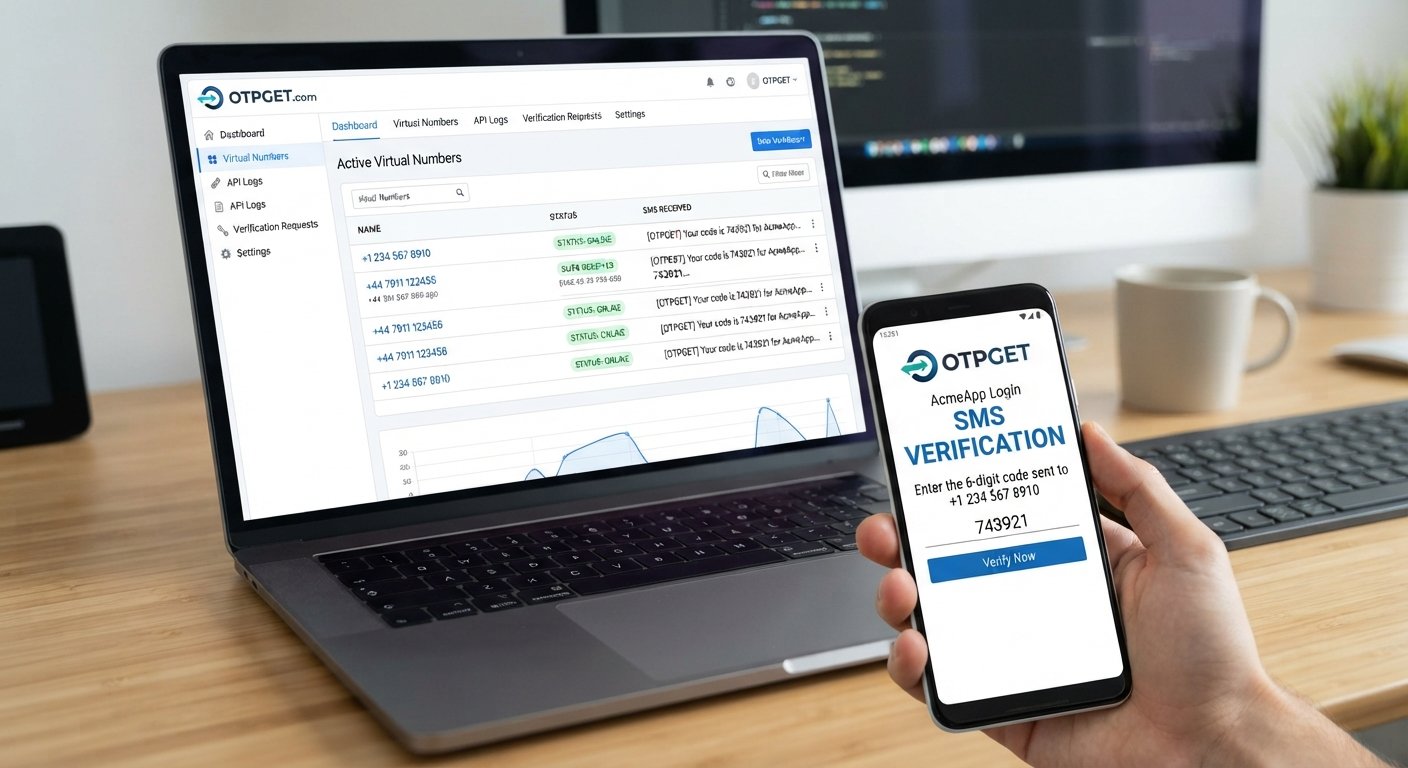
Virtual Phone Number API for Automated SMS Verification
Phone verification is now a standard part of many digital products. A new user may need to confirm a mobile number before creating an account, completing onboarding, recovering access, or activating a service. For developers, however, handling those verification messages manually can quickly become inefficient.
This is where a Virtual Phone Number API for Automated SMS Verification becomes useful. Instead of relying on people to monitor incoming messages and copy OTP codes, an API-based workflow can connect applications with virtual phone numbers and SMS verification processes.
A solution such as OTPGET can help businesses and developers organize this process around virtual numbers, incoming SMS messages, OTP retrieval, and automated verification workflows. The result is a more structured approach to phone verification that can fit directly into applications and internal processes.
What Is a Virtual Phone Number API?
A virtual phone number is a telephone number that is not tied to a traditional physical SIM card in the way a personal mobile number typically is. Depending on the service, virtual numbers can be used to receive calls, SMS messages, or both.
A virtual phone number API adds a programmable layer to that functionality.
An API allows software applications to communicate with another service automatically. Rather than opening a dashboard and checking messages manually, an application can interact with the phone number service through supported API functionality.
For SMS verification, the basic concept is straightforward:
- An application needs to verify a phone number.
- A virtual number is available to receive an SMS.
- The verification service sends a one-time password.
- The incoming message becomes part of the application's verification workflow.
- The relevant OTP can then be processed according to the application's logic.
This makes virtual numbers particularly useful when verification needs to become part of a repeatable software process.
How Automated SMS Verification Works
An automated SMS verification workflow usually follows a sequence of simple steps.
1. A user enters a phone number
During registration, login, onboarding, or another protected action, the application collects a mobile number.
2. The application triggers verification
The application requests verification or initiates a process that causes an OTP to be sent by SMS.
3. An OTP is generated and delivered
The verification system generates a one-time password and sends it through SMS.
4. The virtual number receives the message
A virtual phone number can receive the incoming verification SMS, depending on the capabilities and supported use case of the service being used.
5. The verification code is retrieved
An API-connected workflow can retrieve or process the incoming message without requiring someone to repeatedly check a phone or web interface.
6. The application validates the OTP
The application compares the submitted code with the expected verification information and checks whether the code is valid.
7. The user completes verification
If the validation succeeds, the application can mark the relevant phone number or account as verified and continue the workflow.
The exact implementation varies between providers, but the principle is the same: SMS verification becomes a software-controlled process rather than a manual task.
Why Businesses Use SMS and OTP Verification
SMS verification is commonly used because it provides a familiar way to confirm control of a mobile number. A user receives a code and enters it into the application.
Common applications include:
- Account registration: Confirming a number before activating a new account.
- Login verification: Adding another verification step during authentication.
- Password recovery: Helping users confirm their identity during account recovery.
- User onboarding: Verifying contact information as part of the signup process.
- Transaction confirmation: Adding an additional confirmation step where appropriate.
- Application authentication: Supporting authentication workflows that use SMS.
- Two-factor authentication: Using SMS as one factor in a 2FA process.
- Customer verification: Confirming a customer's mobile number during an appropriate business workflow.
Automation becomes especially useful when these actions happen frequently. Instead of treating every verification as a separate manual operation, developers can incorporate verification into the application's existing logic.
Why Use a Virtual Phone Number API Instead of Manual Verification?
Manual verification can work for occasional testing or small-scale tasks, but it becomes harder to manage as workflows grow.
An API-based approach can provide several practical advantages:
| Area | Manual Verification | API-Based Verification |
|---|---|---|
| Workflow | Human-driven | Software-driven |
| Automation | Limited | Built into application workflows |
| Manual effort | Requires message checking and code handling | Can reduce repetitive manual tasks |
| Scalability | Harder to coordinate at higher volumes | Better suited to repeatable workflows |
| Integration | Often separate from application logic | Can be connected to application processes |
| Developer control | Dependent on manual actions | More programmatic control |
| Operational efficiency | More repetitive work | More streamlined processes |
The main advantage is not simply receiving an SMS. It is being able to make verification part of a broader automated verification system.
For development teams, this can also make testing and internal workflows easier to organize. The precise benefits depend on the provider, implementation, and intended use.
OTPGET as a Solution for Automated SMS Verification
OTPGET is relevant to teams that need to connect virtual phone number functionality with automated SMS and OTP verification workflows.
Instead of treating virtual numbers as an isolated resource, developers can use a service like OTPGET as part of a broader verification process involving SMS reception, OTP handling, and application logic.
With OTPGET, teams can use virtual numbers as part of workflows that may involve:
- Receiving verification SMS messages
- Organizing OTP-related processes
- Connecting verification tasks with application logic
- Reducing repetitive manual intervention
- Supporting developer testing workflows
- Structuring account or user verification processes
- Building repeatable API-based verification workflows
The important point is that OTPGET can sit within the workflow rather than requiring developers to build an entirely manual process around incoming SMS.
For example, a SaaS application could initiate a phone verification request, monitor the relevant virtual-number workflow, process the incoming OTP, and then pass the verification result into the application's authentication logic.
The exact API integration and implementation depend on the functionality and documentation available from the provider. Developers should use the provider's current technical documentation when building a production workflow.
Key Features to Look for in a Virtual Phone Number API
Choosing a virtual number API is about more than simply finding a number that can receive SMS. Developers should evaluate how well the service fits the entire verification workflow.
Important considerations include:
API accessibility
The service should provide a practical way for software to interact with its supported functionality. Clear API access can reduce unnecessary manual steps.
Virtual number availability
Consider whether the service provides the type of virtual numbers and SMS reception capabilities required for the intended application.
Automation capabilities
Look for functionality that supports repeatable workflows rather than requiring developers to manually monitor every incoming message.
Documentation
Good documentation can make API integration significantly easier, particularly when developers need to understand authentication, requests, responses, errors, and usage limits.
Scalability
If verification is expected to grow, consider whether the service can fit the application's operational requirements without creating unnecessary manual work.
Reliability and operational consistency
Verification workflows depend on timely message handling. Teams should evaluate how consistently a provider supports their particular use case.
Security
API credentials, verification messages, and OTP-related information should be handled carefully. Access controls and secure application design remain important regardless of the provider.
Developer experience and support
Clear documentation, understandable workflows, and useful support can reduce friction during integration.
Transparent usage and pricing structure
Businesses should understand how numbers, messages, API usage, and other applicable resources are charged before selecting a service.
OTPGET can be considered within this evaluation when a team is looking for a virtual phone number service that can support automated SMS verification workflows. Specific capabilities should always be confirmed through the provider's available documentation.
Common Use Cases for Virtual Phone Number APIs
Virtual number APIs can support a variety of legitimate development and business scenarios.
SaaS applications
Software companies can incorporate phone verification into registration and account management workflows.
Mobile and web applications
Applications can use SMS OTP as part of user onboarding or authentication processes where appropriate.
QA and testing environments
Development teams may need controlled phone-number resources when testing verification flows, message handling, and application behavior.
Automated workflows
Organizations can incorporate SMS reception into internal processes where automated verification is an appropriate requirement.
Customer onboarding
A verification step can help confirm a mobile number before completing an onboarding process.
Authentication systems
Developers can connect phone verification with application authentication and selected 2FA workflows.
The right implementation depends on the application's security model and the provider's permitted use cases.
How Developers Can Integrate Automated SMS Verification
A typical conceptual architecture can look like this:
Application → Verification Request → Virtual Number/SMS Service → Incoming OTP → API/Application → OTP Validation → Verified User
The application first determines that verification is required. It then initiates the relevant SMS process. Once the OTP arrives, the connected workflow retrieves or processes the verification information and passes the necessary result to the application.
From there, the application validates the OTP according to its own authentication rules.
The exact technical implementation depends on the provider. Developers should refer to the applicable API documentation rather than assuming that every virtual number API uses the same endpoints, authentication method, response structure, or integration pattern.
For teams evaluating OTPGET, the same principle applies: start with the intended verification workflow, then map the available OTPGET functionality to the application's technical requirements.
Security and Responsible Use of SMS Verification
Automation should never come at the expense of responsible security practices.
Teams implementing SMS authentication should consider:
- Protecting API credentials from exposure
- Limiting access to verification messages and OTP data
- Using appropriate rate limits
- Avoiding unnecessary retention of sensitive messages
- Monitoring unusual verification activity
- Protecting application logs from exposing OTP information
- Applying access controls to verification resources
- Using virtual numbers and SMS verification only for legitimate purposes
SMS-based authentication also has limitations. It should be evaluated as part of the application's broader security architecture rather than automatically treated as the strongest available authentication method.
Responsible implementation means designing the workflow around genuine user verification and legitimate application needs.
How OTPGET Can Simplify the Verification Workflow
A virtual phone number is most useful when it fits naturally into the software process around it.
OTPGET can help developers structure that process around virtual numbers and automated SMS verification, reducing the need to make every verification action dependent on manual message checking.
A practical workflow might involve an application initiating verification, using an appropriate virtual number to receive the SMS, processing the incoming OTP, and then passing the relevant verification result back into the application's logic.
This approach can be useful for user onboarding, account verification, application authentication, testing environments, and other legitimate workflows where SMS verification is required.
Rather than building a disconnected manual process, teams can think of OTPGET as part of an API-driven verification workflow that connects the phone-number layer with the application layer.
Frequently Asked Questions
1. What is a virtual phone number API?
A virtual phone number API allows software to interact programmatically with virtual phone-number functionality. Depending on the provider, this can include working with incoming SMS messages and verification workflows.
2. What is an SMS verification API?
An SMS verification API provides programmatic functionality for incorporating SMS-based verification into an application. It can help connect OTP delivery and verification processes with application logic.
3. How does automated OTP verification work?
An application triggers an OTP request, the code is sent through SMS, the relevant message is received and processed, and the application validates the submitted code according to its verification rules.
4. Why use virtual phone numbers for SMS verification?
Virtual phone numbers can provide a programmable way to handle SMS reception for appropriate business, development, and testing workflows without relying on a manually monitored personal phone.
5. Can developers integrate SMS verification through an API?
Yes. An SMS API can connect verification functionality with an application, although the exact integration process depends on the provider's API design and documentation.
6. What should I look for in a virtual phone number service?
Consider API access, number availability, SMS reception, automation, documentation, scalability, security, developer experience, support, and transparent usage or pricing information.
7. How can OTPGET help with automated SMS verification?
OTPGET can help teams incorporate virtual phone numbers and SMS reception into automated OTP and verification workflows, reducing reliance on repetitive manual message handling.
Conclusion
Automated SMS verification can turn phone-number confirmation from a repetitive manual task into a structured part of an application's workflow. A Virtual Phone Number API for Automated SMS Verification provides the programmable connection needed to bring virtual numbers, incoming SMS, OTP processing, and application logic together.
For developers and businesses exploring this approach, the key is to choose a service that fits the technical and operational requirements of the workflow. OTPGET can help by providing a practical foundation for virtual-number and SMS verification processes, including legitimate onboarding, account verification, authentication, and development workflows.
If your team is looking to streamline SMS-based verification through an API-driven approach, explore OTPGET and evaluate how its available capabilities can fit your application's verification workflow.