Why Verification SMS Can Be Delayed or Rejected
Why Verification SMS Can Be Delayed or Rejected
A verification SMS is often expected to arrive within seconds. Whether someone is creating an account, signing in, resetting a password, or completing two-factor authentication, the process usually depends on one small message containing a verification code.
But sometimes the OTP arrives late. Sometimes it never arrives at all. In other cases, the message may be filtered or rejected before reaching the recipient.
These problems can happen for several reasons, and not all of them are caused by the user's phone. Mobile networks, SMS routing, sender restrictions, incorrect numbers, traffic spikes, filtering systems, and provider configuration can all affect OTP delivery.
For businesses, reliable verification SMS is more than a technical requirement. It directly affects registration, authentication, account recovery, and the overall customer experience. Understanding where delivery problems come from is the first step toward reducing them.
What Is a Verification SMS?
A verification SMS is a text message containing a temporary code used to confirm a user's identity or ownership of a mobile number.
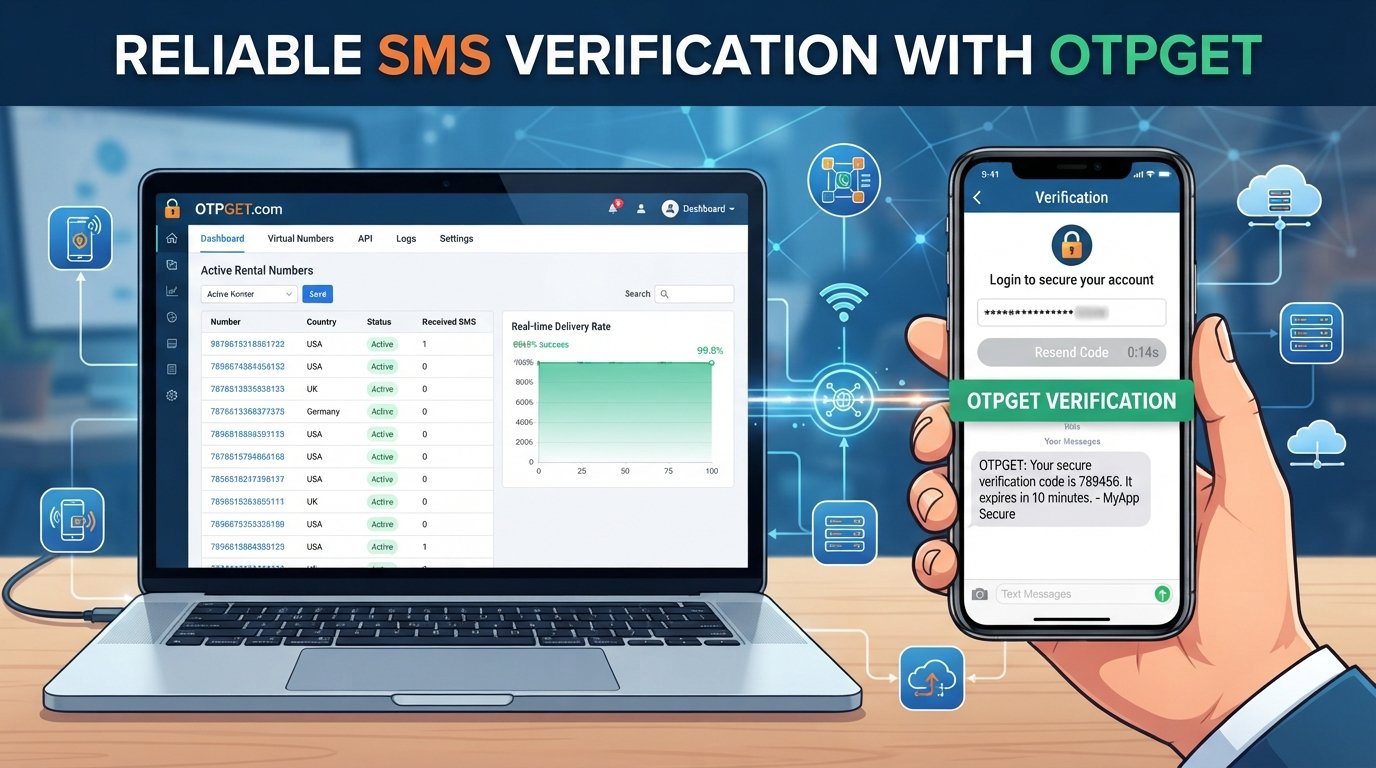
A typical OTP verification process works like this:
-
A user enters a phone number into an application.
-
The application generates a temporary verification code.
-
An SMS platform or API sends the code toward the user's mobile network.
-
Telecommunications networks route the message to the destination.
-
The user's phone receives the SMS and displays the code.
-
The user enters the code into the application to complete verification.
The process sounds simple, but several systems are involved between generating an OTP and displaying it on a phone. A problem at any stage can result in a delayed OTP, failed OTP, or verification code that never arrives.
Why Verification SMS Can Be Delayed
A delayed verification SMS does not necessarily mean that the OTP system is broken. Delivery can be affected by conditions outside the application itself.
Network congestion
Mobile networks handle enormous volumes of messages. During periods of unusually high traffic, SMS messages can experience delays while they are being processed and routed.
This is particularly important for businesses sending large volumes of authentication SMS at once. A sudden traffic spike can create delivery pressure even when the application itself is functioning normally.
Mobile carrier delays
Once an SMS leaves the provider's infrastructure, the destination carrier still has to process and deliver it. Temporary carrier issues, network maintenance, or congestion can slow the process.
This is one reason an OTP may arrive several minutes after it was requested even though the application generated it correctly.
Poor or unsuitable SMS routing
The route used to deliver a message can influence reliability. Different destinations can have different routing requirements, and a route that performs well for one destination may not perform the same way elsewhere.
Businesses handling international SMS verification therefore need to consider routing quality and destination requirements rather than treating all SMS traffic as identical.
International routing issues
Cross-border SMS delivery can involve additional networks and routing steps. Differences between countries, carriers, sender requirements, and local messaging rules can introduce additional failure points.
Sender ID restrictions
Some destinations place restrictions on sender IDs or messaging formats. If a sender configuration does not meet the destination's requirements, delivery can be delayed, filtered, or rejected.
Traffic spikes
A login surge, product launch, promotional campaign, or unexpected event can dramatically increase OTP requests. If the underlying SMS infrastructure is not prepared for that volume, users may experience slower delivery.
Incorrect phone numbers
A surprisingly basic issue can also cause an OTP not to arrive: the number entered by the user is wrong, incomplete, or incorrectly formatted.
Businesses should validate phone numbers before attempting SMS authentication whenever practical.
Carrier filtering
Carriers and messaging systems may apply automated filtering to certain messages. Filtering can affect delivery without the user ever seeing the original SMS.
Why Verification SMS Can Be Rejected
A rejected SMS is different from a message that is simply delayed. Rejection generally means the message could not proceed through part of the delivery process.
Common causes include:
-
Carrier filtering: Messaging systems may identify certain traffic patterns or content as unsuitable for delivery.
-
Sender restrictions: The sender identity or configuration may not be accepted for a particular destination.
-
Invalid numbers: Incorrect formatting, unsupported number types, or invalid destinations can prevent delivery.
-
Routing restrictions: Some destinations require specific routing arrangements or may restrict certain routes.
-
Unsupported destinations: An SMS provider may not support every destination, carrier, or number type.
-
Suspicious traffic patterns: Unusual volumes or repeated requests can trigger automated controls.
-
Message content restrictions: Certain content may be filtered depending on the destination and messaging environment.
-
Provider configuration problems: Incorrect credentials, sender settings, routing choices, or integration settings can cause delivery failures.
The important point is that an OTP rejected by a network is not necessarily the same as an OTP rejected by the application. Troubleshooting requires identifying where the failure occurred.
What Happens When an OTP Does Not Arrive?
For users, the impact is immediate.
A missing verification code can result in:
-
Failed login attempts
-
Problems completing registration
-
Delayed password recovery
-
Repeated OTP requests
-
Abandoned verification
-
Confusion about whether the application is working
For businesses, the consequences can extend beyond one failed message.
Repeated delivery problems can increase support requests, interrupt registrations, create additional OTP traffic when users repeatedly press “resend,” and make customers less confident in the service.
Authentication is often one of the first interactions a customer has with a digital product. If the verification step repeatedly fails, the entire product experience can feel unreliable.
Common Reasons Users Do Not Receive OTP Codes
When an OTP is not received, it helps to separate user-side problems from system-side problems.
Problems users can check
Users should first confirm:
-
The phone number is correct.
-
The device has mobile service.
-
The SMS inbox is not full.
-
The phone is not filtering or blocking messages.
-
The OTP has not already expired.
-
They have not requested multiple codes in quick succession.
-
The latest OTP is being used rather than an older code.
If these checks do not resolve the issue, the problem may require action from the application, SMS provider, or mobile carrier.
Problems businesses need to investigate
Businesses should examine:
-
SMS provider delivery status
-
API configuration
-
Destination formatting
-
Sender configuration
-
Carrier or route failures
-
OTP expiration settings
-
Excessive resend requests
-
Delivery patterns by destination
This distinction makes troubleshooting much faster than simply telling every user to “try again.”
How Businesses Can Improve OTP Delivery
Reliable OTP delivery starts with treating verification SMS as critical application infrastructure rather than an afterthought.
Choose dependable SMS infrastructure
A business should evaluate an OTP provider based on its supported destinations, integration options, delivery monitoring, routing approach, and ability to handle its expected traffic.
Validate phone numbers
Basic validation can prevent messages from being sent to obviously incorrect numbers. It also reduces unnecessary SMS traffic and failed verification attempts.
Set sensible OTP expiration times
An OTP should remain valid long enough for normal delivery and user entry, while still limiting the period during which the code can be used.
Control resend requests
A poorly designed resend button can create a flood of duplicate messages. Businesses should use sensible limits, cooldowns, and clear user feedback.
Monitor delivery results
Delivery data can reveal whether failures are concentrated around particular destinations, routes, sender configurations, or traffic periods.
Monitoring is especially valuable because an application can appear healthy while users are experiencing SMS delivery failures.
Test different destinations
An OTP flow should be tested across relevant countries, carriers, devices, and network conditions where the business operates.
Plan for failures
Where appropriate, businesses can provide alternative verification methods or clear recovery instructions when SMS delivery fails.
The goal is not to assume every message will arrive perfectly. It is to make the system resilient when something goes wrong.
How OTPGET Helps Solve Verification SMS Problems
Businesses and developers that need OTP-related messaging infrastructure can consider OTPGET as a practical solution for managing verification and SMS-based authentication needs.
OTPGET provides virtual numbers for SMS OTP verification, rental numbers, temporary email services, and developer APIs. Its developer documentation describes an SMS OTP API for programmatic number requests and OTP retrieval, while its platform also provides rental-number functionality.
For workflows that depend on receiving verification codes, a dedicated OTP service can simplify the process of obtaining numbers, handling verification messages, and integrating OTP-related functionality into software workflows.
OTPGET's documentation provides API endpoints for actions such as requesting a number and checking whether an SMS verification code has been received.
That can be useful for developers, QA teams, and businesses whose verification workflows require programmatic handling rather than manual SMS checking.
The broader value is workflow consistency. Instead of building every part of OTP-related number and message handling independently, businesses can use an established OTP service as part of their verification process.
As with any messaging solution, businesses should still evaluate destination requirements, applicable policies, routing behavior, and their own use case before deployment.
Why Reliable OTP Delivery Matters for Customer Experience
OTP delivery is part of the customer journey.
A user may have successfully installed an application, entered accurate information, and created a strong password—but if the verification SMS never arrives, none of that matters.
Reliable authentication helps reduce unnecessary friction during:
-
Account registration
-
Login
-
Password recovery
-
Mobile number verification
-
Two-factor authentication
-
Security-sensitive account actions
For businesses, the objective is not simply to send more SMS messages. It is to create a verification process that users can complete without unnecessary confusion.
A service such as OTPGET can be part of that infrastructure when a business needs a dedicated solution for OTP-related workflows.
Best Practices for Reliable SMS Verification
Use these practices to reduce OTP delivery problems:
-
Keep OTP messages concise. Make the verification code easy to identify and enter.
-
Validate phone numbers. Reduce avoidable failures caused by incorrect formatting or invalid numbers.
-
Set reasonable expiration periods. Give users enough time to receive and enter the code.
-
Limit repeated resend requests. Prevent unnecessary duplicate OTP traffic.
-
Monitor delivery results. Look for recurring failures by destination or route.
-
Use reliable SMS infrastructure. Choose an OTP provider that fits your destinations and technical requirements.
-
Test multiple destinations. Verify that the workflow performs as expected across relevant networks.
-
Have an error-handling process. Tell users what to do when a verification SMS does not arrive.
-
Protect OTP generation and verification. Codes should be temporary and handled securely throughout the authentication process.
-
Review failed delivery patterns regularly. Repeated failures can point to configuration, routing, or destination-specific issues.
FAQ
Why is my verification SMS taking so long?
A verification SMS can be delayed by mobile network congestion, carrier processing, routing problems, traffic spikes, filtering, or provider-side issues. Incorrect phone numbers can also prevent delivery entirely.
Why did I not receive my OTP?
Check that your phone number is correct, your device has mobile service, and your SMS inbox is functioning normally. If those checks pass, the problem may be related to the application's SMS provider, routing, or carrier delivery.
Can an SMS verification code expire?
Yes. OTP systems commonly use temporary codes with defined validity periods. If a code expires before it is entered, the user normally needs to request a new verification code.
What causes OTP delivery failure?
OTP delivery problems can result from invalid numbers, carrier filtering, routing restrictions, sender configuration, unsupported destinations, network problems, provider issues, or excessive traffic.
Why are some verification SMS messages rejected?
An SMS can be rejected because of destination restrictions, sender requirements, filtering systems, invalid numbers, unsupported routes, message restrictions, or provider configuration problems.
How can businesses improve OTP delivery?
Businesses can improve reliability by using appropriate SMS infrastructure, validating numbers, controlling resend traffic, monitoring delivery results, testing different destinations, and maintaining clear failure-handling procedures.
What is OTPGET?
OTPGET is an OTP and virtual-number platform offering SMS OTP verification, rental numbers, temporary email services, and developer APIs. Its documentation includes programmatic tools for requesting numbers and retrieving received SMS verification codes.
Conclusion
A delayed or rejected verification SMS can originate from many points in the delivery chain, including the user's device, mobile carrier, SMS routing, sender configuration, filtering systems, or the provider itself.
For users, the result may be a frustrating OTP not received experience. For businesses, repeated SMS verification issues can interrupt registration, authentication, password recovery, and customer support workflows.
The practical response is to treat OTP delivery as an important part of the overall authentication system. Validate phone numbers, control resend requests, monitor delivery outcomes, test relevant destinations, and use dependable infrastructure.
For businesses and developers looking for an OTP-focused solution, OTPGET can be considered as a practical option for managing OTP verification and related SMS workflows. Its documented API capabilities can help integrate programmatic number and OTP handling into applications and operational processes.
When verification depends on a single code reaching a user's phone, reliable infrastructure is not a minor technical detail—it is part of the experience customers rely on to access your service.