OTPGET Fake Email Verification Tool for Secure OTP Testing
Full Blog Article
Introduction
In today’s digital-first environment, almost every online platform requires email verification and OTP authentication before granting access. While this improves security, it also creates challenges for developers, QA testers, and privacy-conscious users who need quick and controlled access to verification systems without relying on personal email accounts.
This is where tools like OTPGET become essential. Whether you're building applications, testing signup flows, or managing temporary verification tasks, handling OTPs and email confirmations efficiently can save significant time and effort.
Modern development workflows demand flexibility, especially when dealing with fake email verification scenarios. Traditional email systems often slow down testing processes, introduce spam risks, and limit scalability. That’s why developers increasingly rely on smarter solutions like OTPGET, designed specifically for secure, fast, and temporary verification handling.
Problem: Challenges in Fake Email Verification
Fake email verification is a necessary part of development and testing, but it comes with several challenges. One of the biggest issues is managing multiple test emails without exposing real user data. Developers often struggle with cluttered inboxes, spam overload, and unreliable OTP delivery systems.
Another major concern is speed. In testing environments, delays in receiving OTPs can break workflows and reduce productivity. Many temporary email services are either too slow or not optimized for real-time verification.
Security is also a key factor. Using random or unsafe disposable email systems can expose sensitive test data or create vulnerabilities during QA testing. Developers need a controlled environment where OTPs are received instantly and securely without compromising privacy.
These limitations highlight the need for a more reliable OTP verification tool that simplifies the entire process while maintaining performance and security.
Solution: Why OTPGET is the Ideal Choice
This is where OTPGET stands out as a modern and efficient solution. Designed for developers, testers, and privacy-focused users, OTPGET simplifies fake email verification and OTP handling in a streamlined way.
With OTPGET, users can easily generate temporary verification environments that handle OTPs instantly. Instead of juggling multiple inboxes or unreliable tools, everything is centralized and optimized for speed and convenience.
One of the strongest advantages of OTPGET is its ability to support real-time OTP reception without delays. This makes it ideal for QA testing, app development, and staging environments where fast verification cycles are critical.
Beyond speed, OTPGET ensures privacy by eliminating the need for personal email accounts during testing. This reduces spam exposure and keeps development workflows clean and organized.
Simply put, OTPGET transforms fake email verification into a smooth, reliable, and developer-friendly experience.
Features of OTPGET
The strength of OTPGET lies in its simplicity and performance-focused design. It is built to support developers and testers who require fast and consistent OTP handling without unnecessary complexity.
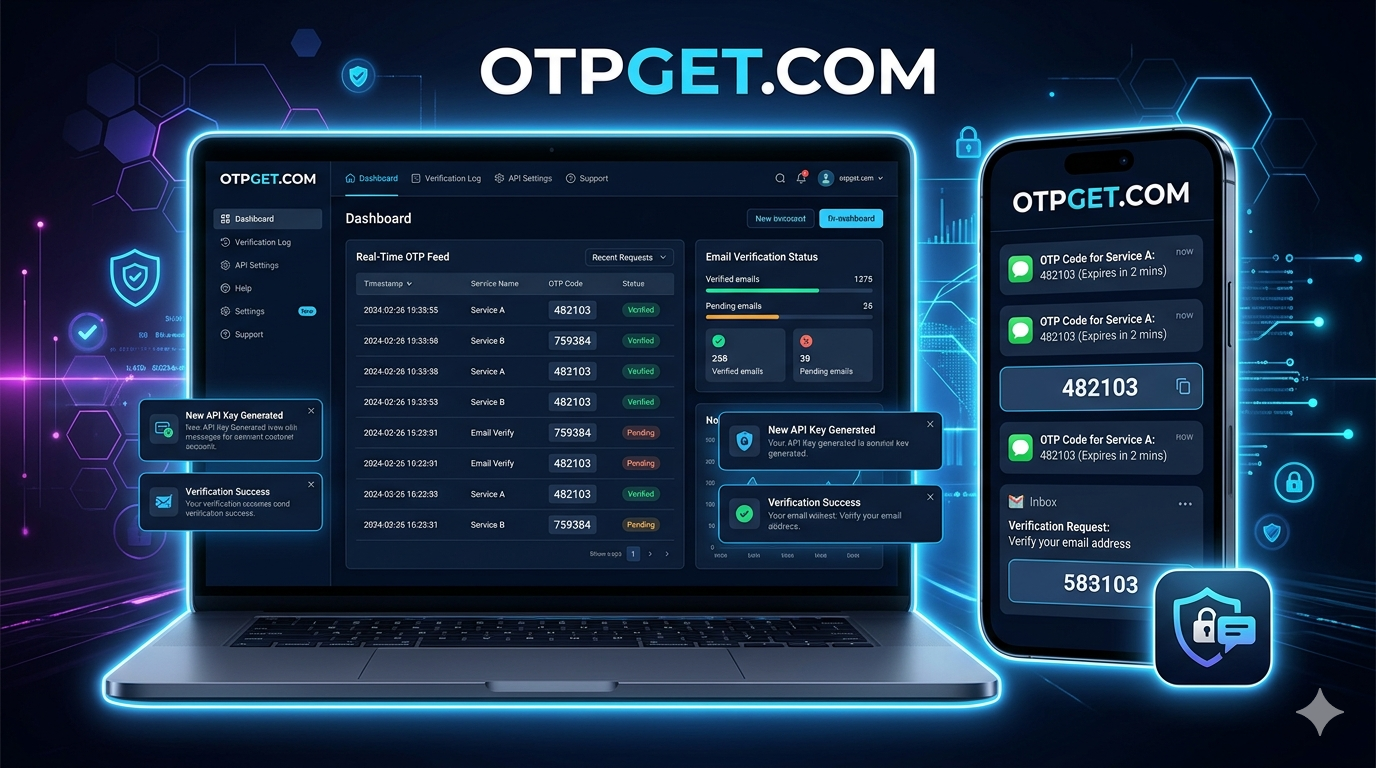
One of the core features of OTPGET is its real-time OTP reception system. This ensures that verification codes are delivered instantly, allowing users to complete testing workflows without interruptions. It also supports temporary email generation, making it easier to simulate real-world user signups.
Another important feature is its clean and intuitive interface. OTPGET avoids unnecessary clutter and focuses on functionality, making it easy for both beginners and experienced developers to use.
Additionally, OTPGET is optimized for secure OTP handling. It minimizes exposure risks by isolating verification sessions and keeping temporary data structured and controlled. This makes it highly effective for environments where privacy and accuracy matter.
Overall, OTPGET combines speed, usability, and reliability into a single streamlined platform for verification testing needs.
Use Cases of OTPGET
OTPGET is widely used across different development and testing scenarios. One of its most common applications is QA testing, where teams simulate user signups and login flows to ensure smooth functionality.
In app development, OTPGET helps developers test authentication systems without relying on real user data. This allows faster debugging and more efficient workflow management.
For temporary email verification, OTPGET provides a safe environment where users can test OTP systems without exposing personal inboxes. This is particularly useful during early-stage development and staging environments.
Privacy protection is another key use case. Many users prefer not to share their personal email addresses during testing, and OTPGET provides a secure alternative.
It is also commonly used in account testing environments where developers need to validate multiple registration flows quickly and reliably.
Benefits of OTPGET
The main reason users prefer OTPGET over traditional verification methods is its efficiency. It significantly reduces the time required for email and OTP testing processes.
Unlike conventional systems, OTPGET eliminates inbox clutter and ensures that all verification codes are organized and instantly accessible. This improves productivity and reduces frustration during testing cycles.
Security is another major benefit. By using OTPGET, users avoid exposing real email addresses during testing, reducing the risk of spam or data leaks. This makes it a safer choice for development environments.
Convenience also plays a major role. With OTPGET, there is no need to configure multiple email accounts or rely on external inbox providers. Everything is available in one unified system designed specifically for OTP handling.
Overall, OTPGET provides a more streamlined and efficient approach to email verification testing.
Comparison: OTPGET vs Traditional Verification Methods
Traditional email verification methods often rely on personal or manually created email accounts. While this works in basic scenarios, it becomes inefficient when scaling testing operations. Managing multiple inboxes, waiting for delayed OTPs, and dealing with spam messages can slow down workflows significantly.
In contrast, OTPGET offers a centralized and automated approach. Instead of switching between inboxes, users receive OTPs instantly within a controlled environment. This makes fake email verification faster and more reliable.
Traditional systems also lack flexibility for developers who need rapid testing cycles. OTPGET, on the other hand, is designed specifically for this purpose, making it a superior choice for modern development and QA environments.
When comparing both approaches, OTPGET clearly provides better speed, organization, and usability for technical workflows.
Conclusion
As digital platforms continue to rely heavily on email and OTP-based authentication, the need for efficient testing tools becomes more important than ever.
OTPGET delivers a powerful solution for developers, QA testers, and privacy-focused users who need reliable fake email verification and OTP handling. Its speed, simplicity, and security-focused design make it a standout choice in modern development workflows.
Whether you're building applications, running tests, or managing temporary verification systems, OTPGET provides everything needed to streamline the process.
In a world where efficiency matters, OTPGET remains a trusted companion for secure and fast OTP verification handling.