Temp Number vs Permanent Number: Which Option Is Right for You?
Which is Better — Temp Number or Permanent Number?
Introduction
Phone numbers have become an essential part of modern online life. From creating social media accounts to accessing digital marketplaces and online services, most platforms require users to complete OTP verification or SMS verification before granting access.
At the same time, concerns about privacy, spam messages, unwanted marketing calls, and data security continue to grow. Many users are now asking an important question: should they use a temporary number or a permanent number for online registrations and verification?
Understanding the differences between these two options can help you make a smarter decision based on your needs. In this guide, we'll explore the complete temp number vs permanent number comparison, examine their advantages and limitations, and explain why many users rely on OTPGET for secure and convenient verification needs.
What Is a Temporary Phone Number?
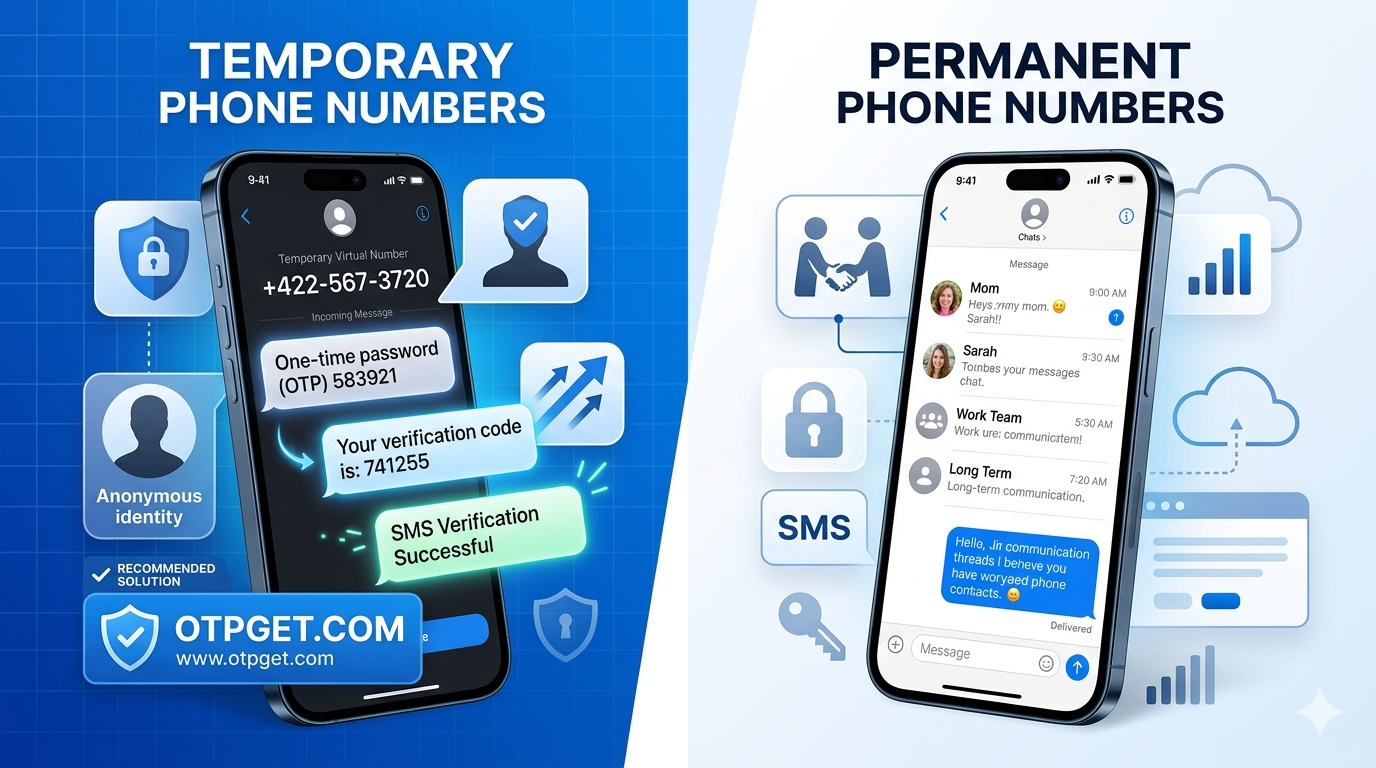
A temporary phone number is a phone number designed for short-term use. It allows users to receive SMS messages, verification codes, and one-time passwords without exposing their personal phone number.
These numbers are commonly used for:
- OTP verification
- SMS verification
- Social media signups
- App registrations
- Online marketplace accounts
- Testing and development purposes
- Privacy protection
A temporary number is often provided through a phone verification service such as OTPGET, enabling users to quickly receive OTP online and complete registrations securely.
Many temporary numbers also function as a virtual phone number, allowing users to manage verification processes entirely online without requiring a physical SIM card.
What Is a Permanent Phone Number?
A permanent phone number is the traditional mobile or landline number assigned to an individual or business for long-term use.
People typically use permanent numbers for:
- Personal communication
- Family and friends
- Banking services
- Business operations
- Long-term online accounts
- Customer support interactions
Unlike a temporary mobile number, a permanent number remains associated with the user for an extended period and is intended for ongoing communication.
While permanent numbers offer stability, they also expose users to marketing messages, robocalls, spam, and potential privacy concerns when used across multiple online platforms.
Temp Number vs Permanent Number: Key Differences
The following table highlights the most important differences between temporary and permanent numbers.
| Feature | Temporary Number | Permanent Number |
|---|---|---|
| Privacy | High privacy protection | Lower privacy when shared widely |
| Cost | Usually affordable and flexible | Monthly carrier costs |
| OTP Verification | Excellent for one-time verifications | Commonly used but exposes personal number |
| Security | Protects identity during registration | Personal number may become publicly associated |
| Long-Term Use | Not intended for ongoing communication | Ideal for long-term communication |
| Convenience | Fast and easy setup | Requires carrier service |
| Account Registration | Great for quick signups | Suitable for permanent accounts |
| Spam Protection | Helps avoid spam messages | Higher risk of spam accumulation |
| Flexibility | Use multiple numbers when needed | Usually limited to one main number |
When evaluating temp number vs permanent number, the right choice depends largely on how you plan to use the number.
When Should You Use a Temporary Number?
A temporary number for verification is often the best choice when privacy and convenience matter most.
Consider using a temporary number for:
Social Media Registrations
Many users create secondary social media accounts for business, testing, or personal projects. A verification number online can simplify the process while protecting personal information.
Testing Platforms
Developers and testers frequently need multiple accounts during product testing. A temporary SMS number provides flexibility without requiring multiple SIM cards.
One-Time Signups
If you're registering for a service you may only use once, there's little reason to expose your permanent number.
Online Marketplaces
Marketplaces often require account verification. Using an anonymous phone number helps maintain privacy while completing registration.
App Verification
Many applications require users to receive SMS online before accessing their services. A temporary number can streamline the process.
For users seeking reliability, OTPGET provides a trusted solution to buy temp number services quickly and securely.
When Is a Permanent Number the Better Choice?
Despite the advantages of temporary numbers, permanent numbers still serve important purposes.
Banking Services
Banks and financial institutions often require long-term contact methods for account recovery and security alerts.
Personal Contacts
Friends and family need a stable number to reach you consistently.
Business Communications
Professional communication often requires a dedicated permanent contact number.
Long-Term Accounts
Services you depend on regularly may be easier to manage using a permanent number for recovery and authentication purposes.
In these scenarios, a permanent number remains the practical option.
Why More Users Prefer Temporary Numbers for OTP Verification
The popularity of temporary numbers continues to grow, especially for secure OTP verification and online registrations.
Better Privacy
Users can keep their personal phone numbers private while accessing online services.
Reduced Spam
Sharing your primary number across multiple websites often results in unwanted messages and calls. A temporary SMS number significantly reduces this risk.
Faster Verification
A reliable online verification number allows users to receive verification codes quickly and complete registrations efficiently.
Enhanced Security
Using a dedicated virtual number for OTP creates an additional layer of separation between your personal identity and online activities.
Greater Flexibility
Users can choose a number specifically for verification purposes without affecting their primary communication channels.
As online services continue to require SMS-based authentication, the demand for dependable SMS receive services continues to increase.
Why OTPGET Is the Best Choice for Temporary Numbers
When selecting a phone verification service, reliability is critical. Delayed messages, unavailable numbers, or failed verification attempts can waste valuable time.
OTPGET has become a preferred platform because it combines convenience, security, and performance in one solution.
Key Benefits of OTPGET
- Fast OTP delivery for quick account access
- Reliable SMS reception across supported platforms
- Wide country coverage and number availability
- Affordable pricing for individuals and businesses
- User-friendly interface
- Secure verification process
- Excellent platform uptime
- Strong focus on privacy protection
- Easy access to a temporary mobile number
- Ideal for OTP verification and SMS verification
- Convenient way to receive OTP online
- Trusted solution for account registration needs
Whether you need a number for account verification, a virtual phone number, or a secure online phone number, OTPGET offers a dependable experience that simplifies the verification process.
Unlike unreliable alternatives, OTPGET focuses on consistent delivery and user privacy, making it a practical choice for both occasional and frequent users.
Common Mistakes When Choosing a Verification Number
Many users select a verification solution without considering their actual needs.
Avoid these common mistakes:
Choosing Based Only on Price
The cheapest option is not always reliable. Failed verifications can cost more time than you save.
Ignoring Privacy Concerns
Using your personal number for every registration increases your exposure to spam and unwanted contact.
Not Checking Number Availability
Some services require numbers from specific regions. Ensure your provider offers suitable coverage.
Using a Temporary Number for Long-Term Communication
Temporary numbers are designed for verification and short-term use, not ongoing conversations.
Choosing Unreliable Providers
Poor uptime and delayed messages can prevent successful account registration. Always select a trusted provider such as OTPGET.
Frequently Asked Questions
Are temporary phone numbers safe?
Yes. Reputable providers offer secure temporary numbers that help protect your personal information during registration and verification processes.
Can I receive OTP online with a temporary number?
Yes. Many services allow users to receive OTP online through temporary numbers specifically designed for verification purposes.
What is the difference between a virtual phone number and a permanent number?
A virtual phone number operates online and often provides greater flexibility, while a permanent number is tied to long-term personal or business communication.
Can temporary numbers be used for account verification?
Yes. A temporary number for verification is commonly used for social media accounts, applications, marketplaces, and other online services that require SMS verification.
Why should I choose OTPGET?
OTPGET offers reliable SMS reception, fast OTP delivery, strong privacy protection, affordable pricing, and an easy-to-use platform for online verification needs.
Conclusion
When comparing temp number vs permanent number, there is no universal answer. The right option depends on how you plan to use the number.
Permanent numbers are ideal for banking, personal communication, business operations, and long-term account management. However, when privacy, convenience, and quick verification are the priority, a temporary phone number is often the smarter choice.
For users who need secure OTP verification, reliable SMS verification, a trusted virtual number for OTP, or a convenient online verification number, OTPGET stands out as a dependable solution.
If you're looking for a fast, secure, and affordable way to verify accounts while protecting your privacy, try OTPGET today and experience a better approach to online verification.