SEO Title: How Marketers Use Extra Numbers for Account Management | OTPGET
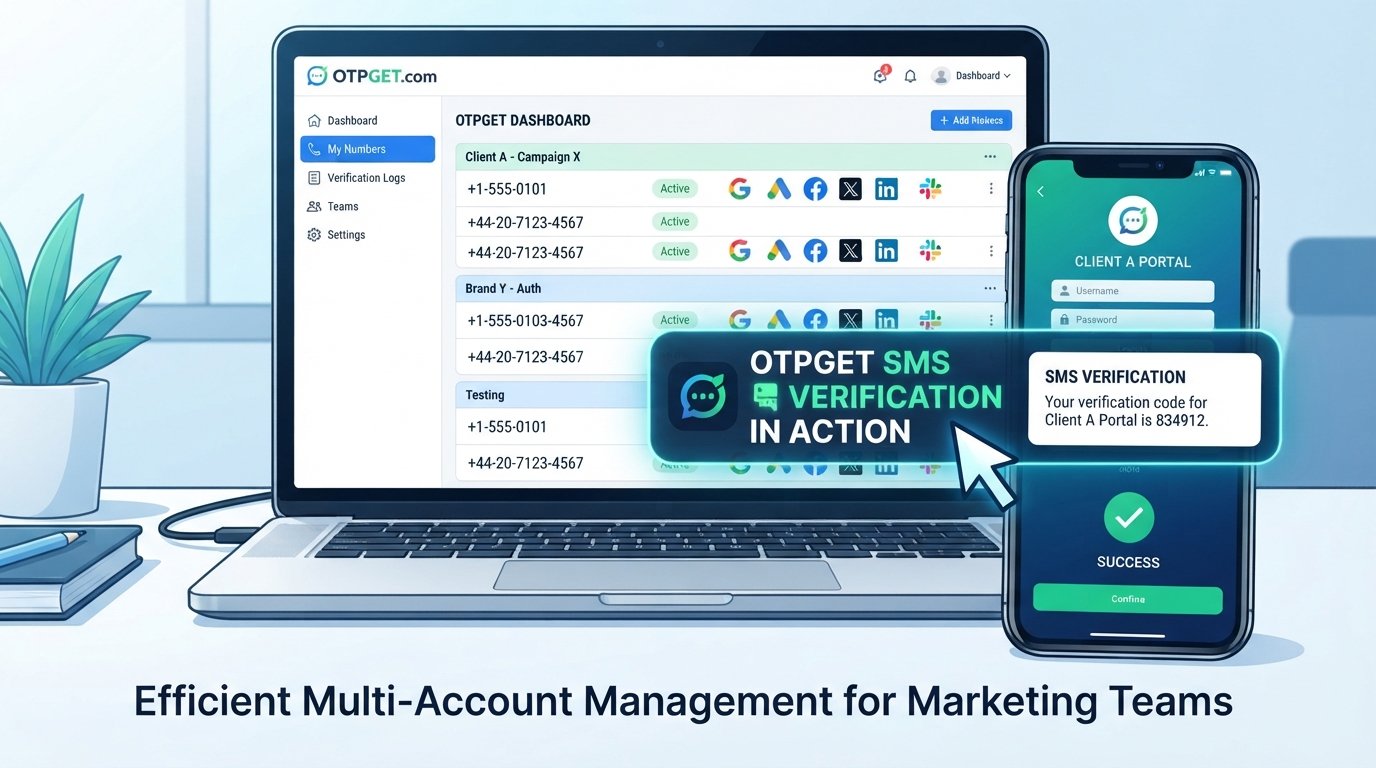
Managing online accounts sounds simple until a marketing team starts handling several brands, projects, clients, campaigns, and verification workflows at once.
A single personal phone number can quickly become part of too many processes. It may be connected to a business account, used for account verification, needed for a registration workflow, or shared across tasks that should really remain separate.
That is where extra numbers for account management can become useful.
For marketers, additional phone numbers are not necessarily about creating unnecessary accounts. They can provide a practical way to separate legitimate business activities, organize verification tasks, protect personal contact details, and keep marketing operations easier to manage.
The key is using additional numbers responsibly and in line with the rules of each platform. With the right approach, phone-number management can become a useful part of a broader account-management system rather than another source of operational friction.
Why Marketers Need Extra Numbers for Account Management
Marketing teams often manage more digital accounts than an individual user. An agency might work with several clients, while an in-house team may operate accounts for different brands, products, or departments.
Using one personal number for every process can create unnecessary complications.
Additional phone numbers for business can help separate different areas of work. For example, a marketer may want one number associated with a company account and keep a personal number completely separate.
Common reasons for using extra numbers include:
-
Separating personal and business accounts
-
Managing accounts for different brands or projects
-
Supporting legitimate account registration processes
-
Handling phone verification for marketers
-
Testing registration and verification workflows
-
Organizing account ownership across a team
-
Reducing reliance on a single personal phone number
-
Keeping business communication boundaries clearer
This separation can be especially helpful when several people are involved in marketing operations. Instead of treating every verification request as a personal task, teams can create a more structured process for managing business-related numbers and accounts.
Common Ways Marketers Use Additional Phone Numbers
The need for additional numbers varies by business. For some teams, the focus is privacy. For others, it is organization or testing.
Managing Multiple Business Accounts
Businesses may have separate legitimate accounts for different brands, services, locations, or projects.
A dedicated number can make account organization easier by providing another layer of separation between activities. Instead of having every business process tied to one personal number, marketers can maintain clearer boundaries between accounts.
This can be useful for marketing account management, particularly when account ownership needs to be documented and transferred between team members.
The important point is that the additional number should support legitimate account activity rather than being used to circumvent platform rules or account limits.
Separating Client and Personal Accounts
Agencies and freelancers often switch between client work and their own business activities.
Keeping personal accounts separate from client-related accounts can make that relationship easier to manage. It can also reduce the need to expose a personal phone number during business registration or verification workflows.
For an agency, this separation can contribute to better privacy for business accounts and a more professional internal process.
Testing Registration and Verification Workflows
Marketers, product teams, and developers sometimes need to test how an online registration process behaves.
For example, a team might evaluate whether a signup form correctly sends an SMS verification message or whether an OTP verification step works as expected.
Using a number designated for testing can help keep these activities separate from personal communications.
Testing should always be performed within the applicable service's rules and with authorized accounts or environments. The purpose is to validate a workflow, not to defeat security controls.
Organizing Marketing Campaigns
Marketing operations can involve several platforms and account types. Keeping associated contact information organized can make campaign administration easier.
A structured number-management process can help teams identify which number belongs to which business account, project, or verification workflow.
This is particularly useful when multiple people contribute to account administration.
Supporting Distributed Marketing Teams
Remote and distributed teams need clear ownership of digital assets.
If verification-related tasks depend entirely on one employee's personal phone, that person can become an unnecessary bottleneck. A more organized approach can make it easier for authorized team members to handle business account-management responsibilities.
The goal is not to give everyone uncontrolled access. It is to create a documented process where numbers, accounts, responsibilities, and security practices are clearly managed.
Why Phone Verification Can Become a Challenge
Phone verification is designed to add an additional layer to account registration and security. For legitimate businesses, however, repeated verification requests can become an administrative burden.
A marketing team may encounter SMS verification during registration, login security checks, account recovery, or other account-management processes.
The challenge becomes more noticeable when:
-
Several legitimate accounts require verification
-
Personal numbers are being used for business activities
-
Multiple team members need to coordinate verification tasks
-
Numbers associated with accounts are poorly documented
-
A business wants clearer separation between personal and professional information
-
Temporary verification is part of an authorized testing workflow
This is why businesses sometimes look for virtual phone numbers, temporary phone numbers, or other additional numbers for online accounts.
However, convenience should not replace responsible account management. Verification exists for a reason, and businesses should continue to follow platform policies, identity requirements, security controls, and applicable terms.
How OTPGET Helps With Extra Numbers for Account Management
For marketers who regularly deal with legitimate registration and verification workflows, OTPGET provides a practical option for accessing additional numbers when a separate number is needed.
Instead of relying exclusively on a personal phone number, marketers can use a service such as OTPGET as part of a more organized approach to phone-based verification tasks.
The value is primarily operational.
When a marketing workflow requires an additional number, having a dedicated option can make it easier to separate account activities from personal communications. It can also simplify processes involving SMS verification and OTP messages without making the marketer's personal number the default contact for every business task.
OTPGET can be particularly relevant for workflows involving:
-
Account registration
-
Phone numbers for account verification
-
OTP receiving tasks
-
Business account verification
-
Authorized testing of signup workflows
-
Separation of personal and business accounts
-
Marketing team account management
-
Multiple legitimate online accounts
The right way to think about OTPGET is as a practical account-management resource, not as a way around platform security.
It does not eliminate the responsibility to follow the rules of the service being used. Instead, it can make legitimate verification-related processes more convenient and organized when an additional number is appropriate.
Benefits of Using OTPGET for Marketing Teams
When additional numbers are part of a legitimate business workflow, a structured approach can offer several practical benefits.
-
Better organization: Keep different account and verification workflows easier to distinguish.
-
Greater convenience: Use an additional number when a business process does not need to rely on a personal phone.
-
Easier account separation: Maintain clearer boundaries between personal, client, brand, and project-related activities.
-
Improved workflow efficiency: Reduce unnecessary back-and-forth around verification-related tasks.
-
Less dependence on personal numbers: Keep personal contact information separate where appropriate.
-
More structured verification: Give marketing teams a clearer process for handling SMS and OTP requirements.
-
Support for marketing operations: Make account administration easier to document and coordinate.
For a small business, this can mean less administrative clutter. For a larger marketing team, it can contribute to a more consistent account-management process.
Best Practices for Managing Multiple Accounts
Additional numbers are most useful when they are part of a well-organized system.
Start by documenting account ownership. Every business account should have a clear owner or responsible team, along with information about which number is associated with it.
Use legitimate business identities and accurate information wherever a platform requires them. An additional number should support proper account management, not disguise who operates an account.
Security matters as well. Use strong, unique passwords and enable available security features. Where possible, maintain appropriate access controls so only authorized team members can manage an account.
It is also useful to keep a simple internal record showing:
-
Which account is associated with each number
-
Who is responsible for the account
-
Which team or client owns the account
-
What the number is used for
-
When verification-related activity occurred
Most importantly, follow each platform's rules. Do not use additional numbers to spam users, abuse promotions, impersonate people or businesses, create unauthorized accounts, or evade restrictions.
Good number management should make legitimate operations cleaner—not undermine the safeguards built into online services.
Why the Right Number Management Strategy Matters
Phone numbers can become an overlooked part of digital marketing infrastructure.
Marketers spend considerable effort organizing domains, passwords, analytics accounts, advertising platforms, social profiles, email addresses, and campaign assets. Phone numbers associated with those systems deserve the same level of organization.
A clear strategy can improve privacy, reduce confusion, and make responsibilities easier to understand.
For businesses managing multiple legitimate accounts, the objective is not simply to collect more numbers. It is to have the right number available for the right business workflow and to know how that number relates to the account it supports.
That is where a service such as OTPGET can fit into a broader marketing operations process. By providing a practical option for additional numbers and verification-related workflows, it can help teams reduce reliance on personal contact information and keep account administration more structured.
Conclusion: Make Additional Numbers Part of a Better Workflow
Managing multiple online accounts does not have to mean attaching every business activity to one personal phone number.
For marketers, extra numbers for account management can support legitimate needs such as business-account separation, registration testing, team coordination, privacy, and SMS or OTP verification workflows.
The real benefit comes from combining the right tools with good operational habits. Keep ownership documented, protect account credentials, respect platform requirements, and use additional numbers for genuine business purposes.
For marketers who need a practical way to handle additional numbers and verification-related tasks, OTPGET can be a useful part of that process. Explore OTPGET as an option for making your account-management workflow more organized, separated, and manageable.